In 2026, South Africa is experiencing an unprecedented internal migration. From Johannesburg to Cape Town, from Durban to Stellenbosch — tens of thousands of South African families are packing up and moving south. This is not a short-term trend but a structural societal shift. For astute international investors, understanding the "semigration" phenomenon is the key to unlocking the Cape Town property market's core driver.
Key Insight: In 2026, approximately 35% of all national semigration flows to the Western Cape. Cape Town's average property price stands at R2.6 million (~USD 158,000), with rental yields of 4-8% and days-on-market of just 55-70. Despite SARB maintaining a 7.00% repo rate (10.50% prime lending rate), Cape Town's property market shows remarkable resilience.

What Is Semigration?
"Semigration" — a portmanteau of "semi" and "emigration" — describes the uniquely South African phenomenon of citizens relocating from inland provinces (particularly Gauteng and KwaZulu-Natal) to the Western Cape, especially Cape Town and its surrounds. This is not emigration abroad, but internal migration on a scale that rivals international movements.
According to PropFlow360 Research, the Western Cape now absorbs approximately 35% of all national semigration, and this share continues to rise. Critically, semigration has evolved from an "affluent-only" phenomenon to a broad middle-class movement.
Four Drivers: Why South Africans Choose Cape Town
1. Governance Quality: Democracy in Action
Cape Town is widely regarded as South Africa's best-governed city. Compared to Johannesburg and Durban — which face aging infrastructure, power supply instability, and security challenges — Cape Town excels in municipal services, water and electricity supply, and public safety. The Western Cape government has been consistently rated the most effective provincial administration in South Africa.
"We're seeing a consistent stream of buyers from upcountry, many of whom are cash buyers or have significant deposits, which naturally drives up demand and, consequently, prices." — Senior Home Loans Consultant, Absa BankPropFlow360 Research, May 2026
2. Infrastructure: The Dividend of Sustained Investment
Cape Town International Airport (CPT) is undergoing a R10 billion upgrade, expanding annual passenger capacity from 14 million to 20 million. The MyCiTi rapid bus transit system continues to expand, connecting more suburbs to the city center. These infrastructure investments not only improve quality of life but directly boost surrounding property values.
3. Lifestyle: One of the World's Most Livable Cities
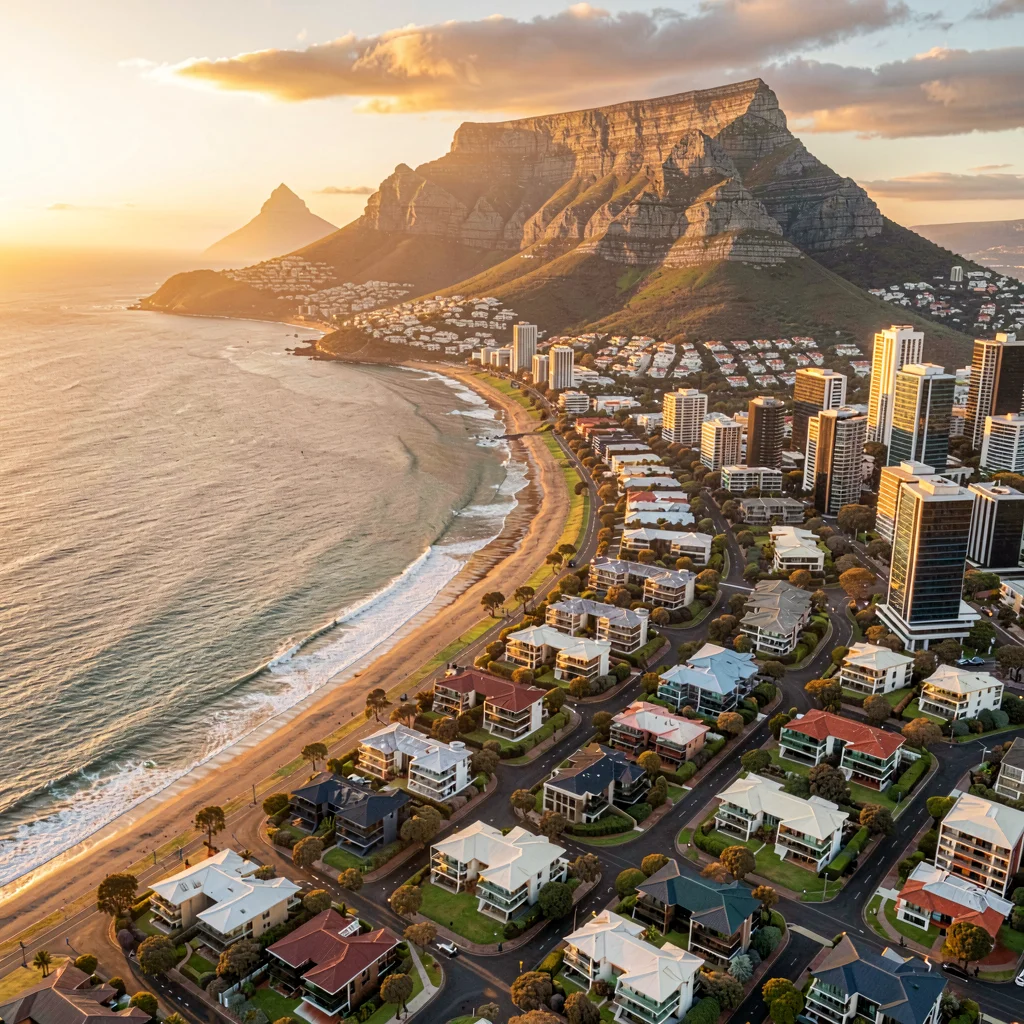
Cape Town is consistently ranked among the world's best cities by The Economist and Lonely Planet. Table Mountain, the Cape of Good Hope, world-class wine estates, and pristine beaches — these natural assets are competitive advantages no other South African city can replicate. Combined with the growing remote work culture, more professionals are choosing to "bring their jobs to Cape Town."
4. Economic Resilience: A Diversified Industrial Base
Cape Town's economy is more diversified than other South African metros. Tourism, technology, financial services, agricultural processing, and film production all thrive. Following South Africa's hosting of the G20 Summit in 2025, Cape Town's international visibility has surged, attracting more multinational corporations to establish regional headquarters.
2026 Cape Town Property Market: Key Metrics
According to The Africanvestor's June 2026 update, the Cape Town residential market exhibits the following characteristics:
- Average price per square meter: R28,000 (~USD 1,700/€1,470), with apartments typically costing more per m² than houses
- Market pace: Popular areas like Sea Point, Green Point, and Claremont sell within 30-45 days; luxury properties in Camps Bay and Clifton take 90-150 days
- Interest rate environment: SARB repo rate at 7.00%, prime lending rate at 10.50% — borrowing costs remain elevated but have eased from 2024 peaks
- Foreign buyers: Can purchase most residential properties, subject to FICA anti-money laundering checks; non-residents typically require 30-50% deposits
Four Key Investment Areas: Deep Dive
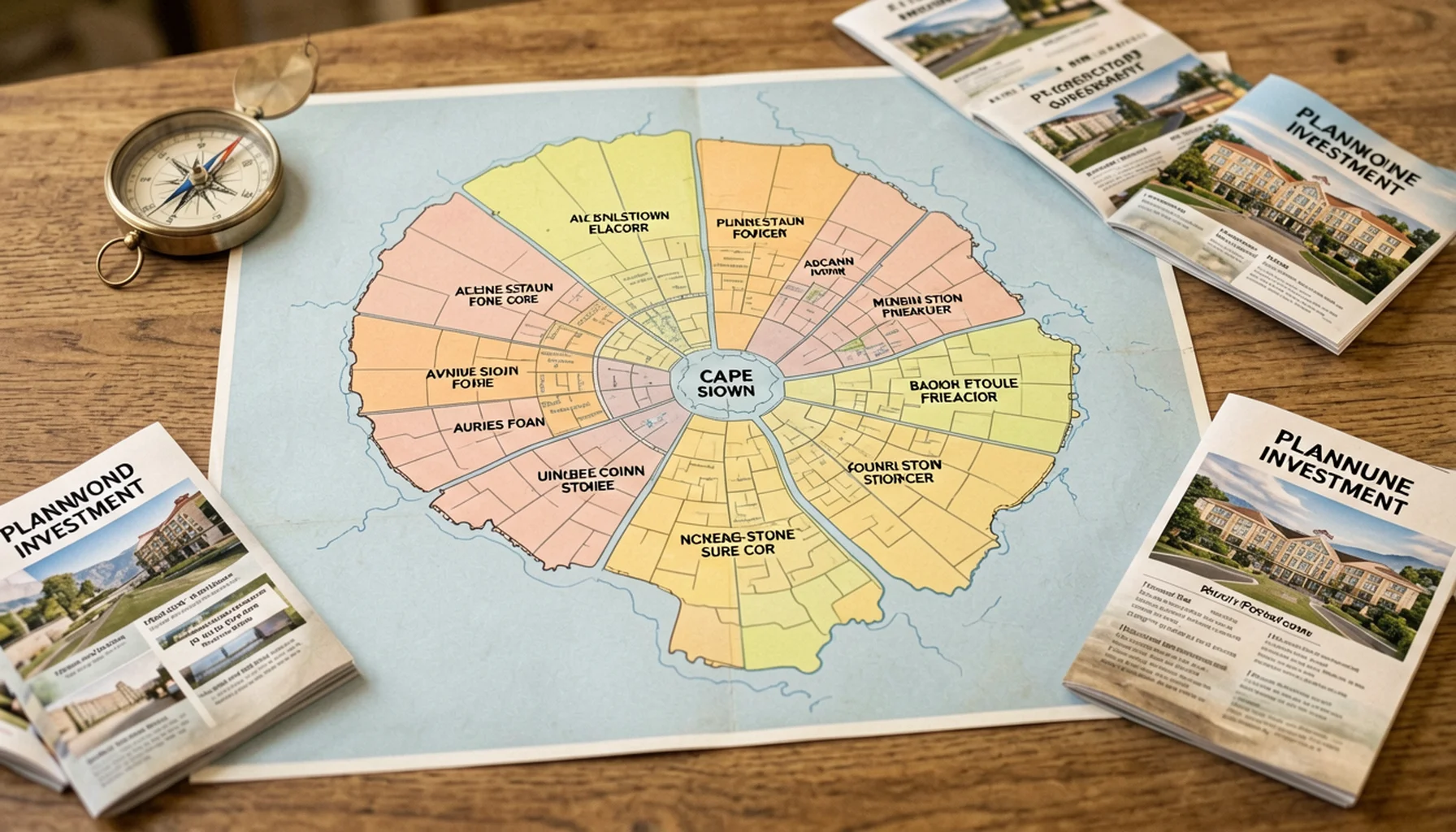
1. Atlantic Seaboard — Premium Luxury Market
Includes Clifton, Camps Bay, Bantry Bay, Sea Point, and Green Point. This is Cape Town's most prestigious residential address. Two-bedroom apartments in Sea Point start from approximately R3 million, while beachfront villas in Clifton regularly exceed R30 million. Rental yields range from 4-6%, with short-term letting performing even better.
2. City Bowl — Urban Living at Its Best
Includes Gardens, Tamboerskloof, Oranjezicht, Vredehoek, and De Waterkant. Apartments range from R2-5 million, while freestanding homes can reach R8-15 million. Attracts young professionals, remote workers, and international buyers. Walkable access to the central business district and excellent amenities.
3. Southern Suburbs — Family Investment Hotspot
Includes Claremont, Rondebosch, Newlands, Constantia, and Bishopscourt. Home to Cape Town's best schools, universities, and medical facilities. Estate-level properties in Constantia start from R15 million. This area is particularly favored by semigrating families seeking space, security, and educational excellence.
4. Northern Suburbs — Entry-Level Investment Opportunities
Includes Durbanville, Bellville, and the Stellenbosch corridor. Durbanville is prized for its excellent schools and security, offering more accessible price points for first-time buyers and middle-class families. Stellenbosch, as a university town and wine region, offers both residential and收藏 value.
How Foreigners Can Buy Property in Cape Town
According to The Africanvestor's July 2026 update, foreigners can legally purchase most residential properties in Cape Town, including sectional-title apartments, townhouses, freestanding houses, and vacant residential plots. The key process is as follows:
Property Selection & Offer to Purchase
Work with a local agent or advisory firm to identify properties and sign a lawyer-drafted offer to purchase
FICA Compliance
Submit passport, proof of address, and source of funds documentation for South Africa's anti-money laundering checks
Funds into Attorney's TPFA Trust Account
Investment funds are deposited into a lawyer's trust account for security. Non-residents typically need 30-50% deposits
Transfer & Registration
The conveyancing attorney completes title transfer and registration. The buyer receives registered ownership. Process takes approximately 6-12 weeks
DingYao Advantage: Through DingYao Advisory and our South African partner Crestline Advisory, Taiwanese and international investors receive full-service support in their preferred language. Investment funds are held in an attorney's TPFA trust account, released per contractual milestones, and transferred to a Standard Bank Wealth private banking account upon completion. Fully compliant with FICA anti-money laundering regulations.
H2 2026 Outlook: Where Is Semigration Heading?
Looking ahead to the second half of 2026, Cape Town's property market will be shaped by the following factors:
- Interest rate trajectory: SARB has been gradually cutting rates from 2024 peaks. Further cuts in H2 2026 would stimulate buyer activity
- Sustained semigration: Gauteng's governance challenges are unlikely to improve in the short term, continuing to drive demand for Cape Town
- Supply constraints: Limited developable land on the Atlantic Seaboard and City Bowl means tight supply supports prices
- International attention: The G20 effect continues to build, with international buyer interest in Cape Town rising steadily
"Cape Town is not behaving like an average South African housing market, because the best residential areas are limited by the mountain, the sea, and strong demand for a safer urban lifestyle." — The AfricanvestorProperty Price Forecasts Cape Town, June 2026
References & Data Sources
- PropFlow360 Research — Cape Town Property Market 2026: The Ultimate Investor's Guide
- The Africanvestor — Cape Town Real Estate Market Analysis (2026)
- The Africanvestor — Buying Property as a Foreigner in Cape Town (2026)
- The Africanvestor — Property Price Forecasts Cape Town (2026)
- Prospr Real Estate — Cape Town Property Market 2026: Prices, Trends, and Area Guide
- South African Reserve Bank (SARB) — MPC Announcements
- Crestline Advisory — South Africa Property Advisory