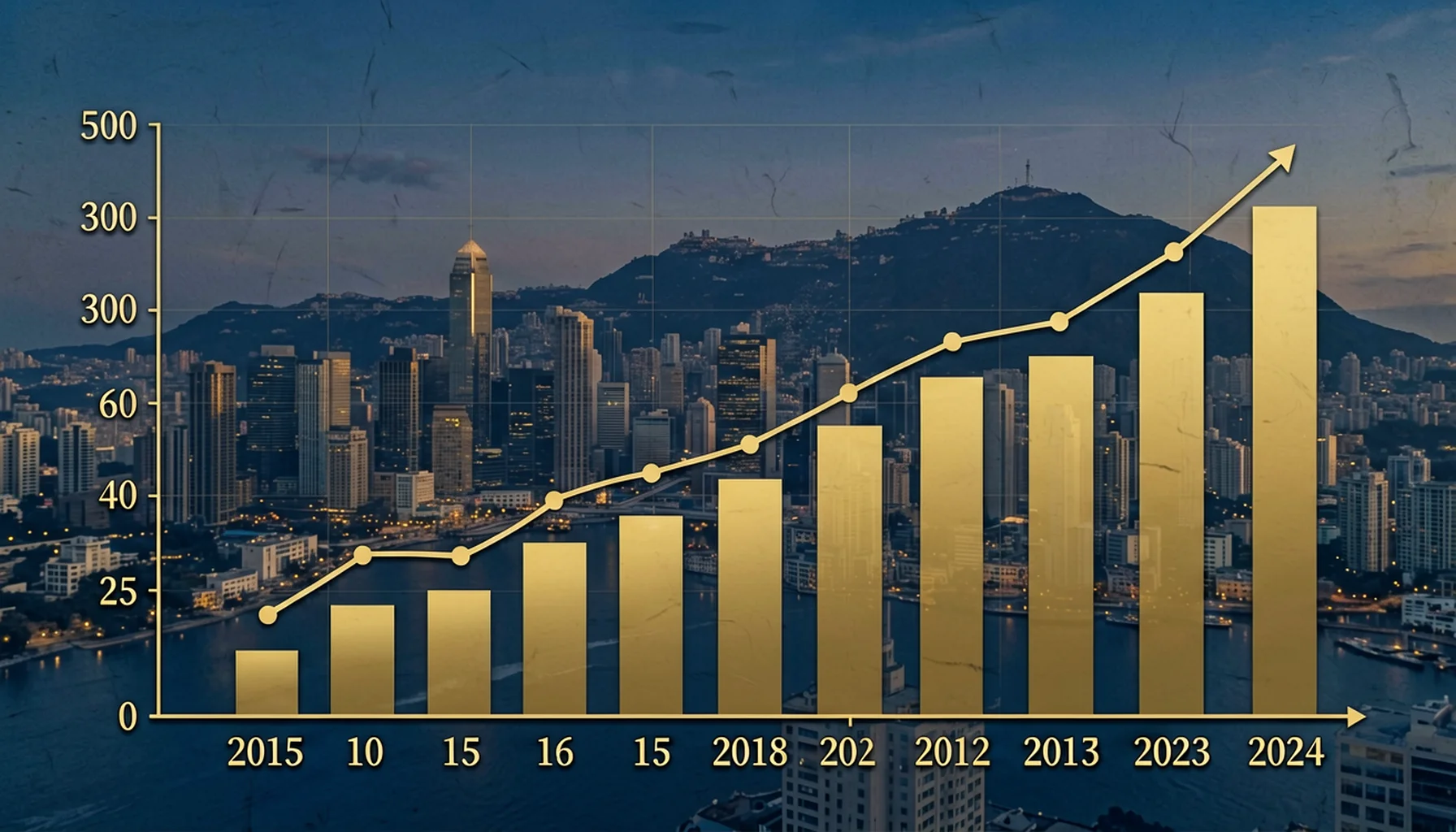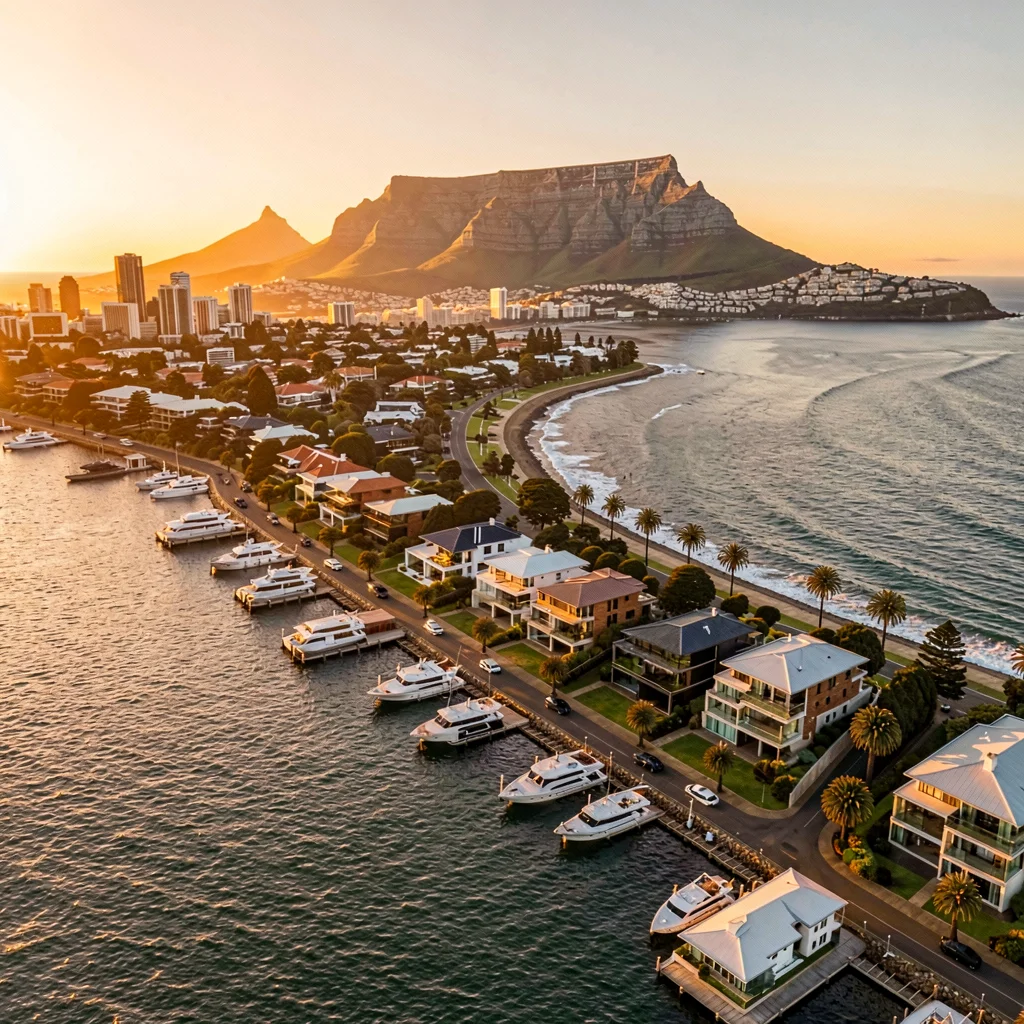
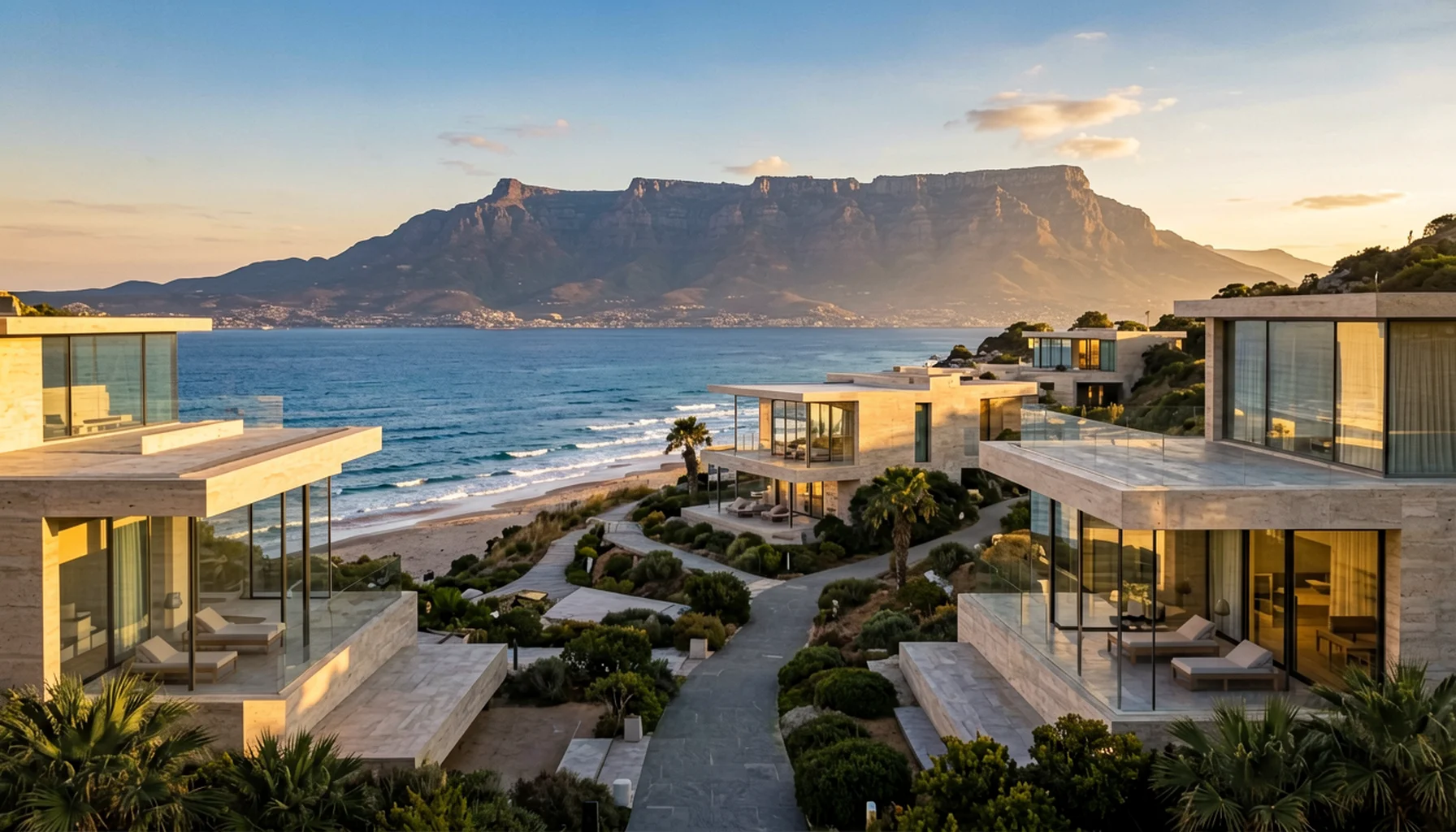
On July 19, 2026, Business Day published a landmark report on South Africa's property market: according to Lightstone data, foreign buyers spent R153 billion on Cape Town luxury properties over the past decade. For properties valued above R20 million, 39% were purchased by foreigners — meaning two out of every five luxury homes in Cape Town were bought by international buyers.
The data comes from Lightstone's comprehensive analysis of approximately 2.39 million residential transactions across South Africa from 2016 to 2025. Hayley Ivins-Downes, Managing Executive for Real Estate Services at Lightstone, noted: "Foreign buyers accounted for 39% of transactions on properties valued above R20 million. That challenges the perception that foreign investment is limited to Cape Town's luxury coastal suburbs."
Key Data Points: Foreign buyers spent R153 billion on Cape Town luxury properties over 10 years. 39% of homes above R20 million purchased by foreigners. Western Cape has the highest foreign buyer share at 7.8%. In Llandudno, approximately two-thirds of properties are bought by foreigners, average price R29.2 million.
Foreign Buyers: More Than Just Holiday Home Purchasers
Ivins-Downes elaborated: "While the popular discussion of foreign property buyers has focused almost exclusively on leisure and lifestyle, the reality is far more nuanced. Johannesburg's established immigrant communities have driven significant buying activity, while lifestyle markets in the Western Cape and Limpopo continue to attract affluent international purchasers."
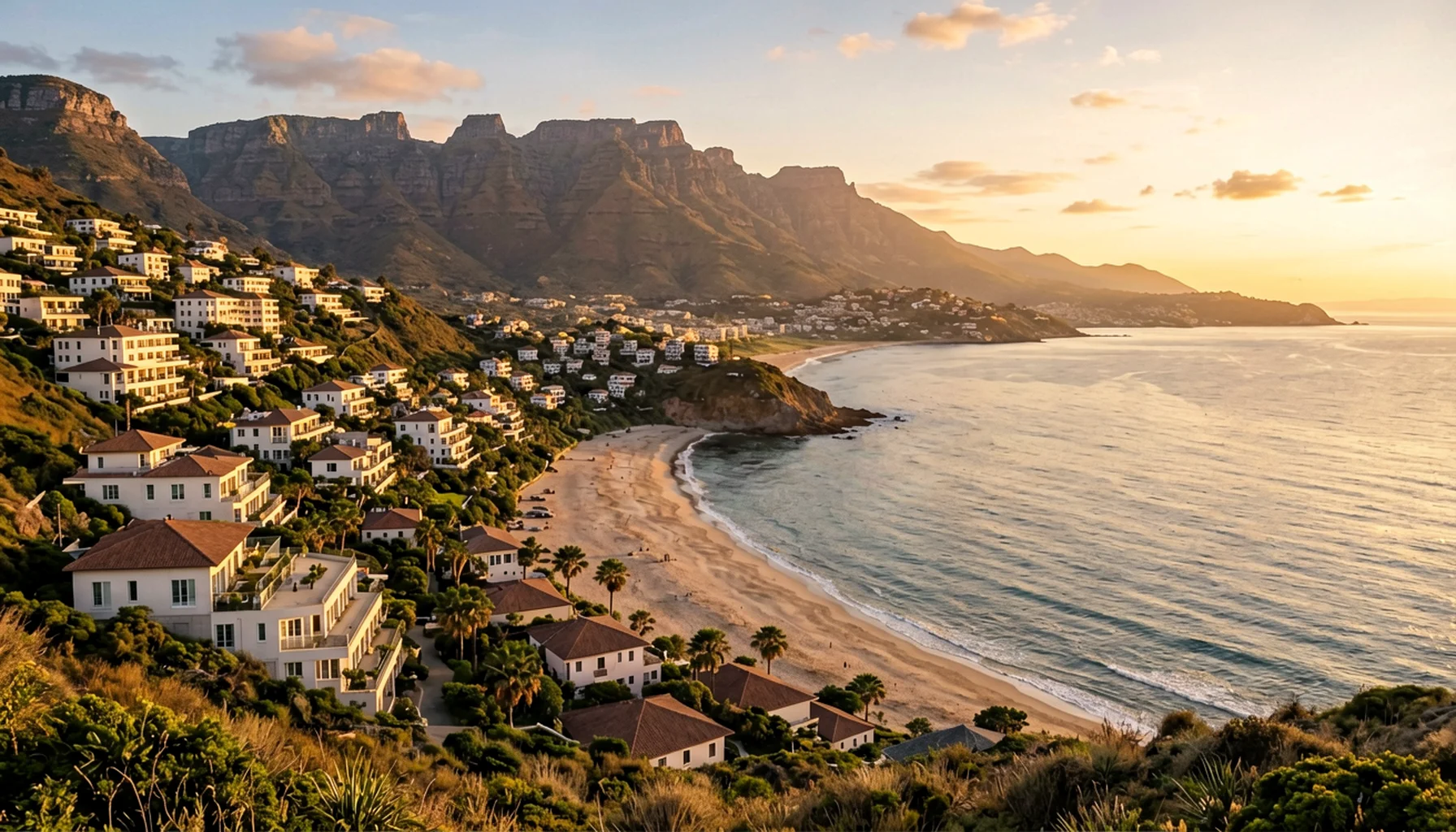
The data reveals that foreign buyers are not a single profile — motivations range from lifestyle and leisure to community ties, business investment, and family networks. On the Atlantic Seaboard, Llandudno stands out with approximately two-thirds of properties sold to foreigners at an average price of R29.2 million. Other hotspots include Bakoven, Camps Bay, Constantia, and Bishopscourt.
Cape Town Market Mid-2026: Prices at Record Highs
Robshaw Property Group's July 5, 2026 market report confirms that Cape Town's property market is in an exceptionally strong cycle:
- Average selling price up 12.9% year-on-year — H1 2026 prices significantly above 2025 full-year averages
- Inventory down 25% year-on-year — total listings on Property24 dropped by approximately one-quarter over the past year
- Average days on market: just 18 days — many properties sell before reaching the open market
- 28% of R10M+ buyers are foreign — and foreign buyers in this segment are overwhelmingly cash purchasers
The Robshaw report states: "Cape Town's property market is being shaped by forces that extend well beyond local salaries and traditional local demand. Lifestyle migration, semigration, remote work, foreign buyers, cash purchasers, limited stock, and Cape Town's growing international appeal are all contributing to a market that is increasingly wealth-driven."
Five-Year Area Performance: Which Areas Gained Most?
From 2021 to 2026, Cape Town's regional price performance shows clear divergence:
| Area | 2021 Median Price | 2026 Median Price | 5-Year Growth |
|---|---|---|---|
| Cape Peninsula (Noordhoek & surrounds) | R 1,850,000 | R 3,000,000 | +62.2% |
| Atlantic Seaboard | R 3,725,000 | R 5,900,000 | +58.4% |
| Blaauwberg Coast | — | — | +41.9% |
| City Bowl | — | — | +25.0% |
| Southern Suburbs | — | — | +21.7% |
| Northern Suburbs | R 1,299,000 | R 1,450,000 | +11.6% |
Source: Robshaw Property Group / Propstats, July 2026
Lifestyle-driven coastal and scenic areas (Cape Peninsula, Atlantic Seaboard) posted the strongest gains, reflecting the compounding effects of semigration, remote work, and wealth migration. The Northern Suburbs, while more affordable and attracting 31.9% of first-time buyers aged 18-35, saw more modest appreciation.
Deep Impact of Foreign Capital on Cape Town's Property Market
1. Cash Transactions Dominate the Luxury Segment
Approximately 82% of luxury transactions in Cape Town are cash purchases. Foreign buyers are almost exclusively cash buyers, making them immune to SARB interest rate fluctuations. When local mortgage-dependent buyers retreat due to rate hikes, foreign cash buyers gain greater negotiating power.
2. Supply Scarcity Continues to Intensify
The Atlantic Ocean and Table Mountain National Park physically constrain developable land in Cape Town. New developments in prime areas like Clifton, Camps Bay, and Bantry Bay are extremely limited. The structural imbalance between sustained foreign demand and constrained supply is the fundamental driver of long-term price appreciation in Cape Town's premium segments.
3. Rental Yields Remain Compelling
According to The Africanvestor's latest data (May 2026), net rental yields across Cape Town remain attractive:
- City Bowl 1-bedroom net yield: 7.5-7.9%
- Sea Point 1-bedroom net yield: 7.5-7.8%
- Observatory 1-bedroom net yield: 11.4%
- Woodstock 1-bedroom net yield: 10.2%
- Rondebosch 1-bedroom net yield: 7.5-7.7%
These yields significantly outperform major global cities — London (3-4%), New York (3-5%), Sydney (2.5-3.5%), and Tokyo (3-4%). Cape Town's rental yield advantage is a key driver of sustained foreign investor interest.
The DingYao Dual-Engine Cash Flow Model: A Structured Solution
For overseas investors seeking to participate in Cape Town's property market, the DingYao Advisory dual-engine cash flow model offers a proven structured approach:
Entry Threshold
R 16,000,000 structured investment comprising property acquisition and trust deposit components.
Rental Engine
R 10,450,000 Cape Town property acquisition, full-occupancy annual income R 836,000-R 1,045,000 (8-10% yield).
Interest Engine
R 5,000,000 deposited in Standard Bank trust account, generating approximately R 335,000 annual interest.
Combined Yield
Total annual cash flow R 1,171,000-R 1,380,000, combined yield 7.3-8.6%.
Structural Advantage of the Dual Engine: The rental engine (8-9% full-occupancy yield) and interest engine form a natural hedge. When rates rise, the interest engine generates more income. When rates fall, the rental engine benefits from economic activity. The two engines complement each other across different market environments, providing stable cash flow for investors.
Funds Security: Lawyer Trust Protection (律師信託保護)
For overseas investors, fund security is the paramount concern. South African law mandates that all property transaction funds must be deposited into a lawyer's trust account (律師信託保護 / lawyer trust protection), independently managed by the law firm. Funds are only released to the seller after title has been successfully registered in the buyer's name, all municipal accounts are settled, and all transaction conditions are met.
This mechanism is strictly regulated under the Legal Practice Act, ensuring that buyer funds cannot be diverted before title transfer is complete. DingYao Advisory partners with top-tier law firms including Garlicke & Bousfield to provide comprehensive legal support from FICA compliance through to title registration.
Actionable Recommendations for Overseas Investors
Lightstone's R153 billion data is not just a report card for the past decade — it is a compass for future trends. Here are specific recommendations for different investor profiles:
Leverage the Currency Advantage
For USD, EUR, and GBP investors, rand volatility provides an additional "currency discount." Cape Town's prime coastal properties are priced at less than 50% of comparable assets on the French Riviera or Mediterranean, and the currency advantage makes the effective purchase cost even more attractive.
Focus on High-Yield Areas
City Bowl, Sea Point, and Observatory offer net yields of 7.5-11.4%, far exceeding global benchmarks. These areas have deep tenant pools and low vacancy rates, making them ideal for cash-flow-focused investors.
Consider Structured Solutions
The DingYao dual-engine model at R 16,000,000 entry threshold combines a rental engine (8-9% yield) with an interest engine to achieve 7.3-8.6% combined annual return, with natural hedging against interest rate volatility.
Ensure Legal Compliance
All transaction funds must flow through lawyer trust accounts (律師信託保護 / lawyer trust protection). Work with experienced law firms and property management teams to ensure every step — from FICA compliance to title transfer — meets South African legal requirements.
"Foreign ownership in South Africa is far more diverse than many assume. Some buyers are purchasing trophy homes and lifestyle properties, while others are buying into established communities or investing in locations linked to business and family networks." — Hayley Ivins-Downes, Managing Executive for Real Estate Services, Lightstone, Business Day, July 19, 2026
Conclusion: Behind the Foreign Capital Inflow, Cape Town's Irreplaceable Value
Lightstone's R153 billion data reveals a clear trend: global capital is voting with real money, recognizing Cape Town as a premier global property investment destination. This is not merely a lifestyle choice — it is a rational assessment of Cape Town's geographic scarcity, governance quality, rental income potential, and long-term appreciation prospects.
For investors from Taiwan and the Asia-Pacific region, Cape Town's property market offers a unique opportunity — entry into a world-class lifestyle market at reasonable prices, with structured returns of 7.3-8.6%. As foreign buyers continue to pour in, inventory continues to shrink, and prices continue to hit new records, this window is gradually narrowing.
R153 billion in foreign capital is telling you the answer. Book a one-on-one consultation today to learn how the DingYao dual-engine cash flow model can help you participate in Cape Town's long-term property market growth.