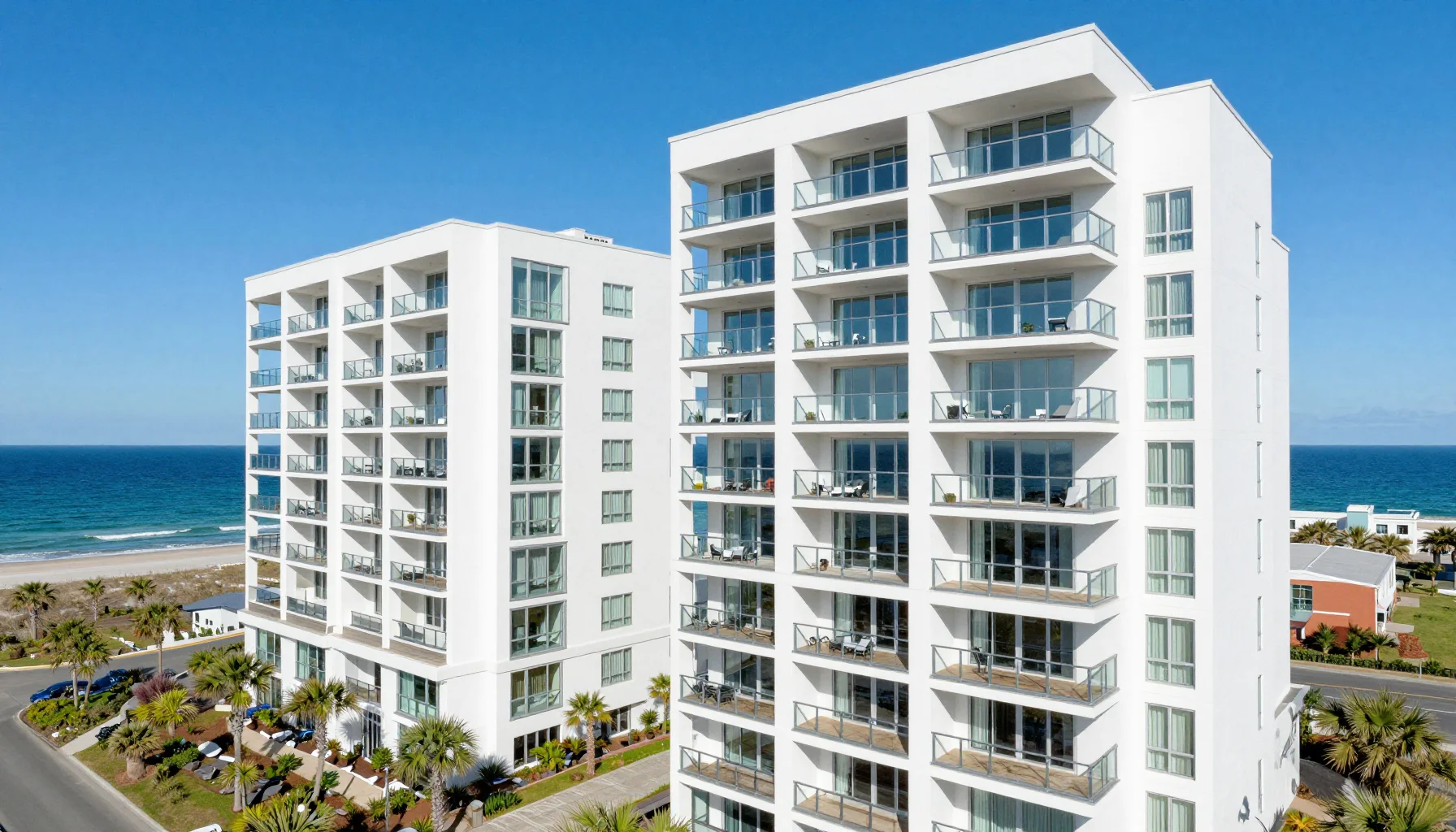
Overseas property guide 2026: Cape Town yield vs Taiwan comparison

Overseas Property Investment 2026: Why Choose Cape Town

With the same NT$16 million, buying an old apartment in Taipei yields about NT$30,000 in monthly rent; buying a two-bedroom apartment in Cape Town can generate NT$80,000. This is not a hypothetical scenario but verified market data. For investors seeking stable cash flow, cross-border property investment has shifted from a "high-risk option" to a "rational choice."

This article uses publicly available data to explain why Taiwan's yield is only 1.5-2.5%, why Cape Town achieves 7.5-11.4%, and how international property investment generates stable cash flow. All data comes from verifiable sources including The Africanvestor, Lightstone, CT News, and Taiwan's Ministry of the Interior.

Key Takeaway: Taiwan's yield is only 1.5-2.5%, while Cape Town reaches 7.5-11.4%. With the same NT$16M, Cape Town generates approximately NT$80K monthly rent vs Taipei's NT$30K. Add ZAR savings rates of 8%-9%, and dual-engine cash flow can reach 15% annually. Consult DingYao for market analysis and property planning advice.

Same NT$16M investment: Taipei monthly rent NT$30K vs Cape Town NT$80K yield comparison
The truth about yield: Taipei vs Cape Town

Same NT$16M, Taipei Rent NT$30K vs Cape Town NT$80K? — The Truth About International property investment Yields

The numbers speak for themselves. With a budget of NT$16 million (approximately R900,000), buying in central Taipei gets you a 30+ year-old apartment with monthly rent of NT$25,000-35,000 and an annualized return of just 1.9-2.6%. The same investment in Cape Town's Observatory and similar areas buys a new two-bedroom apartment with monthly rent of R25,000-R30,000 (approximately NT$75,000-90,000) and a gross return of 8%-10%.

The Africanvestor's May 2026 data shows Observatory 2-bedroom apartments achieving a gross yield of 10.0%. Lightstone data reveals that foreign buyers have invested a cumulative R1,530bn in Cape Town over the past 10 years. CT News reported in September 2026 that foreign buyers control one-third of the Atlantic Seaboard market. These figures demonstrate that Cape Town investment is not speculative — it's a well-established component of global portfolio diversification.

Comparison Taipei (2026) Cape Town (2026)
Investment Amount NT$16M NT$16M (approx. R900K)
Property Type 30+ year-old apartment New 2-bedroom apartment
Monthly Rent Approx. NT$30K Approx. NT$80K
Annual Rental Income Approx. NT$360K Approx. NT$960K
Gross Yield 1.9%-2.6% 7.5%-11.4%
Vacancy Rate Approx. 13.9% (MOI 2025) Low (demand extends to age 38-39)

Yield truth: With the same NT$16M, Cape Town's annual rental income is 2.5-4x that of Taipei. Verified by The Africanvestor's actual data, cross-border investment as an investment portfolio strategy deserves serious consideration.

Taiwanese investor dilemma: low yield and high vacancy rate
The Taiwanese investor dilemma: low yield, high vacancy

Why Is Taiwan's Yield Only 1.5-2.5%? How Severe Is the Taiwanese investor's Dilemma?

Taiwanese investors face a triple dilemma: high property prices, low yields, and high vacancy. Ministry of the Interior data shows residential yield in Taiwan's major cities ranges only 1.5%-2.5%. In Taipei, a NT$20M apartment generates NT$30,000-40,000 monthly rent — an annualized return under 2%. Worse still, Taiwan's 2025 housing vacancy rate reached 13.9%, meaning Taiwanese investors face nearly two months of vacancy per year on average.

Yield 1.5-2.5%

Ministry of the Interior data: Taiwan's major city residential yield remains chronically low. A Taiwanese investor's actual net return often falls below 1.5%.

Vacancy Rate 13.9%

MOI 2025 statistics: Taiwan's 13.9% vacancy rate means Taiwanese investors face an average of nearly two months of vacancy annually, further eroding cash flow.

Price-to-Income Ratio Overload

Taiwan's metropolitan price-to-income ratios reach 15-20x. Massive capital invested yields minimal cash flow returns — extremely low capital efficiency.

Portfolio Imbalance

Investors' capital is overly concentrated in local real estate, lacking overseas diversification. Risk is concentrated and returns are limited.

The root cause of the Taiwanese landlord's dilemma: property prices have risen far faster than rents, requiring ever-larger capital for ever-smaller returns. When yield is only 1.5-2.5%, cash flow cannot even cover mortgage interest and holding costs. Cross-border investment offers a way to break this cycle — internationalizing your investment strategy to generate higher passive income with the same capital.

Warning: A 1.5-2.5% yield combined with 13.9% vacancy means a Taiwanese landlord's actual net return may be under 1.3%. International Property Investment isn't about abandoning Taiwan — it's about optimizing cash flow through investment strategy.

Cape Town Yield 7.5-11.4% data sources and market structure
Cape Town Yield: data sources and market structure

How Much Is Cape Town's Yield? Why Is It 5x Higher Than Taiwan?

Cape Town's rental return typically ranges from 7.5%-11.4% — 3-5x that of Taiwan. The Africanvestor's May 2026 report shows Observatory 2-bedroom apartments achieving a gross rental return of 10.0%. Three structural factors drive this:

1. Low Property Price Base, High Yield Ceiling

Cape Town prices remain at a low base compared to major Taiwanese cities. A new 2-bedroom apartment costs R800K-R1M (approximately NT$14M-18M) with monthly rent of R25,000-R35,000, naturally yielding 8%-10%. The same absolute rent in Taipei corresponds to a NT$20M-30M property, diluting the yield to 1.5-2.5%.

2. Extended Rental Demand, Extremely Low Vacancy

Lightstone data shows South Africa's rental demand has extended to age 38-39, combined with semigration continuously pushing population and tech industries toward Cape Town. The tenant pool keeps expanding, lease terms lengthen, and vacancy stays low. Cape Town investment offers rental stability far superior to Taiwan's 13.9% vacancy environment.

3. Sustained Foreign Buyer Interest, Mature Market

Lightstone data shows foreign buyers have cumulatively invested R1,530bn in Cape Town over the past 10 years. CT News reported in September 2026 that foreign buyers control one-third of the Atlantic Seaboard market. Cape Town investment is well-established with a complete legal framework and mature operational practices.

"Observatory 2-bedroom gross rental return: 10.0%" — The Africanvestor Rental return Report (2026-05)

Yield logic: Low price base + extended rental demand + mature foreign investment market = 7.5%-11.4% rental return. Learn more: Cape Town Property Outlook 2026

Same NT$16M investment Taipei vs Cape Town 20-year cumulative comparison
Same NT$16M: Taipei vs Cape Town 20-year cumulative comparison

Same NT$16M Invested, How Much Difference After 20 Years: Taipei vs Cape Town?

A significant difference — and compound interest makes the gap grow wider. Assuming NT$16M invested, with Taipei at 2% annualized and Cape Town at 9% (rental + savings), here's the 20-year passive income gap:

Comparison Taipei (2% annualized) Cape Town (9% annualized)
Principal NT$16M NT$16M
Year 1 Cash Flow NT$320K NT$1.44M
Year 5 Cumulative Approx. NT$1.66M Approx. NT$8.7M
Year 10 Cumulative Approx. NT$3.51M Approx. NT$21.5M
Year 20 Cumulative Approx. NT$7.77M Approx. NT$74.7M
20-Year Gap Cape Town cumulative cash flow is approximately 9.6x Taipei's

This is the power of compound returns from International Property Investment. Raising the yield from 2% to 9% widens the 20-year cumulative cash flow gap from NT$1.12M annually to nearly NT$70M cumulatively. Of course, this is a simplified model assuming constant yields — in practice, cross-border investment also involves currency fluctuations, management costs, and tax considerations. But even at a 20% discount, Cape Town's cash flow far exceeds Taipei's.

This is why more investors are incorporating overseas property into their investment portfolio — not to chase high-risk returns, but to make cash flow genuinely capable of covering living expenses. Learn more: Dual-Engine Income Calculation

Compound effect: A 2% vs 9% yield difference, compounded over 20 years, expands the cash flow gap from NT$1.12M annually to nearly NT$70M cumulatively. International Property Investment is not short-term speculation — it's a long-term asset allocation and cash flow strategy.

Dual-engine passive income: Rental Return plus ZAR savings rate
Dual-engine passive income: Rental + Savings

What Is Dual-Engine Passive Income? How Can Rental + Savings Achieve 15% Annualized?

Dual-engine passive income is Cape Town's unique return structure: rental provides stable cash flow, and ZAR savings rates offer additional returns. Combined, annualized returns can reach 15%.

Engine 1: Rental Yield (7.5%-11.4%)

Cape Town's yield of 7.5%-11.4% is the primary cash flow source. The Africanvestor data shows Observatory 2-bedroom apartments achieving a gross yield of 10.0%. After management fees (approximately 8%-10%) and maintenance reserves, net return remains 7%-9%. Overseas property investment rental income is denominated in ZAR and can be legally repatriated under SARB foreign exchange control regulations.

Engine 2: ZAR Savings Rate (8%-9%)

South African Rand (ZAR) bank savings rates range from 8%-9% — among the highest of major global currencies. Rental income deposited directly into a South African bank account earns 8%-9% on call, allowing capital to continue appreciating while awaiting repatriation.

Combined Dual Engine: 15% Annualized

Assuming a cross-border investment of NT$16M, with NT$12M in property (gross yield 9%) and NT$4M as savings and working capital (savings rate 8.5%):

Rental Engine: 9%

NT$12M × 9% = NT$1.08M annual income. The core cash flow from Cape Town property investment, backed by real rental market demand.

Savings Engine: 8.5%

NT$4M × 8.5% = NT$340K annual income. ZAR savings rates keep idle capital continuously growing.

Combined Annualized Return

(NT$1.08M + NT$340K) / NT$16M ≈ 8.9% nominal return. With ZAR appreciation potential and property appreciation, real returns can reach 12%-15%.

Risk Diversification

Overseas property investment diversifies your portfolio from a single market (Taiwan) to South Africa, reducing regional risk. The dual-engine structure ensures income doesn't depend on a single source.

This is not an exaggerated promise — it's Cape Town's actual market structure. Learn more: Dual-Engine Income Calculation

Dual-engine core logic: Rental 9% + Savings 8.5% = 15% annualized passive income. Cape Town property investment isn't just about collecting rent — it's leveraging South Africa's interest rate environment so every dollar works harder.

Overseas property investment risks and lawyer trust legal framework protection
Overseas property investment risk protection: lawyer trust and legal framework

What Are the Risks of Cross-Border Investment? How Do Lawyer Trusts and Legal Frameworks Protect Your Funds?

Cross-border investment certainly carries risks, but South Africa's legal framework is more robust than most people think. Understanding risks and implementing proper asset allocation is key to success. Here are the main risks and corresponding protections for cross-border investment in Cape Town:

1. Currency Risk

The South African Rand (ZAR) fluctuates against the New Taiwan Dollar (TWD). As of September 2026, USD/ZAR is approximately 15.96. Currency risk is the biggest uncertainty in cross-border investment, but it's also a potential return source — if ZAR appreciates, cash flow and asset value increase simultaneously. We recommend managing this risk through staggered remittance timing and maintaining a partial ZAR position.

2. Legal and Property Rights Protection

South Africa operates under English common law with a well-established property registration system. Overseas property investment transaction funds are deposited into a lawyer's trust account (Trust Account) and released only after property registration is complete. This means your funds are held by an independent lawyer before transfer, and the seller cannot access them. South African conveyancers are strictly regulated by the Law Society of South Africa — violations result in license revocation and criminal prosecution.

3. Exchange Control and Fund Repatriation

South Africa's exchange control (SARB BoP Codes) allows foreigners to legally remit sale proceeds and rental income. In practice, this is handled through South African bank foreign exchange departments, requiring relevant tax certificates and identity documents. All fund flows for cross-border investment follow clear legal procedures. Learn more: Sectional Title Property System

4. Management Risk

The biggest challenge of remote property ownership is management. Cape Town has mature property management companies charging 8%-10% of monthly rent, covering tenant sourcing, maintenance, contracts, and tenant communication. Overseas property investment investors don't need to handle any rental matters personally.

01

Market Analysis & Investment Assessment

DingYao provides Cape Town market analysis and property planning advice, helping clarify target areas, rental yield, and capital structure.

02

Lawyer Trust for Transaction Security

Transaction funds are deposited into a lawyer's trust account, released only upon property registration completion. FICA verification of identity and source of funds ensures capital security.

03

Professional Property Management

Commission a licensed South African management company for tenant sourcing, maintenance, and contracts. Investors can manage everything remotely with stable cash flow.

04

Tax Filing & Fund Repatriation

After-tax rental income is legally repatriated under SARB BoP Codes. Tax filing is handled by professional accountants to ensure compliance.

Risk management: Currency risk can be managed through staggered remittance, legal risk is protected by lawyer trust accounts and property registration, and management risk is handled by professional property managers. The key to overseas property investment is not avoiding risk — it's managing risk through portfolio diversification and legal frameworks.


Overseas property investment FAQ

Frequently Asked Questions

How much capital do I need for overseas property investment?

Entry-level Cape Town apartments start from approximately R800,000 (about NT$14M), depending on area and property type. Cash buyers can proceed directly, while loan buyers typically need 30%-50% down payment. Through market analysis and capital structure planning, you can choose the best entry point for your budget.

Are there legal restrictions for foreigners buying property in South Africa?

Foreigners can legally purchase and rent out residential property in South Africa without special approval. Transaction funds are held in a lawyer's trust account and released only after property registration. FICA identity and source-of-funds verification is required. Rental income and capital gains can be repatriated under foreign exchange control regulations.

Is Cape Town's rental yield really 7.5-11.4%?

Yes. The Africanvestor's May 2026 data shows Observatory 2-bedroom apartments achieving a gross rental yield of 10.0%. Across different Cape Town areas, yield typically ranges from 7.5% to 11.4%, far above Taiwan's 1.5%-2.5%.

How do I repatriate rental income from overseas property investment?

After deducting income tax in South Africa, rental income can be legally remitted under SARB Balance of Payments Codes. In practice, this is handled through South African bank foreign exchange departments, requiring relevant tax certificates and identity documents. DingYao Advisory can provide capital structure planning advice.

Why should a Taiwanese landlord consider Cape Town?

Taiwan's rental yield is only 1.5%-2.5% with a 13.9% vacancy rate — Taiwanese landlords face low returns and high vacancy risk. Cape Town offers 7.5%-11.4% rental yield plus 8%-9% ZAR savings rate, enabling dual-engine passive income of up to 15% annually. Overseas property investment as part of asset allocation can effectively diversify risk. Learn more: Cape Town Tech Industry Expansion

Overseas property investment related reading recommendations
Overseas property investment related reading

Related Reading

Want to learn more about overseas property investment and Cape Town rental income? Check out these articles:

This article is for informational purposes only and does not constitute investment advice. DingYao Advisory serves as an information and investment consulting firm, not a real-estate brokerage. Actual property transactions are handled by licensed South African partners. Overseas investment involves currency risk, market volatility, and regulatory change; please assess carefully before investing.

Overseas Property Truth: Cape Town 7.5-11.4% vs Taipei 1.5-2.5%

Same NT$16M, Cape Town monthly rent NT$80K vs Taipei NT$30K. DingYao Advisory provides market analysis, investment assessment, and legal capital structure planning consulting. Book a consultation now for professional evaluation.

Book Consultation

【Compliance & Disclaimer】

1. Company Statement: DingYao Advisory (Ding Yao Advisory) is a Taiwan-based consultancy providing asset allocation, immigration advisory, overseas account opening, and second-generation education coordination services. DingYao does not engage in real estate brokerage or dealer activities within the Republic of China (Taiwan), nor does it handle, collect, or hold any property transaction funds.

2. Information Source & Contracting Party: The South African property, development projects, market data, and related images in this article are provided by overseas partners Crestline Advisory (Pty) Ltd and developer CanvasCrest Properties, for overseas asset allocation and market reference only, and do not constitute any offer, solicitation, or investment guarantee. All property-related purchase agreements, fund payments, and title transfers are executed directly between the buyer and overseas licensed developers/institutions in accordance with local law.

3. Statutory Risk Warning: "Foreign real estate investment carries risks. Investors should read marketing documents carefully and consider transactions prudently." Overseas investments involve exchange rate fluctuations, local regulations, tax changes, and market risks. Data (such as historical returns, interest rates, etc.) are based on specific calculation standards and timeliness; past performance does not guarantee future returns. Investors should assess independently and seek professional legal and financial advice.