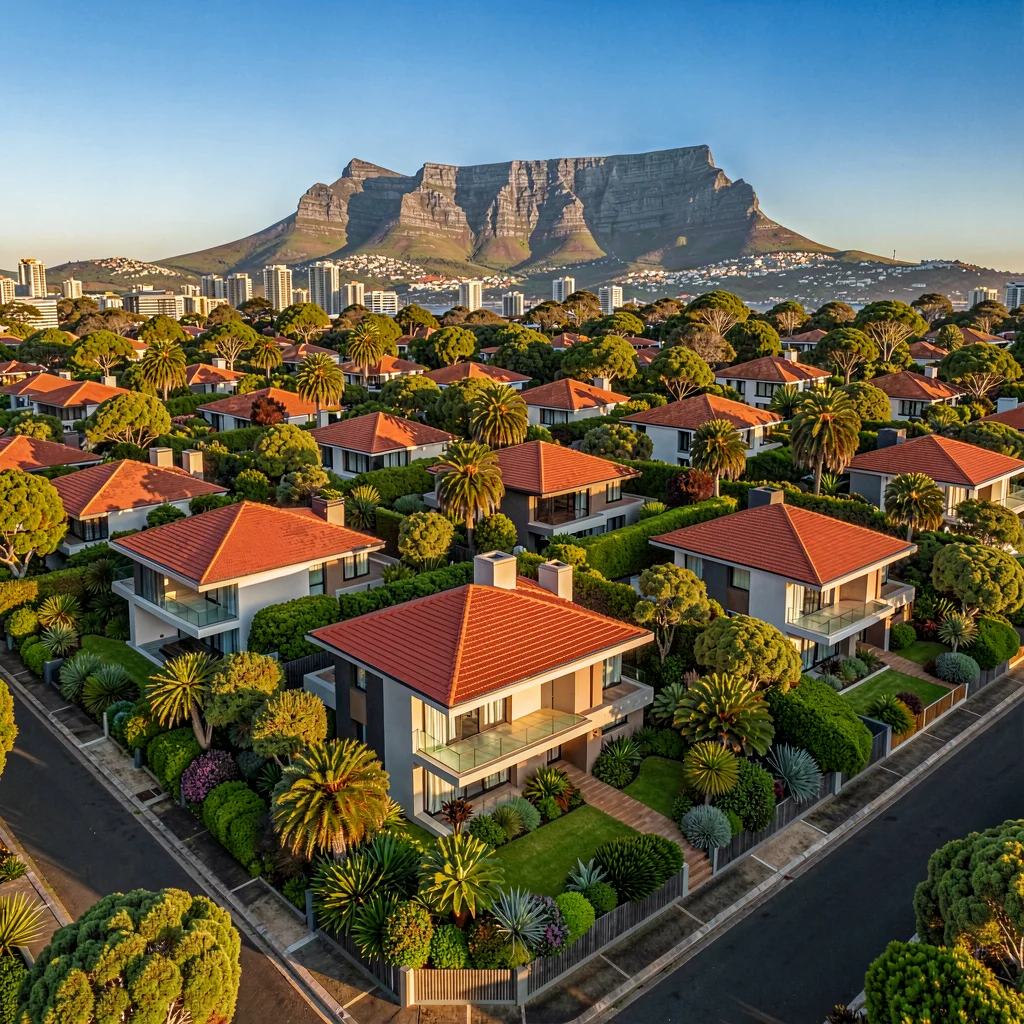
On July 23, the South African Reserve Bank's (SARB) Monetary Policy Committee (MPC) voted 4-2 to hold the repo rate at 7.00%, defying market expectations. Just two days earlier, StatsSA had reported June CPI at 5.0% — a two-year high — and markets had priced in a 47.5% probability of a rate hike.

Governor Kganyago's statement captured the delicate balance: "The inflation outlook has improved marginally since the previous meeting, but inflation remains too high while economic growth is weak." The seemingly contradictory statement masks a critical variable — a sharp downward revision in oil price assumptions. The SARB slashed its Q3 2026 oil forecast from $94/barrel to $78.50/barrel, and Q4 to $75/barrel, directly easing inflation pressure and creating room to hold rates.

For Cape Town property investors, this decision carries three significant implications. Here is the in-depth analysis.

Key Takeaway: The SARB's 4-2 vote to hold at 7.00% defied market expectations. The sharp oil price revision (Q3 $78.50/barrel) was the decisive factor. Three tailwinds for Cape Town property: (1) rate stability through year-end, giving local buyers breathing room; (2) fuel price declines easing inflation, paving the way for 2027 rate cuts; (3) foreign cash buyers continuing to benefit from the rand exchange rate advantage. QPM baseline: Q3 2026 at 6.88%, Q4 2026 at 6.79%, end-2027 at 6.24%.
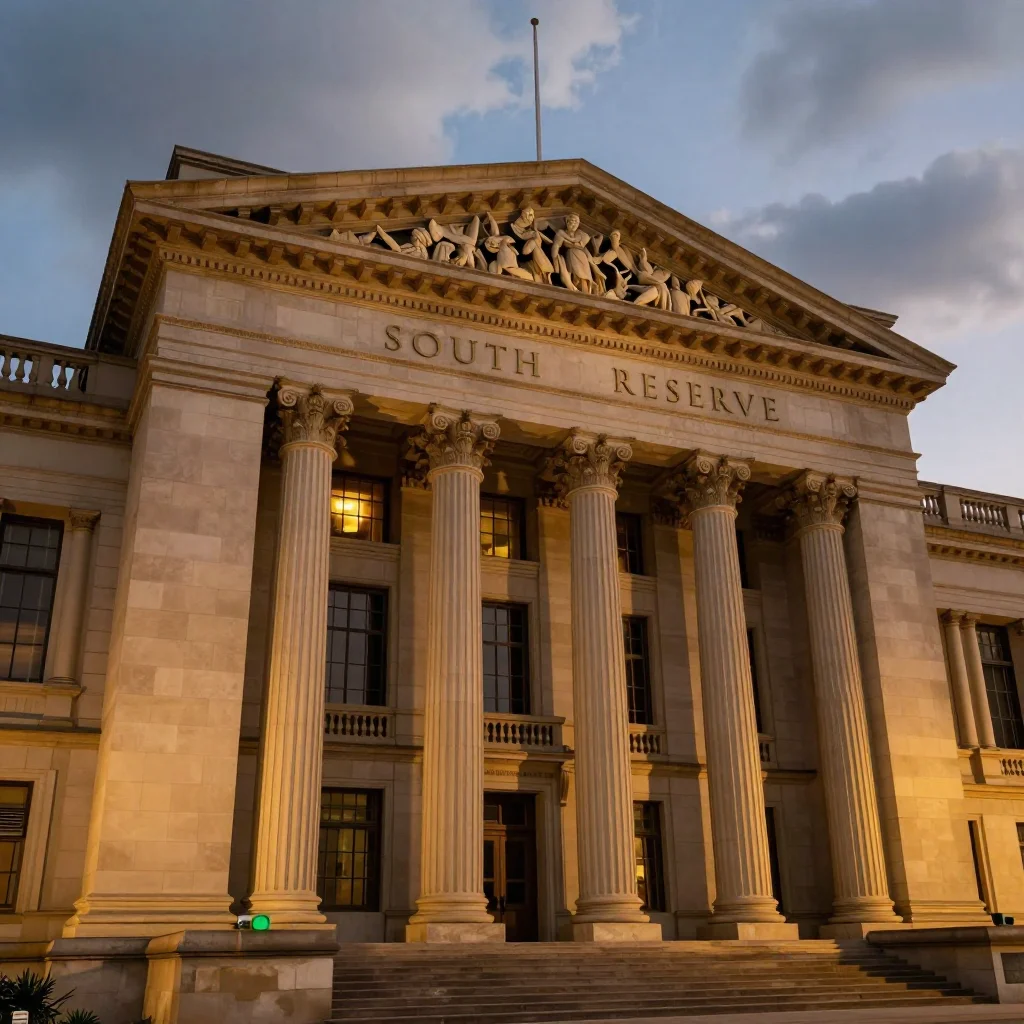

Takeaway 1: Rate Stability Through Year-End — Local Buyers Get Breathing Room

The SARB's Quarterly Projection Model (QPM) shows the rate path remaining broadly stable through the remainder of 2026: Q3 at 6.88%, Q4 at 6.79%. This means local mortgage buyers face no immediate increase in monthly payments at least until the next MPC meeting on September 23.

For Cape Town's property market, this is a significant confidence signal. Robshaw data shows the Mother City currently averages just 18 days on market, with listings down 25% year-on-year — a market in clear supply deficit. In a stable rate environment, buyers who had been waiting on the sidelines due to rate hike fears may re-enter, further tightening supply and pushing prices higher.

7.00%
SARB Repo Rate
(4-2 Vote to Hold)
6.88%
QPM Q3 2026
(Gradual Easing Path)
6.24%
QPM End-2027
(Clear Cutting Room)

Cape Town's annual price growth stands at 12.9%, with the luxury segment at 9-11% and the northern suburbs exceeding 13%. In a stable rate environment, this price momentum is likely to continue. PropFlow360 data shows sectional title rental yields of 8-10% (full occupancy income), City Bowl net yields of 7.5-7.9%, and combined yields of 7.3-8.6% — highly attractive in any interest rate environment.

Takeaway 2: The Fuel Price Plunge — SARB's Key to Holding Rates

Effective July 1, South African petrol prices dropped R1.96/litre and diesel prices fell R3.14-3.58/litre. This is not just good news for motorists — it was the decisive factor enabling the SARB to hold rates despite 5.0% CPI.

The fuel price decline creates a three-layer tailwind for Cape Town property:

  • Direct construction cost reduction — Diesel powers transport vehicles and construction machinery. A R3.58/litre diesel cut directly reduces material transport and on-site construction costs, expanding margins for developers and reducing new-build price pressure
  • Inflation pressure relief — Oil is a major CPI component. The SARB's 16.5% downward revision in its Q3 oil assumption (from $94 to $78.50/barrel) directly lowers the inflation trajectory, creating policy space for rate stability and future cuts
  • Improved buyer purchasing power — Lower fuel costs reduce commuting expenses, effectively increasing household disposable income and enhancing mortgage affordability and purchase intent
"The sharp downward revision in oil price assumptions was the key variable in this decision. We are calibrating policy to achieve the 3% inflation target, ensuring current supply shocks do not de-anchor inflation expectations." — SARB Governor Lesetja Kganyago, July 2026 MPC Statement

Takeaway 3: 2027 Rate Cut Expectations — A Strategic Entry Window for Foreign Buyers

The QPM baseline shows the SARB beginning a cutting cycle in 2027, with rates reaching 6.24% by end-2027 and averaging 5.88% by 2029. What does this mean for Cape Town property investors?

First, rate cuts directly lower mortgage costs, historically triggering significant price appreciation in South African real estate. For foreign cash buyers entering before the cutting cycle begins, the opportunity is twofold: (1) current price levels not yet inflated by rate cut expectations, and (2) capital appreciation acceleration once cuts commence.

Second, foreign buyers continue to benefit from a favourable exchange rate. The rand trades at approximately R16.47/$, meaning Cape Town property remains attractively priced for buyers holding USD, EUR, and Asian currencies.

DingYao Advisory's Phase 1 solution (entry threshold R 16,000,000) demonstrates compelling dual-engine returns in this environment:

  • Property Engine — R 10,450,000 allocated to curated Cape Town property, appreciating at 12.9% annually, generating full-occupancy rental income of R 836,000-1,045,000/year
  • Interest Engine — R 5,000,000 held in a Standard Bank Wealth savings account, earning approximately R 335,000/year (~6.5% p.a.)
  • Combined Annual Cash Flow — R 1,171,000-1,380,000/year

All transaction funds are secured through lawyer trust protection (律師信託保護), ensuring end-to-end capital security from fund remittance to title deed registration.

Property Appreciation

Cape Town average 12.9% annual growth, luxury 9-11%, northern suburbs 13%+. Momentum sustained in stable rate environment.

Fuel Price Tailwind

Petrol -R1.96, diesel -R3.58 in July. SARB oil assumption cut to $78.50/barrel, easing inflation pressure.

Dual-Engine Returns

Rental R 836,000-1,045,000 + Interest R 335,000 = R 1,171,000-1,380,000/year. Combined yield 7.3-8.6%.

Capital Security

Lawyer trust protection (律師信託保護) ensures end-to-end transaction security, regulated by the Legal Practice Act.

Three Scenarios: SARB's Rate Path Analysis

The SARB's QPM model published three scenario analyses. Investors should prepare based on their risk profile:

  • Baseline Scenario (highest probability) — Q3 2026 at 6.88%, Q4 2026 at 6.79%, end-2027 at 6.24%, 2029 average at 5.88%. Oil at $78.50/barrel, inflation gradually returning to target. Cape Town property continues steady growth
  • Elevated Inflation Expectations Scenario — If inflation expectations de-anchor, rates could peak at 7.17% (Q1 2027), remaining at 6.61% through Q4 2028. Local mortgage buyers face pressure, but foreign cash buyers remain unaffected
  • Adverse Oil Scenario ($100/barrel) — If Middle East geopolitical risks escalate, oil could return to $100/barrel, pushing rates to 7.27% (Q3 2026). However, the SARB's sharp downward revision makes this scenario less likely

Notably, even in the most adverse scenario, Cape Town's property fundamentals — supply-constrained market structure, sustained semigration inflows, and strong foreign buyer demand — remain intact. PropFlow360 data shows foreign buyers account for 28% of Cape Town's R10 million+ luxury segment, ESG-certified properties command a 12-17% premium, and properties within 500m of MyCiTi stations enjoy a 6-9% price premium.

Conclusion: A Strategic Entry Window for Cape Town Property

The SARB's 4-2 rate hold delivers rare policy certainty for Cape Town's property market. With fuel prices declining, inflation expectations easing, and 2027 rate cuts on the horizon, the current environment may represent the most strategically compelling entry window of the second half of 2026.

For international investors, the stable rate environment reduces competition from local mortgage-dependent buyers while the rand exchange rate advantage persists. DingYao Advisory's Phase 1 solution, with its R 16,000,000 entry threshold, delivers robust cash flow and capital appreciation potential through its dual-engine structure of property and interest income.

The next MPC meeting is scheduled for September 23. Until then, the rate stability window provides investors ample time for evaluation and decision-making. Key variables to monitor include August's CPI release and global oil price trends — these will be decisive factors in the SARB's subsequent policy direction.

Ready to explore how the SARB rate decision affects your Cape Town investment strategy? Book a one-on-one consultation for a personalised investment assessment.