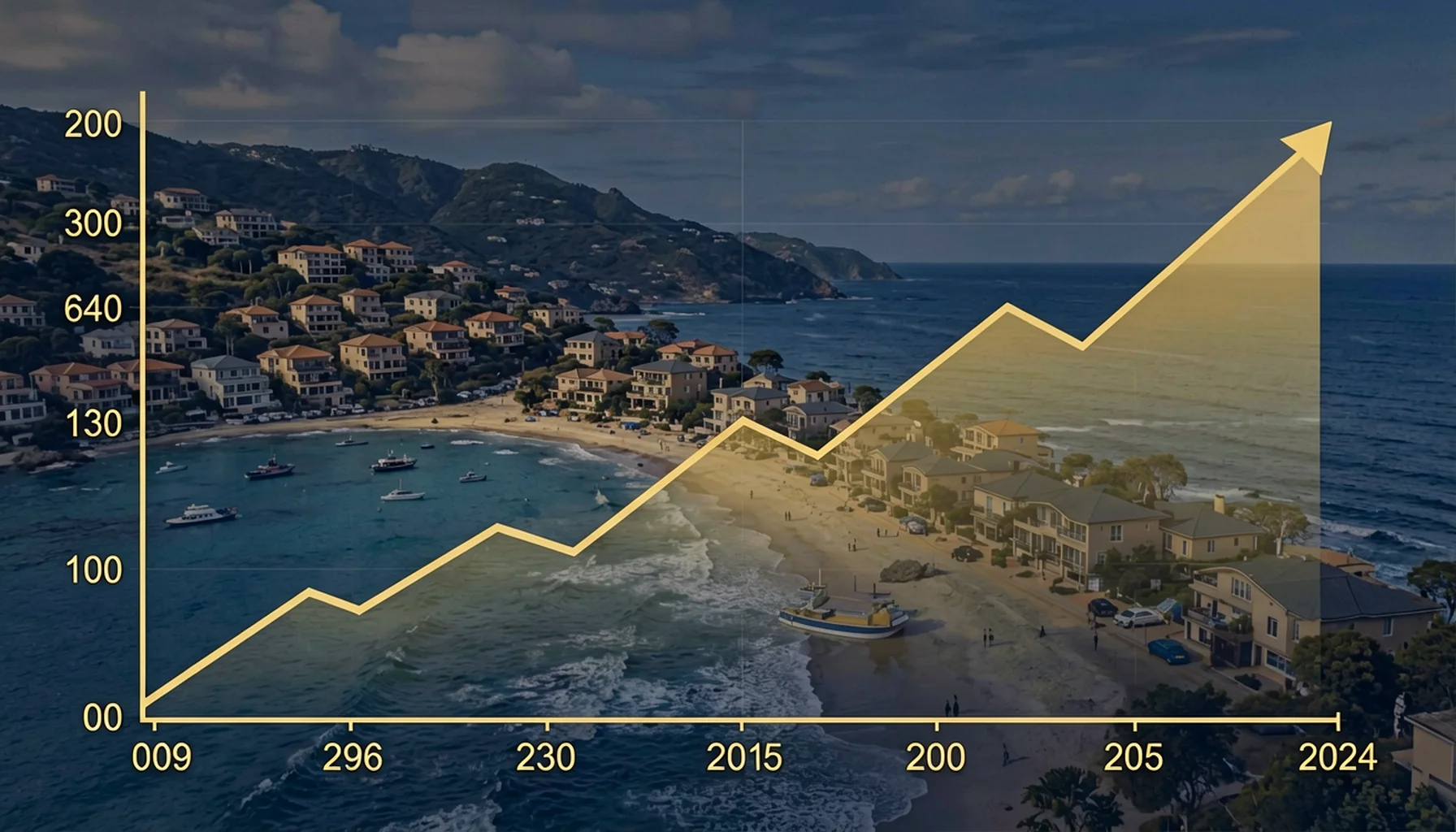
On July 23, 2026, the South African Reserve Bank's Monetary Policy Committee will deliver its latest rate decision. According to Polymarket prediction market data, the probability of a 25 basis point hike stands at 47.5%, with a 34.5% chance of a hold and only 18% probability of a cut. This follows the May 2026 hike that brought the repo rate to 7.0% (prime 10.50%), and markets are pricing in nearly a 50-50 chance of further tightening.

For Cape Town's property market, this is far from a routine policy decision — it marks a critical inflection point in a structural divergence that has been building for months. With supply tightening sharply (inventory down 12.5% in six months) and rental demand at record levels, the direction of interest rates will determine which side of the market — local mortgage-dependent buyers or overseas cash investors — emerges stronger. This article examines the three-layer impact of a potential SARB hike on Cape Town property and why overseas cash buyers may be uniquely positioned to benefit.

Key Takeaway: A 47.5% probability of a SARB rate hike on July 23 creates headwinds for local buyers but a structural opportunity for overseas cash investors. Cape Town inventory has dropped 12.5% in six months, supply constraints support prices, and rising rates boost rental demand. The DingYao Dual-Engine strategy (R 16,000,000 entry, R 1,171,000-1,380,000 annual cash flow) is designed to thrive in this environment, with the savings deposit component rising alongside SARB rate increases.
I. The SARB's Dilemma: Balancing Inflation Pressures and Economic Growth

To understand the SARB's current policy predicament, it's worth tracing the 2026 rate trajectory. The January and March MPC meetings both held the repo rate at 6.75%, but the May meeting delivered a surprise 25bps hike to 7.0%, driven by CPI persistently above the SARB's 4.5% midpoint target and rand depreciation pressures.

Entering July, the decision-making environment has grown more complex. Global inflation pressures persist due to supply chain restructuring and energy price volatility, while South Africa's domestic economy remains weak with GDP growth of approximately 1.3%. Investec Treasury Economics described the May hike as "insurance against second-round effects" and now sees rates on hold through Q3 2026. However, Nedbank CIB has revised its terminal repo forecast up by 25bps, indicating that market expectations for further tightening are building.

47.5% Hike Probability

Polymarket prediction market shows nearly 50-50 odds of a 25bps hike at the July 23 MPC meeting.

Repo 7.0% → 7.25%

A hike would push prime from 10.50% to 10.75%, the highest level since early 2024.

Rate Differential Pressure

The Fed holding rates high forces the SARB to maintain differentials to prevent capital outflows and rand weakness.

CPI Above Target

Inflation persistently above the 4.5% midpoint gives the SARB a hawkish bias, prioritizing preemptive action.

II. Supply Crunch: Cape Town's Structural Tightening

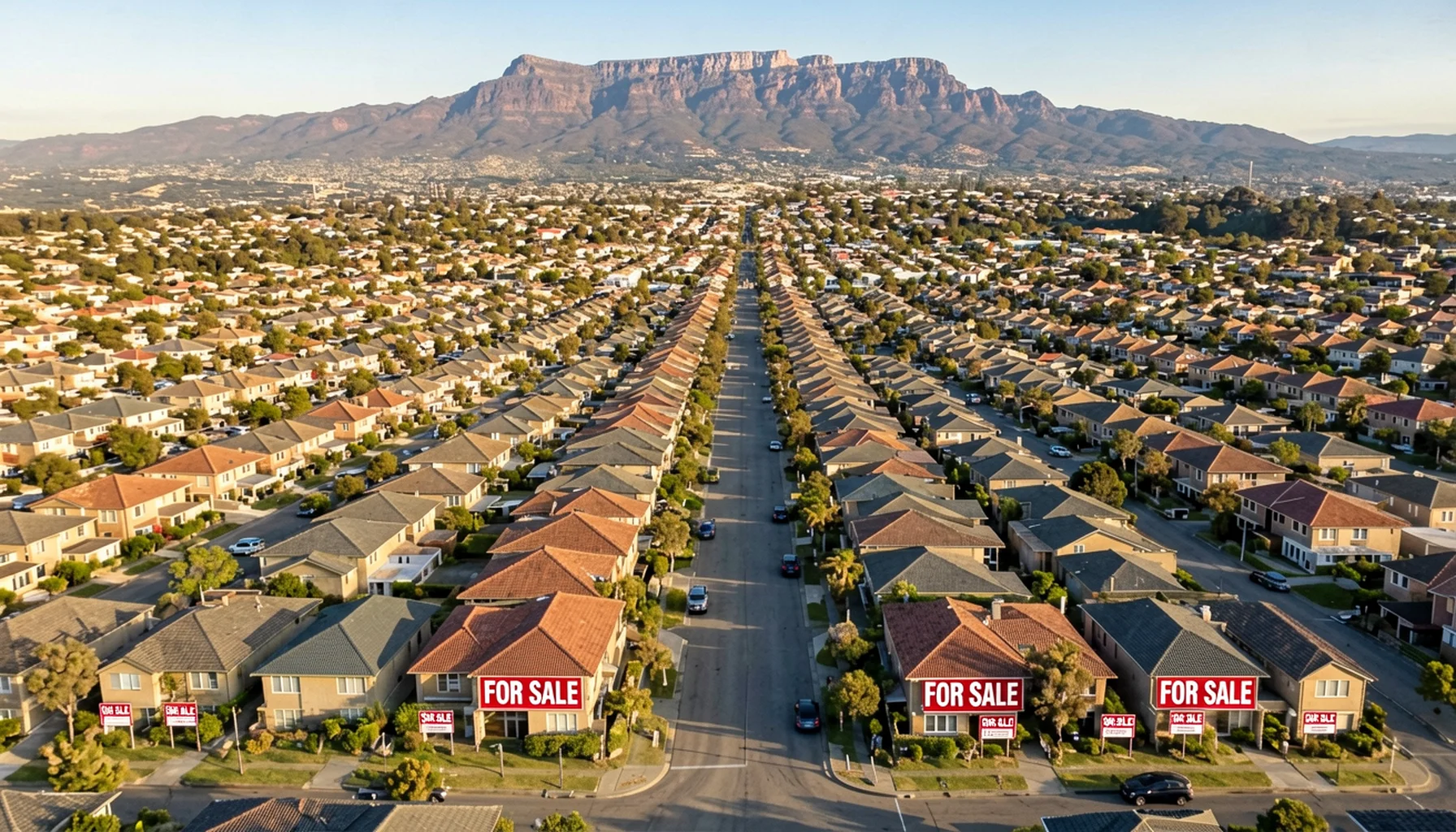
Beyond interest rate policy, the most powerful force shaping Cape Town's property market is supply-side tightening. According to the latest Property24 data, Cape Town's property inventory dropped from 6,584 units in December 2025 to 5,759 units in May 2026 — a 12.5% decline in just six months. This figure reflects multiple converging factors:

  • Accelerating Semigration — Approximately 35% of all inter-provincial migration now flows to the Western Cape, with Gauteng residents continuing their southward trek
  • Land Supply Constraints — Developable land in sought-after areas like the City Bowl and Atlantic Seaboard is nearly exhausted
  • Approval Bottlenecks — Municipal planning approval cycles remain slow, with new supply unable to keep pace with demand growth
  • 4+ Bedroom Segment Hit Hardest (-15.6%) — The luxury segment faces the tightest supply, providing the strongest price support

The Western Cape has South Africa's lowest vacancy rate at just 1.07%, indicating an extremely tight rental market where landlords hold significant pricing power. For buy-to-let investors, this represents a highly favorable market environment.

III. Three Layers of Structural Divergence in a Rising Rate Environment

When supply tightening meets rising interest rates, Cape Town's property market undergoes a profound structural divergence across three dimensions:

Layer 1: Local Buyers vs. Overseas Cash Buyers

For local mortgage-dependent buyers, a rate hike directly reduces purchasing power. On a R 2,000,000, 20-year bond, prime moving from 10.50% to 10.75% adds approximately R 280 to the monthly repayment. While modest in isolation, the cumulative effect is significant — prime has oscillated from 11.75% (2023 peak) down to 10.25% and back up to 10.50%, creating uncertainty that keeps many potential buyers on the sidelines.

For overseas cash buyers, however, the SARB's rate decision has zero impact on their cost of acquisition. This creates a unique structural advantage: as local competitors retreat due to rising borrowing costs, cash buyers gain wider negotiation margins. BetterBond data shows that foreign buyers already account for over 40% of transactions above R 10,000,000 in Cape Town — a share that is likely to increase further in a rising rate environment.

Layer 2: Rental Market vs. Sales Market

The impact of rate hikes on the rental market diverges sharply from the sales market. When borrowing costs rise, more households choose to rent rather than buy, directly boosting rental demand. According to REMAX Living's Premium Portfolio data, average monthly rents for premium Cape Town properties have reached R 22,356 and continue their upward trajectory.

For buy-to-let investors, this translates into higher rental yields. The Africanvestor reports that City Bowl one-bedroom apartments generate net yields of 7.5-7.9%, far exceeding most major global cities. In a rising rate environment, rental demand strengthens further, potentially expanding yields.

Layer 3: The Dual-Engine Strategy's Rate Immunity

The DingYao Dual-Engine strategy demonstrates a unique structural advantage in a rising rate environment. The strategy allocates R 16,000,000 across two engines:

  • Engine 1: Premium Cape Town Property (R 10,450,000) — Annual rental income of R 835,000-940,000, yielding 8-9%
  • Engine 2: Standard Bank Wealth Savings (R 5,000,000) — Annual interest of R 336,000-440,000, with rates rising alongside SARB increases

The critical insight: when the SARB hikes rates, Engine 2's interest income increases in tandem, partially offsetting any moderation in property price growth from Engine 1. This dual-engine structure actually becomes more resilient in a rising rate environment — total annual cash flow of R 1,171,000-1,380,000, representing a combined yield of 7.3-8.6%.

Dual-Engine Performance in a Rising Rate Environment: If the SARB delivers a 25bps hike in July, the Standard Bank Wealth savings rate is expected to follow, adding approximately R 12,500 to Engine 2's annual interest. This means the Dual-Engine strategy not only withstands rate hikes but may actually deliver higher cash flow as rates rise — a genuine rate-immune investment structure.

IV. Historical Evidence: Cape Town Prices Through Rate Cycles

Looking at the past decade, Cape Town property prices have never experienced a significant decline during rate hiking cycles. According to StatsSA's RPPI (Residential Property Price Index), Western Cape prices grew 9.3% year-on-year in Q1 2026, far outpacing the national average. Even during the 2023 tightening peak when prime reached 11.75%, Cape Town prices maintained positive growth — only the pace of appreciation moderated.

The core logic is straightforward: Cape Town's price drivers are primarily structural (semigration, supply constraints, lifestyle demand) rather than monetary. Interest rates influence transaction velocity and buyer composition, but they do not alter the long-term upward trajectory. For overseas investors with 5-10 year holding horizons, short-term rate volatility matters far less than the power of long-term structural trends.

"Cape Town's property market has proven its resilience across every rate environment. What truly determines price direction is the city's structural ability to attract talent and capital — not the MPC's quarterly decisions." — FNB Property Barometer Analyst

V. The Strategic Window for Overseas Cash Buyers

Synthesizing the above analysis, July 2026 presents a rare structural entry window for overseas cash buyers. Here is a comprehensive assessment of the current market environment:

Market Factor Impact on Local Buyers Impact on Overseas Cash Buyers
SARB Rate Hike Reduced purchasing power, higher borrowing costs No impact, fewer competitors
Supply Crunch -12.5% Fewer choices, price pressure Asset scarcity premium, strong long-term appreciation
Strong Rental Demand Rising rents, higher entry barriers Higher rental yields, more stable cash flow
Weak Rand Higher import costs Currency tailwind, enhanced purchasing power
Foreign Share 40%+ Increased competition Market validation, assured liquidity

Overseas cash buyers hold an advantage or neutral position across all five factors. This is not coincidental — Cape Town's property market is structurally designed to attract global capital, and the SARB's rate policy only accelerates this trend.

VI. How to Capitalize on This Structural Window

For international investors considering Cape Town property, here are actionable strategies for the current environment:

01

Target the Tightest Supply Zones

City Bowl, Atlantic Seaboard, and Southern Suburbs — areas with the most severe inventory declines — offer the strongest price support in a rising rate environment. Property24 data confirms these zones have the steepest inventory drops, with limited negotiation room but the highest long-term appreciation certainty.

02

Evaluate Rate-Immune Investment Structures

The Dual-Engine strategy's savings deposit component rises with SARB rate increases, providing a natural hedge. In the current environment of elevated hike expectations, this structural advantage is particularly valuable.

03

Leverage the Weak Rand Window

The Rand's long-term weakness provides a significant currency tailwind for foreign-currency buyers. For investors denominated in USD, TWD, or other hard currencies, the combined effect of currency appreciation and asset growth can substantially amplify total returns beyond nominal yield figures.

04

Engage Professional Structuring

Through DingYao Advisory's end-to-end service, investors receive complete structural planning — from legal frameworks and tax optimization to capital allocation. Garlicke & Bousfield (est. 1895) provides legal护航, while Standard Bank Wealth handles capital custody.

Investor Guidance: The July 2026 SARB MPC meeting, regardless of its outcome, will further accelerate the structural divergence in Cape Town's property market. For overseas cash buyers, this is not a moment for concern — it is a window for action. Supply constraints support prices, rising rates suppress competitors, rental demand boosts yields, and the weak Rand provides currency advantages. Four forces converging simultaneously create a rare structural entry opportunity. Historical patterns show that entry during supply-tightening and rate-peak convergence windows consistently delivers optimal negotiation conditions and long-term capital appreciation.

Conclusion: Strategic Opportunity in Structural Divergence

The SARB's July MPC meeting represents one of the most significant macro events for Cape Town property in 2026. Whether the decision is a hike, a hold, or a cut, its deeper impact lies in accelerating the market's structural divergence — widening the gap between local mortgage-dependent buyers and overseas cash investors.

For international investors, the current market environment presents a rare structural window: supply constraints (-12.5%) support prices, rising rates suppress local competition, strong rental demand boosts yields, and the weak Rand provides a currency tailwind. Four factors converging simultaneously make Cape Town one of the most compelling property investment destinations globally.

The DingYao Dual-Engine strategy (R 16,000,000 entry, R 1,171,000-1,380,000 annual cash flow) is purpose-built for this structural environment — combining property rental income with savings deposit interest to deliver stable cash flow regardless of the rate cycle. Backed by Garlicke & Bousfield's legal护航 (including lawyer trust protection / 律師信託保護) and Standard Bank Wealth's capital custody, it provides international investors with a complete, professionally structured pathway into Cape Town property.

The SARB July MPC meeting is approaching. Now is the optimal time to evaluate your Cape Town property investment strategy. Book a one-on-one consultation for a personalized structural assessment.