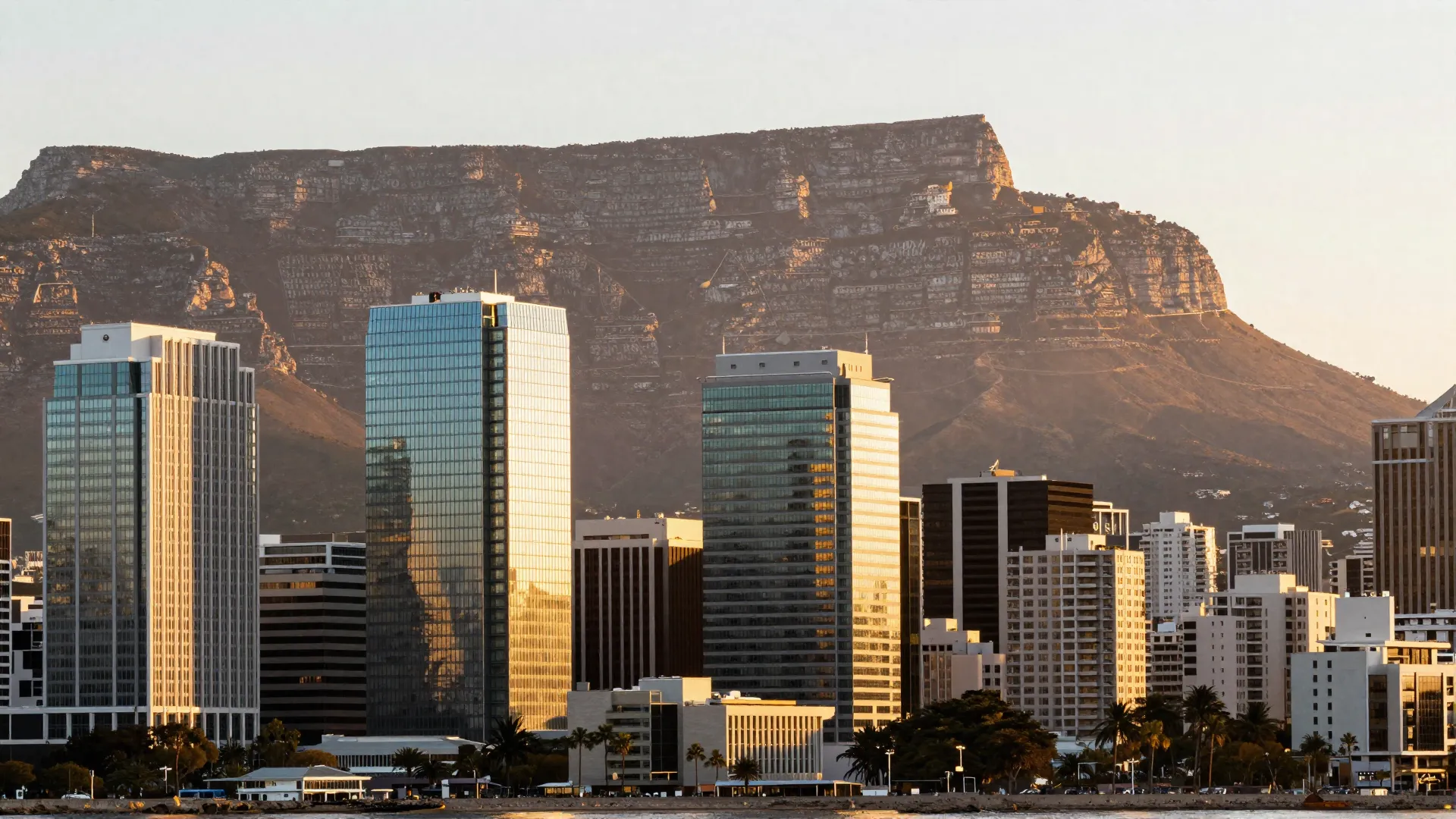
Cape Town Skyline with Table Mountain
Property Investment April 5, 2026 14 min read

South Africa Investment Opportunities 2026 : Post-G20 Real Estate Strategy

In 2026, South Africa stands at a historical turning point. G20 Summit success, interest rates at 10.75%, Rand still undervalued—foreign investors face a rare "double return" window. This article provides conservative, balanced, and aggressive strategies with in-depth analysis of Cape Town, Johannesburg, and Durban opportunities and risks.

GDP Growth 1.6%-2.0%
Prime Rate 10.75%
USD/ZAR 16.80
LP
Leo Pan

CEO, DingYao Advisory

In 2026, South Africa stands at a historical turning point. From the international spotlight of successfully hosting the G20 Summit in 2025, to the macroeconomic environment of slowing inflation, declining interest rates, and stabilizing currency—this nation once called the "Gateway to Africa" is undergoing a profound economic restructuring. For overseas investors, this may represent a significantly underestimated opportunity window.

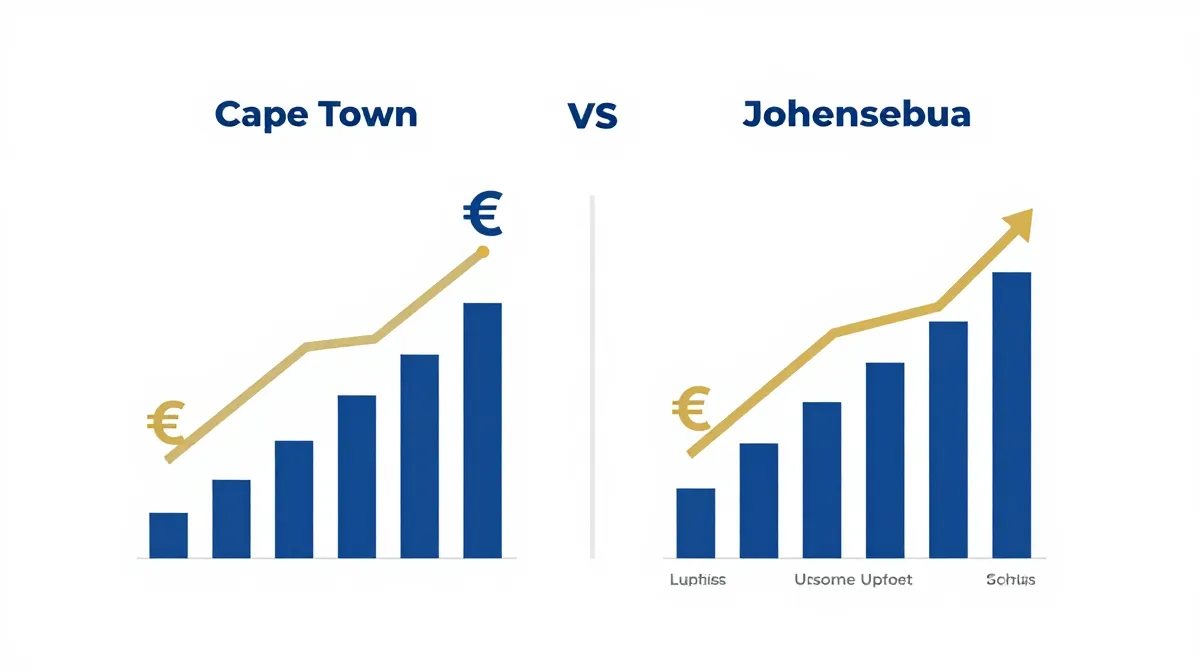
Cape Town, Johannesburg, and Durban skylines representing South African real estate diversity
South Africa's three major cities: Cape Town, Johannesburg, and Durban each offer unique investment opportunities

I. South Africa's Economic Outlook for 2026

1.1 GDP Growth Forecast: Recovery from the Bottom

According to the IMF's January 2026 forecast, South Africa's GDP growth for 2026 is projected at 1.6% to 2.0%, accelerating from 1.4% in 2025. While modest by global standards, this represents significant improvement for a country that has experienced years of low growth.

The United Nations South Africa Office's January 2026 Macroeconomic Trends Report notes that South Africa's outlook is "steadily improving," benefiting from:

  • 1 Government of National Unity (GNU) Stabilization: Since GNU formation in May 2024, political uncertainty has decreased significantly and investor confidence is recovering.
  • 2 G20 Legacy Effect: South Africa's 2025 G20 presidency successfully showcased its investment potential, with noticeably increased FDI interest.
  • 3 Load Shedding Reduction: State power utility Eskom reduced power outage days to near zero by late 2025, providing a more stable energy environment.

1.2 Inflation and Monetary Policy: Declining Rates Create Investment Window

Following SARB's interest rate cutting cycle that began in H2 2025, the monetary policy environment in 2026 remains accommodative. As of March 2026, the Repo Rate stands at 7.25% with Prime Rate at 10.75%—down 100 basis points from the 2024 peak of 11.75%.

According to Reuters' March 2026 report, the market generally expects SARB to have further room for rate cuts in 2026, with inflation expected to remain in the lower half of the 3%-6% target range.

For real estate investors, this means:

  • Reduced Purchase Costs: Lower interest rates directly reduce monthly mortgage payments
  • Improved Cash Flow: For leveraged investors, reduced financing costs improve returns
  • Enhanced Market Liquidity: Lower rates typically stimulate housing demand

1.3 Employment and Consumer Confidence

While unemployment remains high (~32%), structural improvements appeared in Q1 2026: stable employment in middle-upper income sectors, consumer confidence recovering to near-neutral levels, and lower rates unleashing pent-up consumer demand driving retail and real estate markets.

II. South African Property Market Trends

2.1 Overall Market Performance: Steady Price Recovery

According to Real Estate Investor magazine's 2026 analysis, 2026 is viewed as the "turning point" for South African house price growth.

Key Data:

  • National Average House Price Growth: Expected at 3.2%-4.5% (significantly up from 1.8% in 2025)
  • Residential Transaction Volume: Expected to grow 15-20% vs 2025
  • New Housing Permits: Double-digit growth in both Gauteng and Western Cape

2.2 Residential Market Segments

Apartment Market: Strong Demand

2026 South African apartment market characteristics:

  • Urban Center Revival: Strong demand in Cape Town CBD and Johannesburg Sandton CBD
  • Small Units Popular: One and two-bedroom apartments favored by young professionals
  • Rental Growth: Apartment rents growing at 5-7% annually in major cities

Standalone Homes: Premium Market Divergence

  • Mid-to-High-End Stable: Demand robust in the R3-8 million price range
  • Luxury Market Recovery: Foreign buyers returning to Atlantic Seaboard and Sandton
  • Entry-Level Shortage: Supply of affordable housing under R1.5 million remains tight

Rental Market: Stricter Airbnb Regulations

In 2026, multiple cities tightened short-term rental regulations. Cape Town requires host registration and limits annual rental days. Long-term rental market benefits relatively, with yields stabilizing.

III. Currency Advantages and Interest Rate Trends

3.1 Rand Exchange Rate: Undervalued Currency

As of March 2026, USD/ZAR maintains a 16.50-17.50 range, significantly stronger than the 18.50 level at end-2024.

FX Leaders analysts predict USD/ZAR may test the 15.00 level in H2 2026 as South Africa's fundamentals improve and the dollar weakens.

Implications for Foreign Investors:

IndicatorEnd 2024March 2026End 2026 Forecast
USD/ZAR18.5016.8015.50-16.00
Currency Movement-+9.2%+15-18%
Asset Appreciation (TWD)-+9.2%+15-18%

Key Insight: For investors in USD, EUR, or Asian currencies (TWD, HKD, SGD), entering South Africa now offers significant currency advantages. Even considering only local currency real estate returns (3-5% annual growth) plus expected currency appreciation, total returns can reach 15-25%.

3.2 Interest Rate Trends and Investment Timing

2025-2026 Interest Rate Trajectory:

  • 2024 Peak: Repo 8.25% / Prime 11.75%
  • End 2025: Repo 7.50% / Prime 11.00%
  • March 2026: Repo 7.25% / Prime 10.75%
  • End 2026 Forecast: Repo 6.75%-7.00% / Prime 10.25%-10.50%

3.3 Return Comparison by City

CityAvg Price (ZAR M)Rental YieldPrice GrowthTotal Return
Cape Town (CBD)2.8-4.55.5-7.0%4-6%9.5-13.0%
Cape Town (Atlantic)8.0-25.0+3.5-5.0%3-5%6.5-10.0%
Johannesburg (Sandton)3.5-6.06.0-8.0%2-4%8.0-12.0%
Johannesburg (North)2.5-4.07.0-9.0%3-5%10.0-14.0%
Durban (Surrounds)1.8-3.07.5-9.5%2-4%9.5-13.5%

IV. Foreign Investment Policy and Environment

4.1 Foreign Property Ownership: Relatively Open

South Africa is one of the few African countries allowing foreigners to freely purchase real estate:

  • ✅ Foreigners can purchase residential, commercial, and agricultural land
  • ✅ No government approval or residency required
  • ✅ Bank mortgages available (typically up to 70% LTV)
  • ✅ Can rent and remit rental income

SARS strengthened foreign property owner tax supervision in the 2026 Budget: rental income declaration required, CGT on sale (40% inclusion rate, max 18%), and up to 15% withholding tax for non-residents on property sales.

4.2 Improved Investment Environment Post-G20

  • Enhanced International Image: G20 Summit boosted South Africa's credibility as an investment destination
  • Improved Policy Transparency: Government committed to improving business environment and simplifying approvals
  • Infrastructure Investment: G20-related investments driving transportation, communications, and energy upgrades

V. Major Investment Region Comparison

5.1 Cape Town: Internationalization and Quality of Life

Cape Town is South Africa's most international city and the preferred destination for foreign investors.

World-Class Quality of Life

Beautiful natural scenery and pleasant climate, rated among the world's most livable cities

Highest Internationalization

English widely spoken, mature expat communities, abundant international schools

Developed Tourism

Short-term rental market active, strong Airbnb demand

5.2 Johannesburg: Economic Hub and High Yields

Johannesburg is South Africa's economic heart, offering more affordable entry and higher rental yields. Yields reach 7-10%, with property prices 30-40% lower than Cape Town.

5.3 Durban: Emerging Potential and High Value

South Africa's third-largest city offers the highest rental yields (8-10%) and lowest entry barriers. Coastal lifestyle with port economy and logistics supporting rental demand.

5.4 Three-City Comparison Summary

DimensionCape TownJohannesburgDurban
Avg Property PriceHighMediumLow
Rental Yield4-6%6-8%8-10%
Appreciation PotentialMedium-HighMediumMedium-High
Quality of Life⭐⭐⭐⭐⭐⭐⭐⭐⭐⭐⭐⭐
Security⭐⭐⭐⭐⭐⭐⭐⭐
Best ForConservative/BalancedBalanced/AggressiveAggressive

VI. Risk Assessment

6.1 Major Risk Factors

Political & Policy Risk

Level: 🟡 Medium

GNU operating relatively stably but with internal divisions. No national elections in 2026, relatively stable policy environment.

Economic & Currency Risk

Level: 🟡 Medium

Growth below potential, Rand volatile but trending toward stability. Mitigate through currency diversification.

Security Risk

Level: 🔴 Medium-High

Crime rate above international average. Choose gated communities and invest in security systems.

Infrastructure Risk

Level: 🟡 Medium

Load shedding significantly improved. Water resources tight in some areas. Verify backup power at properties.

6.2 Due Diligence Checklist

  • ✅ Physical area inspection, day and night
  • ✅ Understand local security conditions and crime statistics
  • ✅ Inspect property structure and maintenance condition
  • ✅ Confirm clear title, no legal disputes
  • ✅ Understand municipal rates and property taxes
  • ✅ Assess rental potential and vacancy risk
  • ✅ Consult local tax and legal advisors
  • ✅ Understand foreign exchange controls and remittance regulations

VII. Strategy Recommendations for Three Investor Types

7.1 Conservative Investors

Profile: Capital preservation priority, stable returns. Horizon: 5+ years, low risk tolerance.

Recommended Strategy:

  • Preferred Areas: Cape Town Sea Point, Green Point, Claremont
  • Property Type: Two-bedroom apartments in gated communities
  • Price Range: R4-7 million (~$240,000-420,000 USD)
  • Financing: 50-60% LTV, lower leverage
  • Target Return: 8-10% total

7.2 Balanced Investors

Profile: Balance between capital appreciation and cash flow. Horizon: 3-7 years, medium risk tolerance.

Recommended Strategy:

  • Preferred Areas: Cape Town CBD/Waterfront, Johannesburg Sandton/Rosebank
  • Property Type: One or two-bedroom apartments
  • Price Range: R3-6 million (~$180,000-360,000 USD)
  • Financing: 60-70% LTV, moderate leverage
  • Target Return: 12-15% total

7.3 Aggressive Investors

Profile: High capital appreciation pursuit, higher risk tolerance. Horizon: 2-5 years, high risk tolerance.

Recommended Strategy:

  • Preferred Areas: Durban Umhlanga/Ballito, Johannesburg emerging northern areas
  • Property Type: Off-plan, land, renovation opportunities, small multi-family
  • Price Range: R2-5 million (~$120,000-300,000 USD)
  • Financing: 70-80% LTV, maximize leverage
  • Target Return: 18-25% total

"South Africa in 2026 is at a unique investment window. The question isn't 'whether to invest' but 'how to invest wisely.'"

Conclusion: Seize the Opportunity, Plan Rationally

Whether you're a conservative investor seeking steady preservation, a balanced investor pursuing balanced returns, or an aggressive investor targeting high growth, South Africa's real estate market offers corresponding opportunities. In 2026, South Africa's investment opportunities are unfolding.

Frequently Asked Questions

Is 2026 a good time to invest in South African real estate?
Yes. 2026 presents a rare investment window: interest rates in a cutting cycle (Prime Rate 10.75%), Rand remains undervalued (USD/ZAR 16.50-17.50), G20 effect enhanced international image, and house prices at a turning point (expected growth 3.2%-4.5%). Foreign investors can enjoy both asset appreciation and currency gains—a rare "double return" opportunity.
What restrictions apply to foreigners buying property in South Africa?
South Africa allows foreigners to freely purchase residential, commercial, and agricultural land without government approval or residency status. Foreigners can obtain bank mortgages (typically up to 70% LTV) and can rent and remit rental income. Note: rental income must be declared, CGT applies on sale (up to 18% for individuals), and non-residents are subject to up to 15% withholding tax on property sales.
Which city is better for investment: Cape Town, Johannesburg, or Durban?
Each city has distinct advantages: Cape Town offers highest internationalization and quality of life, suitable for conservative investors (rental yield 4-6%); Johannesburg has concentrated economic activity with high yields (6-8%), suitable for balanced investors; Durban offers highest yields (8-10%) and lowest entry barriers, suitable for aggressive investors. Choose based on your risk tolerance and objectives.
What are the main risks of investing in South African real estate?
Key risks include: security risk (higher crime in some areas), currency volatility (Rand may fluctuate), political risk (coalition divisions), and infrastructure risk (water/electricity in some areas). Mitigation: choose gated communities, diversify currency exposure, hold assets through trusts, and conduct thorough due diligence.
What is the current interest rate environment in South Africa?
SARB began its rate cutting cycle in H2 2025. As of March 2026, Repo Rate is 7.25% and Prime Rate is 10.75%—down 100 basis points from the 2024 peak of 11.75%. The market expects further cuts in 2026, with Prime Rate potentially falling to 10.25%-10.50%. Now is an excellent time to lock in financing costs.
LP

Leo Pan

CEO, DingYao Advisory

Specializing in South African property, education, retirement, and residency planning. With over 10 years of cross-border investment advisory experience, dedicated to leveraging technology for transparency—helping Taiwanese investors manage wealth and future overseas as if they were present in person.

Limited Window: 2026 Rate Cycle Opportunity

Want to Explore South Africa Investment Opportunities?

From area selection, rental calculations, return analysis to risk assessment—we provide one-on-one free consultation to help you develop a customized South African real estate investment strategy.

7.25%

Repo Rate (March 2026)
Rates still declining

15-25%

Expected Total Return
(incl. currency gains)

3-5 Years

Recommended Holding
Smooth currency fluctuations

Consultation is completely free with no hidden fees. Your information will be kept strictly confidential.

Related Reading: More South Africa Insights