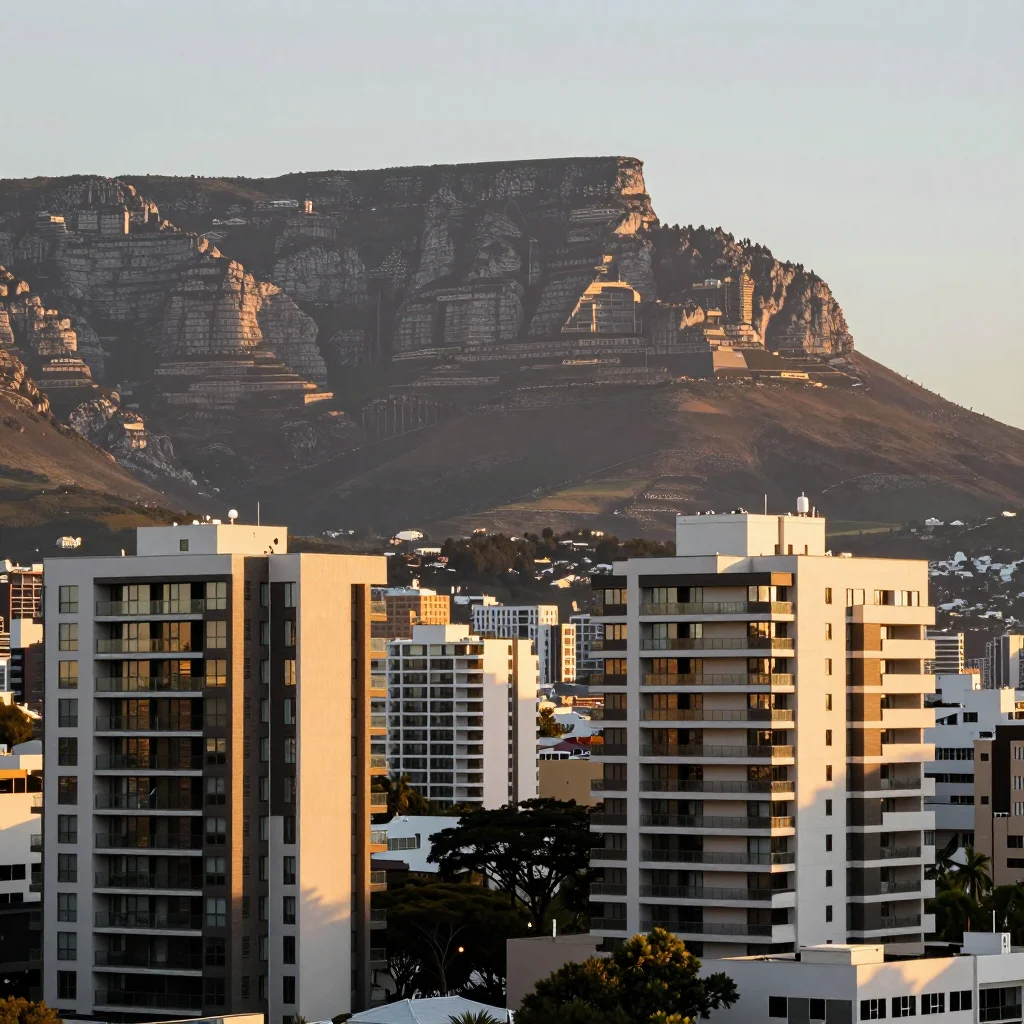
Cape Town Atlantic Seaboard resilience — why the Cape of Storms region is a safe haven for international investors
Resilient Property June 5, 2026 7 min read

Cape Town Atlantic Seaboard's "Recession Resilience": Why the Cape of Storms Region Is a Safe Haven for International Investors

Dropped 8% in the 2008 financial crisis, less than 5% during the 2020 pandemic, and grew 4-6% while the rest of the country stagnated in 2023 — the Atlantic Seaboard has proven its recession resilience through three major crises. Through an attorney trust protection structure, invest R 16,000,000 for a dual-engine annual cash flow of R 1,171,000-1,380,000, keeping your overseas investment rock-steady through global storms.

Three Crisis Validations
8-10% Rental Yield
Attorney Trust Protection

How South Africa's Remote Work Visa Is Driving Cape Town Property Demand: The Structural Link Between Digital Nomads and Overseas Property Investment in 2026

South Africa's Remote Work Visitor Visa is reshaping Cape Town's property market — visa holders transition from short-term rentals to long-term leases, and from leases to home purchases. ZAR 650,976/year income threshold, 3-year stay, first 6 months tax-exempt. R 16,000,000 dual-engine annual cash flow R 1,171,000-1,380,000.

How South Africa's Remote Work Visa Is Driving Cape Town Property Demand: Digital Nomads and Overseas Investment in 2026

Introduction: How Visa Policy Is Reshaping Property Demand

The global remote work wave is rewriting the rules of the real estate market. In the past, the decision path for overseas property investment was: first decide to invest, then choose a city. But the remote work visa has created an entirely new path: first experience life, then decide to invest.

South Africa's Remote Work Visitor Visa, officially launched in late 2024, allows eligible remote workers to legally stay in South Africa for up to 3 years. This policy has not only transformed South Africa's tourism industry but is also reshaping Cape Town's property demand structure — because the conversion rate of visa holders from "short-term visitors" to "potential homeowners" is far higher than that of traditional tourists.

For Taiwanese investors considering overseas asset allocation, understanding the underlying logic of this "visa-driven property demand" is key to grasping new opportunities in Cape Town real estate.


South Africa Remote Work Visa: Core Specifications and Application Requirements

Visa Basics

The core specifications of the South Africa Remote Work Visitor Visa are as follows:

Item Specification
Visa Type Remote Work Visitor Visa
Maximum Stay 3 years (initial 1 year, renewable up to 3 years)
Minimum Income Threshold ZAR 650,976/year (approx. USD $2,900/month)
Tax Benefits First 6 months exempt from SA income tax (foreign income)
Restrictions Cannot work for a South African employer
Medical Insurance Must hold comprehensive international medical insurance
Police Clearance Required
Application Location South African embassy/consulate abroad
Processing Time 4-8 weeks
Application Fee Approx. ZAR 425 + VFS service fee

The Self-Screening Effect of the Income Threshold

The ZAR 650,976/year (approx. USD $2,900/month) income threshold is moderate by global remote work visa standards, but it serves an important "self-screening" function — ensuring visa holders have stable financial capacity to afford Cape Town's cost of living and potential property investments.

This demographic represents DingYao Phase 1's potential client base: high-income professionals with stable overseas income, awareness of asset allocation, and an active interest in long-term overseas living solutions.

Why Is Cape Town the Top Choice for Digital Nomads?

Structural Advantages in Quality of Life

According to Google Search Console data, "cape town quality of life" received 10 impressions with an average ranking of 5.9 over the past 30 days, while "is cape town a good place to live" ranked #1. These search trends show that global remote workers are actively evaluating Cape Town's quality of life.

Cape Town's quality-of-life advantages span multiple dimensions:

The Natural Transition from Living to Investing

The 3-year stay period of the remote work visa provides visa holders with a complete decision cycle from "trial living" to "home purchase." According to market observations, the decision cycle for remote workers transitioning from renting to buying typically takes 6-18 months — far shorter than the 2-3 year cycle for traditional international buyers moving from research to purchase.

A Prospr Real Estate report from April 2026 notes that Cape Town's high-end market is supported by both local wealth and international buyers, with the trend of remote workers converting from tenants to buyers accelerating. PropFlow360's latest report from June 30, 2026, also emphasizes that semigration continues to drive Cape Town property demand, while remote work culture is attracting more talent and investment.

From Visa to Property: A Four-Stage Natural Conversion Path

Stage 1: Short-Term Rental (0-3 Months)

Upon arrival in Cape Town, visa holders typically choose short-term rentals (Airbnb or furnished apartments), concentrated in international communities such as City Bowl, Sea Point, and Green Point. The core goal of this stage is to familiarize themselves with the environment and assess quality of life.

Stage 2: Long-Term Lease (3-12 Months)

After confirming that Cape Town meets their living expectations, visa holders transition to long-term leases. At this stage, monthly rental payments (R 15,000-R 30,000) begin prompting tenants to think: "Instead of paying rent, why not buy a property?"

Stage 3: Purchase Evaluation (12-18 Months)

Extended living experience gives visa holders deep knowledge of Cape Town's various neighborhoods. They begin comparing the long-term costs of buying versus renting, evaluating the asset protection benefits of attorney trust protection, and assessing the investment returns of the dual-engine cash flow model.

Stage 4: Purchase Decision (18-36 Months)

The purchase decision is made within the visa validity period, using DingYao's structured solution to convert leases into property ownership. At this point, the visa holder has transformed from a "remote worker" into an "overseas property investor."

Global Remote Work Visa Competitive Landscape

Country Visa Type Income Threshold (Annual) Max Stay Tax Benefits
------ ------
**South Africa** Remote Work Visa ZAR 650,976 (~$35K) 3 years First 6 months tax-free
Portugal D7/D8 Visa €9,840+ 2 years+ renewable Non-resident rate 20%
Spain Digital Nomad Visa €28,800 1 year+ renewable Non-resident rate 24%
Dubai Virtual Working $5,000/month 1 year Tax-free
Thailand LTR Visa $80,000 10 years Tax-free
Costa Rica Rentista $2,500/month 2 years No special benefits

South Africa's visa threshold (~$35K/year) is moderate globally, but it offers a generous 3-year stay period and 6-month tax exemption, making it highly competitive for remote workers. More importantly, South Africa is one of the few countries that simultaneously offers a "low visa threshold + high property investment return" — a rare combination among remote work visa destinations.

Unique Opportunities for Taiwanese Remote Workers

Solutions for Language and Cultural Barriers

For Taiwanese remote workers, the biggest obstacle to the South Africa Remote Work Visa is not the income threshold, but language and cultural adaptation. DingYao's structured solution fills this gap perfectly — providing one-stop service from visa application consulting, attorney trust protection setup, to property selection and ongoing management.

Integrated Visa + Property Solution

For Taiwanese high-income professionals who meet the visa income threshold (ZAR 650,976/year), DingYao's Phase 1 solution (entry threshold R 16,000,000, property purchase price R 10,450,000, post-transfer deposit R 5,000,000) provides a complete path from visa to property ownership:

Structural Support for Cape Town's Property Market

According to long-term tracking data from the Cape Town Data Portal, house prices in the Western Cape have grown 179.6% from January 2010 to September 2025, far outpacing Gauteng's 79.7%. The year-on-year growth rate comparison for September 2025 is even more striking: Western Cape 9.3% vs Gauteng 3.8%.

The introduction of the remote work visa adds a new structural support to this long-term trend. The continuous inflow of visa holders not only creates rental demand but also generates new purchase demand in the high-end market.

Internationalization of the High-End Market

BetterBond data shows that foreign buyers already account for over 40% of R10M+ high-end transactions in the Western Cape. The addition of remote work visa holders as "new international buyers" is further accelerating the internationalization of the high-end market.

Frequently Asked Questions (FAQ)

Q: Can Taiwanese citizens apply for the South Africa Remote Work Visa?

Yes. The South Africa Remote Work Visa is open to all nationalities. Taiwanese passport holders simply need to meet the income threshold (ZAR 650,976/year) and provide a police clearance certificate and medical insurance to apply.

Q: Can visa holders buy property in South Africa?

Yes. South Africa has no nationality restrictions on property purchases. Visa holders can buy property in their personal name or through an attorney trust protection structure.

Q: Do I need to pay tax on rental income during the visa period?

Foreign income is exempt from South African income tax for the first 6 months. After 6 months, global income must be declared according to South African tax law. We recommend consulting a tax professional before purchasing property.

Q: What happens to my property if my visa expires?

Property ownership is not affected by visa status. Even if you leave after your visa expires, you can continue managing your property through DingYao's management solutions and enjoy the dual-engine cash flow returns.

Q: Can the Remote Work Visa lead to permanent residency?

The Remote Work Visa itself does not directly lead to permanent residency. However, long-term residence and property investment can serve as favorable factors when applying for other visa categories in the future.

Conclusion: A New Era of Visa-Driven Property Investment

The launch of South Africa's Remote Work Visa has opened a door for global remote workers to experience Cape Town. But this is more than just a policy update — it is creating an entirely new model of overseas property investment: experience first, then invest; live first, then own.

For Taiwanese high-income professionals and remote workers, this represents a unique window of opportunity. A reasonable visa threshold, exceptional quality of life in Cape Town, and a clear property investment return structure — the combination of these three factors creates a rare overseas asset allocation opportunity.

If you are considering overseas property investment and would like to learn more about the integrated solution combining South Africa's Remote Work Visa with Cape Town property investment, we welcome you to book a free consultation. DingYao's professional team will provide end-to-end service from visa application to property purchase.

---

---

Cape Town Sea Point residential neighborhood street view
Remote work and visa lifestyle concept

Ready to Start Your Cape Town Property Journey?

From visa application to property purchase, DingYao provides one-stop service. Book your free consultation today.

Consult Now

References & Data Sources

  • PropFlow360 — Cape Town Property Market Analysis (June 30, 2026)
  • Prospr Real Estate — Cape Town Market Overview (April 2026)
  • SettledNomad — South Africa Remote Work Visa Guide (2026)
  • AbroadScope — South Africa Digital Nomad Visa Guide (2026)
  • Bowmans Law — Visa Regulatory Analysis (2026)
  • Metatlas — Cape Town Cost of Living & Remote Work Data (2026)
  • BetterBond — International Buyer Report (February 2026)
  • Cape Town Data Portal — Long-Term House Price Tracking Data
SH

Scott Huang | Business Development

DingYao Advisory — Your South Africa Property Partner

⚠️ Disclaimer: This article is for informational purposes only and does not constitute investment advice. Overseas property investment involves currency risk, market fluctuations, and regulatory changes. Please consult a professional advisor before investing. Rental income is based on full occupancy (income contingent on tenancy) and is not a guaranteed fixed return.

FAQ

Frequently Asked Questions

The Fiercer the Storm, the More Valuable the Safe Haven

Invest securely in the Atlantic Seaboard Phase 1 through an attorney trust protection structure, with a dual-engine annual cash flow of R 1,171,000-1,380,000

Consult the Atlantic Seaboard Property Solution Now

Related Reading