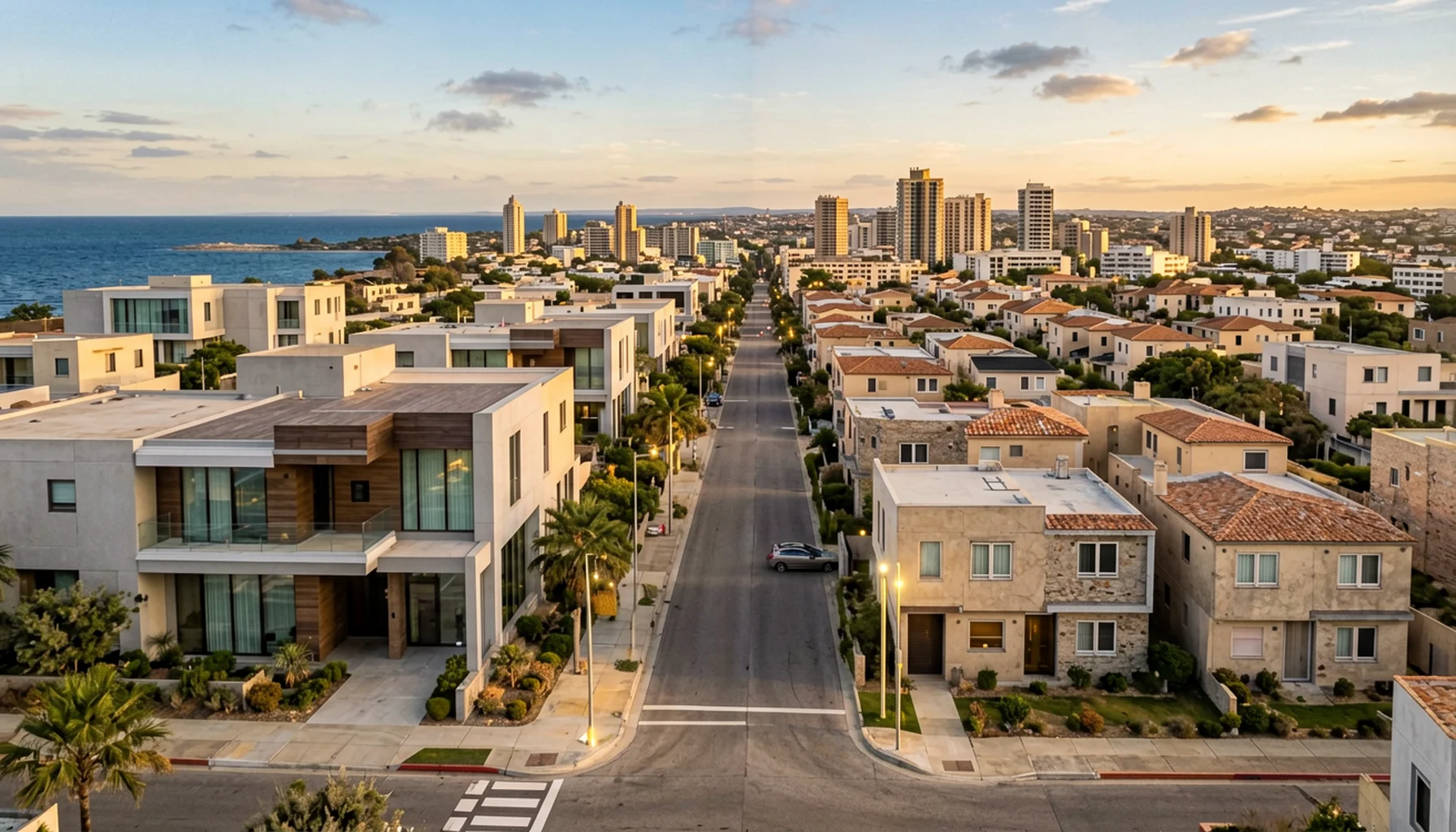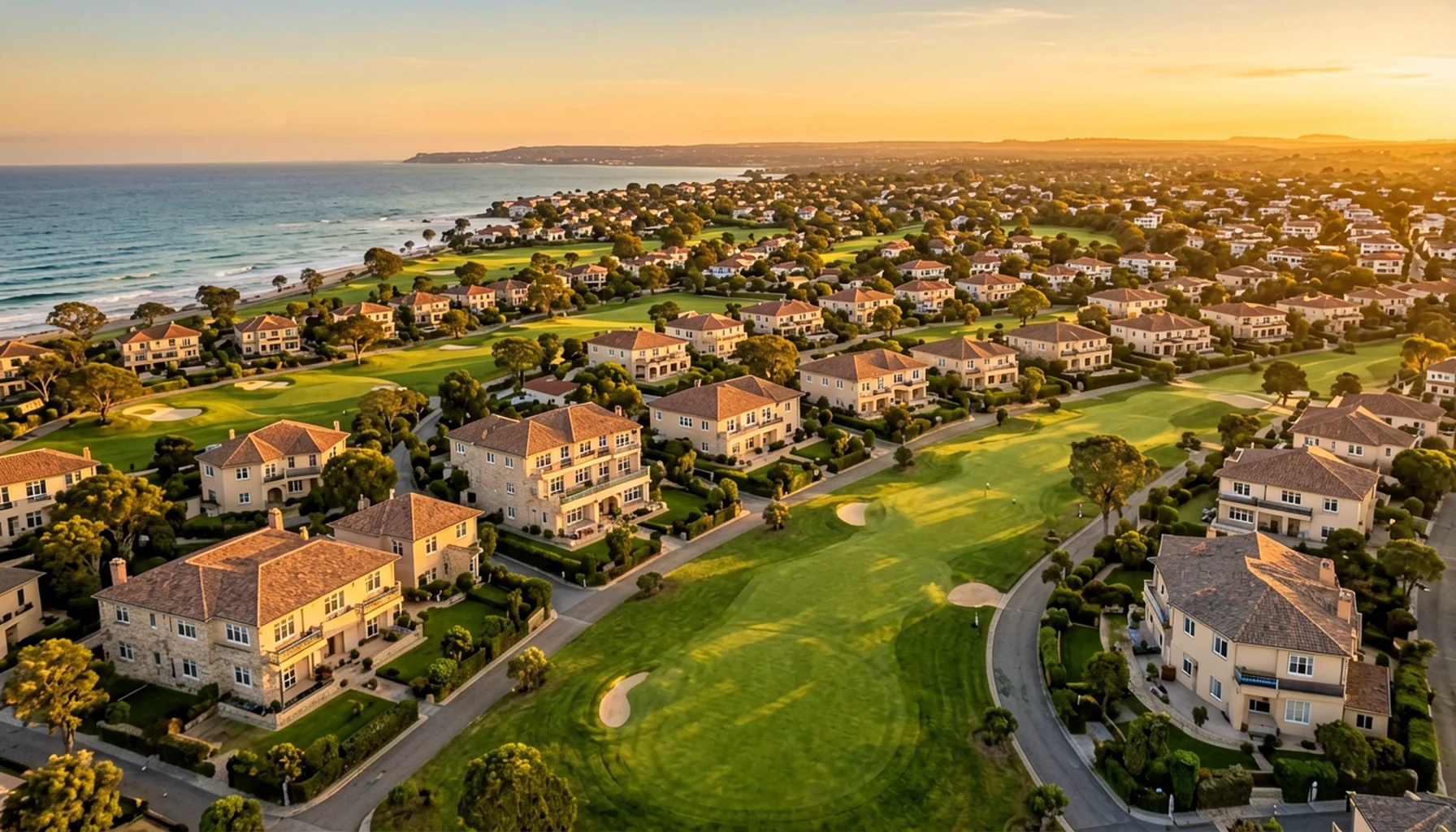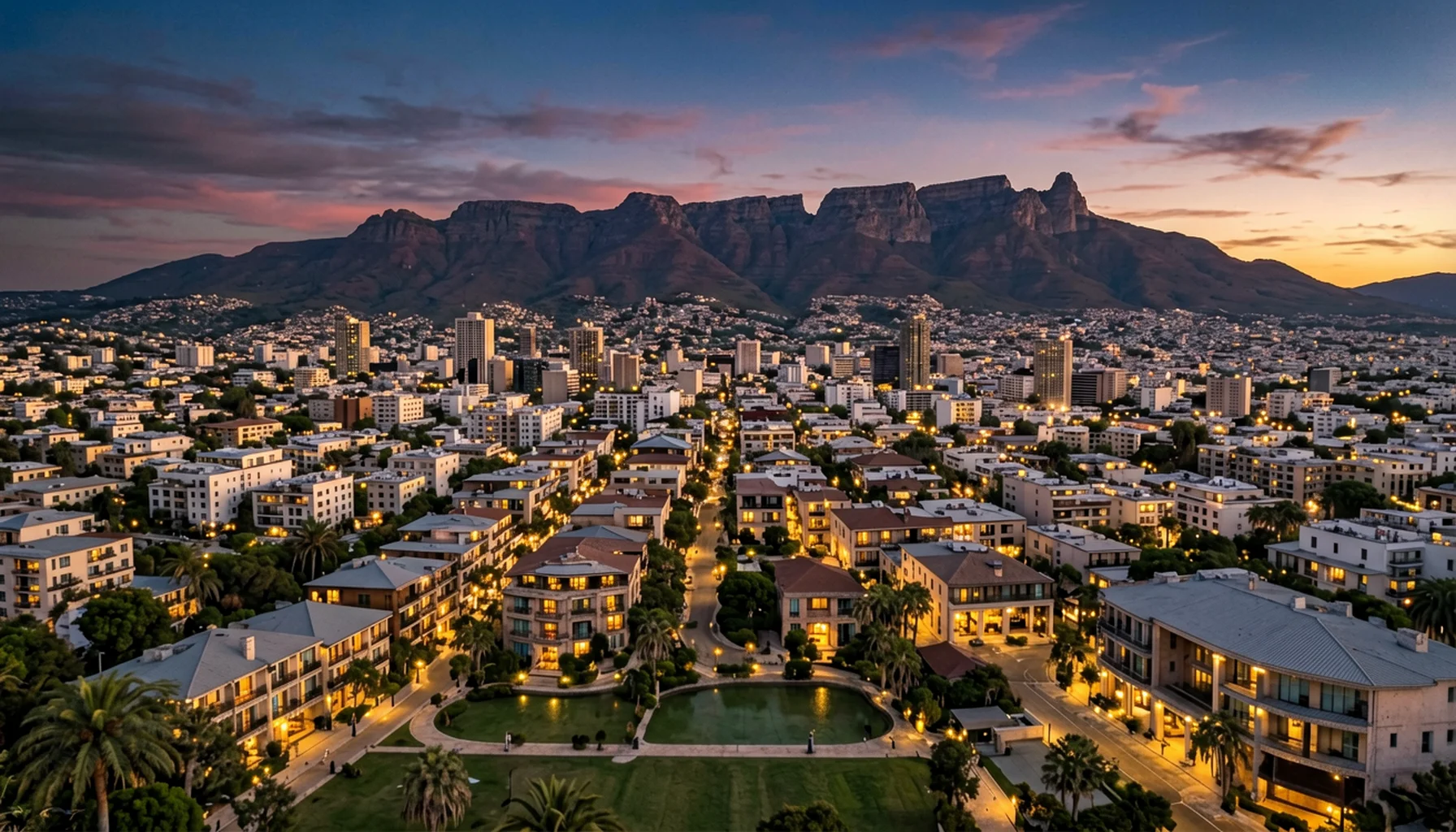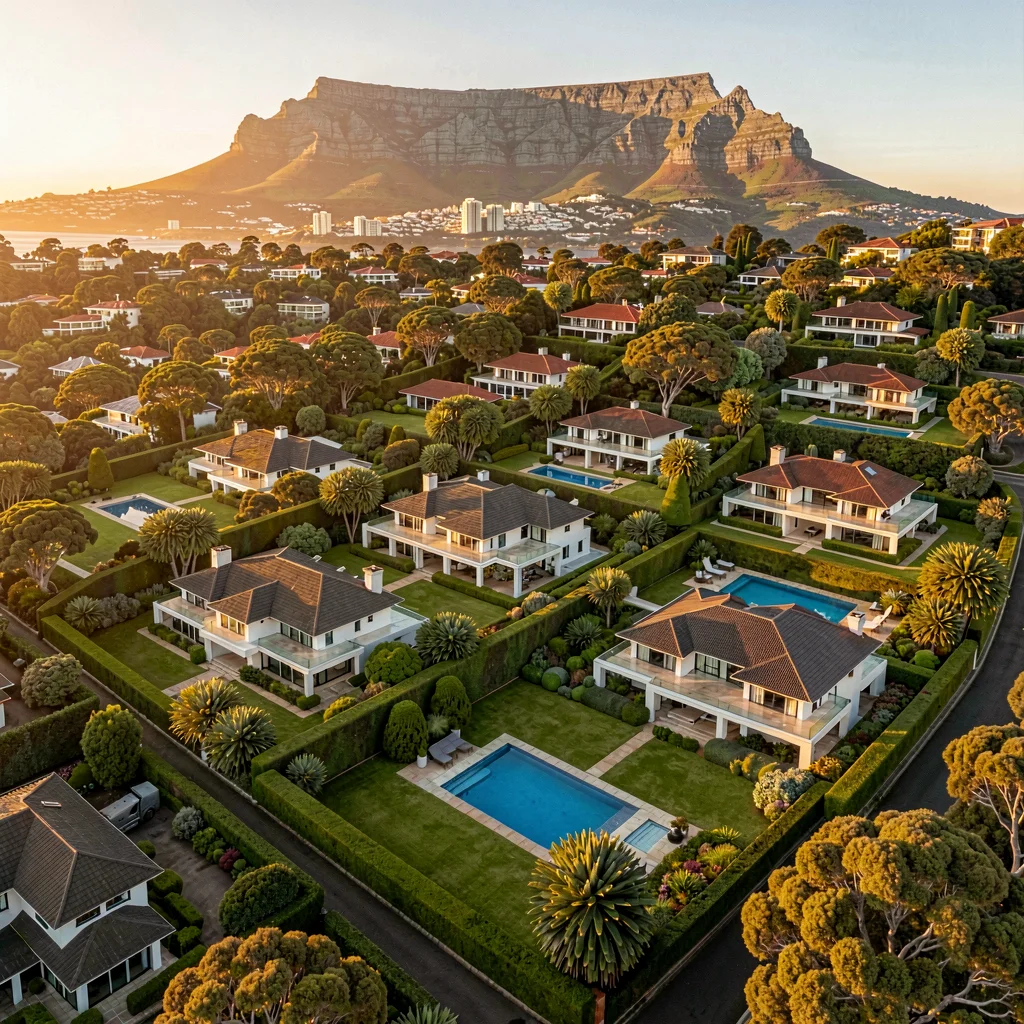
Two data points simultaneously shook South Africa's property market in July 2026. eNCA's "Number of the Day" revealed that foreign buyers account for 39% of all property transactions above R20 million (approximately USD 1.1 million) in Cape Town. Simultaneously, The Citizen reported that luxury property prices in Cape Town's Southern Suburbs continue to surge — Constantia Upper now averages R26 million, while Bishopscourt has breached R30 million, with prices doubling or even tripling over five years.
Together, these data points paint a clear market reality: Cape Town's high-end property market is no longer a "local market" — nearly four in ten transactions are driven by international capital, and price trends in premium suburbs have completely decoupled from South Africa's domestic economic cycle. 2oceansvibe's analysis following the SARB's July rate decision further confirms that South Africa's property market is rapidly splitting into two distinct markets.
Key Insight: Cape Town's luxury property market (R16M+) has formed a "parallel market" — immune to SARB interest rates, unaffected by local inflation pressures, and unconstrained by mortgage tightening. This market is driven by international cash buyers, high-net-worth semigration families, and institutional capital, with a price discovery mechanism entirely decoupled from the mainstream market. For foreign investors, this is not just an opportunity — it is a structural competitive advantage.

39% Foreign Buyers: International Capital Flowing into Cape Town's Luxury Market
The data published by eNCA on July 21 is striking: in Cape Town property transactions above R20 million, foreign buyers account for 39%. This means that nearly 4 out of every 10 high-end transactions involve international buyers — a proportion far higher than any other South African city and exceeding most comparable global markets.
These foreign buyers come primarily from Europe (the UK, Germany, the Netherlands), the Middle East, and Asia. While Taiwanese investors still represent a small share, their growth rate is significant — DingYao Advisory's consultation volume in the first half of 2026 grew over 60% compared to the same period last year.
Notably, the 39% figure only counts foreign buyers purchasing directly as individuals. When foreign capital held through South African trusts or companies is included, the actual foreign participation rate is likely higher. Quay 1 completed over R1.6 billion in property transactions in the first half of 2026, with a substantial portion coming from international clients.
39% Foreign Buyers
Share of foreign buyers in R20M+ properties, far above other SA cities.
28% Cash Transactions
Nearly a third of luxury deals are all-cash, completely mortgage-independent.
R1.6bn+ H1 Sales
Quay 1's H1 2026 transaction total, demonstrating strong luxury market momentum.
2-3x in Five Years
Constantia Upper and Bishopscourt prices have doubled or tripled in five years.
Constantia Upper R26M, Bishopscourt R30M: Luxury Price Analysis
The Citizen's July 15 report, citing Seeff top agent Francois Venter, revealed that Constantia Upper's average price has reached R26 million (approximately USD 1.4 million), while Bishopscourt has hit R30 million (approximately USD 1.6 million). These two premier residential suburbs in Cape Town's Southern Suburbs have seen prices double or even triple over the past five years.
This price growth is no accident. Here are the core driving factors:
- Scarcity — Cape Town's overall property inventory has declined 25% year-on-year, and new listings in premium suburbs are exceptionally rare. Constantia Upper and Bishopscourt are both low-density residential areas with extremely limited land supply
- International demand — The 39% foreign buyer ratio means global capital is competing for a finite pool of premium properties, with supply-demand imbalance continuously pushing prices higher
- Semigration effect — High-net-worth families from other South African provinces continue migrating to the Western Cape, typically purchasing with cash and without mortgage dependency
- Lifestyle premium — Cape Town, consistently ranked among the world's most beautiful cities, attracts global high-net-worth individuals with its natural environment, climate, culinary scene, and wine culture
- Security and privacy — These gated communities offer 24-hour security and strict access control, meeting core buyer requirements for safety and privacy
"The Constantia Upper and Bishopscourt markets are completely immune to economic headwinds and interest rate fluctuations. Buyers in these areas aren't looking at mortgage rates — they're looking at lifestyle, scarcity, and long-term capital preservation." — Francois Venter, Seeff Top Agent (The Citizen, Jul 15, 2026)
Two Markets Accelerating Apart: Luxury vs. Mainstream
2oceansvibe's analysis following the SARB's July rate decision captured the structural transformation of South Africa's property market with precision. The analysis noted that the SARB's decision to hold the repo rate at 7.00% (prime rate 10.50%) lands on two fundamentally different property markets:
Market One: Mainstream (bond-sensitive) — Dominated by mortgage-dependent local buyers. At 10.50% prime, monthly repayments remain elevated, and purchasing power continues to be compressed. June CPI at 5.0% (a two-year high) further erodes real purchasing power. This market is acutely sensitive to interest rates, and any rate hike could trigger further demand contraction.
Market Two: Luxury (ultra-prime) — Dominated by cash-rich ultra-high-net-worth buyers. 28% of transactions are all-cash, completely independent of mortgage rates. The 39% foreign buyer segment brings international capital whose decisions are based on global asset allocation, currency hedging, and lifestyle requirements — not South Africa's local interest rate environment.
These two markets are accelerating in opposite directions. The mainstream market faces dual pressure from compressed purchasing power and increasing supply. The luxury market, by contrast, continues to rise on the back of sustained international capital inflows and structural supply scarcity. For foreign cash buyers, this represents a structural competitive advantage — as local buyers retreat, competition decreases and negotiating leverage increases.
Why Luxury Defies Interest Rates: Four Structural Reasons
1. Cash Transactions Dominate
Nearly 28% of luxury market transactions are all-cash. For these buyers, the SARB's rate decisions are entirely irrelevant — they don't need mortgages, don't worry about monthly payment fluctuations, and don't need to pass bank affordability assessments. Cash buyers make decisions based on asset prices, long-term appreciation potential, and global allocation needs.
2. International Capital Pricing
The 39% foreign buyer ratio means Cape Town's luxury property price discovery mechanism has become internationalized. These buyers evaluate prices from a global perspective — compared to equivalent properties in London, New York, or Sydney, Cape Town's premier homes still offer significant value. The weak South African rand provides an additional currency tailwind for foreign buyers.
3. Extreme Supply Scarcity
Cape Town's overall property inventory has declined 25% year-on-year, and supply in premium suburbs is extremely limited. Constantia Upper and Bishopscourt are mature neighborhoods where new development projects are virtually non-existent. This structural supply shortage provides a solid floor under prices, unaffected by short-term interest rate fluctuations.
4. Safe-Haven Demand
Against a backdrop of rising global geopolitical uncertainty, high-net-worth individuals' demand for "safe haven" assets continues to increase. Cape Town, with its stable political environment, mature legal system, and superior natural conditions, has become one of the world's preferred safe-haven destinations. This demand is structural, not cyclical.
Entry Strategy for Foreign Investors
For foreign investors considering entry into Cape Town's luxury market, here are specific strategic recommendations:
- Target Southern Suburbs core areas — Constantia Upper, Bishopscourt, Fresnaye, and Camps Bay represent the heart of the luxury market, offering the best liquidity and greatest appreciation potential
- Leverage cash advantage — Cash buyers hold significant negotiating leverage, particularly when sellers need a quick close. Some sellers are willing to offer 5-10% discounts for all-cash transactions
- Hold through trusts or companies — Holding property through a South African trust or company structure can achieve both tax optimization and asset protection. DingYao Advisory's partner law firm Garlicke & Bousfield can provide comprehensive legal structuring
- Watch the rate window — While the luxury market is not directly affected by interest rates, the rate environment influences overall market sentiment. Periods of local buyer retreat offer foreign buyers greater selection and stronger negotiating power
- Adopt a long-term holding mindset — Cape Town luxury property appreciation cycles are measured in decades. The five-year doubling data demonstrates that patient holding is the key to maximum returns
DingYao's Dual-Engine Income Model: Taking DingYao's R16M solution as an example, at full occupancy the annual rental income reaches R 836,000-1,045,000, plus Standard Bank Wealth savings account interest of R 335,000, for a combined annual return of R 1,171,000-1,380,000. In an environment of luxury market polarization, DingYao's attorney trust protection structure enables foreign investors to participate in this structural growth market safely and compliantly.
Conclusion: A Structural Opportunity in Luxury Real Estate
Cape Town's 2026 property market tells a clear story: the luxury and mainstream markets are accelerating apart. For foreign investors, this is not a risk — it is a structural competitive advantage.
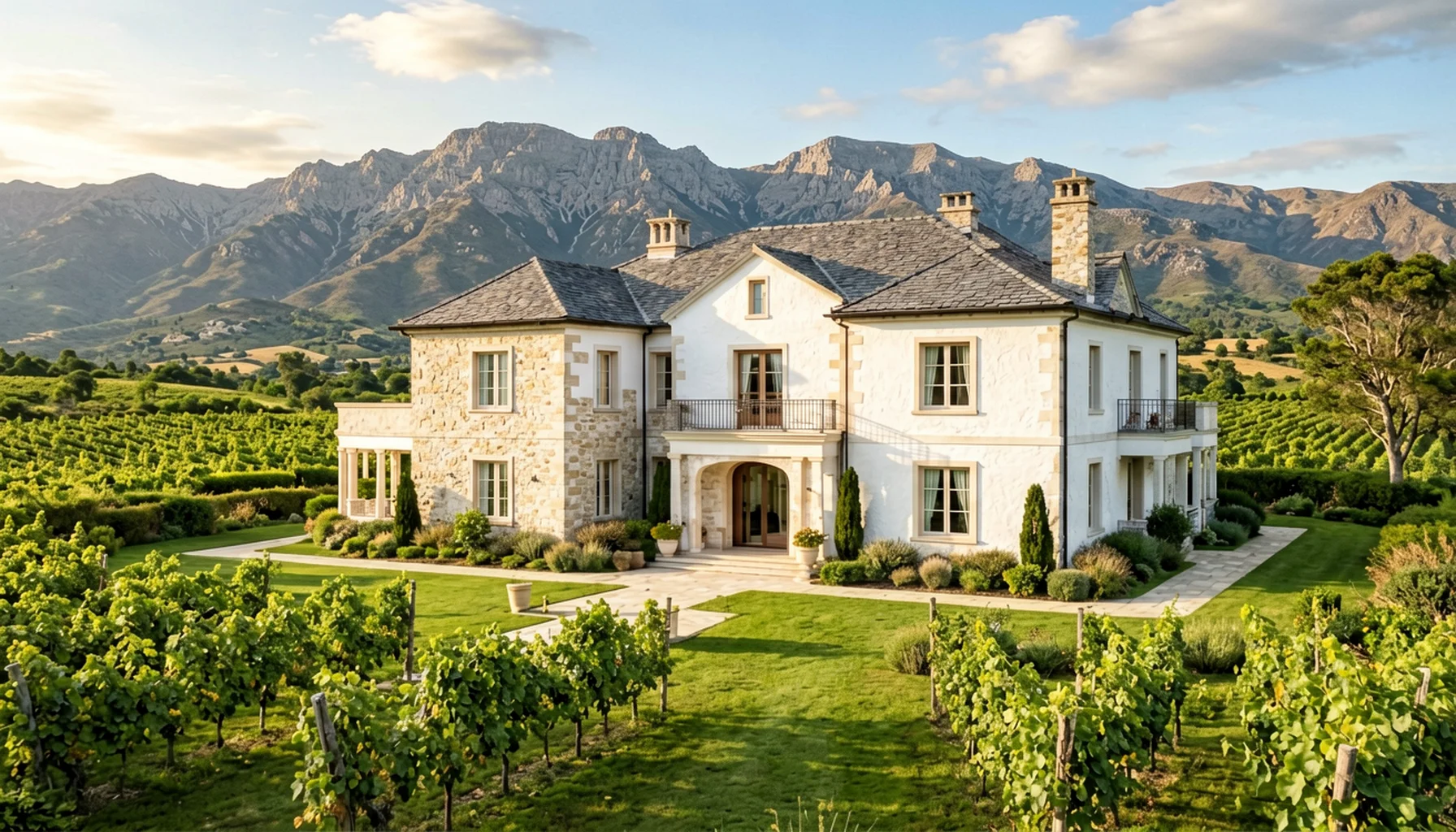
39% foreign buyer share, R26M to R30M premium prices, five-year capital appreciation of 100-200%, 28% cash transaction ratio — these data points collectively paint a picture of a parallel market driven by international capital, immune to local interest rates. As local buyers retreat under rate and inflation pressure, foreign cash buyers enjoy greater selection and stronger negotiating power.
Cape Town's premier properties are more than assets — they are lifestyle choices and long-term wealth preservation tools for the world's high-net-worth individuals. For international investors, now is the optimal time to enter this structural growth market through professional advisory support.
Interested in Cape Town luxury property investment opportunities? Book a one-on-one consultation for professional market analysis and asset allocation advice from DingYao Advisory.