Cape Town Property Amid South Africa's Tax Emigration Wave: A Strategic Guide for Overseas Investors
Overseas Investment May 31, 2026 8 min read

Cape Town Property Amid South Africa's Tax Emigration Wave: A Strategic Guide for Overseas Investors

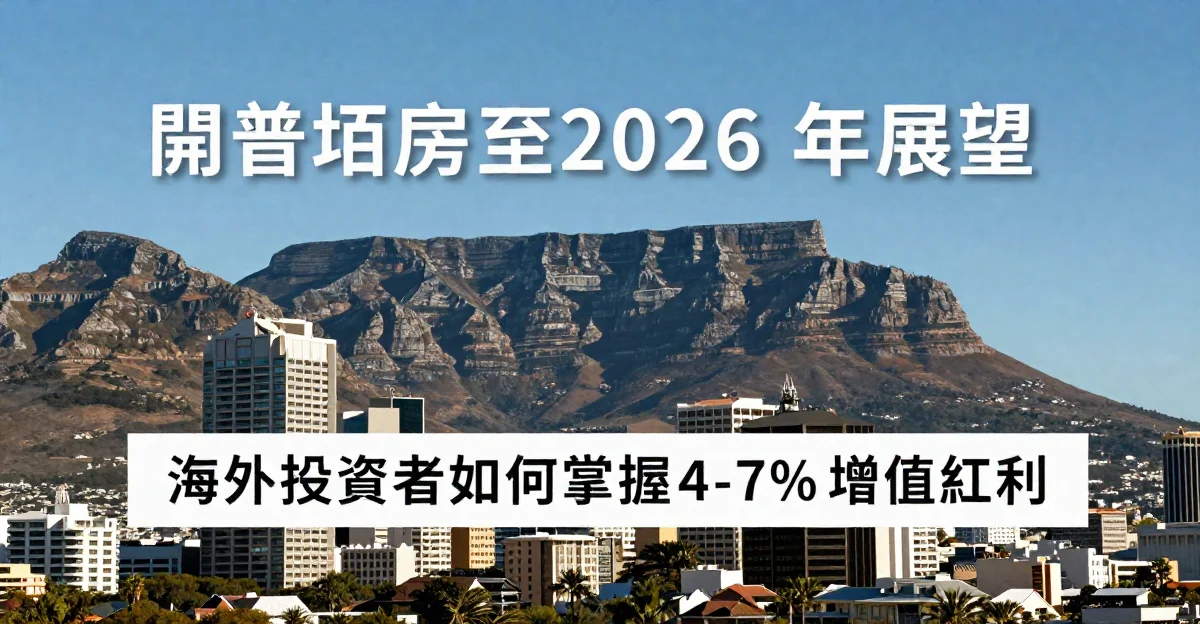
Western Cape house prices forecast to grow 4-7% in 2026, well above the national average. Semigration, structural supply shortages, and rate cuts converge — and overseas investors can capture both capital growth and dual-engine cash flow with an R 16,000,000 deployment.

Water Resilience
Property Premium
Dual-Engine Cash Flow
LP
Scott Huang

CEO, DingYao Advisory

Western Cape house prices are forecast to grow 4-7% in 2026, well above the national average. Driven by semigration, structural supply shortages, and a rate-cutting cycle, Cape Town is entering a structural bull market — and overseas investors can capture both capital growth and dual-engine cash flow with an R 16,000,000 deployment.

Three Growth Drivers: Why 4-7% Is Sustainable

Semigration: Long-Term Demographic Tailwind

Semigration — the domestic relocation of families from Gauteng and other provinces to the Western Cape — is the most persistent driver of Cape Town property demand. Over the past five years, more than 10,000 households have moved annually, seeking better quality of life, lower crime rates, and more reliable municipal services. REMAX Living reports tenant growth of 11.6%, reflecting genuine demographic shifts rather than speculative demand.

These migrants are predominantly middle-to-high-income families, concentrating demand in Atlantic Seaboard, City Bowl, and Southern Suburbs properties. Supply elasticity is near zero — Cape Town's geography (a narrow corridor between mountain and sea) and strict zoning laws mean new supply cannot increase quickly enough to match demand growth.

Supply Shortage: Cape Town's Geographic and Institutional Advantage

Cape Town's supply constraints are structural, not cyclical:

  • Geographic limits: Table Mountain, the Atlantic coastline, and False Bay form natural boundaries that leave minimal developable land
  • Zoning regulations: The City of Cape Town's zoning laws strictly limit high-density development, preserving neighborhood character
  • Construction timelines: From planning to handover typically runs 18-24 months, far slower than demand growth

The result is a deepening supply-demand imbalance. In the Atlantic Seaboard, quality listings now sell within 30 days, and competitive bidding scenarios are increasingly common.

Rate-Cut Cycle: Lower Capital Costs as Tailwind

SARB has cut rates six times since September 2024, bringing the prime rate down from 11.75% to 10.25% and the repo rate to 6.75%. The cascading effects particularly favor overseas cash buyers:

  1. Improved local purchasing power: Lower rates reduce monthly payment pressure for local buyers, pushing up the demand floor
  2. Relative rental yield advantage: As fixed-income alternatives (bonds, term deposits) offer diminishing returns, property rental yields become more attractive
  3. Standard Bank Wealth call account still pays 6.5%: Daily compounding paid monthly (effective annual rate approximately 6.72%), generating about R 335,000 in annual interest — remaining competitive even in a declining rate environment
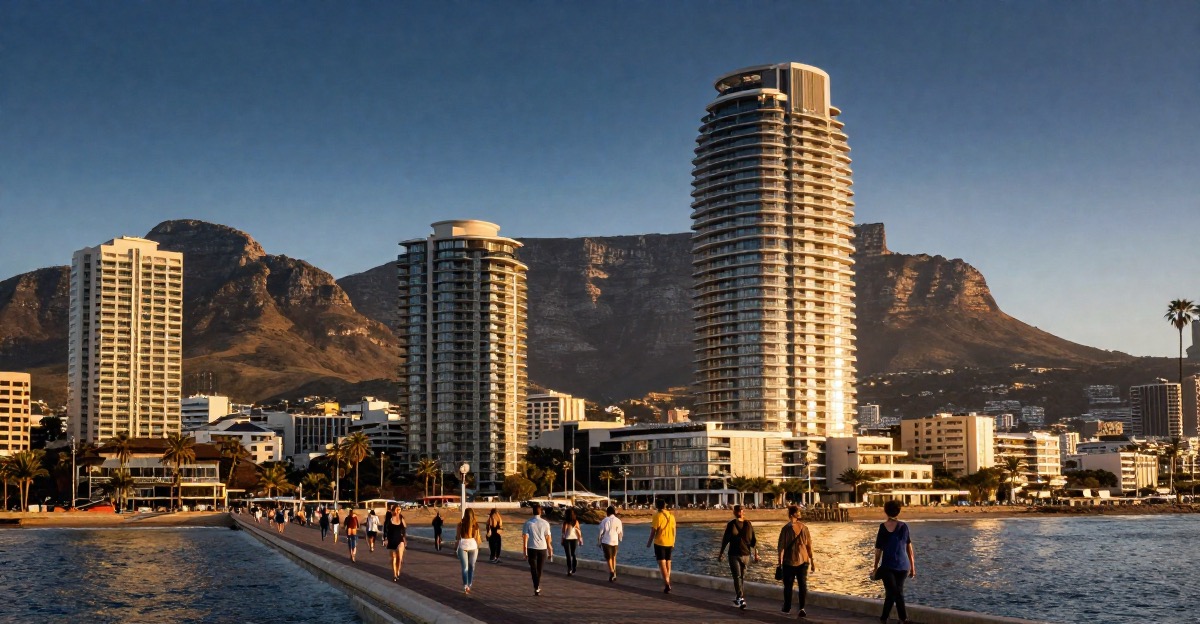
Aerial view of Cape Town Atlantic Seaboard: luxury residential properties between mountain and sea
Cape Town's Atlantic Seaboard: scarce residential supply driven by geographic constraints fuels property appreciation

The R 16,000,000 Phase 1 Deployment for Overseas Investors

Dual-Engine Cash Flow Structure

DingYao's Phase 1 deployment of R 16,000,000 splits capital across two engines, generating cash flow while capturing capital growth:

Engine One: Rental Income

  • Property purchase: R 10,450,000
  • Annual rental yield: 8-10% (full-occupancy income)
  • Annual rental income: R 836,000-R 1,045,000

Engine Two: Interest Income

  • Post-transfer deposit: R 5,000,000 (Standard Bank Wealth call account)
  • Annual rate: 6.5%, daily compounding paid monthly (effective annual rate approximately 6.72%)
  • Annual interest income: approximately R 335,000

Combined annual cash flow: R 1,171,000-R 1,380,000

The Hidden Engine: Interest During the Waiting Period

A critical advantage often overlooked: the full R 16,000,000 begins earning interest from day one inside the lawyer trust protection structure (律師信託保護). Monthly interest of approximately R 86,000 (daily interest approximately R 2,849) accrues even before property transfer — the investor's capital is never idle.

Lawyer Trust Protection: Security for Overseas Investors

Capital security is a primary concern for overseas investors. DingYao uses a lawyer trust protection structure (律師信託保護) that ensures: funds are held by an independent law firm in trust, never passing through any personal account; buyer funds are fully protected by law until transaction completion; the structure complies with the Attorneys Act's strict trust account regulations; and the entire process is transparent and trackable.

Currency Window: A 20-30% Purchasing Power Discount

The current ZAR/USD exchange rate of approximately 18-19:1, compared to the historical average of 14:1, gives overseas investors a 20-30% effective purchasing power discount. The same dollar or foreign currency capital buys roughly one-third more asset value in Cape Town today compared to five years ago.

This currency window combines with the 4-7% growth forecast in a multiplicative effect: buying at a discount, exiting at appreciation, capital returns are significantly amplified.

Comparison: Cape Town vs Other Overseas Property Markets

Compared to other popular overseas property destinations, Cape Town's comprehensive advantages are clear: R 16,000,000 buys high-end residential quality in Cape Town that would only purchase a mid-range apartment in London or Sydney; combined dual-engine annual cash flow of R 1,171,000-R 1,380,000 delivers better overall returns than most mature markets; the lawyer trust protection structure (律師信託保護) provides capital security comparable to Australia and New Zealand; and Cape Town consistently leads global livability rankings, adding a lifestyle premium to the asset.

Conclusion: The 2026 Entry Window

Cape Town's 2026 property market sits at the intersection of three tailwinds: 4-7% structural growth, a 20-30% currency discount, and declining capital costs from SARB's rate cuts. DingYao's Phase 1 R 16,000,000 deployment offers overseas investors a complete solution — capital growth participation, dual-engine cash flow, and capital that starts earning from day one through the lawyer trust protection structure (律師信託保護).

The key to overseas investment is not predicting the absolute bottom — it is acting decisively when structural tailwinds are clear. Cape Town in 2026 is precisely that moment.

Limited Consultation

Ready to Explore Cape Town Property Opportunities?

Professional one-on-one consultation — from property selection to PR application.

8-10%

Annual Rental Yield

6.5%

Daily Compounding Savings

100%

Capital Control

FAQ

Frequently Asked Questions

References & Data Sources

  • Louw & Coetzee Properties – Cape Town's Property Market Is Stepping Into 2026 With Serious Momentum
  • Property24 – Cape Town Property: Maximize Investment Returns for 2026
  • PRLog – Cape Town Housing Trends for 2026
  • The African Vestor – Cape Town Real Estate Market Analysis

Scott Huang | Business Development

DingYao Advisory — Professional South Africa Property Investment Consulting for the APAC Region

Specializing in Cape Town premium property investment, providing one-stop overseas property, PR application, rental management, and asset allocation services.