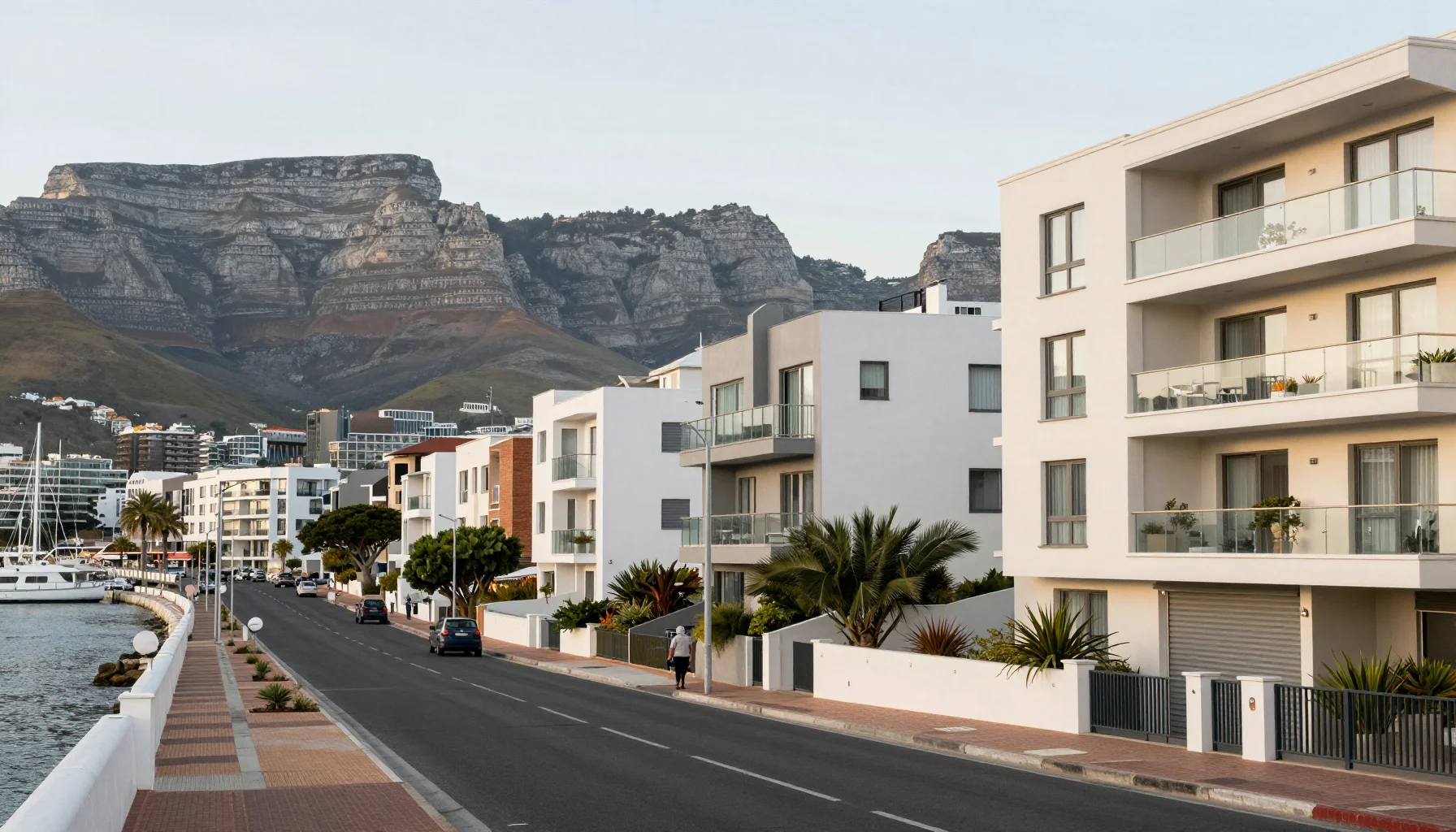
FOMC decision night: Cape Town property playbook

FOMC Decision Night: The Two-Scenario Playbook for Cape Town Property Under an 85% Hike Pricing

All day on September 16, "US economy" and "investment" appeared together on Taiwan's Google trending board — the former with 1,000+ searches and active for over 11 hours, the latter with 1,000+ and active in the past hour. Google Search Console even shows a real query, "9/16 rate hike": Taiwanese investors are searching for a number that has not been announced yet. The answer comes at 2:00 AM Taiwan time on September 17, when the US Federal Reserve publishes its decision.

This is not abstract geopolitics. For anyone who already owns property in Cape Town — or is moving capital toward South Africa — the FOMC decision directly ties three things together: the strength of the dollar, the rand exchange rate, and the pressure on the South African Reserve Bank (SARB) to follow on September 23. Tonight's decision effectively sets both the "currency entry point" and the "borrowing cost" for Cape Town property at the same time. This article covers the latest market pricing evidence, the rand playbook for two scenarios, the tactical differences between cash and mortgage buyers, and a checklist to run after the announcement. All figures are sourced; exchange-rate and interest-rate information is for reference only, and actual transactions should be handled with a licensed financial adviser.

Executive summary: The Fed announces its decision tonight (2:00 AM Taiwan time, Sept 17). Market pricing puts a hike at roughly 85%, CME FedWatch shows above 60%, and $42M in prediction markets wagers 55% on a hike. If it hikes: the dollar strengthens, the rand tests the 16.20 resistance, and Cape Town property effectively gets cheaper in Taiwan-dollar terms — but borrowing costs rise. If it holds: the rand rebounds and the market stabilizes. SARB (repo 7.00%) faces follow-through pressure in seven days. Consult DingYao for cross-border capital and FX planning advice.


US Federal Reserve rate decision imagery

Why is "US economy" trending in Taiwan, and what answer is the Fed giving tonight?

Because Taiwanese asset allocation has long been tied to US interest rates. "US economy" with 1,000+ searches and 11-hour activity, "investment" with 1,000+ in the past hour, and "retail investors" at 10,000+ — financial anxiety has heated up for a third straight day (Sept 13 inheritance tax, Sept 15 capital and retirement, Sept 16 US rates). GSC even shows the real query "9/16 rate hike" (0 clicks / 3 impressions / average position 14.0), meaning people are waiting for tonight's number.

The Fed's answer has two layers: the rate decision itself (hike, hold, or cut) and Chair Kevin Warsh's tone on the path ahead. Market consensus is overwhelmingly skewed toward a hike: 247wallst put odds at 85%+ on Sept 11, CME FedWatch shows above 60%, prediction markets wagered $42M at 55% hike vs 45% hold (Yahoo Finance, Sept 15), and CBS cites economists saying a September hike is nearly certain. August PPI rose 5.4% year over year (diesel +24.1% month over month, MSN Sept 14) and CPI 3.4% — inflation has clearly re-accelerated since the Iran conflict, which is the core reason markets are pricing a hike.

"Markets broadly expect the Federal Reserve to raise rates by 25 basis points at the September meeting — the first time in this cycle that a hike has been priced this heavily before the meeting." — Yahoo Finance, Federal Reserve meeting live updates (accessed 2026-09-16)

247wallst, Sept 11

Hike probability 85%+ (likely higher by decision night). The heaviest pre-meeting hike pricing of this cycle.

CME FedWatch

Rate-futures tool shows above 60% odds of a September hike (via Yahoo Finance).

$42M prediction markets

Wagering on the September decision: 55% hike vs 45% hold (Yahoo Finance, Sept 15) — real money voting.

PPI 5.4% / CPI 3.4%

August producer prices +5.4% (diesel +24.1%) and consumer prices +3.4% y/y (MSN/CBS).

Sources: 247wallst (2026-09-11); Yahoo Finance (2026-09-15/16, FedWatch and prediction markets); MSN (2026-09-14, PPI); CBS (2026-09-11, economist commentary). GSC query "9/16 rate hike" captured by DingYao internal tools.

Market hike pricing and rate futures imagery

Is the market really pricing an 85% chance of a hike? Where is the evidence?

Yes, and multiple independent mechanisms cross-validate it. A single source can be biased, but four distinct market mechanisms all point in the same direction: financial-media surveys (247wallst 85%+), rate futures (CME FedWatch >60%), prediction markets ($42M, 55% hike), and inflation data (PPI 5.4%). When four independent mechanisms price roughly the same outcome, that is not noise; it is consensus.

For Cape Town investors, the practical meaning of this pricing consensus is that markets rarely wait for the announcement to react — the dollar, the rand, and capital flows often move first. USD/ZAR spent mid-September testing the 16.20 resistance area (InvestingCube), with the rand squeezed between oil and gold prices; once a hike lands, the probability of a stronger dollar rises, and the rand may probe new levels. This is exactly what a decision-night playbook handles: not waiting for the answer, but writing down how you will respond in each scenario first.

Pricing indicator Latest value Published Read
247wallst survey Hike odds 85%+ Sept 11 Actual pricing may be higher by decision night
CME FedWatch Hike odds >60% Sept 15-16 Mainstream expectation in rate futures
Prediction markets $42M wagered, 55% hike Sept 15 Real-money market bets
August PPI +5.4% y/y (diesel +24.1%) Sept 14 Producer inflation re-accelerating, key hawkish driver
August CPI +3.4% y/y Sept 12 Consumer inflation above target, supports a hike

Key insight: An 85% hike pricing means the market has already priced the hike in. For investors converting currency to buy Cape Town property, the real question is not "will they hike" but "where will the rand trade before and after" — a currency entry point rewards prepared capital and a clear conversion plan, not reacting to headlines.

Sources: 247wallst (2026-09-11); CME FedWatch via Yahoo Finance (2026-09-15); Yahoo Finance prediction markets (2026-09-15); MSN (2026-09-14, PPI); DingYao US CPI series (2026-09-12, CPI 3.4%).

USD ZAR exchange rate and Cape Town property imagery

If the Fed hikes, where does the rand go? Will Cape Town prices be affected?

In a hike scenario the rand faces short-term pressure and USD/ZAR may break above 16.20 — but Cape Town property actually gets cheaper for foreign buyers in their home-currency terms. The chain is: Fed hikes → US rates become more attractive → dollar demand rises → the rand and other emerging currencies weaken. InvestingCube flagged 16.20 as a key resistance in mid-September; if it breaks, the next level could come quickly. The weaker the rand, the lower the total cost — in Taiwan dollars — of buying the same Cape Town property.

For property prices themselves, split short, medium and long term: in the short term, a weaker rand can attract foreign-currency buyers (prices are quoted in rand but paid in dollars or Taiwan dollars), creating demand support; in the medium term, persistently higher rates raise South African mortgage costs and weaken local demand; long term, supply still rules. Cape Town is special because international buyers are a large share of demand and supply has been structurally tight — it is less sensitive to the domestic rate cycle than inland cities. The reference growth range for Western Cape prices in 2026 is about 4-7% (historical data, not guaranteed), and premium Atlantic Seaboard annual appreciation reference values are higher — these are market-reference ranges, and actual outcomes vary by area and property.

Hike → weaker rand

USD/ZAR tests 16.20 resistance (InvestingCube); dollar assets become more attractive.

Lower effective cost

Illustration on a R5M property: converting at USD/ZAR 15.5 vs 16.5 is about a 6% difference in dollar terms — the weaker the rand, the better for foreign buyers.

Short-term price support

Foreign demand can offset rate pressure; Cape Town's international demand and supply shortage make it more resilient to rate cycles.

Imported inflation

A weaker rand makes imports, fuel and building materials pricier, lifting South African inflation and SARB follow-through pressure (see Sept 23 calendar below).

A simple illustration of the "currency discount": assume a Cape Town apartment costs R5,000,000. At USD/ZAR 15.5 the dollar cost is about USD 322,580; at 16.5 it is about USD 303,030 — the same property is roughly 6% cheaper in dollar terms just from the exchange rate (historical-range illustration, not a guaranteed return). For Taiwan-dollar buyers the full cost also depends on TWD/USD strength; actual conversion costs must be calculated by a licensed financial institution at live rates. This is exactly the value of planning your conversion timing around decision night.

Investor takeaway: If the hike lands, a currency entry point for Cape Town property may open — but remember that the rand's high volatility also means currency risk during your holding period. Foreign buyers are advised to convert in tranches instead of going all-in at one moment, and to include FX volatility in the overall investment assessment. FX and rate information is for reference only; consult a licensed financial adviser for actual transactions.

Sources: InvestingCube (mid-Sept 2026, USD/ZAR 16.20 resistance); LiteFinance quote 2026-09-14, USD/ZAR 16.20; Western Cape price reference range is a DingYao market-analysis compilation (historical data, not guaranteed). Illustration is a market-reference scenario, not a promise.

Fed hold scenario rand rebound and Cape Town market imagery

If the Fed unexpectedly holds, what happens to the rand and the property market?

In a hold scenario the rand likely rebounds short-term, and Cape Town keeps a "rates unchanged, demand stable" dynamic — but the hike expectation is only deferred, not gone. The higher the market's hike pricing, the more a "no hike" can trigger a contrarian reaction: a softer dollar, a recovering rand, and capital flowing back into risk assets. If USD/ZAR falls back from the 16.20 resistance, previously patient investors start entering, and Cape Town enquiries and sales may warm up modestly.

But a hold does not clear the air. If the Fed stands still while inflation remains (PPI 5.4%), markets simply push the hike expectation later — the December meeting odds rise. For South Africa the implication is that SARB's decision pressure on Sept 23 does not ease, because imported inflation (oil, import costs) is still there. A Cape Town investor entering under a hold scenario is trading the deeper currency entry point for near-term certainty on borrowing costs — both choices carry costs; there is no perfect answer.

Scenario USD/ZAR direction Cape Town market (short term) For Taiwanese buyers
Scenario 1: hike 25bp Tests or breaks 16.20 Foreign demand supports; local mortgage buyers wait Lower conversion cost, but borrowing costs rise
Scenario 2: hold Rebounds, tests 15.8-16.0 Rates unchanged; stable demand, waiting capital returns High certainty, but a deeper FX entry point may be missed

Key reminder: With an 85% hike pricing, a "hold" would be an out-of-consensus surprise, and short-term market volatility may match a hike itself. Write both playbooks before the announcement rather than thinking on your feet afterwards — that is the difference between a decision-night playbook and ordinary news commentary.

Sources: Scenario framework compiled by DingYao market analysis; USD/ZAR 16.20 resistance per InvestingCube/LiteFinance; SARB repo 7.00% per SARB official data, 2026-09-14. FX forecasts are highly uncertain and for reference only.

Cash buyer versus mortgage buyer comparison imagery

Should I buy Cape Town property with cash or a mortgage right now?

Under a rising-rate environment, the short answer is: cash if you can; if capital is limited, use a mortgage but lock in rates and keep a buffer. South African prime lending rate is 10.50% (SARB official, Sept 14), and if SARB follows with a hike on Sept 23, floating mortgage rates go higher. A cash buyer's edge is not just interest saved: in the window when rates rise and local buyers are cautious, cash buyers get more negotiating room and faster close times, and they avoid the credit-approval uncertainty of applying for a loan during FX volatility.

Mortgage buyers are not barred from entering; they just need a different playbook: ① prioritise fixed-rate or a longer lock-in; ② raise the down payment to 30-50% to lower monthly pressure; ③ stress-test cash flow with a SARB Sept 23 hike included, not just today's rates. The rules for foreign nationals applying for South African mortgages — documentation and non-resident loan-to-value limits — are covered in DingYao's foreign-buyer mortgage guide; if South Africa follows a Fed hike, the rise in borrowing cost needs a precise calculation, and "the property got cheaper" is only half the story.

1

Map your capital sources

Cash, accessible foreign currency, Taiwan loan capacity — this decides whether you are a "cash buyer" or a "mortgage buyer"; the strategies are completely different.

2

Stress-test two rate scenarios

Start from SARB's repo 7.00% and prime 10.50%, then model both "no hike on Sept 23" and "+25bp / +50bp" monthly-payment differences.

3

Confirm your fund remittance path

Sending capital from Taiwan to buy a South African property involves FX reporting and South African BOP codes — confirm this before converting, not after closing.

4

Execute in tranches

Cash or mortgage, convert currency in tranches and avoid a single all-in point; decision night is a starting line, not the finish.

Bottom line: For foreign buyers the question is never "can I get a loan" but "at what rate". Under a stacked Fed-hike plus SARB-follow scenario, compare the opportunity cost of cash versus the interest cost of a mortgage on the same spreadsheet, and keep the risk disclaimer in view: market-reference ranges are historical data, not guaranteed returns; past performance does not guarantee future results.

Sources: SARB official selected historical rates (2026-09-14, repo 7.00%, prime 10.50%); DingYao foreign-buyer mortgage guide (loan-to-value and process). Rate calculations depend on individual circumstances and must be confirmed by a licensed financial institution.

Fed and South African Reserve Bank seven-day calendar imagery

Why is the SARB decision on September 23 just as critical?

Because the Fed is the cause and SARB is the effect — two central-bank decisions in seven days are one complete rate script. SARB currently holds the repo rate at 7.00% and prime at 10.50% (official, Sept 14), with the next MPC meeting on Sept 23. If the Fed hikes tonight, a weaker rand → higher imported inflation → directly raises the pressure on SARB to follow. If the Fed holds, SARB still faces inflation pressure from fuel and import costs, so the decision remains a dilemma either way.

South Africa's own numbers make this harder: August Absa manufacturing PMI came in at 45.8, meaning manufacturing is contracting (EconoTimes, Sept 16) — hiking would suppress growth, while not hiking accepts inflation. For Cape Town investors this means two moments must be watched together: the Fed at 2:00 AM Sept 17 and SARB on the evening of Sept 23. In the seven days between, the rand trades in a high-volatility band — an opportunity window for currency-converting buyers; mortgage buyers should wait for Sept 23 to confirm South African rate direction before locking loan terms.

Date Event Meaning for Cape Town investing
Sept 17, 2:00 AM Fed September rate decision Sets dollar strength → rand direction → FX entry point
Sept 17-23 High-volatility rand window The golden seven days for tranched FX conversion; watch news and technicals together
Sept 23 evening SARB MPC (repo 7.00%) Sets South African mortgage rates → rate-lock moment for mortgage buyers
1-2 weeks after Market digestion and data confirmation Real reaction in enquiries and sale prices — the reference for the next wave

Dual-central-bank calendar key: The Fed decides "how cheap the rand gets" and SARB decides "how expensive the loan gets" — only when both variables stack do you see the true cost of Cape Town property. Follow just one and you are reading half the map. Run the full seven-day, two-decision calendar before allocating large capital.

Sources: SARB official selected historical rates (2026-09-14); EconoTimes (2026-09-16, Absa PMI 45.8); Fed meeting schedule (Yahoo Finance, 2026-09-16). SARB decisions are uncertain; not a forecast guarantee.

Cape Town investment checklist after the Fed decision imagery

After the decision, how should I structure my Cape Town plan?

First, map the outcome: a hike means Scenario 1 kicks in; a hold means Scenario 2. Then run the same five-step checklist. The scenarios differ only in currency timing and loan strategy; every step after that is identical: confirm the fund path, evaluate the target, model full-cycle cost, keep a buffer, and work with licensed professionals. The most common mistake Taiwanese investors make is treating decision night as a single event — it is actually the start of a chain of decisions: Fed → SARB → market data → your closing date.

1. Confirm fund remittance path

Confirm the rules for sending and reporting purchase capital from Taiwan to South Africa (BOP codes, FX limits) — before converting, not as a post-closing fix.

2. Lock your target areas

Cape Town's areas differ enormously: Atlantic Seaboard premium, South Peninsula mid-market, northern suburbs affordable — pair the FX entry point with area selection.

3. Model full-cycle cost

Price + taxes (transfer duty, legal fees) + FX cost + mortgage interest (if any) + holding costs (municipal fees, maintenance) — not just the sticker price.

4. Keep a buffer

FX volatility, rate moves and South African administrative timelines deserve a 10-20% buffer — no all-in at a single moment.

After mapping the outcome, the most important step is putting decision night into a bigger framework. A Fed hike affects more than Cape Town — dollar strength also changes the overall asset-allocation rhythm for Taiwanese investors. Instead of being pushed around by a single event, build your own decision calendar: Fed Sept 17 → SARB Sept 23 → Taiwan's offshore-asset reporting season before October tax filing. Each stop has its own preparation work. DingYao provides market analysis and cross-border capital-structuring advisory — we do not broker transactions between you and sellers; we help you understand the South African property process and market information. Actual transactions and transfer are executed by South African partners and licensed professionals.

Final takeaway: Tonight's Fed decision is not a threat to Cape Town investors; it is a repricing of opportunity. A hike makes the rand cheaper and lowers your property cost in Taiwan-dollar terms; a hold gives you certainty and time. The real risk is not choosing the wrong scenario — it is having no playbook at all. Write both scenarios on paper, and follow the script when the numbers land at 2:00 AM. That is how you open decision night correctly.

Disclaimer: This article is for information only and does not constitute investment or financial advice. FX and interest-rate information is for reference only; consult a licensed financial adviser for actual transactions. All return figures are market-reference ranges, not guaranteed returns; past performance does not guarantee future results. DingYao Advisory is an information-advisory role and does not engage in real-estate brokerage or agency business.

FAQ
FAQ

FAQ

Is a September Fed rate hike really that likely?

Yes. Market pricing puts the odds at about 85% or higher (247wallst, Sept 11), CME FedWatch shows above 60%, and $42M in prediction markets wagers 55% on a hike (Yahoo Finance, Sept 15). August PPI rose 5.4% and CPI 3.4% year over year, and economists say a September hike is nearly certain (CBS).

What does a Fed hike mean for the rand exchange rate?

A Fed hike usually strengthens the dollar and pressures the rand. USD/ZAR is already testing the 16.20 resistance area (InvestingCube); once a hike is confirmed, the rand may weaken further. For a Taiwanese buyer, a weaker rand means a more favourable conversion rate and a lower effective cost for a Cape Town property. The rand is highly volatile — FX information is for reference only, and actual transactions should be handled with a licensed financial adviser.

Should I buy Cape Town property with cash or a mortgage now?

It depends on the scenario. If the Fed hikes and SARB follows on Sept 23, mortgage rates rise (prime is currently 10.50%, SARB official Sept 14), giving cash buyers a clear cost and negotiating advantage. If rates hold, mortgage buyers can enter with lower upfront capital while keeping cash flexibility. The key is modelling the full holding cost, not choosing one side blindly.

Will the South African Reserve Bank hike on September 23?

There is pressure, but it is not certain. SARB holds the repo rate at 7.00% and prime at 10.50% (official, Sept 14). If a Fed hike weakens the rand and raises imported inflation, the pressure to follow increases; but an August manufacturing PMI of 45.8, in contraction (EconoTimes), gives room to wait. The two decisions in seven days must be assessed together; neither can be predicted in isolation.

How should I adjust my Cape Town plan after the decision?

Hike: a weaker-rand conversion window opens, but borrowing costs rise, so prefer cash or a large down payment and convert in tranches. Hold: the rand rebounds and the market stabilises, so mortgage buyers can enter in tranches while watching SARB on Sept 23. Either way, sort out your fund remittance reporting (BOP codes) and residency planning before deciding your conversion timing.

How do I handle fund remittance reporting when sending money to buy in South Africa?

Sending capital from Taiwan to buy overseas property involves FX reporting at the bank level and South African BOP codes for the purpose of the funds; each side has its own steps and documentation. Confirm the full path before converting. DingYao can provide market analysis and cross-border capital-structuring advisory; the actual filings are executed by licensed financial institutions and professionals.

Further reading
Further reading

Decision night: how do you adjust your Cape Town capital plan?

With an 85% hike pricing, the rand tests 16.20 and SARB follow-through looms in seven days — the two-scenario playbook, decoded. DingYao Advisory offers market analysis, investment evaluation, and cross-border capital and FX planning advisory. Book a consultation today.

Book Now

【Compliance & Disclaimer】

1. Company Statement: DingYao Advisory is a Taiwan-based consultancy providing asset allocation, immigration advisory, overseas account opening, and second-generation education coordination services. DingYao does not engage in real estate brokerage or dealer activities within the Republic of China (Taiwan), nor does it handle, collect, or hold any property transaction funds.

2. Information Source & Contracting Party: The South African property, development projects, market data, and related images in this article are provided by overseas partners Crestline Advisory (Pty) Ltd and developer CanvasCrest Properties, for overseas asset allocation and market reference only, and do not constitute any offer, solicitation, or investment guarantee. All property-related purchase agreements, fund payments, and title transfers are executed directly between the buyer and overseas licensed developers/institutions in accordance with local law.

3. Statutory Risk Warning: "Foreign real estate investment carries risks. Investors should read marketing documents carefully and consider transactions prudently." Overseas investments involve exchange rate fluctuations, local regulations, tax changes, and market risks. Data (such as historical returns, interest rates, etc.) are based on specific calculation standards and timeliness; past performance does not guarantee future returns. Investors should assess independently and seek professional legal and financial advice.