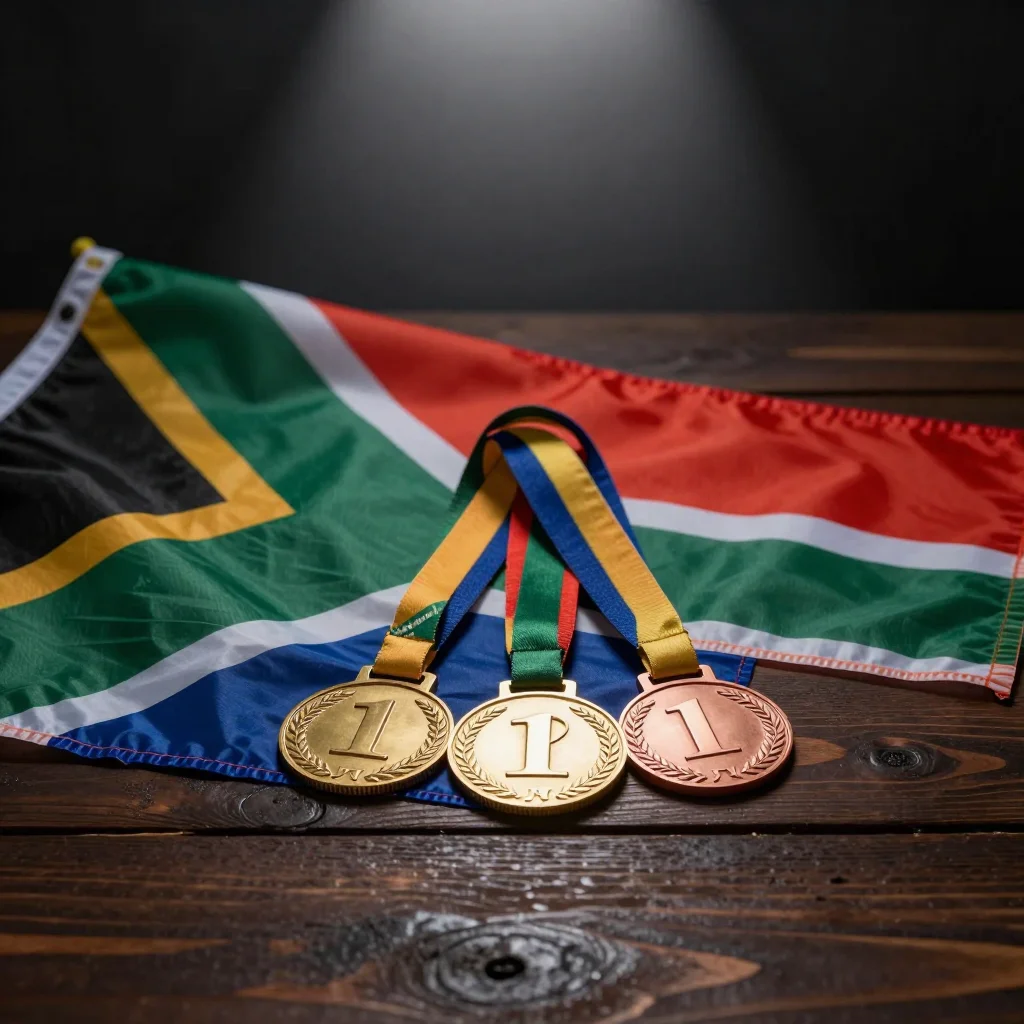
July 2026, Shanghai — The 67th International Mathematical Olympiad (IMO) concluded successfully from July 10 to 20 in Shanghai, China. South Africa's team delivered an impressive performance, securing 1 Silver medal, 1 Bronze medal, and 3 Honourable Mentions, ranking 57th among over 100 participating countries. This is not only a personal triumph for six young students but also sends a clear message to the world: South Africa's educational strength is real — strong enough to win medals at the world's most prestigious mathematics competition.

🏆 South Africa Team Total Score: 94 points · Global Ranking: 57th (out of 117 countries/regions)
Medals: 1 Silver · 1 Bronze · 3 Honourable Mentions
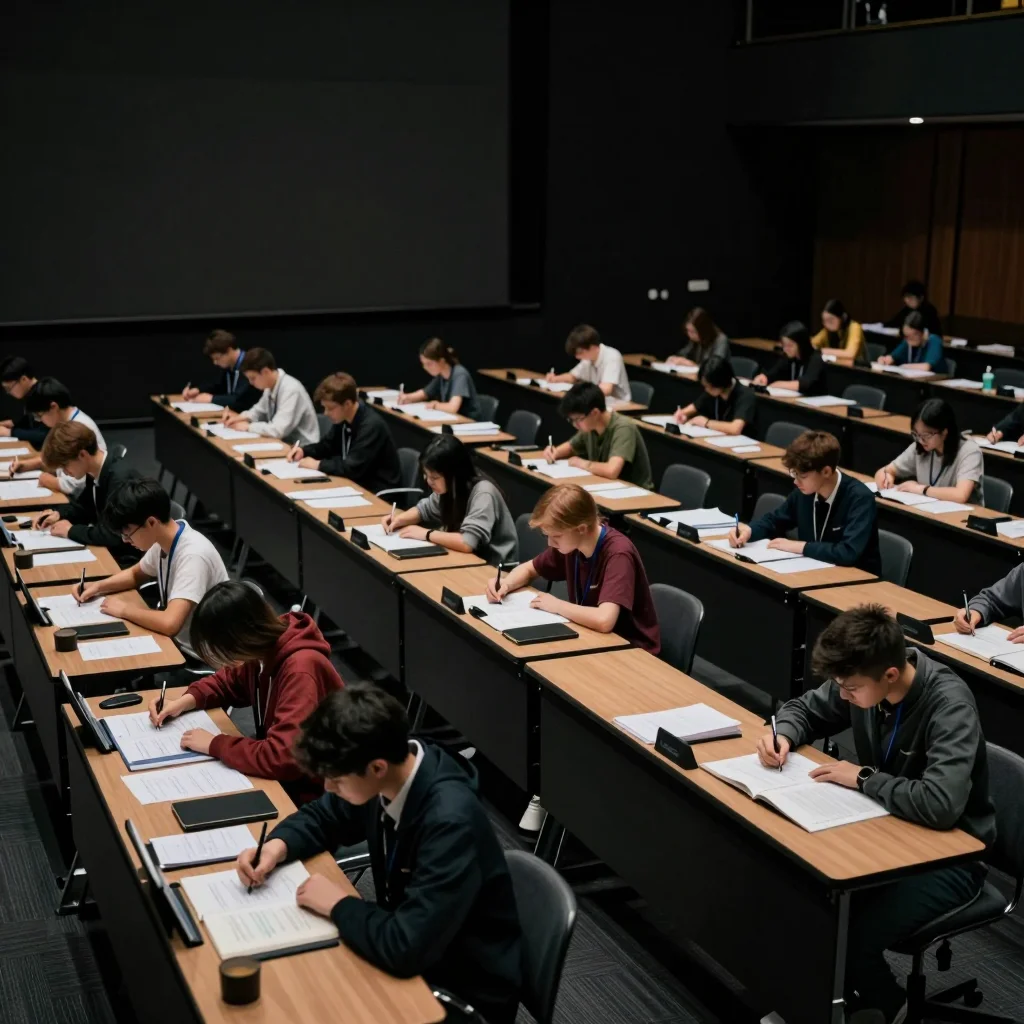
Event Overview: A Summit of the World's Top Mathematical Minds

This year's IMO brought together 666 contestants from 117 countries and regions in Shanghai, where they tackled six exceptionally challenging mathematical problems over two days of rigorous four-and-a-half-hour examinations. Each problem was worth 7 points, for a total of 42 points. Contestants were not permitted to use calculators or any external aids — relying entirely on their mathematical insight and creative thinking. This is the highest殿堂 of human intellectual competition.

China's team claimed the team championship with a commanding 232 points, with all members earning Gold medals, including 3 perfect scores of 42. Team USA placed second with 207 points, and Russia ranked third with 196 points. A total of 7 perfect scorers (42/42) emerged this year, from China (3), South Korea (1), the United Kingdom (1), and the United States (2).

Given this level of competition, South Africa's achievement of a Silver medal, a Bronze medal, and three Honourable Mentions is truly remarkable. IMO contestants represent the world's most elite mathematical talents — students from China, the United States, Russia, and other nations undergo systematic Olympiad training from an early age. That South African students, with comparatively limited resources, can compete on equal footing with these powerhouses is itself a testament to the depth of South Africa's education system.

South Africa Team Results

The South African team was led by team leader Kerry Porrill and deputy leader Yian Xu, with six young mathematical talents shining on the international stage:

🥈 Silver Eli Max Williams · 26 pts
🥉 Bronze Pocoyo Pun · 16 pts
🏅 Hon. Mention ×3 Vincent Wang · Noah Greenblatt · Xiaoyuan Li
🇿🇦 Participant Noah Rassou · 13 pts
  • Eli Max Williams (Westerford High School, Western Cape, Grade 12) — Earned a Silver medal with 26 points (7+4+0+7+7+1), ranking 90th individually. He achieved perfect scores of 7 on Problems 1, 4, and 5, a particularly outstanding performance. Eli previously represented South Africa at IMO last year and has once again brought honour to the nation.
  • Pocoyo Pun (Elkanah House, Western Cape, Grade 11) — Won a Bronze medal with 16 points, earning perfect scores on Problems 1 and 4. Winning an IMO medal at just Grade 11 signals immense future potential.
  • Vincent Wang (Deutsche Internationale Schule Pretoria, Gauteng, Grade 12) — 15 points, Honourable Mention.
  • Noah Greenblatt (King David High School, Gauteng, Grade 12) — 12 points, Honourable Mention.
  • Xiaoyuan Li (St John's College, Gauteng, Grade 11) — 12 points, Honourable Mention.
  • Noah Rassou (South African College High School, Western Cape, Grade 12) — 13 points, a valuable contributor to the team.

Notably, both Eli Williams and Pocoyo Pun represented South Africa at IMO last year and won medals, returning this year to serve their country once again. This is no flash in the pan — it is ironclad evidence that South Africa's mathematics training system consistently produces top-tier talent.

The Path to Cultivating South Africa's Mathematical Talent

Standing on the IMO stage requires years of rigorous training and层层筛选. South Africa's mathematics talent pipeline begins at the foundational level with the International Kangaroo Mathematics Competition, progressing through the South African Mathematics Challenge and the South African Mathematics Olympiad (SAMO).

Top-performing students enter the South African Mathematics Olympiad Training Programme, where intensive camps and high-level coursework ultimately select the six-member national team. The entire process often spans a significant portion of a student's academic career, with a level of competition no less fierce than anywhere in the world. Since 2010, South Africa has accumulated 1 Gold, 13 Silver, 60 Bronze, and 82 Honourable Mentions at the IMO — a record of consistent and improving performance.

"South Africa's education system may have fewer resources than developed nations, but our talent has never lacked for natural ability and perseverance. The IMO medals are the best proof of that." — South African Mathematics Foundation

South Africa's Educational Strength: From IMO Medals to National Competitiveness

Many people associate South Africa with abundant natural resources and stunning landscapes, but overlook the country's deep educational strengths. In fact, South Africa boasts one of the most developed higher education systems on the African continent. The University of Cape Town, Stellenbosch University, and the University of the Witwatersrand consistently rank among Africa's top institutions globally.

IMO results further demonstrate South Africa's competitiveness in STEM (Science, Technology, Engineering, Mathematics) foundational education. In an increasingly knowledge-driven global economy, a nation's ability to consistently produce high-level STEM talent is a key indicator of long-term economic competitiveness. South African youths' repeated success at world-class competitions like the IMO proves that this country possesses educational potential and talent depth that cannot be ignored.

For those considering real estate or business investment in South Africa, this signals that the country has the soil to cultivate high-level professional talent — whether in tech startups, financial services, or engineering and construction, all will benefit from this talent momentum. When a nation can produce top mathematical minds who win IMO medals, its future development potential should not be underestimated.

💡 South Africa has won IMO medals for two consecutive years, confirming that its mathematics education system is internationally competitive. For real estate and investment decisions, talent supply is a core factor in assessing long-term regional value. South Africa is not only a country rich in natural resources — the depth and breadth of its human capital are equally worthy of serious consideration by long-term investors.

Implications for South Africa's Investment and Property Market

For investors focused on the South African market, this news carries an important positive signal. Excellence in mathematics and science education directly reflects the quality of South Africa's talent pool. In today's increasingly fierce global war for talent, South Africa is proving with results that its younger generation possesses the ability and potential to compete with the world's best.

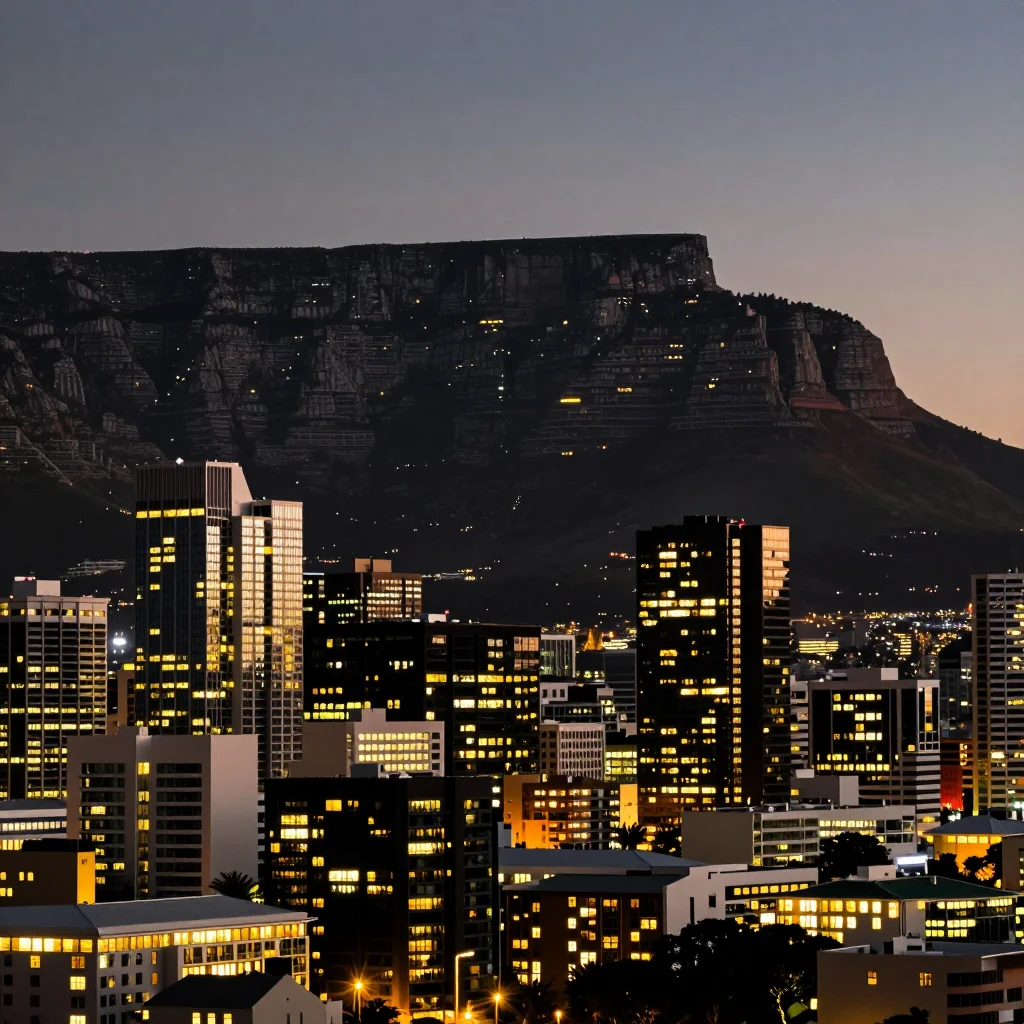
Cape Town, as South Africa's technology and innovation hub, has attracted a growing number of international tech companies in recent years. Amazon has established its Africa headquarters in Cape Town, and tech giants like Microsoft and Google have set up R&D centres here. One of the key reasons these companies chose South Africa is the high-quality talent pool. The IMO medals are merely the tip of this talent iceberg.

For investors considering property in Cape Town, what does this mean? Talent agglomeration effect — when a city has a high-quality education system and a steady stream of exceptional talent, its real estate market has a foundation for long-term appreciation. Influxes of tech talent drive housing demand, and housing demand pushes property values higher — a virtuous cycle.