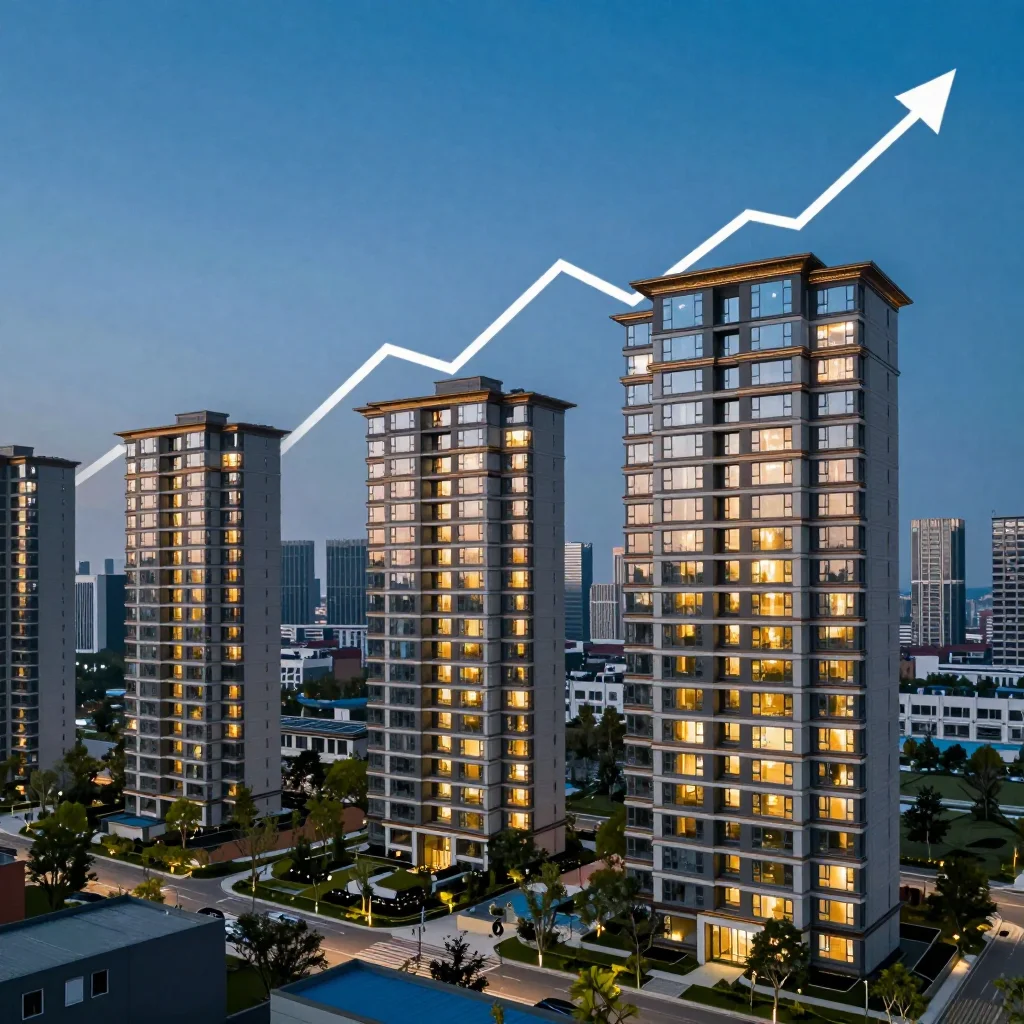
South Africa's commercial real estate market is undergoing a quiet but dramatic shift of power. According to quantified data released by Gmaven in July 2026, Johannesburg holds approximately 44.9 million square meters of let commercial space — roughly 54% more than Cape Town. Yet the total value of the two markets is almost identical: Joburg at about R376 billion, and Cape Town at about R365 billion.

Put these two numbers side by side and a striking fact emerges: Johannesburg's commercial assets trade at a discount of roughly R196 billion relative to Cape Town. In other words, the market is telling us, with real money, that capital is voting with its feet and flowing toward Cape Town. This gap is not just a commercial-market phenomenon — it is a core clue to understanding where South African asset value is heading.

Key Takeaways: Joburg has 54% more let commercial space than Cape Town, yet the two markets are worth almost the same — implying a R196 billion discount for Johannesburg. This reflects capital concentrating toward Cape Town, as companies, talent and foreign money keep relocating south. For property investors, capital flow is the direction of price support — and Cape Town is South Africa's most structurally resilient market.

How Is the R196bn Discount Calculated?

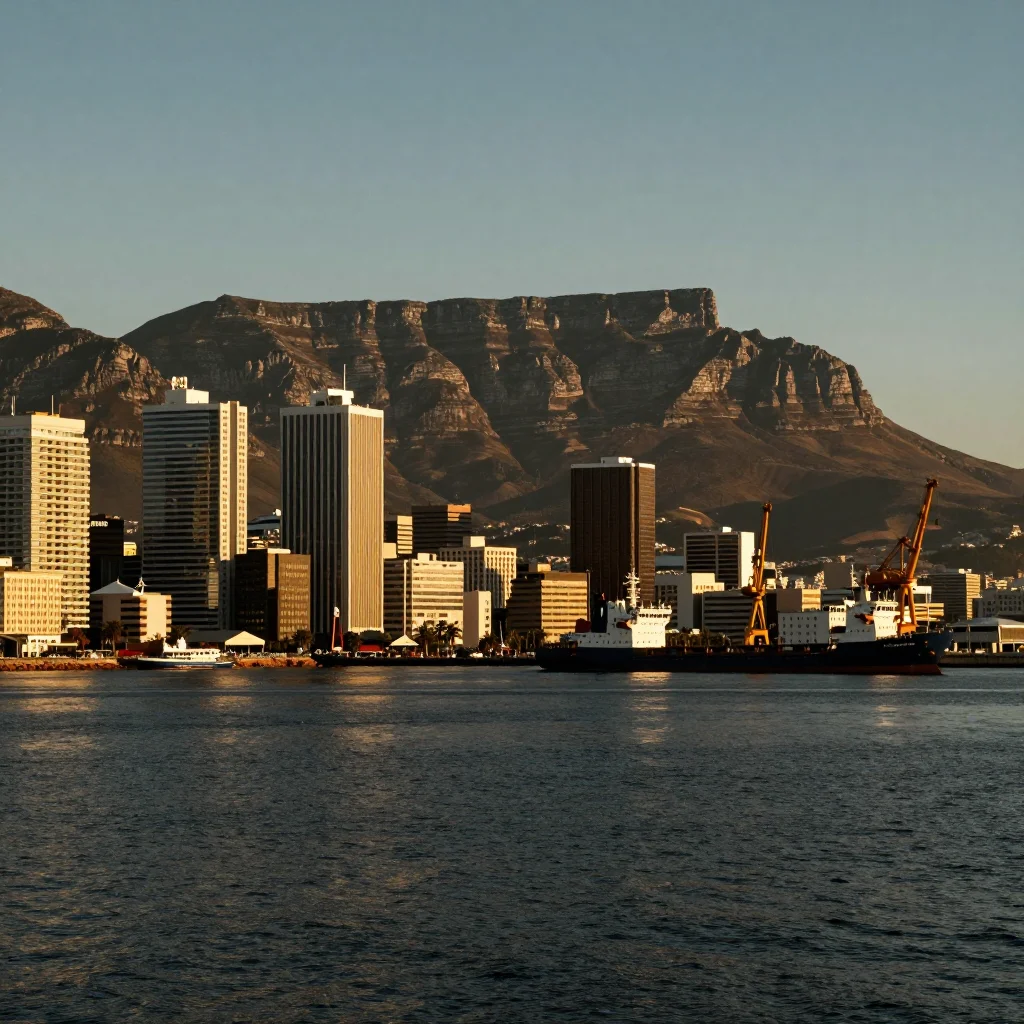
Gmaven's data lines up the Johannesburg and Cape Town commercial markets side by side, and the difference is clear at a glance:

Metric Johannesburg Cape Town
Let commercial space ~44.9 million ㎡ (54% more) ~29.15 million ㎡
Total market value ~R376 billion ~R365 billion
Relative discount Joburg trades at a ~R196 billion discount to Cape Town
Recent deal Bank acquired a 21,946㎡ asset at ~R11,164/㎡ (incl. parking) Waterfront and CBD premium assets keep drawing capital

The existence of this discount shows the market assigns very different valuations to the two cities' asset quality, demand stability and long-term prospects.

Why Does Capital Keep Flowing to Cape Town?

Cape Town's ability to attract capital against the grain is not the result of any single factor, but the convergence of several structural forces. Understanding these drivers is the key to reading the direction of South African asset value:

  • The safety and quality-of-life gap — the Johannesburg CBD has long wrestled with safety and operational challenges, while Cape Town offers a more liveable, safer environment that attracts companies and high-net-worth households
  • The semigration trend — residents from Gauteng and other provinces keep relocating south, moving people, businesses and capital to Cape Town in parallel
  • Foreign buyer preference — Cape Town's waterfront and high-quality assets are highly attractive to international investors, making it South Africa's primary magnet for inward capital
  • Infrastructure and tourism momentum — Cape Town's stable infrastructure, thriving tourism and emerging industries underpin the long-term resilience of both commercial and residential demand
"The huge discount on Joburg commercial property is not a victory slogan for Cape Town, but the reality South Africa's market has written with capital flows: asset value is concentrating toward the more resilient city." — IOL Business/Property, 29 July 2026

Capital Flow = Price Support: What It Means for Investors

Capital flows tend to lead property prices. When companies, talent and money keep flowing into Cape Town, residential demand is naturally and structurally supported. For investors, this sends a clear signal: wherever capital flows is where the strongest resilience and appreciation potential lies.

R196bn Commercial Gap

The Joburg discount to Cape Town highlights the relative resilience and demand strength of Cape Town assets.

Capital Heading South

Companies, talent and foreign money keep moving from Gauteng to Cape Town, lifting overall demand.

Residential Beneficiary

Commercial demand and population inflows lift residential demand in tandem, supporting Cape Town prices.

Foreign Capital Magnet

Cape Town's waterfront and high-quality assets are highly attractive to international buyers.

Cape Town's price support rests on limited developable land, sustained semigration demand, foreign capital preference and a more stable quality-of-life dividend. These four forces together build a far deeper moat than Johannesburg's.

Cape Town vs Taipei: A Comparative Lens for Overseas Investment

For Taiwanese investors, this capital flow carries another layer of meaning. Prime Taipei districts have long passed the NT$1 million-per-ping mark, whereas Cape Town — even with an average above the South African national level — remains far more affordable than comparable Taipei locations. When capital is clearly flowing toward Cape Town, Taiwanese high-net-worth investors can think about diversifying a portion of their assets into a market where capital is flowing in and that offers lifestyle and currency-diversification value, rather than concentrating risk in a single market.

Key Insight: The R196 billion commercial discount is the clearest quantitative evidence of where South African capital is heading. For property investors, wherever capital flows is where resilience and appreciation potential are strongest. Cape Town is the core where South African capital, talent and foreign money converge — understanding this trend is the key to timing your position.

Conclusion: Follow the Capital Flow and Position in Cape Town

The R196 billion commercial gap between Joburg and Cape Town is not an isolated business phenomenon, but a microcosm of the revaluation of South African asset value. Capital keeps flowing toward the more resilient Cape Town — a choice made by both companies and households, and a judgment by the market on the two cities' long-term prospects.

For investors seeking overseas asset allocation, the key lies in reading the capital flow, choosing the right area, and building a long-term strategy. Cape Town spans a broad spectrum from Atlantic Seaboard luxury to suburban and emerging developments, and each price band carries a different risk-and-return profile. The capital flow gives you direction; what really wins is professional local judgment and precise positioning.

Want to position in Cape Town by following the capital flow? Book a one-on-one consultation for a tailored Cape Town property assessment and area recommendations.