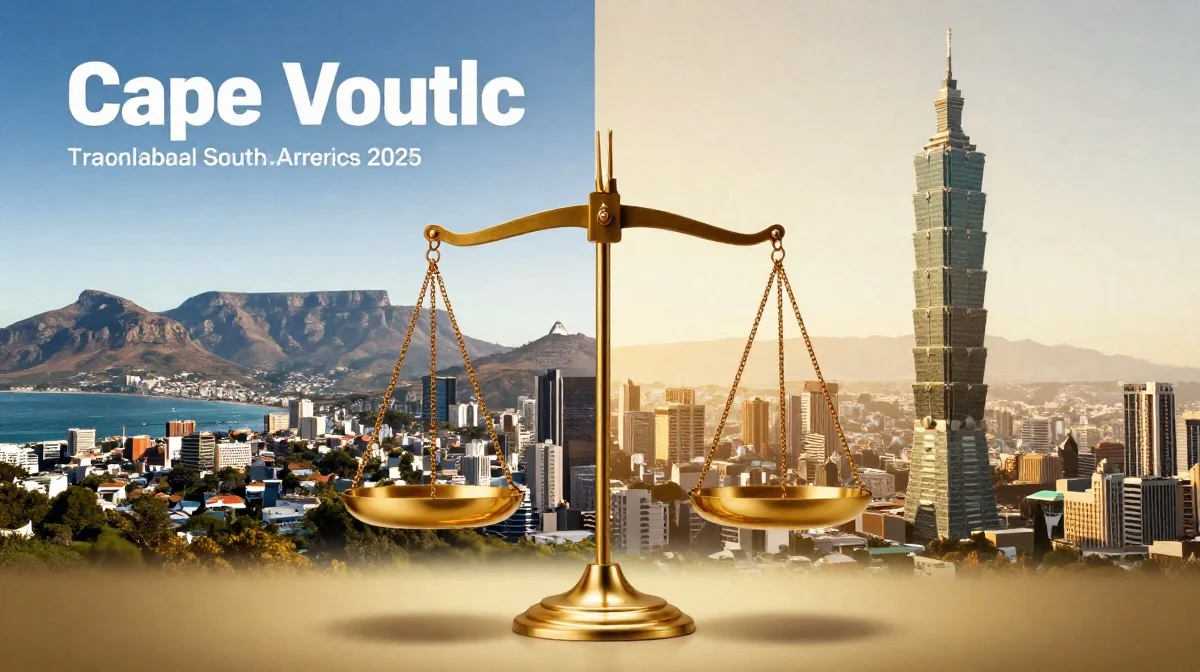
In 2026, Taiwan's real estate market is in a deep correction phase. The central bank's seventh round of selective credit controls continues to bite, property hoarding tax 2.0 is in effect, and domestic investment returns have compressed to historic lows. According to the latest International Migration Expo survey, over 67% of high-net-worth individuals are evaluating overseas property investment — a five-year high. However, overseas property investment is not a game where "money is all you need." Over the past decade, countless Taiwanese investors have returned defeated from Japan, Cambodia, and Thailand. Some have been locked in for ten years unable to sell; others have watched 30% of their assets evaporate through currency movements; still others have become entangled in local legal disputes, losing everything.

I. Three Fatal Risks of Overseas Property Investment: The "Sucker Traps" You Must Know
1.1 Currency Risk: The "Exchange Rate Evaporation" You Can See But Can't Prevent
The biggest invisible killer in overseas property investment is often not price volatility, but currency fluctuation.
Real Case Study: In 2015, Taiwanese investors flooded into the Japanese property market. The yen exchange rate was approximately 0.27 TWD/JPY; by 2025, it had fallen to 0.21 — a currency loss exceeding 22%. Even if property prices rose 20%, the actual return remained negative.
Malaysia Case: The Malaysian Ringgit has depreciated approximately 15% against the Taiwan Dollar over five years. Without rental income to compensate, currency losses will eat away most capital gains.
Key Data:
- Japan: 5-year currency change -22%, severe currency evaporation
- Cambodia: 5-year currency change -18%, USD-denominated, relatively stable
- Malaysia: 5-year currency change -15%, requires high rental yield offset
- South Africa: 5-year currency change -25%, but rental yields reach 8-10%
1.2 Legal Risk: Clauses You Can't Read, Rights You Don't Have
Overseas property legal systems differ fundamentally from Taiwan's. Common traps include:
Unclear Land Ownership: In parts of Thailand and Vietnam, foreigners can only obtain "lease rights" or "usage rights" — not permanent ownership. After 30 years, land ownership reverts to the original owner.
Tax Differences: Japan's inheritance tax reaches up to 55%; Malaysia's foreigner purchase threshold is RM1 million (approximately TWD 6.8 million); Australia imposes an additional 8% stamp duty on foreigners.
Inheritance Issues: Some countries mandate that foreigner estates must be forcibly sold or subject to high inheritance taxes.
⚠️ Warning: Many agents only mention "high returns" but never explain "exit difficulty." Easy to buy, hard to sell — this is the common problem of overseas property.
1.3 Liquidity Risk: The "Asset Prison" You Can't Sell
Overseas property has far lower liquidity than Taiwan. Take Japan as an example:
-
1
Average Selling Period
Rural areas may exceed 2 years; urban areas also need 6-12 months
-
2
Dual Agency Problem
Agents represent both buyer and seller, distorting prices
-
3
Information Asymmetry
Foreign investors struggle to access authentic local market data
Cambodia Case: In 2018, Taiwanese investors flooded into Phnom Penh. Today, local oversupply has caused some project prices to halve with no buyers in sight.

II. 2026's New Favorite: Why Malaysia Stands Out?
Despite the risks, overseas property investment still has value — the key is "choosing the right market."
2.1 Malaysia MM2H Program: Property + Residency, Two Birds with One Stone
Malaysia's "Malaysia My Second Home" (MM2H) program is one of the most favored immigration pathways for Taiwan's high-net-worth individuals:
- Fixed Deposit Threshold: USD 150,000 (approximately TWD 4.8 million)
- Income Proof: Monthly income above TWD 100,000
- Application Age: 35+ years old
- Residency Visa: 10 years, renewable
- Property Purchase: Qualified applicants exempt from foreign stamp duty
Advantage: Compared to US EB-5 (USD 800,000) and UK investment immigration (GBP 2 million), Malaysia's threshold is much more accessible.
2.2 Rental Yield: Among the Highest in Southeast Asia
Rental yields in major Malaysian cities:
-
1
Kuala Lumpur City Center
4-6%
-
2
Penang
4-5%
-
3
Johor Bahru
3-4%
Compared to Taiwan's six major cities averaging 1.5-2.5%, Malaysia's cash flow advantage is clear.
2.3 Chinese-Friendly Environment, Lower Barriers
Malaysian Chinese comprise over 20% of the population, making language communication barrier-free and lifestyle adaptation easy. Plus, living costs are about 60% of Taiwan's, suitable for retirement planning.
III. Why Cape Town, South Africa Is the High-Net-Worth "Secret Weapon"
If you're pursuing stronger cash flow and asset diversification, Cape Town deserves your attention.
3.1 Rental Yield: The 8-10% "Cash Flow Monster"
Malaysia already sounds good? Cape Town is even more impressive:
- Taipei, Taiwan: Rental yield 1.5-2.5%, capital appreciation potential: correction phase
- Kuala Lumpur, Malaysia: Rental yield 4-6%, capital appreciation potential: moderate
- Cape Town, South Africa: Rental yield 8-10%, capital appreciation potential: high (rate-cut cycle)
Real Case: DingYao Advisory's featured property in Cape Town's Atlantic Seaboard — priced at R10,450,000 (~NT$20.2M) — generates annual rent of R384,000–R420,000 (~NT$740K–810K). With DingYao's guaranteed rental management, owners can achieve effective returns of NT$800K+ annually — cash flow exceeding Taiwan by more than three times.
3.2 Capital Gain Opportunity in Rate-Cut Cycle
The South African Reserve Bank has entered a rate-cutting path:
-
1
Benchmark Rate
Dropped from 8.25% to 7.5% (2025)
-
2
Mortgage Rate
From 11% peak to approximately 9.5%
-
3
Annual Price Growth
Reached 6.8% in October 2025, momentum strengthening
Historical experience shows that the early stage of a rate-cut cycle is the golden window for property investment.
3.3 Currency Risk Is Manageable: High Returns Cover Volatility
The South African Rand (ZAR) does fluctuate significantly, but high rental yields provide a natural "currency buffer":
Scenario Simulation (DingYao Featured Property):
- Property Price: R10,450,000 (~NT$20.2M)
- Annual Rental Income: R384,000–R420,000 (~NT$740K–810K)
- With guaranteed rental management: 8–10% effective yield
- Currency Depreciation: 5% (Annual Loss: ~NT$1.01M)
- Net Return Under Management Still Reaches NT$600K–800K
Conversely, in low-yield markets (2% rental), 5% currency depreciation means immediate loss.
3.4 Asset Diversification + Residency Planning: Two Benefits
South Africa offers a "Financially Independent Person's Visa," suitable for high-net-worth individuals planning a second home. Compared to Malaysia's MM2H:
-
1
Fixed Deposit Threshold
Malaysia MM2H: USD 150,000 / South Africa Financial Independent Visa: No mandatory fixed deposit
-
2
Income Proof
Malaysia: TWD 100,000/month / South Africa: Financial proof sufficient
-
3
Rental Yield
Malaysia: 4-6% / Cape Town: 8-10%
-
4
Living Cost
Malaysia: 60% of Taiwan / South Africa: 50% of Taiwan
IV. Investment Strategy Recommendations: Avoid Traps, Seize Opportunities
4.1 Three-Stage Checklist
Before entering the market, complete these three stages:
Stage 1: Risk Assessment
- Calculate currency loss sensitivity
- Confirm property rights type (freehold/leasehold/usage rights)
- Understand exit costs and taxes
Stage 2: Market Research
- Compare at least three countries
- Calculate actual rental yield (after management fees, taxes)
- Interview at least two local Taiwanese investors
Stage 3: Professional Consultation
- Consult an attorney familiar with local law
- Confirm tax planning (Taiwan + local)
- Choose an agent or consultant with track record
4.2 Portfolio Recommendation
For high-net-worth individuals with TWD 10-30 million:
- Taiwan Core Assets 50-60%: Capital preservation, liquidity
- Malaysia 20-25%: Residency planning, moderate returns
- Cape Town, South Africa 15-25%: Cash flow, capital gains
V. Risk Warnings
Overseas property investment involves multiple risks including currency, legal, and political factors. Please:
-
1
Don't Go All-In
Keep at least 50% of assets in Taiwan
-
2
Don't Only Look at Returns
Liquidity and legal protection are equally important
-
3
Don't Believe "Guaranteed Returns"
High returns always come with risks
-
4
Don't Skip Professional Consultation
Money saved on attorneys may become larger losses
Conclusion: Overseas Property Is Not "Buy and Profit" — It's "Choose Right to Win"
The 2026 overseas property market offers both opportunities and traps. Malaysia, with friendly residency policies and moderate returns, has become a choice that balances offense and defense; Cape Town offers another path for cash flow-oriented investors with 8-10% rental yields.
Whichever market you choose, remember: Information is the greatest moat. Before signing, ask more, see more, compare more — only then can you avoid becoming a sucker and become a true winner in overseas property.
Why Choose DingYao Advisory?
Local Strategic Partners
Deep partnership with Crestline Advisory for first-hand Cape Town property investment opportunities
Digital Asset Platform
Exclusive Client Portal system — monitor your overseas assets in real-time from Taiwan
Fund Security Guarantee
Investment funds deposited into Standard Bank personal accounts, FICA-compliant, absolute fund security
DingYao Advisory specializes in Cape Town, South Africa property investment consulting, providing full-service support from property selection, legal procedures, remittance assistance to rental management. Our team has deep roots in the South African market for over 10 years, familiar with local laws, taxes, and currency risks, creating a safe and transparent overseas property investment experience for Taiwanese investors.
Our Services:
- Cape Town premium property recommendations
- Purchase contracts and transfer registration
- Overseas remittance assistance
- Rental management and rent collection
- Permanent residency planning consultation
- Malaysia MM2H application guidance
- Children's education planning
This article is for reference only and does not constitute investment advice. Overseas property investment involves currency, legal, tax, and other risks. Please consult professionals before investing.
Frequently Asked Questions
References
Leo Pan - 潘品樺
CEO, DingYao Advisory
With over a decade of deep experience in the Cape Town, South Africa property market, Leo Pan specializes in assisting Taiwan's high-net-worth individuals with overseas property investment, residency planning, and asset allocation. As the head of Crestline Advisory's Asia-Pacific digital marketing center, he is committed to driving transparency through technology, enabling Taiwanese investors to control their wealth and future from the other side of the world as if they were there in person.