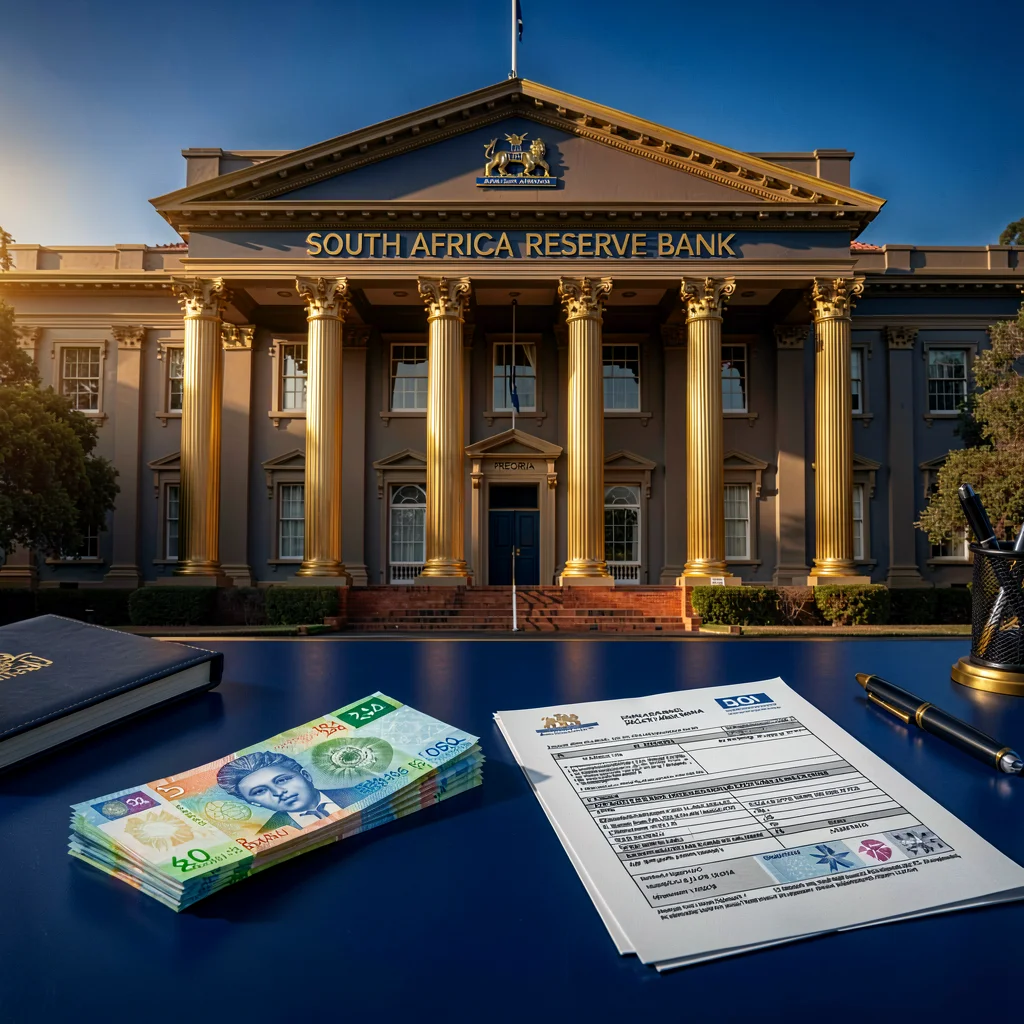
On 11 August 2026, the South African Reserve Bank (SARB) will implement updated Balance of Payments (BoP) reporting codes. This seemingly technical administrative change carries profound implications for foreign buyers purchasing property in Cape Town — using the wrong BoP code can result in delayed fund transfers or even frozen capital.
Immigration and tax experts at Foreign Buyer Property Solutions (FBPS) note that the new code system encompasses over 800 categories and subcategories, a level of granularity far exceeding the previous framework. For Taiwanese investors considering or already holding property in Cape Town, understanding these new rules is essential for ensuring the safe movement of capital across borders.
Key Insight: The SARB's BoP code update is not a routine administrative adjustment — it is a structural reform aligning South Africa with the IMF's Balance of Payments Manual (Version 6). For foreign property investors, the correct BoP classification is the passport for capital to flow freely; an incorrect classification can become a roadblock. With only 8 days until the 11 August effective date, now is the final window to understand the new rules and ensure compliance.
What Are BoP Codes and Why Must Foreign Buyers Care?
South Africa remains an exchange control jurisdiction where cross-border capital movements are closely regulated. The BoP reporting system is the electronic messaging system that authorised dealers (commercial banks) use to report cross-border transactions to the SARB. When a foreign buyer brings funds into South Africa to purchase property, the bank uses a specific BoP code to declare the nature of the transaction to the SARB.
This code is not a simple checkbox — it declares the nature of the funds to the SARB, and the classification depends on the type of investment structure and what the property will be used for. The correct BoP classification will enable you to transfer your proceeds abroad when exiting the South African property market, while an incorrect code can result in delays or even freezing of your capital.
Lightstone data shows that foreign buyers now account for approximately 40% of South African home sales above R20 million. Paul Stevens, CEO of Just Property, notes that international buyers are no longer looking at South African luxury homes only as investments, but as places to live, work remotely, holiday and return to. As foreign buyer participation grows, BoP reporting compliance becomes increasingly critical.
Old vs New: The Structural Upgrade to 800+ Categories
The updated BoP code framework aligns with the IMF's Balance of Payments Manual (Version 6 or BPM6). It is intended to standardise category code structures, descriptions, direction rules, and supporting information requirements for transactions across borders. FNB noted in a client communication that the harmonised requirements apply to both inward and outward transactions, including import and export payments, advance payments and receipts, and other cross-border payments requiring BoP reporting.
| Item | Old System | New System (from 11 Aug 2026) |
|---|---|---|
| Number of categories | ~200+ categories | 800+ categories and subcategories |
| International standard | Partial BPM5 alignment | Full BPM6 alignment |
| Reporting scope | Primarily large transactions | All cross-border transactions, regardless of amount |
| Processing efficiency | Higher manual review ratio | Straight-through processing (STP) in CMA |
| SARS consistency | No mandatory requirement | Must match tax disclosure |
According to FNB, the harmonised structure is aimed at improving reporting accuracy, ensuring consistent BoP classification, and enhancing the quality of data used by the SARB for economic analysis, financial stability monitoring, and policy formulation. It should also improve straight-through processing of payments within the Common Monetary Area (CMA), making qualifying transactions more efficient.
BoP Reporting in Practice: Cape Town Property Scenarios
For Taiwanese investors purchasing property in Cape Town, the choice of BoP code depends on several factors. Here are the four most common investment structures and their corresponding BoP reporting considerations:
Individual Ownership
Foreign buyer purchases property in personal name. Funds are reported as "personal capital transfers." Simplest structure, but requires attention to estate planning and tax residency status.
Company Ownership
Property held through a South African or offshore company. Funds reported as "direct investment" or "portfolio investment" depending on the corporate structure. Company registration documents must align with BoP reporting.
Trust Structure
Property held through a lawyer trust protection structure, as recommended by DingYao Advisory. Funds reported as "trust-related capital transfers" with supporting trust documentation. Provides asset isolation and estate planning advantages.
Joint Venture
Multiple investors co-owning property. Each investor's funds must be reported separately, with proportional allocation upon sale. All co-owners must maintain consistent BoP classifications.
Consequences of Incorrect Codes: From Delays to Frozen Capital
FBPS issues a clear warning: incorrect BoP classification can lead to serious consequences. The most common scenario is delayed fund repatriation — when you sell your property and the bank discovers that the BoP code used for the initial fund entry does not match the exit declaration, the transaction is suspended for review, a process that can take weeks or even months.
In the most severe cases, incorrect codes can result in frozen capital. If the SARB determines that the source or nature of the funds is questionable, it can freeze the relevant capital until the investigation is complete. For buyers who need liquidity or have already planned their next investment, this is a nightmare scenario.
Critical Reminder: The BoP code used must be consistent with the taxpayer's disclosure to the South African Revenue Service (SARS). From a tax compliance perspective, it is very important that your coding matches your tax return, as any inconsistency will raise flags with SARS. This means BoP reporting is not just a banking requirement — it is an integral part of tax compliance.
How to Ensure You Use the Correct BoP Code
Given South Africa's exchange control framework, foreign real estate investors buying property in the country should ensure the correct BoP classification is used from the outset. Here is a practical guide:
Determine Your Investment Structure
Before bringing funds into South Africa, decide on the legal structure for property ownership — individual, company, or trust. Different structures correspond to different BoP classifications.
Consult Professional Advisors
Work with advisors familiar with South African exchange control and tax regulations to confirm the applicable BoP code. DingYao Advisory can connect you with our partner law firm Garlicke & Bousfield to ensure correct classification from the start.
Confirm with Your Bank
Before remitting funds, confirm with your South African commercial bank (such as Standard Bank) that the BoP code being used is correct. As authorised dealers, banks are responsible for ensuring reporting accuracy.
Maintain Complete Documentation
Keep all documents related to fund entry, including remittance slips, bank confirmations, and contract documents. These may be required when repatriating funds in the future.
Review Compliance Regularly
South Africa's regulatory environment continues to evolve. Periodically review your BoP reporting and tax filing consistency with your advisor to ensure ongoing compliance.
Impact of the SARB Update on Cape Town's Property Market
The impact of this BoP code update on Cape Town's property market is two-sided. In the short term, some foreign buyers may delay purchase decisions due to unfamiliarity with the new rules, creating a brief wait-and-see period. However, in the medium to long term, a more precise BoP reporting system will enhance the transparency and efficiency of South Africa's cross-border capital flows, potentially attracting more compliant international capital.
For investors who already hold property in Cape Town, this new regulation means that when selling in the future, the BoP reporting for fund repatriation must match the classification used when funds were originally brought in. If the original reporting had issues, now is the best time to proactively review and correct them.
"If your coding is incorrect, your money will not flow, and if your SARS record is inconsistent with the code used, you face big problems. Getting it right from the start is your best option." — FBPS, Foreign Buyer Property Solutions (15 Jul 2026)
How DingYao Advisory Can Help
For Taiwanese investors, the SARB BoP code update may sound complex and distant, but it plays a critical role at every stage of Cape Town property investment — from fund entry, property purchase, holding management, to eventual sale and fund repatriation, every step involves BoP reporting.
DingYao Advisory provides a complete Cape Town property service chain covering every aspect of BoP compliance:
- Legal Structure Design — Through our partner law firm Garlicke & Bousfield (over a century of South African legal experience), we design the optimal holding structure for each investor, ensuring BoP classification is correct from the outset
- Fund Management — Standard Bank Wealth savings account providing secure, transparent fund custody with professional BoP reporting oversight
- Tax Compliance — Ensuring BoP reporting aligns with SARS tax filings to avoid triggering audits due to inconsistencies
- Asset Management — End-to-end asset management from lease administration to property maintenance, including assistance with smooth fund repatriation upon sale
DingYao's SARB Compliance Strategy: SARB's 11 August BoP code update = comprehensive upgrade of foreign buyer fund reporting = higher compliance standards. DingYao Advisory's lawyer trust protection structure + Standard Bank account + Garlicke & Bousfield legal support ensures your funds remain compliant from entry to exit. With only 8 days until the new rules take effect, now is the time to review your BoP compliance status.
Conclusion: Compliance Is the Foundation of Capital Security
The SARB's BoP code update is not a technical detail to be ignored — it is the foundation of capital security for foreign buyers in South Africa's property market. The granularity of 800+ categories, alignment with IMF international standards, and consistency requirements with SARS tax filings together form a stricter but more transparent cross-border capital regulatory framework.
For Taiwanese investors in Cape Town property, this new regulation presents both a challenge and an opportunity. The challenge is the higher compliance threshold requiring more professional advisory services. The opportunity is that investors who can demonstrate compliance will gain a competitive advantage in a more transparent and efficient market.
With only 8 days until the 11 August effective date, if you are considering Cape Town property investment or already hold Cape Town property, now is the time to understand the new rules, review your compliance status, and ensure your capital security.
The SARB's 11 August deadline is approaching — is your BoP reporting ready? Book a one-on-one consultation to receive DingYao Advisory's professional compliance assessment and Cape Town property investment advice.