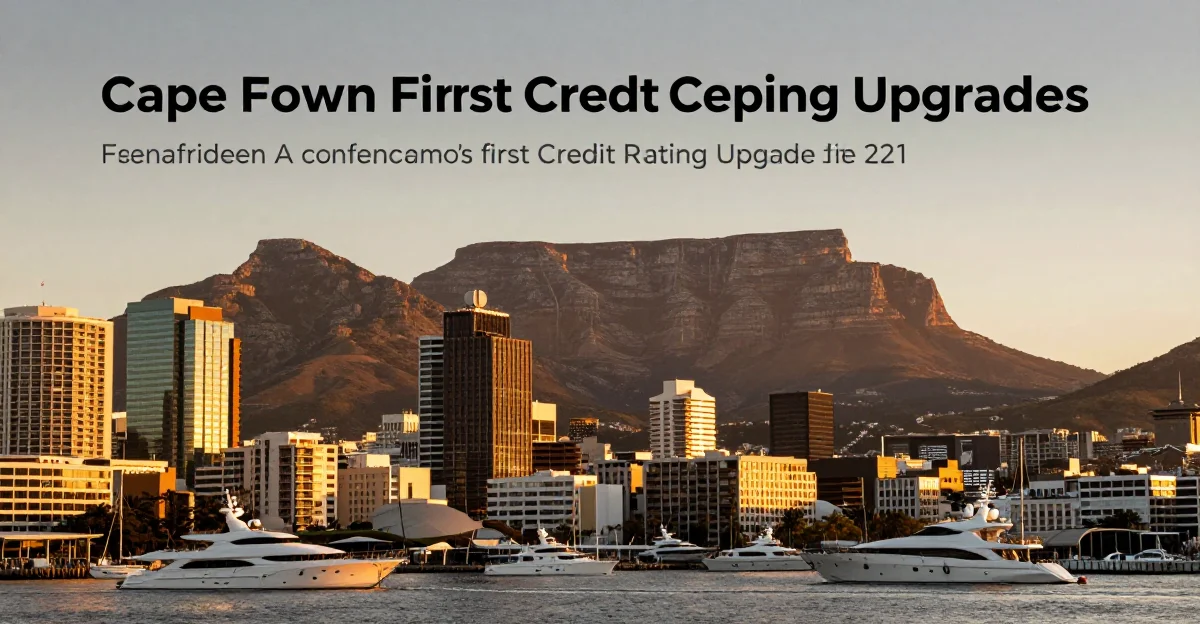
Introduction: A Once-in-21-Years Capital Repricing
On June 5, 2026, Fitch Ratings upgraded South Africa's sovereign credit rating from BB- to BB with a stable outlook — its first positive rating action on South Africa since 2005. South Africa also became only the second G20 nation to receive a Fitch upgrade in 2026.
The bigger signal lies in three-agency convergence. S&P Global shifted its outlook to "positive" in November 2025; Moody's moved from "stable" to "positive." This synchronized improvement across all three major agencies is extremely rare in post-apartheid South Africa. The National Treasury stated on June 12 that these upgrades "show the path to investment grade" — the subtext: South Africa's country risk premium is compressing, and international capital has begun repricing.
Capital Flows After 21 Years of Rating Stagnation
148 Basis Points of Repricing
South Africa's 10-year government bond yield has dropped approximately 148 basis points — international capital is buying South African sovereign debt at a lower risk premium. When bond yields fall, financing costs across the economy benefit, from corporate borrowing to mortgage rates. For overseas investors, this compression signals that markets are reassessing South Africa's country risk, and the process is far from over.
Institutional Capital "Unlock Effect"
Many global pension funds, insurance companies, and sovereign wealth funds restrict investment in sub-investment-grade markets. Fitch's upgrade from BB- to BB still keeps South Africa in junk territory, but three dynamics are already in motion:
- Positive momentum attracts early positioning: Institutional investors begin building positions along the "upgrade path" rather than waiting for investment grade
- S&P positive outlook hints at next upgrade: If S&P pushes South Africa into investment grade, it will trigger massive institutional inflows
- Emerging market fund rebalancing: South Africa's improvement increases its weight in emerging market portfolios
Rand Asset Discount Narrowing
The rand remains in historically undervalued territory. Rating-upgrade capital inflows are supporting the currency, and sovereign rating improvements typically lag 6-18 months before fully reflecting in exchange rates. The current rand level still contains a "rating discount" — a double discount window on both currency and asset prices for overseas investors.
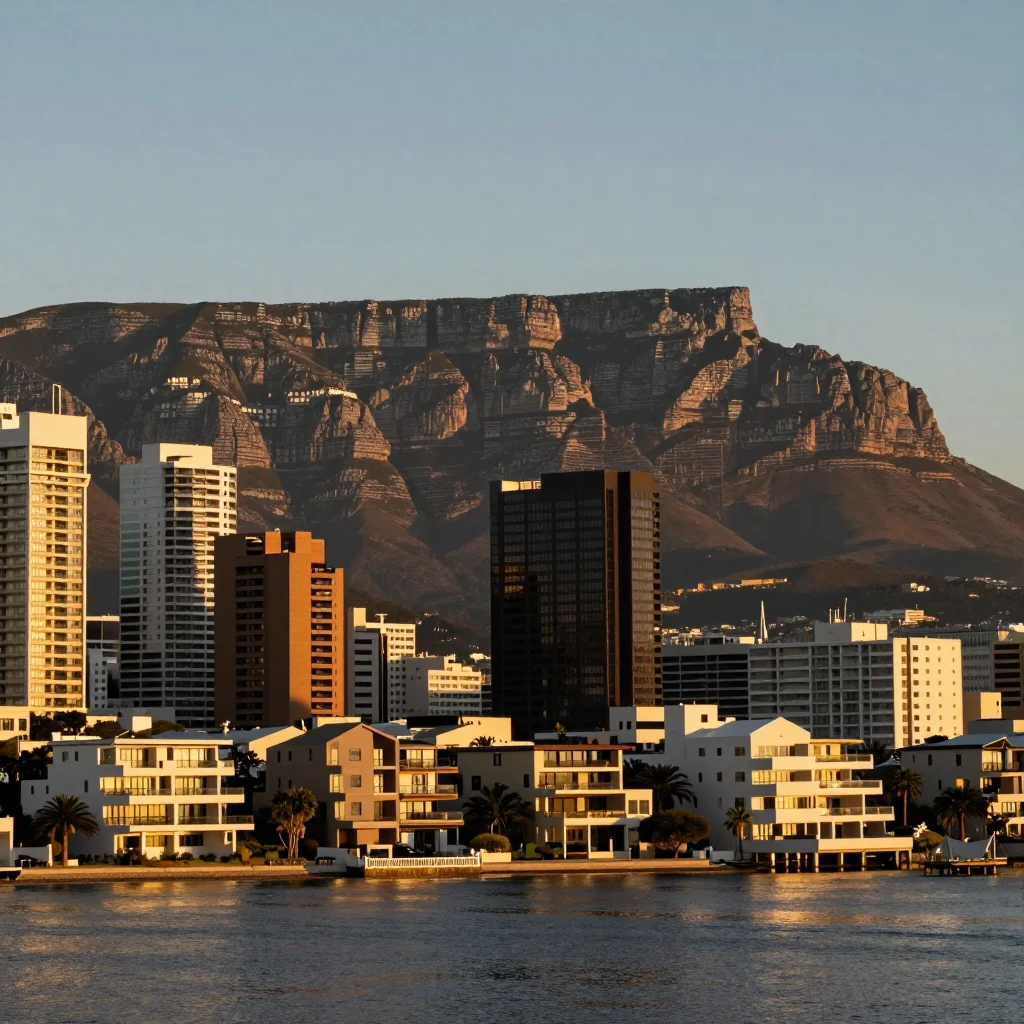
Cape Town: International Capital's Preferred Post-Upgrade Destination
When country risk premiums decline, the highest-quality asset classes capture the largest repricing gains. Cape Town premium residential real estate offers three layers of appeal:
- Scarcity pricing power: Developable land in Atlantic Seaboard and City Bowl is extremely limited. Supply constraints give owners pricing power — even during downturns, premium properties fall far less than the national average
- Sustained international rental demand: Cape Town is Africa's top expatriate city. Tech and financial sector expansion drives premium rental demand, supporting 8-10% full-occupancy rental yields
- Growing governance premium: The Western Cape's municipal quality significantly outperforms the national average. After a rating upgrade, this governance gap becomes more pronounced — investors seek risk-adjusted returns, and the Western Cape provides the best risk-adjustment baseline in South Africa
The rating upgrade amplifies Cape Town's value through three effects: a confidence shift from "high-risk emerging market" to "improving opportunity" (Cape Town benefits first as the most recognizable brand); financing effect — lower interest rates raising the local demand floor and indirectly supporting overseas cash buyers' asset values; and currency effect — rand discount narrowing letting overseas investors capture both asset appreciation and currency gains.
DingYao Phase 1: The R 16,000,000 Optimal Post-Upgrade Allocation
The rating upgrade reduces the risk basis for holding South African assets, while DingYao Phase 1's structure already balances yield and security — together forming the most compelling overseas property strategy for the current window.
| Component | Amount | Description |
|---|---|---|
| Property purchase | R 10,450,000 | Cape Town premium residential |
| Associated costs | Approximately R 550,000 | Transfer, legal, trust establishment |
| Standard Bank Wealth demand deposit | R 5,000,000 | Daily compounding paid monthly, effective annual rate approximately 6.72% |
| Total entry threshold | R 16,000,000 | One-time investment |
Dual-Engine Cash Flow: Rating Upgrade Yield Accelerator
Rental Engine
- R 10,450,000 × 8-10% = R 836,000 - R 1,045,000/year (full-occupancy rental income; income only when occupied)
- Post-upgrade corporate expansion drives rental demand, improving occupancy rates and rental levels
Interest Engine
- R 5,000,000 × 6.5% daily compounding paid monthly ≈ R 335,000+/year (effective annual rate approximately 6.72%)
- The Standard Bank Wealth demand deposit rate remains competitive even in a rate-cutting environment
Combined annual cash flow: R 1,171,000 - R 1,380,000
Lawyer Trust Protection (律師信言保護): Safety Gate Under Rating Improvement
All funds operate through a lawyer trust protection structure — from remittance to property transfer to the demand deposit account, client funds always remain in an independent trust account and never enter any personal account.
Hidden Engine: Interest During the Waiting Period
The full R 16,000,000 starts earning interest in the trust account immediately, with monthly interest of approximately R 86,000 (daily interest approximately R 2,849). Your money works from day one — even during the waiting period before property transfer, funds continue to accrue value.
Comparison With Other Overseas Markets
Cape Town's dual-engine cash flow (rental + deposit interest) totals R 1,171,000-1,380,000/year, far exceeding London (3-4% rental only), Sydney (3-5%), and Singapore (2-3%) — and the rating upgrade means Cape Town's yield risk basis is improving, narrowing the gap with these investment-grade markets.
Conclusion: First Upgrade in 21 Years Is an Action Signal
Fitch's first upgrade of South Africa in 21 years is the international capital market's formal confirmation of improving macro fundamentals. Three agencies improving in sync, 148 basis points of yield compression, and institutional capital beginning to "unlock" point to one conclusion: South Africa's risk repricing has begun, and Cape Town as the highest-quality destination benefits first.
For overseas investors, DingYao Phase 1's R 16,000,000 dual-engine allocation — annual cash flow of R 1,171,000-1,380,000 paired with lawyer trust protection (律師信言保護) — provides the optimal path during the rating improvement window. The timing is not in a future investment-grade confirmation — it is in today's rating improvement window.