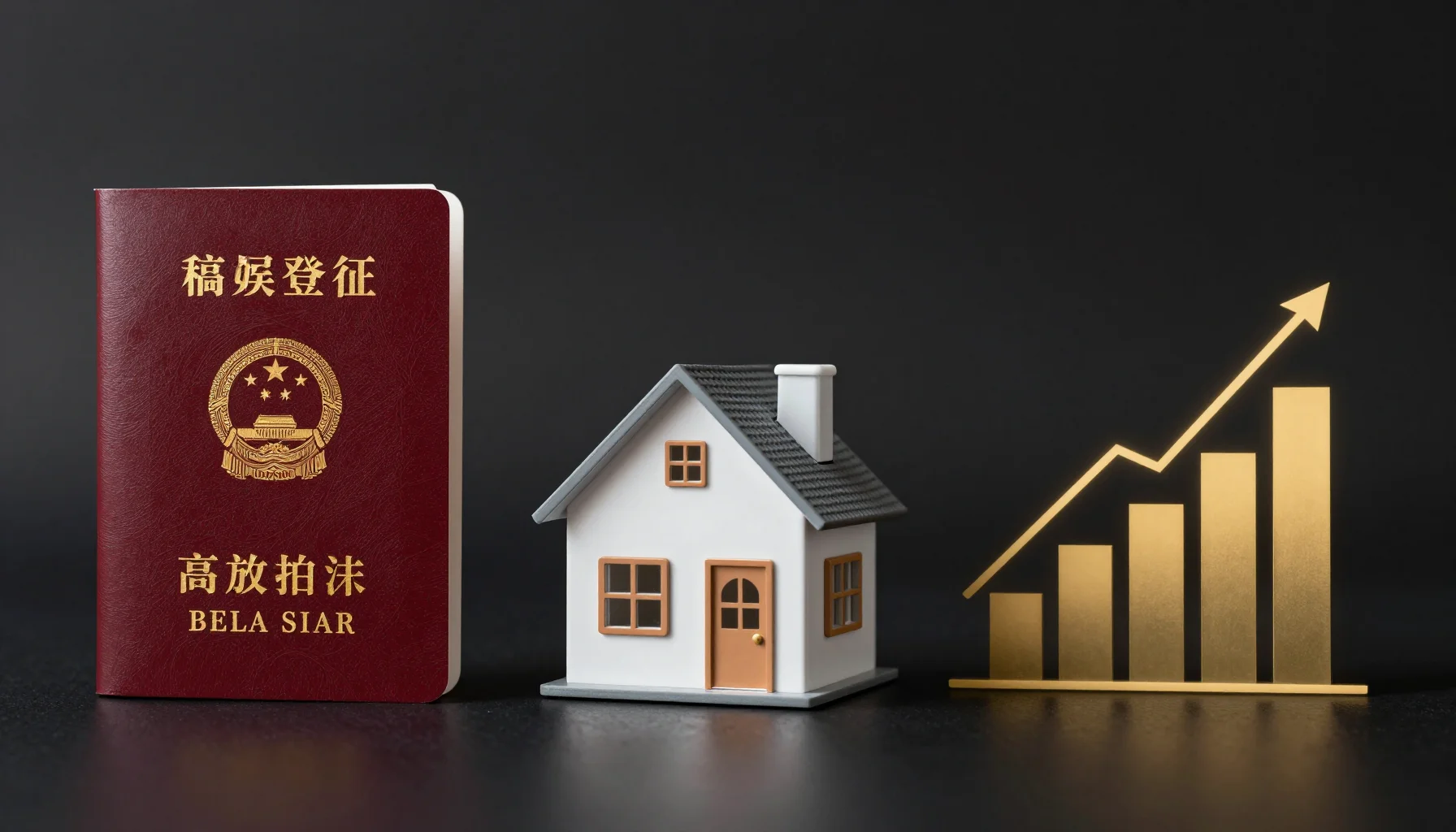
Taiwan passbook and Cape Town seaside home comparison imagery, showing the shift from low to high interest and passive income allocation

Taiwan Deposit Rates Too Low? South Africa High-Interest Fixed Deposits + Cape Town Property: How to Turn Idle Cash into 7-11% Stable Passive Income

"Taiwan's fixed deposit rates are too low — my money in the bank earns almost no interest. What should I do?" This is the most anxious question for many Taiwanese retirees and savers in a low-interest environment. Taiwan's TWD fixed deposit rates are only about 1-1.5%, while South Africa, with SARB holding the repo rate at 7%, offers fixed deposit rates of 7-8% and Cape Town property rental yields of 7.5-11.4%.

This is the key opportunity for Taiwanese investors to turn idle cash into stable overseas passive income. Through the dual-engine allocation of "South African high-interest fixed deposits + Cape Town property," you can transform TWD that would otherwise sit in the bank earning almost nothing into 7-11% stable cash flow. This guide will walk you through a complete comparison of TWD deposits, South African deposits, Cape Town property, and South African REITs to find the high-yield alternative that best fits you.

Direct Answer: Taiwan fixed deposit rates are only 1-1.5%, while South Africa offers 7-8% fixed deposit rates (Standard Bank 12-month up to about 8.15%) and Cape Town property rental yields of 7.5-11.4%. With SARB holding at 7% and prime at 10.5%, the dual-engine strategy of "South African high-interest deposits + Cape Town property" can turn idle cash into 7-11% stable passive income. Consult DingYao now to master the allocation strategy.


Taiwan Deposit Rates Too Low? First See the Huge Gap Between TWD and South African Deposits

Let's give a clear answer first: Taiwan's deposit rates are indeed too low, and South Africa offers a far higher-yield alternative. Taiwan's central bank has long maintained a low-interest environment, with TWD fixed deposit rates generally between 1-1.5%. Even the most favorable digital account products are mostly around 2%. For retirees and savers, this means a million TWD in fixed deposits earns only about 10,000-15,000 TWD in interest per year.

In contrast, with SARB holding the repo rate at 7%, South African fixed deposit rates generally range from 7-8%. For example, Standard Bank offers 12-month fixed deposit rates of about 7-8%, with some products reaching as high as 8.15%. The same capital placed in South African deposits earns 5-8 times more than in Taiwan.

Key Insight: Taiwan deposits at 1-1.5% vs. South African deposits at 7-8% — a 5-8x gap in returns. This is not a small difference; it is the key to whether retirees and savers can "live off interest." South Africa's high-interest environment is the high-yield alternative answer for Taiwan's low-interest savers.

"Taiwan's deposit rates are too low — the deepest anxiety of retirees. South Africa, at a 7% repo rate, offers 7-8% deposits, the first exit for Taiwanese savers to turn idle cash into stable passive income." — Scott Huang, CEO of DingYao Advisory

South African High-Interest Fixed Deposits: How Standard Bank's 7-8% Rates Work

Having understood the huge gap between TWD and South African deposits, the next question is: how do South African high-interest fixed deposits actually work? South African deposit products are conceptually similar to Taiwan's, but with different rates and rules.

Take Standard Bank, one of South Africa's largest banks, as an example. Its Fixed Deposit product offers a guaranteed interest rate, allowing investors to choose investment terms ranging from 3 months to 5 years. The 12-month fixed deposit rate is about 7-8%, with some products reaching as high as 8.15%, and a minimum deposit of about R100,000.

Guaranteed Rate

South African fixed deposits offer a guaranteed rate, locking in the interest for the investment term regardless of market fluctuations.

Flexible Terms

Choose investment terms from 3 months to 5 years, with the 12-month rate being the most attractive.

Minimum Deposit

Standard Bank's fixed deposit minimum is about R100,000, suitable for medium-to-large capital allocation.

FX Compliance

Foreigners opening a South African deposit account must comply with exchange control, and funds remitted in must be declared per SARB rules.

For Taiwanese investors, the appeal of South African deposits lies in "high interest + relatively low risk." A fixed deposit is a bank-guaranteed product with risk far lower than stocks or funds, yet it offers 7-8% returns — the most direct "high-yield alternative" for Taiwanese savers.

Cape Town Property: The 7.5-11.4% Rental Yield High-Yield Engine

If South African fixed deposits are the "floor" of the high-yield alternative, then Cape Town property is the engine for pursuing higher returns and appreciation. Cape Town property rental yields generally range from 7.5%-11.4%, higher than South African deposits, and the property itself also offers appreciation potential.

As South Africa's economic and tourism hub, Cape Town has stable property demand. According to the State of Cape Town Central City Report 2025, Cape Town CBD investment surged 41% to R12.8 billion, with inner-city investment momentum continuing to heat up, corroborating Cape Town's appeal as a property destination.

For Taiwanese investors, the advantage of Cape Town property lies in "rental income + asset appreciation" dual returns. Rental yields of 7.5-11.4% provide stable cash flow, while property price appreciation offers long-term capital gains. Through DingYao's property management service, investors can easily manage overseas property and enjoy stable passive income.

Key Insight: Cape Town rental yields of 7.5-11.4% are higher than South African deposits at 7-8%, and property also offers appreciation potential. Cape Town CBD investment surged 41% to R12.8 billion, corroborating inner-city investment momentum. For Taiwanese investors pursuing "high returns + appreciation," Cape Town property is a more advanced high-yield engine than deposits.

Deposits vs. Property vs. REIT: A Complete Comparison of Three High-Yield Allocations

Having understood South African deposits and Cape Town property, the next key decision is: which of these three high-yield allocations is best for you? The comparison table below shows the differences between TWD deposits, South African deposits, Cape Town property, and South African REITs at a glance.

Comparison TWD Deposit SA Deposit Cape Town Property SA REIT
Yield 1-1.5% 7-8% 7.5-11.4% ~6-9%
Liquidity High Medium (at maturity) Low (slow to sell) High (tradable)
Risk Very low Low (bank-guaranteed) Medium (property/FX) Medium-high (market)
Appreciation None None High (price growth) Medium (share price)
Management Cost None None Medium (property mgmt) Low
Best For Conservative savers High-yield floor needs High return + growth Diversifying property risk

From the comparison table, Cape Town property offers the highest yield (7.5-11.4%) with appreciation potential, but lower liquidity and management costs; South African deposits offer a stable 7-8% floor with better liquidity. The two are not mutually exclusive — they can be combined into a dual-engine allocation of "deposit floor + property growth".

Key Insight: Cape Town property yields of 7.5-11.4% are the highest with appreciation potential, while South African deposits at 7-8% provide a stable floor. The best strategy is not to choose one, but to use a dual-engine allocation — deposits ensure stable cash flow, while property pursues higher returns and asset growth.

SARB's 7/23 Rate Decision: The Significance of Holding at 7% and Prime at 10.5%

The foundation of South Africa's high-interest environment comes from the South African Reserve Bank's (SARB) interest rate policy. On 23 July 2026, the SARB Monetary Policy Committee (MPC) decided to hold the repo rate at 7.00%, with the prime lending rate remaining at 10.50%.

The significance of this decision is that South Africa's high-interest environment will persist. At a 7% repo rate, bank fixed deposit rates remain at the high level of 7-8%, and Cape Town property rental yields remain attractive at 7.5-11.4%. For Taiwanese investors, this means the yield advantage of South African high-interest deposits and Cape Town property will not disappear in the short term.

Notably, SARB hiked rates by 25 basis points in May 2026 and held steady in July. The next MPC meeting is on 23 September. If South African inflation pressure persists, SARB may hike further, potentially raising deposit and property yields; if it cuts, the yield advantage may narrow. Positioning early is the way to lock in the current high-interest environment.

Key Insight: SARB held at 7% on 7/23 with prime at 10.5%, so South Africa's high-interest environment persists. This means the yield advantage of South African deposits at 7-8% and Cape Town property at 7.5-11.4% will not disappear in the short term. The next MPC is on 9/23, so positioning early locks in the current high interest.

The TWD/ZAR Exchange Rate: How to Amplify Your South African Purchasing Power

Beyond high interest, Taiwanese investors have an additional advantage — the exchange rate. In 2026, the TWD is relatively strong while the South African rand (ZAR) is relatively weak, creating a dual exchange-rate advantage of "TWD appreciation + ZAR weakness."

For Taiwanese investors, this means the same TWD capital can be exchanged for more rands, buying "cheaper" South African deposits and Cape Town property. When you allocate TWD-denominated capital to South Africa, the exchange-rate advantage further amplifies your actual returns and purchasing power.

  • Relatively strong TWD — higher overseas purchasing power
  • Relatively weak ZAR — South African deposits and property are relatively cheaper
  • Dual exchange-rate advantage — amplifies actual investment returns
  • Returns denominated in ZAR — exchange-rate fluctuations affect actual TWD returns

Of course, the exchange rate is a double-edged sword. If the rand appreciates, your asset value rises; if it depreciates, it may erode returns. Therefore, professional exchange-rate planning and a long-term holding strategy are essential — this is exactly the value DingYao Advisory's on-the-ground team can provide.

The Dual-Engine Allocation: How to Combine Deposits and Property into Stable Passive Income

Having understood the advantages of South African deposits and Cape Town property, the next key question is: how do you combine the two into stable passive income? This is the core concept of the dual-engine allocation.

01

Assess Capital and Goals

Confirm the idle capital available, set a passive income target (e.g., NT$50,000 per month), and decide the ratio of deposits to property.

02

Allocate South African High-Interest Deposits

Put part of your capital into South African deposits (7-8%) as a stable floor of cash flow, ensuring fixed interest income each month.

03

Allocate Cape Town Property

Put another part of your capital into Cape Town property (rental yields of 7.5-11.4%) to pursue higher returns and asset appreciation.

04

Capital Compliance and FX Planning

Use DingYao to assist with capital remittance compliance (SARB declaration) and TWD/ZAR exchange-rate planning to amplify purchasing power.

05

Property Management and Income Management

Use DingYao's property management service to manage your Cape Town property, building stable passive income from rent plus deposit interest.

The key to this allocation is the complementarity of "deposit floor + property growth." Deposits provide stable, low-risk cash flow, while property offers higher returns and appreciation potential. Combined, they ensure stable monthly passive income while pursuing long-term asset growth.

Risks and Considerations: View High Interest and Property Rationally

High interest and property can amplify returns, but they can also amplify risk. Before allocating to South African high-interest deposits and Cape Town property, investors must rationally consider the following risks:

  • Exchange-rate risk — Fluctuations in the South African rand (ZAR) against the TWD may affect actual returns and asset value. Assess hedging and long-term holding.
  • Interest-rate risk — If SARB cuts rates, deposit and property yields may narrow; if it hikes, borrowing costs rise.
  • Exchange control risk — Funds remitted in and out must comply with SARB rules; declaration errors may cause delays or freezes.
  • Liquidity risk — Cape Town property is slower to liquidate than deposits; plan your capital accordingly.
  • Tax and legal — Overseas deposits and property involve South African tax, foreign buyer rules, and legal procedures that require professional advisors.

These risks are not uncontrollable — they require professional planning and management. Through DingYao Advisory's on-the-ground team (Crestline Advisory on execution, Garlicke & Bousfield law firm, Standard Bank for fund custody), investors can obtain complete legal, tax, and capital security support to minimize risk.

"High interest and property are not traps, provided you understand the rules and risks behind them and manage them with the right structure. South Africa's 7% repo rate and exchange control are the compliance framework for Taiwanese investors allocating to high-interest deposits and Cape Town property, worth deep study by rational investors." — Scott Huang, CEO of DingYao Advisory

Conclusion: Master South African High-Interest Deposits + Cape Town Property and Turn Idle Cash into Stable Passive Income

Taiwan fixed deposit rates are only 1-1.5%, while South Africa offers 7-8% fixed deposit rates and Cape Town property rental yields of 7.5-11.4%. In the high-interest environment of SARB holding at 7% and prime at 10.5%, South Africa provides a complete high-yield alternative for Taiwan's low-interest savers.

Through the dual-engine allocation of "South African high-interest fixed deposits + Cape Town property," you can transform TWD that would otherwise sit in the bank earning almost nothing into 7-11% stable passive income. Deposits provide a stable floor of cash flow, while property pursues higher returns and asset appreciation. Mastering the allocation early and calculating returns and risks precisely is the way to maximize the benefit of your idle cash.

Want to understand how to turn your idle TWD into stable passive income through South African high-interest deposits and Cape Town property? Book a consultation now and let DingYao Advisory help you plan the dual-engine passive income strategy.

Frequently Asked Questions (FAQ)

Taiwan deposit rates are too low. What are South Africa's fixed deposit rates?

South African fixed deposit rates are far higher than Taiwan's. For example, Standard Bank offers 12-month fixed deposit rates of about 7-8% (some products up to 8.15%), while Taiwan's TWD fixed deposit rates are only about 1-1.5%. With SARB holding the repo rate at 7% and prime at 10.5%, South African high-interest deposits are a high-yield alternative for Taiwanese savers.

Which generates higher passive income: South African fixed deposits or Cape Town property?

Cape Town property rental yields (7.5-11.4%) are typically higher than South African fixed deposits (7-8%), and property also offers appreciation potential; however, fixed deposits offer higher liquidity and no management costs. The two are not mutually exclusive — they can be combined into a dual-engine allocation of 'deposit floor + property growth' that balances stable cash flow with asset growth.

Can foreigners open a fixed deposit account in South Africa?

Yes. Foreigners can open a non-resident account and place fixed deposits through South African banks (such as Standard Bank), but must comply with South Africa's exchange control regulations, and funds remitted in must be declared per SARB rules. DingYao can help you understand the account opening and capital compliance process.

What is South Africa's SARB interest rate right now?

The SARB repo rate currently stands at 7.00%, with the prime lending rate at 10.50%. SARB decided to hold rates steady on 23 July 2026, with the next MPC meeting on 23 September. This high-interest environment is the foundation of South African deposit and property yields.

How should Taiwanese investors allocate between South African high-interest deposits and Cape Town property?

A dual-engine allocation is recommended: put part of your capital into South African high-interest fixed deposits (7-8%) as a stable floor of cash flow, and part into Cape Town property (rental yields of 7.5-11.4%) to pursue higher returns and appreciation. Leverage the TWD/ZAR exchange rate advantage to amplify purchasing power, with DingYao's on-the-ground team assisting with capital compliance and property management.

Related Reading

Master South African High-Interest Deposits + Cape Town Property and Turn Idle Cash into Stable Passive Income Taiwan fixed deposit rates are only 1-1.5%, while South Africa offers 7-8% fixed deposit rates and Cape Town property rental yields of 7.5-11.4%. With SARB holding at 7% and prime at 10.5%, book a property assessment now and let DingYao Advisory help you plan the dual-engine passive income strategy of South African high-interest deposits plus Cape Town property. Book a Property Assessment