South Africa's Property 'Purple Patch' Has Arrived: Is It Time to Buy Cape Town?

South Africa's Property 'Purple Patch' Has Arrived: Is It Time to Buy Cape Town?

South Africa's largest bank has just declared a "purple patch" for the country's real estate market over the next 24 to 48 months. Andrew Robinson, Head of Real Estate at Standard Bank, made the announcement at a Sandton media roundtable on 9 September, alongside a strategic alliance with investment bank Java Capital. This is breaking news from 10 hours ago — and it answers the question Taiwanese investors care about most: with institutional money moving in, is it time to buy Cape Town property?

Based on the Standard Bank official interview, SAPOA office vacancy data, StatsSA GDP figures and SARB interest rates, this article unpacks the evidence behind the "purple patch" forecast, the capital-market significance of the Java Capital alliance, the uneven REITs recovery, and a three-factor framework — institutional signals, interest rates and exchange rates — for Taiwanese investors to judge the timing. All figures come from public data and official interviews; nothing is exaggerated or fabricated.

Key Summary: Worth watching. Standard Bank declares a 24-48 month "purple patch" for SA property. REITs +2.4% YTD, office vacancy at a post-COVID low of 12.1%, policy rate 7%. Institutional money is a long-term structural signal; timing for Cape Town should be judged with the three-factor framework. Consult DingYao for market analysis and property planning advice.


Standard Bank declares 24-48 month purple patch for SA property

What Is the "Purple Patch" and Why Does Standard Bank See 24-48 Months?

The "purple patch" is Standard Bank's bullish call on South African real estate for the next 24-48 months, based on three converging trends: peaking interest rates, institutional capital returning, and improving vacancy rates. Andrew Robinson told the Sandton media roundtable that SA property is entering a "purple patch" — a sports term for a period of peak form, applied here to mean a golden window when bullish conditions align.

Rates Peaking: 7.00%

SARB policy rate holds at 7.00%, Prime at 10.50%. Markets expect the 23 September MPC to start a cutting cycle, gradually lowering financing costs.

Vacancy Low: 12.1%

SAPOA Q2 2026: national office vacancy fell to a post-COVID low of 12.1%, a clear improvement in commercial property fundamentals.

REITs Turn Positive: +2.4%

SA REITs are up 2.4% over the first 8 months as institutional money returns — though August's -5% shows the recovery is uneven.

IB Alliance: Java Capital

Standard Bank's balance sheet plus Java Capital's corporate finance, M&A and ECM capabilities — a structural capital-market play begins.

"We are entering a purple patch for South African real estate over the next 24 to 48 months." — Andrew Robinson, Head of Real Estate, Standard Bank (Sandton media roundtable, 2026-09-09)

Key Data: The "purple patch" rests on three pillars — policy rate 7.00% (peaked, awaiting cuts) + office vacancy 12.1% (post-COVID low) + REITs +2.4% YTD (capital returning). This is not a single tailwind; rates, supply-demand and capital are turning together.

Standard Bank and Java Capital alliance capital market significance

Why Is the Standard Bank–Java Capital Alliance a Structural Signal?

Because it pairs a bank balance sheet with investment-bank capital markets — institutional money is no longer just watching. Standard Bank is South Africa's largest bank by assets; Java Capital is an investment bank focused on corporate finance, M&A and equity capital markets. The alliance matters not as a single deal, but as a commitment to fund and structure real estate transactions over the next 24-48 months.

And the market is already showing real action: Dipula Properties announced a R2 billion acquisition of 9 shopping centres in September; Fortress and Hyprop are raising capital to expand simultaneously. These are the on-the-ground proof of the "purple patch" narrative — large institutions are deploying real money into SA property.

Institutional Move Details Significance
Standard Bank × Java Capital Bank balance sheet + IB capital markets alliance Upgraded capacity to finance and structure property deals
Dipula Properties R2bn acquisition of 9 shopping centres (September) Institutional M&A in retail property begins
Fortress / Hyprop Raising capital to expand simultaneously REIT capital returning; expansion appetite recovering
REIT Index +2.4% YTD (August -5%) Positive overall but uneven; stock selection beats timing

For Investors: Institutional alliances and M&A are leading indicators of "smart money." When banks and investment banks are willing to put their balance sheets behind property, they see a 24-48 month structural opportunity — not a three-month news cycle.

SA REITs +2.4% YTD but August -5% uneven recovery

REITs Are Up 2.4% YTD — Why Did August Fall 5%?

Because the recovery is uneven — the trend has turned positive, but monthly volatility remains high, which is exactly why institutions are entering in tranches. SA REITs are up 2.4% over the first 8 months, seemingly mild, yet August alone fell 5%, as the market digests rate uncertainty and diverging earnings across individual names.

For Taiwanese investors, this "+2.4% but -5%" combination is an important signal: REITs are a leading indicator of institutional capital, but they are not a synchronous indicator of the residential market. REITs mostly hold commercial and retail property, while Cape Town's residential market is driven by semigration, foreign buyers and supply scarcity — a different rhythm. Institutional money returning to REITs means overall risk appetite is rising, but residential investment still comes down to regional fundamentals.

Key Insight: REITs +2.4% is the "direction"; August -5% is the "rhythm." Institutions are looking at a 24-48 month window, not a single month. When reading institutional signals, focus on the trend, not the monthly noise.

Office vacancy 12.1% post-COVID low

Office Vacancy Hit a Post-COVID Low of 12.1% — Why Cape Town Over Johannesburg?

Because the national average is dragged down by Johannesburg, while Cape Town's commercial and residential demand is stronger. SAPOA Q2 2026 data shows national office vacancy fell to 12.1%, a post-COVID low. But this "national average" hides a two-speed structure: Johannesburg's office oversupply is still being absorbed, while Cape Town benefits from ongoing semigration and corporate relocations, lifting both commercial and residential demand.

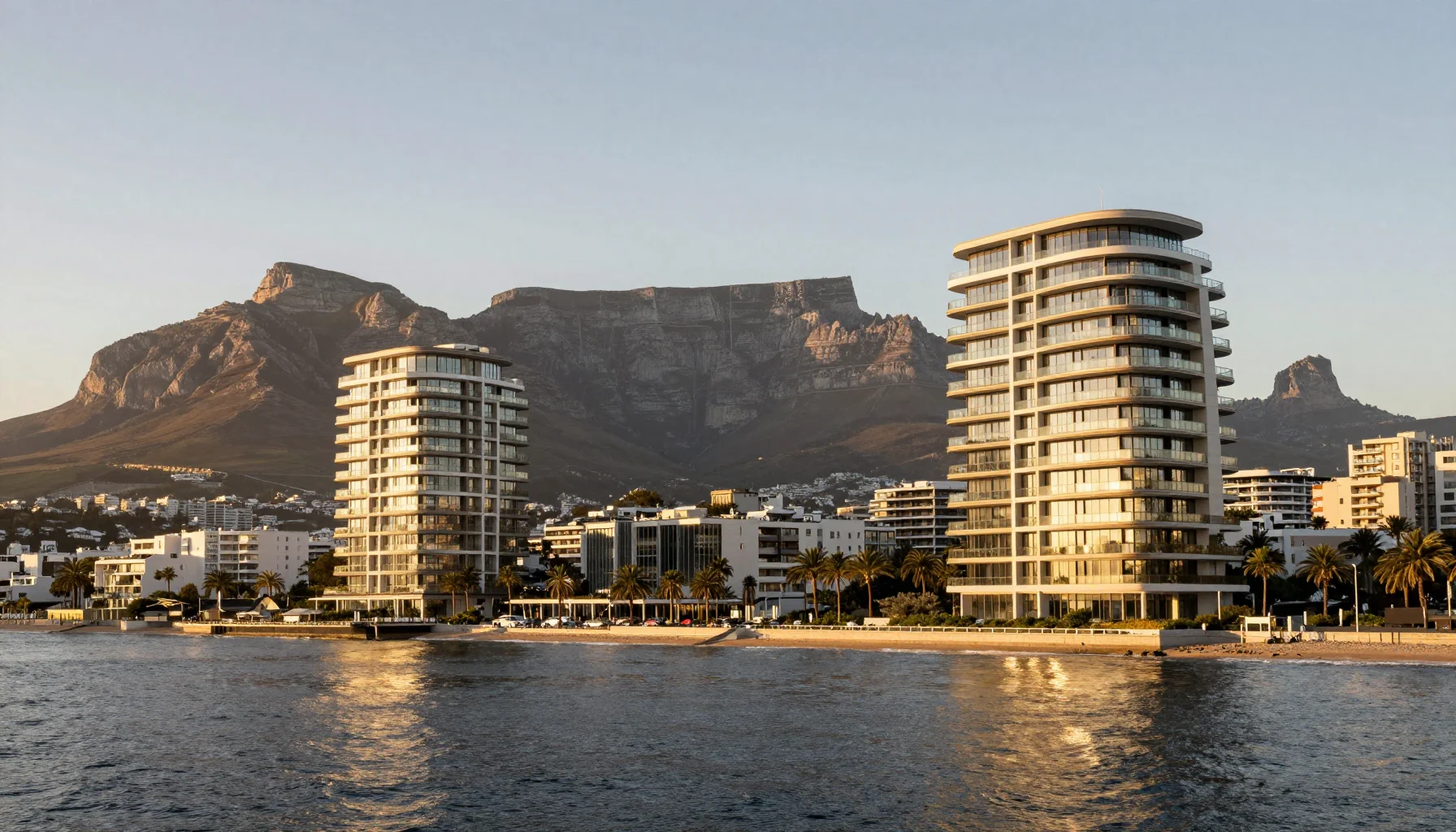
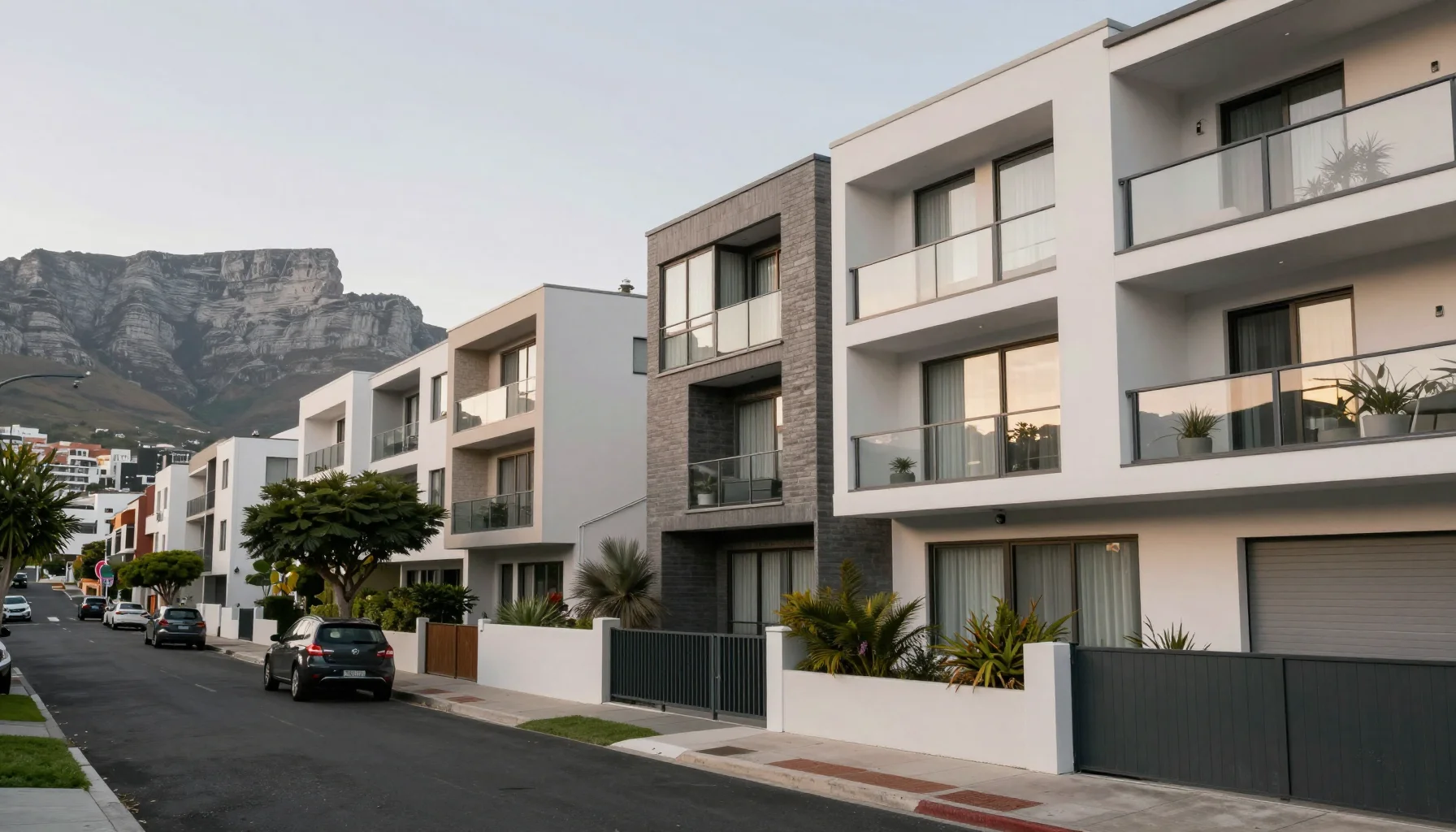
Apply this structure to the residential market: Cape Town sits between mountain and sea, with limited developable land, so supply cannot keep up with demand. Western Cape house prices rose 11.2% year-on-year (StatsSA April official data), well above the national 7.9%. Institutional capital returning plus regional supply-demand imbalance makes Cape Town the most certain region in the "purple patch" narrative.

01

Read the National Trend

Vacancy at 12.1% low, REITs positive, rates peaking — confirm the overall direction is up.

02

Read the Regional Structure

Cape Town's semigration, foreign buyers and supply scarcity give higher demand certainty than Johannesburg.

03

Read the Property Type

Apartments and townhouses yielding 7.5%-11.4% offer better cash flow than high-value luxury homes.

For Investors: The "purple patch" is a national narrative, but execution is regional. Cape Town's supply-demand structure (mountain-sea limits + semigration + foreign buyers) gives it higher certainty than Johannesburg in this wave of institutional capital.

Three-factor timing framework for Taiwanese investors

Should Taiwanese Investors Buy Now? The Three-Factor Framework

Using the "institutional signal + interest rate + exchange rate" framework: institutional signals have turned positive, rates are peaking ahead of cuts, and the rand is strengthening — all three factors are aligned, a rare entry window in recent years. But entering does not mean chasing highs — institutions are looking at a 24-48 month window, and Taiwanese investors should apply the same patience.

Factor Current State (Sep 2026) Meaning for Timing
Institutional Signal Standard Bank purple patch + Java Capital alliance + REITs +2.4% Smart money turns bullish; risk appetite rising
Interest Rate Policy rate 7.00%, Prime 10.50%, MPC on 23 Sep Peaked, awaiting cuts; borrowing costs to fall
Exchange Rate Rand strengthening (USD/ZAR ~15.96) Currency gains cut conversion costs; foreign buying power up

In the language Taiwanese investors know well: institutional money entering is like "institutional buying" in stocks; rates peaking is like "the hiking cycle ending"; a stronger rand is like "foreign capital returning" — when all three signals appear together in Taiwan's stock market, it is a clear buy signal, and the same logic applies to South African property. But remember, real estate is an illiquid asset — before entering, work out your capital structure, legal process and holding costs.

For Investors: Three factors aligned = the entry window is open. But "right timing" does not mean "buy anything" — region, property type and capital structure determine long-term returns. Institutions have 24-48 months of patience; Taiwanese investors should too.

Institutional money entering and what it means for Taiwanese investors

Institutional Money Entering — Threat or Opportunity for Taiwanese Investors?

It is an opportunity — provided you understand what institutions are buying. Institutional capital returning to SA property means the market's risk premium is falling and liquidity is improving — which is actually good for overseas investors: institutions provide a floor on the way in and a bid on the way out.

Connect the data in this article: Standard Bank's 24-48 month purple patch, REITs +2.4% YTD, office vacancy at a 12.1% low, policy rate 7.00%, Cape Town rental yields of 7.5%-11.4%, Western Cape prices up 11.2% — institutional bullishness, regional supply-demand imbalance and high rental cash flow all hold at once. Against Taiwan's 1-2% rental yields, Cape Town's income logic is backed by verifiable data on both return and diversification.

Of course, cross-border property is not just about headlines: currency volatility, rate decisions (23 Sep MPC), legal process and tax filing all need professional planning. The steady approach is to get market analysis and capital structure right first, then enter. The "purple patch" is a 24-48 month window — there is no need to rush for a three-day news cycle.

Institutional money has entered. How do you judge your Cape Town timing? Book a one-on-one consultation for professional market analysis and property planning advice.

This article is for information only and does not constitute investment advice. DingYao Advisory acts as an information consultant and does not engage in real estate brokerage. Actual property transactions, transfers and brokerage services are handled by South African partners (Crestline Advisory, licensed SA agents).

FAQ
FAQ

FAQ

What is the South African property "purple patch"?

The "purple patch" is a term used by Standard Bank's Head of Real Estate Andrew Robinson at a 9 September media roundtable, describing a 24-48 month golden window for SA real estate. The basis: rates peaking (policy rate 7.00%), office vacancy at a post-COVID low of 12.1%, and REITs up 2.4% YTD — three trends turning together.

With institutional money entering, is it time to buy Cape Town?

The three-factor framework shows the entry window is open: institutional signals positive (Standard Bank purple patch + Java Capital alliance), rates peaking ahead of cuts (23 Sep MPC), and a strengthening rand. But right timing does not mean buying anything — region, property type and capital structure determine long-term returns.

Why did SA REITs fall 5% in August despite being up 2.4% YTD?

Because the recovery is uneven. The overall trend has turned positive, but single months are still affected by rate uncertainty and individual earnings. REITs are a leading indicator of institutional capital, but not a synchronous indicator of the residential market — Cape Town housing is driven by semigration, foreign buyers and supply scarcity.

What mortgage rates can foreigners get in Cape Town now?

SA policy rate is 7.00% and Prime is 10.50%. Foreigners typically need 30%-50% down payment and must verify overseas income. Markets expect the 23 September MPC to start cutting, gradually lowering borrowing costs; cash buyers are unaffected by rates and see net rental income more directly.

How do I start planning a Cape Town property purchase?

First confirm target areas with official data and market reports, then plan your capital structure (cash or loan) and remittance route, complete legal due diligence and transfer, and finally appoint a professional management company for leasing, maintenance and tax filing. DingYao provides advisory services in market analysis, investment evaluation and legal/capital structure planning.

Related Reading
Related Reading

Institutional Money Has Entered — Is It Time to Buy Cape Town?

Standard Bank declares a 24-48 month "purple patch" for SA property. REITs +2.4% YTD, office vacancy at a post-COVID low of 12.1%. DingYao Advisory provides market analysis, investment evaluation and legal/capital structure planning consulting. Book a consultation now for professional assessment.

Book Consultation

【Compliance & Disclaimer】

1. Company Statement: DingYao Advisory (Ding Yao Advisory) is a Taiwan-based consultancy providing asset allocation, immigration advisory, overseas account opening, and second-generation education coordination services. DingYao does not engage in real estate brokerage or dealer activities within the Republic of China (Taiwan), nor does it handle, collect, or hold any property transaction funds.

2. Information Source & Contracting Party: The South African property, development projects, market data, and related images in this article are provided by overseas partners Crestline Advisory (Pty) Ltd and developer CanvasCrest Properties, for overseas asset allocation and market reference only, and do not constitute any offer, solicitation, or investment guarantee. All property-related purchase agreements, fund payments, and title transfers are executed directly between the buyer and overseas licensed developers/institutions in accordance with local law.

3. Statutory Risk Warning: "Foreign real estate investment carries risks. Investors should read marketing documents carefully and consider transactions prudently." Overseas investments involve exchange rate fluctuations, local regulations, tax changes, and market risks. Data (such as historical returns, interest rates, etc.) are based on specific calculation standards and timeliness; past performance does not guarantee future returns. Investors should assess independently and seek professional legal and financial advice.