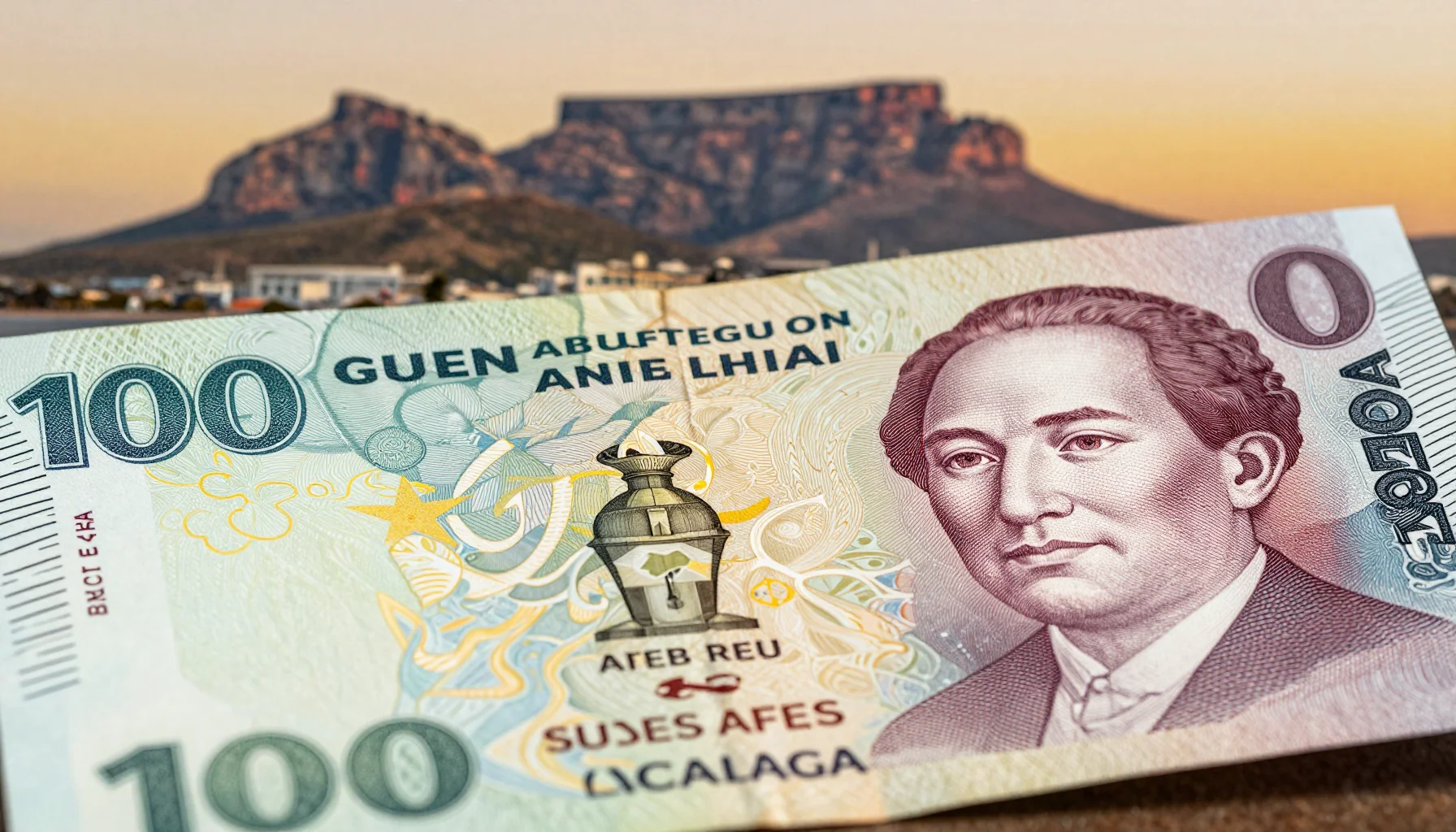
Taiwan stock market chart and Cape Town seaside homes, showing stock market gains turning into overseas assets and passive income accumulation

Taiwan's Stock Market Breaks 40,000 — Where Should Your Profit-Taking Money Go? How Cape Town Property Turns Stock Market Highs into Stable Passive Income

In August 2026, the hottest financial topic in Taiwan is the stock market breaking 40,000 points. Driven by the AI boom and the return of international capital, the Taiwan stock market surged past the 40,000-point mark, briefly flashing an all-time high of 41,575 points, with daily trading volume repeatedly exploding to NT$1.4-1.7 trillion. Investment executives interviewed by Business Weekly even boldly predicted "50,000 points is not a dream" for the fourth quarter.

But the higher the index climbs, the more anxious investors become — "It's risen so much, where should my profit-taking money go?" This is the question every profitable investor faces after the market breaks 40,000. When you sell your stocks at the high, if this capital stays entirely in a single market, it may face pullback risk; if you put it back into fixed deposits, the yield is pitifully low. You need a destination that can turn stock market highs into stable cash flow.

Direct Answer: With Taiwan's stock market breaking 40,000, profit-taking capital can be allocated to Cape Town property (rental yields 7.5-11.4%) and South African high-yield deposits (4.0-6.05%) — a dual-engine combination that turns a one-time stock market gain into stable passive income and overseas asset allocation. Get your asset allocation plan now.


The 40,000-Point Phenomenon: Taiwan's Hottest Financial Topic of 2026

First, let's understand how hot the "40,000-point stock market" phenomenon is. In 2026, the Taiwan stock market surged past the 40,000-point mark, driven by the AI boom and the return of international capital, briefly flashing an all-time high of 41,575 points, with daily trading volume repeatedly exploding to NT$1.4-1.7 trillion. Investment executives interviewed by Business Weekly No.1541 boldly predicted "50,000 points is not a dream" and "60,000 points is not out of the question" for the fourth quarter.

Behind this rally is Taiwan's strong export growth of 44.7% (Business Weekly No.770), combined with the AI boom and the return of international capital. For Taiwanese investors, this is a rare wealth effect — but it also brings the anxiety of "profit-taking at the high, where does the money go?"

Indicator Data Implication
Market milestone Broke 40,000 points All-time high, euphoric sentiment
Intraday high 41,575 points Daily volume NT$1.4-1.7 trillion
Export growth 44.7% AI boom + international capital
Market expectation "50,000 not a dream" Profit-taking anxiety emerges

The higher the index, the greater the volatility. As market sentiment runs high, "profit-taking at the high" becomes the rational choice for investors — but after selling, where this capital goes is the real test.

"Taiwan's 40,000-point stock market is the hottest financial topic of 2026, but the higher the index, the more investors should think: how can profit-taking capital be turned into stable, sustainable cash flow, rather than staying in a single market to face pullback risk." — Scott Huang, CEO of DingYao Advisory

The Anxiety of Profit-Taking at the High: Where Should the Money Go?

After the market broke 40,000, the question investors care most about is "it's risen so much, where should my profit-taking money go?". Behind this is asset allocation anxiety — when you sell your stocks, this capital needs a destination that can both preserve value and generate stable returns.

But Taiwan's traditional destinations face the dilemma of low yields. Taiwanese residential rental yields typically range from just 1-2%, and fixed deposit rates have continued to decline after the rate-hike cycle peaked. When your capital yield is only 2%, fighting an inflation rate above 3% is nearly impossible — your money quietly shrinks in "negative real interest rate" territory.

Stock market high volatility

The higher the index, the greater the pullback risk, driving profit-taking demand.

Taiwan rental yields 1-2%

Low residential rental yields slow passive income accumulation.

Inflation erodes purchasing power

Real purchasing power erodes; low yields can't accumulate.

Overseas high-yield opportunity

Markets like Cape Town offer 7.5-11.4% rental yields.

This is why "overseas high-yield assets" have become a key destination for Taiwanese investors after profit-taking at the high. When domestic yields are too low to outpace inflation, finding a market with higher yields and asset appreciation potential is the way to make your capital truly outpace prices and accelerate asset accumulation. And Cape Town, with its 7.5-11.4% rental yields and South African high-yield deposits, provides exactly that destination.

Cape Town Property: Turning Stock Market Highs into Stable Passive Income (Rental Yields 7.5-11.4%)

Cape Town is an ideal destination for profit-taking capital, largely because it offers rental yields far above Taiwan's. As South Africa's most international city, Cape Town property rental yields typically range from 7.5% to 11.4%.

For example, Observatory one-bedroom net yields can reach 11.4%, and Woodstock 10.2% — numbers almost unimaginable in Taiwan's residential market (rental yields of just 1-2%). When your rental yield reaches 10%, your passive income can easily outpace inflation, growing your assets while fighting price increases, turning a one-time stock market gain into ongoing stable cash flow.

Key Insight: Cape Town rental yields of 7.5-11.4% are 5-10 times Taiwan's residential 1-2%. While Taiwan's low-yield assets are eroded by inflation, Cape Town property's high rental income and capital appreciation are the key engine for turning stock market highs into stable passive income.

More importantly, Cape Town's rental demand continues to grow. As South Africa's tourism and commercial hub, Cape Town attracts a large number of international tenants, digital nomads, and students, keeping the rental market supply-demand relatively healthy. For Taiwanese investors, this represents a stable source of rental cash flow — an ideal target for building stable passive income.

South African High-Yield Deposits: The Second Engine (ZAR Deposits 4.0-6.05%)

Beyond Cape Town's rental income, South Africa offers a second passive income engine — high-yield deposits. The SARB (South African Reserve Bank) repo rate currently stands at 7.00%, with the prime lending rate at 10.50%.

In this high-rate environment, South Africa's major banks offer relatively attractive fixed deposit rates — 12-month deposit rates of roughly 4.0%-6.05%, well above Taiwanese and US dollar deposits. For investors seeking stable cash flow and looking to turn stock market highs into passive income, this is an extremely attractive destination for capital.

Asset Class Yield Capital Destination Ability
Taiwan residential rental 1-2% Weak (below inflation)
Taiwan/US dollar deposits 1-3% Weak (below inflation)
South African ZAR deposits 4.0-6.05% Medium (near/above inflation)
Cape Town rental income 7.5-11.4% Strong (well above inflation)

These two engines are not mutually exclusive — they can be complementary allocations. Deposits provide stable interest cash flow, while property provides rental income and long-term capital appreciation. Combined, they build a more robust, diversified passive income portfolio for profit-taking capital, accelerating asset accumulation while fighting inflation.

Dual-Engine Passive Income: Stock Market Volatility vs Cape Town Rental Stability

Having understood the advantages of Cape Town property and South African high-yield deposits, the next step is the actual construction. DingYao Advisory's dual-engine passive income plan can be broken down into the following stages:

01

Assess stock gains and asset status

Calculate your stock gains, overall assets, and risk tolerance, evaluate the proportion of profit-taking at the high, and set passive income goals.

02

Asset evaluation and allocation

Conduct a one-on-one property assessment to understand your capital scale, risk tolerance, and yield goals, and plan the allocation ratio between deposits and property.

03

ZAR high-yield deposit allocation

Allocate part of your profit-taking capital to South African ZAR high-yield deposits (4.0-6.05%), enjoying stable interest cash flow as the foundation of passive income.

04

Prime Cape Town property purchase

Target prime Cape Town areas with high rental yields (such as Observatory, Woodstock) and purchase properties with appreciation potential.

05

Property management and cash flow

Manage the property remotely through DingYao's property management service, steadily collecting rent that, combined with deposit interest, forms the dual-engine passive income.

The key to this plan is the complementarity of the "dual engines" — deposits provide stable, low-volatility interest income, while property provides higher but management-requiring rental income and long-term appreciation. Combined, they allow profit-taking capital to build, in a more robust way, a portfolio that outpaces inflation and turns stock market highs into stable passive income.

The TWD/ZAR Currency Advantage: Amplifying Your Overseas Purchasing Power

Beyond high yields, Taiwanese investors have an additional advantage — currency. In 2026, the New Taiwan Dollar is relatively strong while the South African Rand (ZAR) is relatively weak, creating a "strong TWD + weak ZAR" dual currency advantage.

For Taiwanese investors, this means the same TWD capital can be exchanged for more Rand, buying "cheaper" Cape Town property. When you allocate TWD-denominated assets to South Africa, the currency advantage further amplifies your actual purchasing power and investment returns, making asset accumulation more effective.

  • Relatively strong TWD — increased overseas purchasing power
  • Relatively weak ZAR — Cape Town property relatively cheaper
  • Dual currency advantage — amplifies actual investment returns
  • Long-term holding — currency volatility smoothed over time

Of course, currency is a double-edged sword. If the Rand appreciates, your asset value rises; if it depreciates, it may erode returns. Therefore, professional currency planning and long-term holding strategies are crucial — this is exactly the value DingYao Advisory's on-the-ground team can provide.

Risks and Considerations: Viewing High Yields Rationally

High yields often come with high risk, and South African high-yield assets are no exception. Before allocating, investors must rationally consider the following risks:

  • Currency risk — Fluctuations in the South African Rand (ZAR) against the New Taiwan Dollar may affect actual returns. Assess currency hedging and long-term holding.
  • Interest rate risk — If the SARB cuts rates in the future, deposit rates and mortgage costs may change, affecting returns.
  • Liquidity risk — Overseas property is less liquid than deposits; proper capital planning is needed.
  • Tax and legal — Overseas property involves South African tax, foreign buyer regulations, and legal procedures requiring professional advisors.

These risks are not uncontrollable — they require professional planning and management. Through DingYao Advisory's on-the-ground team (Crestline Advisory for execution, Garlicke & Bousfield law firm, Standard Bank for fund custody), investors can receive complete legal, tax, and capital security support to minimize risk.

"High yield is not a trap, provided you understand the risks behind it and manage them with the right structure. South Africa's dual-engine passive income is a tool to turn stock market highs into stable cash flow and accelerate financial freedom — worth deep research by rational investors." — Scott Huang, CEO of DingYao Advisory

Conclusion: Use Cape Town Property to Turn Stock Market Highs into Stable Passive Income

Taiwan's stock market breaking 40,000 is the hottest financial topic of 2026 and a key moment for investors to take profits at the high. When you sell your stocks, this capital needs a destination that can turn a one-time gain into stable cash flow.

The dual-engine combination of Cape Town property (rental yields 7.5-11.4%) and South African high-yield deposits (4.0-6.05%) is the concrete path for Taiwanese investors to turn stock market highs into stable passive income and overseas asset allocation. While Taiwan's residential yields are just 1-2% and deposit rates continue to decline, allocating to South African high-yield assets early is the way to make your capital outpace inflation, truly accumulate assets, and reach financial freedom sooner.

Want to use Cape Town property to turn stock market highs into stable passive income? Book a consultation now and let DingYao Advisory help you assess your stock gains and asset status, building a dual-engine passive income plan of ZAR deposits + Cape Town rental income.

Frequently Asked Questions (FAQ)

Taiwan's stock market has broken 40,000 — where should my profit-taking money go?

After the Taiwan stock market broke 40,000, profit-taking capital can be allocated to Cape Town property (rental yields 7.5-11.4%) and South African high-yield deposits (4.0-6.05%), turning stock market highs into stable cash flow and overseas asset allocation while reducing single-market volatility risk.

How does Cape Town property turn stock market highs into passive income?

Cape Town property rental yields typically range from 7.5% to 11.4%, far above Taiwan's residential 1-2%. By investing profit-taking capital into prime Cape Town property, you can earn stable rental cash flow through property management, turning a one-time stock market gain into ongoing passive income.

What are South Africa's fixed deposit rates right now?

The SARB repo rate currently stands at 7.00%, with the prime lending rate at 10.50%. South Africa's major banks offer 12-month fixed deposit rates of roughly 4.0%-6.05%, well above Taiwanese and US dollar deposit rates — a stable source of passive income.

Why allocate to overseas assets after taking profits at a stock market high?

Stock market highs often come with volatility risk. If profit-taking capital stays entirely in a single market, it may face pullback risk. Through the dual-engine allocation of Cape Town property and South African high-yield deposits, you can diversify market risk, earn stable cash flow, and capture the currency advantage of a strong TWD and weak ZAR.

How does Taiwan's 40,000-point stock market relate to Cape Town property investment?

Taiwan's 40,000-point stock market is the hottest financial topic of 2026, and profit-taking capital needs a stable destination. Cape Town property offers 7.5-11.4% rental yields and capital appreciation, and combined with South Africa's high-yield deposits, it is a concrete path to turn stock market highs into stable passive income and overseas asset allocation.

Related Reading

Use Cape Town Property to Turn Stock Market Highs into Stable Passive Income

Cape Town rental yields 7.5-11.4%, South African high-yield deposits 4.0-6.05% — a dual-engine passive income that turns stock market highs into stable cash flow. Book a property assessment now to review your stock gains and asset status and build a South African passive income plan.

Book a Property Assessment