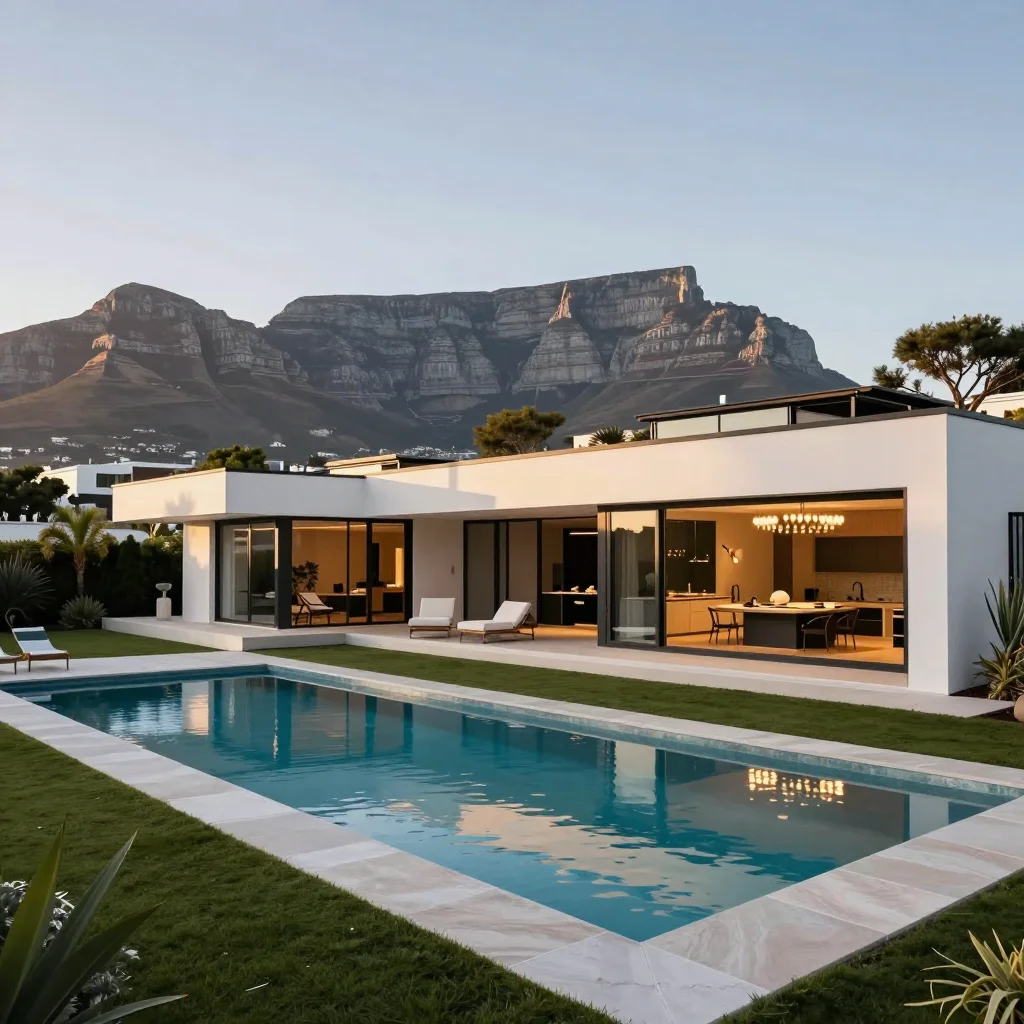
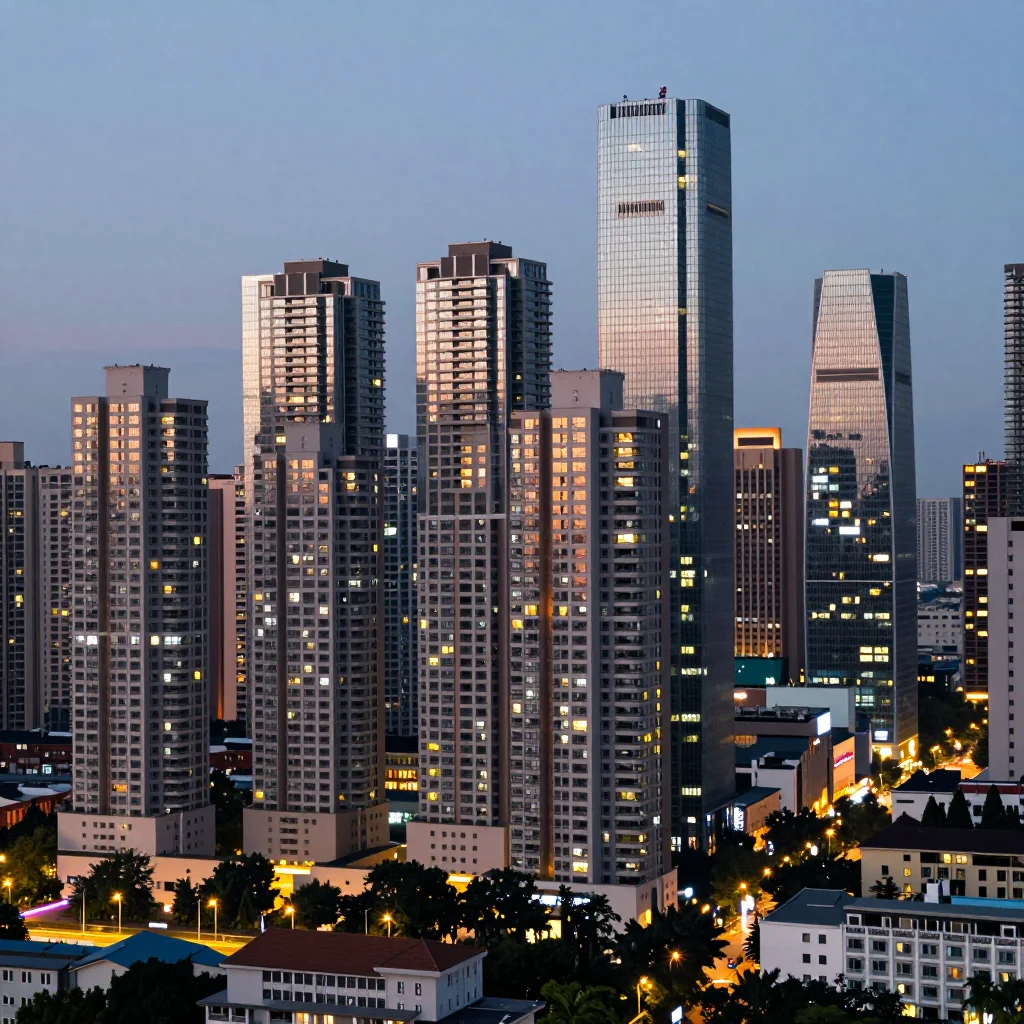
Cape Town garden home vs Asian city skyline comparison
Property Investment April 6, 2026 15 min read

R16 Million ZAR Cross-Border Choice: Cape Town vs Asian Lifestyle

NT$7.43 million — a small studio in Taiwan? Or a garden home plus 7 years of passive income in Cape Town? With the same capital, the asset gap after 10 years can reach NT$2.14 million.

Overseas Property
Investment Analysis
Cross-Border Comparison
LP
Leo Pan

CEO, DingYao Advisory

Introduction: The Purchasing Power of R16 Million ZAR

R16 million ZAR (approximately NT$7.43 million) — this sum of money has vastly different fates in different regions.

At current exchange rates (1 ZAR ≈ 1.88 TWD), R16 million ZAR equals approximately NT$7.43 million. In Taiwan, this amount might not even buy a decent apartment in Taipei city center, but in Cape Town, South Africa, it can kickstart a complete "property + passive income" portfolio.

Core Question: With the same capital, choosing Cape Town property with high-interest deposits versus staying in Asia — how much will the asset gap be after 10 years?

Beautiful Cape Town garden home and cityscape
Cape Town's serene garden homes contrast sharply with cramped Asian apartments

The South African Option: Cape Town's "Dual Engine" Asset Strategy

Property Allocation: What Does R10.45 Million Buy?

According to Lightstone and Property24 Q3 2025 data, Cape Town's average property price is approximately R3.5 million (~NT$1.82 million), but this is the citywide average.

With a budget of R10.45 million ZAR (~NT$4.95 million), you can choose in Cape Town:

Area Avg Price/m² Purchasable Area Rental Yield
Woodstock R18,000 ~580㎡ 5.5-6%
Observatory R16,000 ~650㎡ 5-5.5%
Green Point R35,000 ~300㎡ 4.5-5%
Sea Point R38,000 ~275㎡ 4.5-5%

Recommendation: For investors seeking rental income, properties in Southern Suburbs and Observatory in the R2.5-4.5 million range offer annual rental yields of 5.8% (citywide average), far exceeding Taipei's 1.5-2%.

Financial Allocation: 7% Compound Interest on R5.55 Million

Depositing the remaining R5.55 million ZAR (~NT$2.94 million) in South African high-interest savings:

  • 1 SARB Policy Rate: 7% (post July 2025 rate cut)
  • 2 Actual Fixed Deposit Rate: Approximately 7-8% annually
  • 3 Compound Calculation: 7% annual compounding

10-Year Return Projection:

Principal: R5.55M ZAR
Annual Rate: 7%
After 10 Years: R5.55M × (1.07)^10 = R5.55M × 1.967 = ~R10.92M ZAR

Pure Interest Income: ~R5.37M ZAR (~NT$2.83M)

Rental Income: Passive Cash Flow

Calculated with R3,500,000 property at 5.8% gross rental yield:

  • Annual Rental Income: R203,000 (~NT$1.07M)
  • 10-Year Cumulative Rent: ~R2.03M (after vacancy and maintenance: ~R1.7M)

Property Appreciation: Total Assets After 10 Years

Cape Town property long-term appreciation is approximately 3-5% annually (conservative estimate: 4%):

Property Appreciation Projection:

Purchase Price: R10,450,000
Value After 10 Years (4% growth): R10,450,000 × (1.04)^10 = R15,460,000

Property Appreciation: ~R5M ZAR

Asian Options Compared: What Does NT$7.43M Buy?

Option A: Taiwan — High Prices, Low Returns

Price Reality:

  • Taipei City average price: NT$800,000-1,200,000 per ping (~NT$270,000-400,000/㎡)
  • NT$7.43M can purchase approximately 6-8 ping small studio

Yield Dilemma:

  • Taiwan savings rate: 1.5-2% (2025 data)
  • Rental yield: 1.5-2% (Taipei area)
  • Property appreciation: Recent slowdown, ~2-3% annually

Option B: Thailand — Foreign Ownership Restrictions

Price Advantage:

  • Bangkok condo average: NT$150,000-250,000/㎡
  • NT$7.43M can purchase approximately 30-50㎡ condo

Foreign Restrictions:

  • Foreigners can only purchase 49% of condo quota
  • Cannot directly hold land (only leasehold)
  • Lease term maximum 30+30 years

Option C: Malaysia — MM2H Threshold Raised

2025 New Policy:

  • Platinum: USD$1M fixed deposit + RM2M property purchase
  • Gold: USD$500K fixed deposit + RM1M property purchase
  • Silver: USD$150K fixed deposit + RM600K property purchase

NT$7.43M (~USD$23K) only qualifies for Silver tier, with limited property options.

10-Year Asset Gap: The Data Speaks

Cape Town Option Overview

Asset Type Initial Investment 10-Year Value Return
Property R10,450,000 R15,460,000 +R5,010,000
Fixed Deposit R5,550,000 R10,920,000 +R5,370,000
Rental Income (10yr) - R1,700,000 +R1,700,000
Total Assets R16,000,000 R28,080,000 +75%

Converted to TWD: Total assets ~NT$14.87M (original investment NT$7.43M)

Taiwan Option Overview

Asset Type Initial Investment 10-Year Value Return
Property NT$7.43M ~NT$10.03M +NT$2.6M
Savings Interest - ~NT$1.2M +NT$1.2M
Rental Income - ~NT$1.5M +NT$1.5M
Total Assets NT$7.43M ~NT$12.73M +71%

Key Gap

Comparison Cape Town Taiwan Gap
10-Year Total Assets NT$14.87M NT$12.73M +NT$2.14M (+17%)
Living Quality Garden Home/Apt Small Studio Clear Advantage
Annual Passive Income ~NT$400K ~NT$150K +167%
Liquidity High (savings portion) Low (property illiquid) Clear Advantage

Quality of Life Comparison: Beyond Just Numbers

Cost of Living (Numbeo 2025 Data)

Item Cape Town Taipei Difference
Single Living Cost (excl. rent) ~R8,500/mo ~NT$18,000/mo Cape Town ~22% lower
Rent (1BR city center) R12,000/mo NT$25,000/mo Cape Town ~30% lower
Dining Out Lower Higher Cape Town lower
Medical High-quality private Comprehensive NHI Each has strengths

Non-Financial Factors

Cape Town Advantages:

  • Climate: Mediterranean, ~17°C annual average, abundant sunshine
  • Natural Environment: Table Mountain, beaches, wine estates
  • English Environment: No language barrier in business or daily life
  • Healthcare: Excellent private hospitals, lower cost than Europe/US

Cape Town Disadvantages:

  • Security: Some areas require caution; choose safe communities
  • Electricity: Intermittent load-shedding issues
  • Employment: Limited local job opportunities

Taiwan Advantages:

  • Security: One of the safest globally
  • Infrastructure: Comprehensive and stable
  • Language/Culture: Chinese-speaking environment, no cultural barrier
  • Healthcare: Comprehensive National Health Insurance

Taiwan Disadvantages:

  • Housing Prices: Extremely expensive, rental yields very low
  • Climate: Hot/humid summers, damp/cold winters
  • Work Pressure: Long hours, high cost of living stress

Conclusion: Who Suits Which Option?

Ideal for Cape Town Option

  • Retirees Seeking Passive Income — 7% deposits + rental yield far exceeds most Asian markets
  • Digital Nomads — English-speaking environment + pleasant climate + low cost
  • Long-Term Asset Allocators — Geographic risk diversification, South Africa interest rate benefits
  • Outdoor Lifestyle Enthusiasts — Beaches, hiking, wine culture

Ideal for Taiwan/Asian Options

  • Those Needing Stable Employment — Abundant local job opportunities
  • Prioritizing Security & Convenience — Comprehensive Asian city infrastructure
  • Unable to Leave Chinese-Speaking Environment — Cultural and family factors
  • Short-Term Investors — Better liquidity in Asian housing markets

Frequently Asked Questions

What can R10.45 million ZAR buy in Cape Town real estate?
With R10.45 million ZAR (~NT$4.95M), you can purchase a villa or garden home in Cape Town. Key areas include Woodstock (~580㎡, 5.5-6% rental yield), Observatory (~650㎡, 5-5.5% yield), or Southern Suburbs properties in the R2.5-4.5 million range with annual rental yields reaching 5.8%.
What are South African bank deposit interest rates and actual returns?
The SARB policy rate stands at 7% (post July 2025 rate cut), with actual fixed deposit rates around 7-8% annually. Depositing R5.55 million ZAR would grow to approximately R10.92 million ZAR after 10 years, generating pure interest income of approximately R5.37 million ZAR (~NT$2.83M).
What's the asset gap between Taiwan and Cape Town after 10 years with NT$7.43M?
Taiwan option (all into property + savings): ~NT$12.73M after 10 years. Cape Town option (property + savings + rental): ~NT$14.87M after 10 years. The gap is approximately NT$2.14M, with Cape Town outperforming by about 17%.
How does Cape Town's cost of living compare to Taipei?
According to Numbeo 2025 data, Cape Town's single-person living cost (excluding rent) is approximately R8,500/month, about 22% lower than Taipei's NT$18,000/month. One-bedroom apartment rent in city center is R12,000/month vs NT$25,000/month in Taipei, approximately 30% lower in Cape Town.
Who is the Cape Town property investment best suited for?
Ideal candidates include: retirees seeking passive income (7% deposits + rental yield far exceeds Asian rates), digital nomads (English-speaking environment + pleasant climate + low cost), long-term asset allocators (geographic risk diversification, South Africa interest rate benefits), and outdoor lifestyle enthusiasts (beaches, hiking, wine culture).
LP

Leo Pan

CEO, DingYao Advisory

Specializing in South African real estate investment analysis and cross-border asset allocation. Helping Taiwanese high-net-worth individuals evaluate global property opportunities through detailed market data comparisons and 10-year asset projections. With extensive experience observing life in both Cape Town and Taipei, dedicated to helping clients make informed cross-border investment decisions with objective data.

Cross-Border Investment Consultation

Where Should NT$7.43M Go?

The data doesn't lie. The Cape Town option outperforms by NT$2.14M after 10 years, with passive income 2.67x higher than the Taiwan option.

+NT$2.14M

10-Year Asset Gap

+167%

Passive Income Increase

7%

SA Fixed Deposit Rate

Consultation is completely free with no hidden fees. Your information will be kept strictly confidential.

Related Articles: More South Africa Investment Insights