
Cape Town Gated Community Levies 2026: Hidden Costs and Net Yields

Cape Town short-term letting by-law and inner-city skyline

Cape Town Gated Community Levies 2026: Hidden Costs and Net Yields

Quick answer (2026): Are Cape Town gated communities worth buying? First decide which return you are buying. The number of security estates has grown from roughly 200 in 2015 to more than 500 by 2026, and that supply growth is itself evidence of demand. If the goal is long-term capital growth and hands-off ownership from Asia, the cost is a monthly levy of R2,500-R8,000 (R8,000-R15,000 in large amenity-rich estates); on a two-bedroom R5 million unit with a R4,000 monthly levy, the net yield after levies and holding costs lands at roughly 7.7%-8.2%. If the goal is the highest nominal rental yield, ordinary housing (about 5-8%) usually beats gated communities (about 4-6%). Before deciding, ask one question: have you read the conduct rules, the latest annual financial statements and the reserve fund balance?

If you have searched for Cape Town gated communities, you have probably found a handful of scattered lists of "best estates" but nothing that connects the types, the levies, the growth performance and the foreign-buyer process in one place. This guide fills that gap. It is the hub page of the DingYao Cape Town gated community cluster, and every deeper article on the topic links back to it.

Locally, a gated community is usually called a security estate or simply an estate, and it has been the fastest-growing residential format in Cape Town over the past decade - expanding from roughly 200 estates in 2015 to more than 500 by 2026. For a buyer based in Asia, it solves three problems at once: personal security, the management burden of holding a property from a distance, and long-term capital growth. That is why gated communities are the first category most Taiwan-based buyers ask about.

But a gated community is not simply "an expensive house". You are buying a house plus a governed community: monthly levies, a homeowners' association constitution, a reserve fund and the risk of special levies all shape your cost of ownership and your future resale. This guide uses public South African market data to set out all four.

Key takeaway: Cape Town gated communities are worth buying, but it depends on your goal. Gated communities have grown at roughly 8-12% compound annual price growth over five years, ahead of the wider market's 6-8% (market-reference ranges, not guarantees); foreign buyers have risen from about 15% of purchases in 2020 to roughly 28% in 2026. The trade-off is the monthly levy: about R2,500-R8,000 in mainstream estates and R8,000-R15,000 in large amenity-rich estates. If your goal is long-term capital growth and peace of mind from a distance, gated communities are the first choice. If your goal is the highest headline rental yield, standalone homes usually pay slightly more (about 5-8%, versus 4-6% in gated communities). All figures are market-reference ranges and depend on actual letting performance and tax. This article is for information only and is not investment advice.
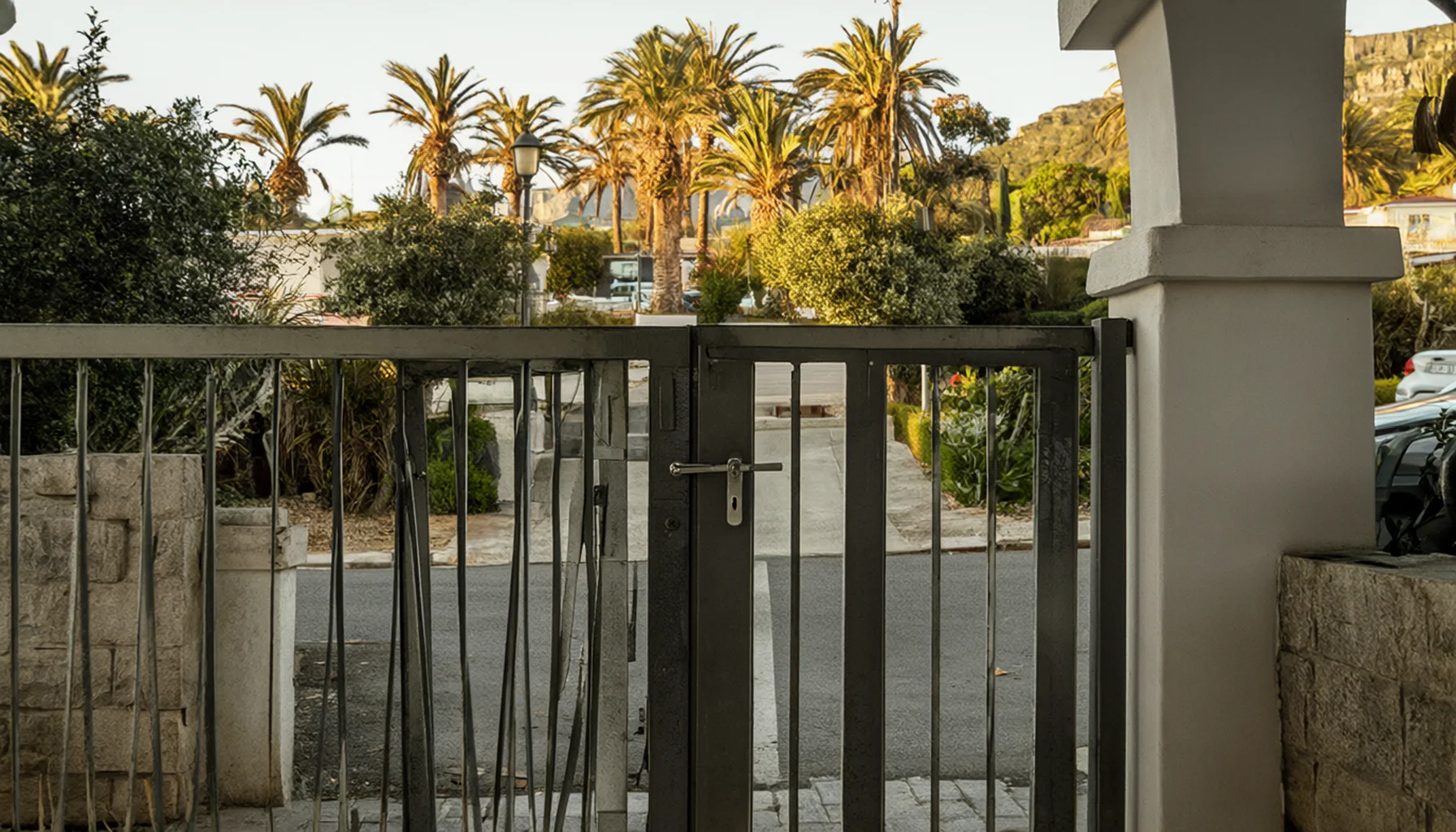
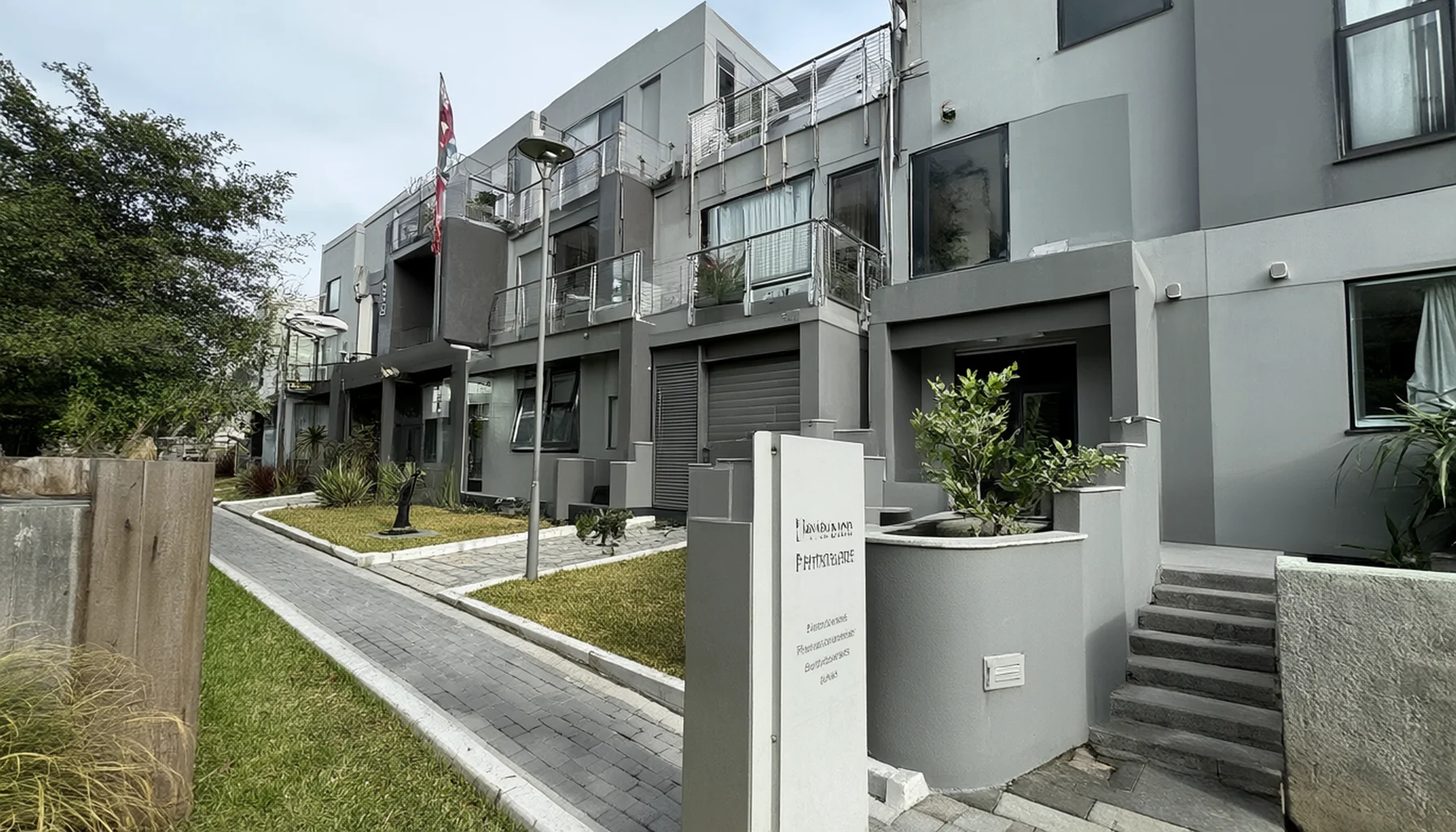
Controlled entrance and guard house at a Cape Town gated community
Controlled access and a 24-hour guard house are the core product of an estate

What is a Cape Town gated community, and how is it different from a normal suburb?

Direct answer: a Cape Town gated community (also called a security estate) is a walled residential area on private land with one or a few controlled entrances, 24-hour guarding and visitor registration, where a homeowners' association (HOA) or managing agent maintains the common areas and security. The biggest difference from an open suburb is not the price - it is that you sign up to a constitution. Buying into a gated community automatically makes you a member of the HOA, bound by its constitution and conduct rules.

That single difference shapes everything else. Security and environmental standards are enforced by an institution rather than depending on individual neighbours, and in exchange your fixed monthly cost rises by a levy that is adjusted for inflation each year. In most mid- to upper-tier South African estates, levies escalate at around 5-8% a year (a market-reference figure that varies with each estate's financials).

  • Controlled access: one or a few entrances, a guard house, visitor registration, and in some estates biometric or number-plate recognition.
  • 24-hour security: patrols, electric fencing, CCTV and a contract with an armed-response company; the largest estates run their own private security teams.
  • HOA governance: rules on exterior paint colours, pets and building work, plus maintenance of internal roads, parks, street lighting and landscaping.
  • Reserve fund: money set aside for future major repairs and capital projects - the single most overlooked item by overseas buyers, and the one with the biggest long-term impact.
  • Automatic membership: before transfer the estate issues a levy clearance certificate confirming the seller is paid up; after transfer you are bound by the constitution.

The practical point for a Taiwan-based buyer is that a gated community institutionalises neighbourhood quality and security management, which is what makes holding a property from 11,000 km away workable. You do not have to fly to Cape Town every quarter to resolve a dispute over a common area, and you do not have to worry that a neighbour will suddenly build something that blocks your view. The price of that certainty is that the same rulebook binds you.

Sources: Cape Town Invest, "Security Estates Cape Town Foreign Buyers Guide 2026" (21 Aug 2026); KILICASA, "Gated Estates South Africa: Premiums, Levies & Lifestyle Value" (28 Jun 2026). The author verified both pages directly.

What types of Cape Town gated community are there — and how do they drive levies?

Short answer: three types — security estates, golf/lifestyle estates and coastal estates — and the type directly determines your levy band. Security estates focus on 24-hour security and family amenities (roughly R2,500-R8,000 per month); golf and lifestyle estates add courses and clubhouses (roughly R8,000-R15,000+); coastal estates sell views and beach access (roughly R2,000-R4,000). For the full comparison of growth profiles, buyer mix and the foreign purchase process, see our Cape Town gated community foreign buyer guide.

Estate levy, municipal rates and utility statements for a Cape Town property
Levy, rates and utility charges are three separate bills

How much are Cape Town gated community levies - and what hidden costs come with them?

Direct answer: monthly levies in Cape Town gated communities typically run R2,500-R8,000. Large, amenity-rich golf and lifestyle estates can reach R8,000-R15,000, and top private enclaves more than R18,000. But the levy is not the whole bill: you also pay City of Cape Town property rates, fixed water and electricity service charges, and possibly a city improvement district (CID) levy. Three separate charges, going to three different payees - which is exactly where overseas buyers under-budget.

ChargeWhat it coversWho you payHow it is calculated
Municipal ratesCity services, infrastructure, refuseCity of Cape TownMunicipal valuation x rate-in-the-rand
Estate levy (HOA fee)Security, common areas, estate managementHomeowners' associationEqual or proportional share of the estate budget
Sectional title levyBuilding maintenance, shared services, insurance, reserve fundBody corporateParticipation quota based on unit size

The rates figure is calculable. For the City of Cape Town's 2026/27 financial year (from 1 July 2026) the residential rate-in-the-rand is approximately 0.006428, and primary residences receive a rebate on the first R500,000 of municipal value, provided the property's total municipal value does not exceed R8 million. Worked example on an R3.82m property: rateable value R3.82m minus R500,000 = R3.32m; annual rates about R21,341, or roughly R1,778 a month (Sources: City of Cape Town 2026/27 rates and tariffs notice; Villa-Nova, "Rates, Levies and HOA Fees in a Gated Estate", 2026).

Ask what the levy covers and what it excludes, line by line. Typical inclusions are 24-hour security (guards, patrols, access control), CCTV, internal road maintenance, communal parks and landscaping, street lighting, waste management, estate administration and a contribution to the reserve fund. Typical exclusions are individual home insurance, private maintenance, your own alarm-response contract and user-pay amenities such as tennis courts or guest suites.

The three items overseas buyers most often miss: (1) Special levies - when an estate undertakes major capital work (resurfacing roads, rebuilding perimeter walls, replacing pump equipment) it may raise a one-off charge of several thousand to tens of thousands of rand per household. Ask for the last three years of meeting minutes. (2) Reserve fund level - an under-funded estate has a materially higher chance of future special levies. (3) Fixed utility charges - Cape Town bills residential water and electricity service charges separately from consumption, and they are payable even when the property is empty.

On a R16m holding, annual levies of roughly R36,000-R60,000 (market-reference range) represent about 0.2-0.4% of the invested amount. For investors, levies on a let property are commonly treated as a deductible operating expense, but the actual deduction depends on your tax position and SARS rules - confirm with a South African tax professional.

Sources: City of Cape Town approved 2026/27 budget rates and tariffs (July 2026); Villa-Nova, "Rates, Levies and HOA Fees in a Gated Estate: What to Budget in 2026"; Cape Town Data cost-of-living database (September 2026). The author verified each page directly.

Chart comparing capital growth and rental yield of gated communities and standalone homes
Capital growth and cash flow are rarely the same choice

After levies, do gated communities still beat standalone homes on net yield?

Direct answer: it is not "better across the board" - it is a trade. Gated communities usually deliver stronger long-term capital growth, but a slightly lower headline rental yield, because the levy comes off net cash flow first. In the Cape Town market, foreign buyers typically see gross yields of about 4-6% in gated communities against about 5-8% for standalone homes (both are market-reference ranges, not guaranteed returns, and depend on actual letting performance and tax). If capital preservation and long-term growth are your goal, the trade is worth it. If maximising current cash flow is the goal, a standalone home is not necessarily the worse choice.

MetricGated communityStandalone home
Gross rental yield (market reference)about 4-6%about 5-8%
Vacancy rateabout 2-4%about 5-10%
Monthly levyR2,500-R8,000 (higher in large estates)None, or very low
Security layer24-hour controlled access and armed responseBuilt per individual home
Difficulty of remote managementLow (the managing agent handles common areas)Higher (you arrange maintenance)

Where the numbers come from matters. Cape Town Invest's foreign-buyer guide states that estates "trade some yield for security, low vacancy and steady family demand", making them a lifestyle and capital-preservation play rather than a high-yield one, with gross yields typically near 4% to 6% (Source: Cape Town Invest, 21 Aug 2026). The same page puts the variable cost - the HOA levy - commonly at R2,500 to R8,000 a month, with R8,000 to R15,000 in luxury golf precincts.

In practice this means the net cash flow of a gated community is highly sensitive to the levy. On the same R5m property, a levy of R2,500 versus R8,000 a month is a R66,000-a-year difference - enough to consume a meaningful share of the rental income. So when comparing two properties, rank them on after-tax net cash flow rather than headline yield, especially if you plan to hold with a bond.

The 2026 market backdrop: on 23 September 2026 the South African Reserve Bank raised the repo rate by 25 basis points to 7.25%, taking the prime lending rate to 10.75% (Source: SARB / Reuters, 23 Sep 2026). For foreign buyers the immediate implication is higher borrowing costs and a clearer relative advantage for cash buyers - unaffected by rates, and negotiating from a stronger position in supply-constrained quality estates. The next rate decision is 19 November 2026.

A second dimension that gets overlooked is liquidity. Quality stock in gated communities is released in small volumes and sells quickly, but the buyer pool is narrower (it must accept the constitution and the levy), so transaction prices are highly sensitive to the quality of estate governance. An estate with a thin reserve fund and a history of rule disputes will resell visibly worse than an identical-looking one. That is exactly why due diligence belongs on the management, not the decor.

How does a foreign buyer purchase in a Cape Town gated community?

Short answer: the process and legal limits are covered in full in our dedicated guide; this chapter keeps only the two cost-relevant points. First, funds must enter an attorney's trust account and are released against conveyancing milestones, so each remittance carries its own fees and timing. Second, the estate's conduct rules and financial statements reveal how levies escalate and how well the reserve fund is funded — documents you need before judging long-term holding cost. For the complete process, BOP reporting and legal notes, see the Cape Town gated community foreign buyer guide.

How do levies and net yields compare across Cape Town areas?

Short answer: the unit of comparison is not "which suburb grew fastest" but "how much levy do I pay each year per R1 million of price". On the same R5 million home, a security estate levy may equal 0.6-1.9% of the price while a golf estate can reach 1.9-3.6% — deducted straight from your gross yield. The figures below use a reproducible calculation.

AreaDominant typeMonthly levy (market reference)Annual levy as % of R5m price*
Constantia, Southern SuburbsSecurity / golf estatesR2,500-R15,0000.6%-3.6%
Stellenbosch, WinelandsGolf / lifestyle estatesR4,000-R15,0001.0%-3.6%
Northern Suburbs (Durbanville etc.)Security estatesR2,000-R6,0000.5%-1.4%
West Coast, MelkbosstrandCoastal estatesR2,000-R4,0000.5%-1.0%

* Calculation: monthly levy x 12 / R5,000,000. Levies are market reference ranges; actual figures follow each estate's conduct rules and annual budget.

Putting levies back into the yield formula makes the difference visible. Cape Town gross rental yields vary widely by unit type: about 12.4% for one-bedroom, 10.7% for two-bedroom and 5.5% for three-bedroom, averaging about 9.5% city-wide (Global Property Guide, 2026; gross, before costs; market reference range, not guaranteed). Take a two-bedroom at R5 million with a R4,000 monthly levy: gross yield 10.7%, annual levy R48,000 equals 0.96% of price, leaving about 9.7%; then deduct rates, vacancy and a maintenance provision (per Global Property Guide methodology, net yields typically run 1.5-2 percentage points below gross) — an indicative net yield of roughly 7.7%-8.2%. This is an illustrative calculation; actual figures depend on the estate and the lease.

The four areas' cost structures map to different holding strategies. Constantia and the Southern Suburbs carry the highest levy ceiling (golf estates up to R15,000 per month), but management systems and reserve funds are comparatively mature — suited to long-term capital preservation. Stellenbosch and the Winelands offer a stable university-town tenant base with mid-to-high levies, suited to rental-focused buyers who can carry higher fixed costs. The Northern Suburbs (Durbanville etc.) show the lowest levy-to-price ratio (0.5%-1.4%) and deserve priority if net yield is the objective. West Coast Melkbosstrand is the cheapest on cost, but view-led assets are more sensitive to vacancy and market sentiment.

Three documents before judging cost: (1) the conduct rules — levy escalation mechanism and penalties; (2) the annual financial statements — actual expense structure and arrears ratio; (3) the reserve fund level — which determines whether a special levy is coming. Do not decide on "monthly levy" alone.

FAQ

Are Cape Town gated communities a good investment?

It depends on your goal. Gated communities have grown at roughly 8-12% compound annual price growth over five years, ahead of the wider market's 6-8% (market-reference ranges, not guarantees), and foreign buyers have risen from about 15% of purchases in 2020 to roughly 28% in 2026. The trade-off is a monthly levy of R2,500-R8,000. For long-term capital growth and peace of mind from a distance, yes. For the highest headline rental yield, standalone homes usually pay slightly more. (Source: Cape Town Invest, 21 Aug 2026)

How much are levies in Cape Town gated communities each month?

Commonly R2,500-R8,000 a month; large amenity-rich golf or lifestyle estates reach R8,000-R15,000, and top private enclaves more than R18,000. Levies typically escalate at around 5-8% a year (market-reference figure). Always request the last three years of financial statements and AGM minutes to confirm the reserve fund level and any special levy history. (Sources: Cape Town Invest, 21 Aug 2026; KILICASA, 28 Jun 2026)

Do gated communities or standalone homes offer a higher rental yield?

Headline (gross) rental yield is usually slightly higher on standalone homes. Foreign buyers typically see gross yields of about 4-6% in Cape Town gated communities versus about 5-8% for standalone homes (both market-reference ranges, actual figures depend on letting performance and tax, and are not guaranteed returns). The gated community advantage is lower vacancy and stronger capital preservation, so compare properties on after-tax net cash flow rather than headline yield. Past performance does not guarantee future returns.

How are property rates calculated inside a Cape Town gated community?

The City of Cape Town applies a rate-in-the-rand to the property's municipal valuation. For 2026/27 (from 1 July 2026) the residential rate-in-the-rand is about 0.006428, with a rebate on the first R500,000 of value for primary residences (where the total municipal value does not exceed R8 million). On an R3.82m property, that is roughly R1,778 a month. Rates are paid to the City of Cape Town and are a separate bill from the HOA levy. (Source: City of Cape Town 2026/27 rates notice)

What do interest rates look like for buyers entering in 2026?

On 23 September 2026 the South African Reserve Bank raised the repo rate by 25 basis points to 7.25%, taking prime to 10.75%, with the next decision due on 19 November 2026. Higher borrowing costs sharpen the relative advantage of cash buyers - unaffected by rate moves and negotiating from strength in supply-constrained quality estates. (Source: SARB, 23 Sep 2026) This is a statement of current rates, not investment advice.

Data Sources & Verification

The figures and rules in this article rest mainly on primary government and official pages. Each one was checked by opening the original page rather than relying on second-hand reporting. Survey and institution-based figures are dated in the body text itself and are not repeated here. Primary sources, their use and query dates (2026-10-28):

Verification rule: where an official page conflicts with a secondary report, the official page prevails. Market values such as rental yields, price bands and levies are quoted as reference ranges, not guarantees; actual outcomes depend on the individual property, lease and tax residency status.

Why Handle This Through Crestline Advisory?

South African documentation requirements change every year — and what changes is usually the format, not the eligibility. Same passport, same proof of address, wrong format, rejection.

The three most common failure points

  • Passport certification rejected: A plain true-copy stamp is not accepted. A commissioner of oaths must certify in English, confirm the original was seen, add a true-likeness statement for photo pages, and include signature, date, address and occupation.
  • TIN left blank without a reason code: For Taiwanese clients the tax number is the national ID number. Leaving it blank requires ticking Reason A / B / C with an explanation.
  • Proof of address older than three months: Measured from the application date. Past the deadline the entire application is void and must be resubmitted.

Working through our partner Crestline Advisory (on-the-ground execution in South Africa) means these are checked before submission: document format pre-screened item by item (avoiding a 2-4 week round trip), current bank requirements confirmed before you book any flight, remittance routing and BOP declaration categories aligned in advance, and progress tracked locally after submission.

DingYao verifies your documents on the Taiwan side and hands over to Crestline Advisory for execution. You do not receive a checklist and left to figure it out alone.

Not sure which Cape Town estate type fits your holding goal?

DingYao provides advisory consulting on market analysis, investment assessment and cross-border funding structure planning, to help you understand the differences between Cape Town estate types, levy structures and the foreign-buyer process. The actual property transaction, transfer and agency services are carried out by South African partners and licensed professionals. Book a consultation to request our "Cape Town Gated Community Comparison and Due Diligence Checklist". This article is for information only and is not investment advice.
Book Now

[Compliance & Disclaimer]

1. Company statement: DingYao Advisory (DingYao) is a Taiwan-based advisory firm for asset allocation, immigration consultancy, offshore account setup and second-generation education coordination. The company does not conduct real-estate brokerage or agency sales within the territory of the Republic of China (Taiwan), and does not handle, collect or hold any property transaction funds.

2. Information source and contract parties: South African properties, developments, market data and related images in this article are provided by offshore partner Crestline Advisory (Pty) Ltd and developer CanvasCrest Properties for offshore allocation and market reference only, and do not constitute an offer, solicitation or investment guarantee. All property purchase contracts, fund payments and title transfers are executed directly between the buyer and the offshore licensed developer/institution in accordance with the law outside Taiwan.

3. Statutory risk warning: Overseas real estate investment involves risks; investors should read all marketing documents carefully before transacting. Overseas investment involves FX volatility, local legal and tax changes and market risk; data (such as historical prices, averages, days-on-market and rental yields) have their own calculation standards and time sensitivity. Past performance does not guarantee future returns. All property rates, tariff and return figures in this article are market-reference values drawn from public reporting and the City's own worked examples, not guarantees or forecasts; the draft by-law is not yet in force and final clauses are subject to the City of Cape Town's announcement. This article is for information only and is not investment advice.