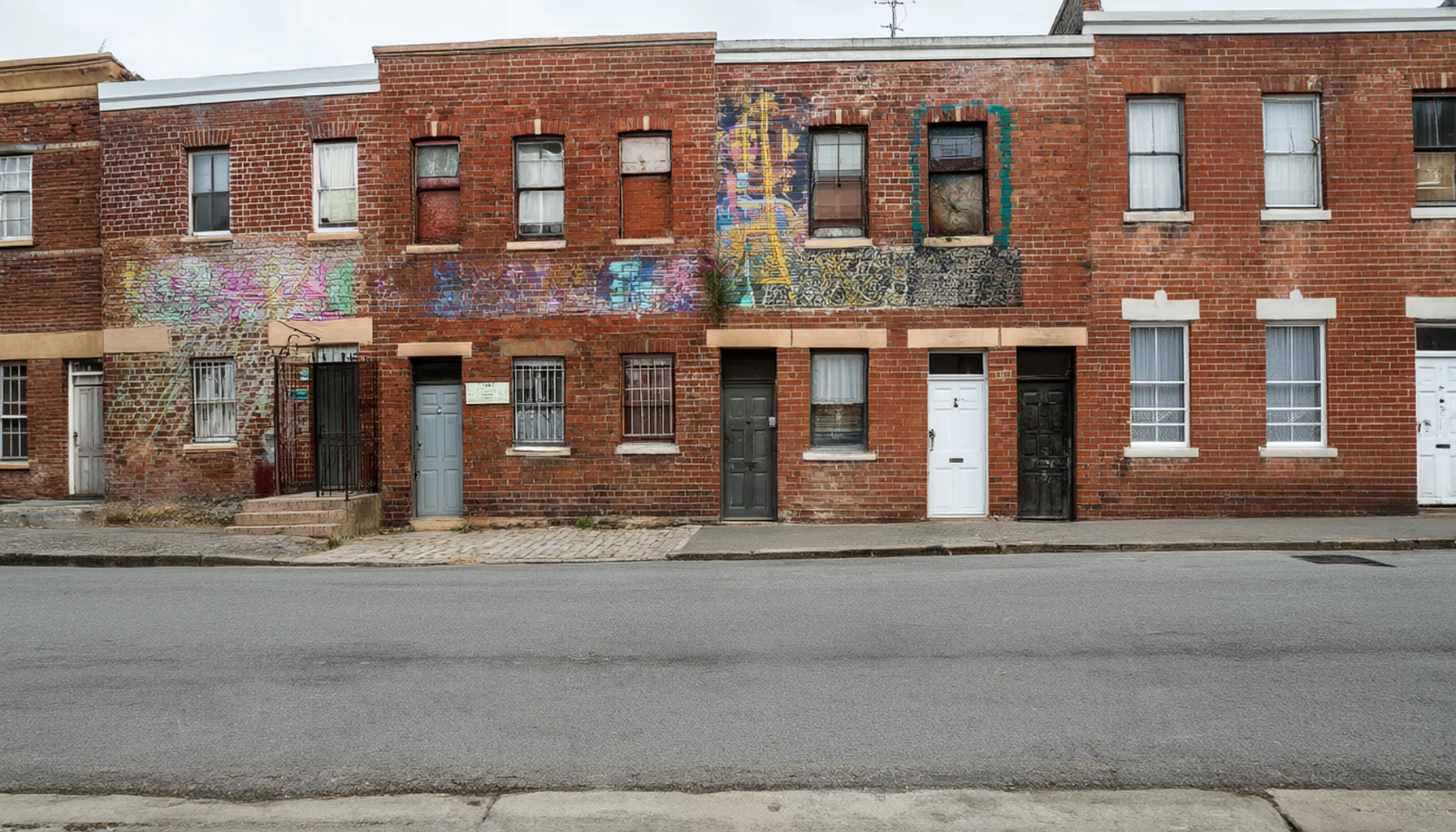
Cape Town short-term letting by-law and inner-city skyline

Cape Town Short-Term Letting By-law 2026: Airbnb Rates Could Triple - What Property Investors Do Now

Cape Town's short-term rental market has reached a turning point. Public comment on the City of Cape Town's draft Short-Term Letting By-law closed on 5 October 2026. Under the draft, any Cape Town property available for short-term letting for more than half the year (183 nights) would be reclassified from residential to commercial accommodation, and its Cape Town property rates would be recalculated on a commercial basis. Using the City's own calculator, an inner-city property valued at R2.8 million would see its monthly bill rise from R1,274 to R3,945 - roughly three times as much.

This is not only a story for South African hosts. Cape Town has more than 27,000 Airbnb listings, almost 6,000 of them in the inner city, so for anyone assessing a Cape Town short term rental investment or already holding one, three questions matter: will my property be moved onto commercial rates, what happens to the net rental yield afterwards, and what can I still do before the rules take effect on 1 July 2027? This article sets out the draft's thresholds, the actual Rand impact, the policy logic, three host scenarios and an action checklist.

Key takeaway: The Cape Town short term letting by law is still a draft - public comment closed on 5 October 2026 and it is not yet in force. The core threshold: a property available for short-term letting more than 50% of the year (183 nights) is treated as commercial accommodation, and Cape Town property rates can be up to three times higher (City calculator: an inner-city R2.8m property moves from R1,274 to R3,945 a month). Professional multi-listing hosts (above 50%) are hit hardest; occasional hosts of part of a primary residence (50% or less) are unaffected; foreign buyers not yet in the market may find a negotiating window. Actual rates depend on the registration system data from 1 July 2027. This article is for information only and is not investment advice.


Illustration of the Cape Town short-term letting by-law draft and registration
The draft by-law and Cape Town's registration system

What is the Cape Town short term letting by law, and which properties move to commercial rates on 1 July 2027?

Direct answer: it is a draft by-law from the City of Cape Town that requires every Cape Town property listed on booking platforms such as Airbnb, LekkeSlaap or Booking.com to register and display a registration number. If a property is available for short-term letting more than 183 nights a year (50% of annual room nights), it is deemed commercial rather than residential, and Cape Town property rates are then calculated on a commercial basis. Public comment closed on 5 October 2026; the by-law is not yet in force, and the reclassification of rates is planned to take effect from 1 July 2027, based on data from the registration system.

  • Mandatory registration: every Cape Town property listed on a short-term letting platform must register with the City; no listing is permitted without a registration number, which must be displayed on the listing.
  • Platform data sharing: booking platforms, owners and operators must provide the City with availability and occupancy data.
  • The 50% / 183-night threshold: more than 50% of annual room nights available for short-term letting means commercial accommodation; 50% or less remains residential.
  • What is unaffected: properties, or parts of them (such as a granny flat), that are let without being listed on short-term letting platforms are outside the draft and need no registration number.

It is worth noting that the City's latest rates policy, adopted on 29 June 2026, already defines "commercial accommodation" as a property used or available for short-term letting for more than 50% of total annual room nights. So although the by-law itself is still a draft, its central threshold is already written into Cape Town's property rates policy.

A crucial caveat: this is a draft by-law, not law in force. After public comment, it must still pass council and legislative processes, and the final clauses and effective details can change. Any Cape Town investment calculation that assumes the rules are settled should price in that uncertainty.

(Source: GroundUp, 2026-09-28, Steve Kretzmann; City of Cape Town draft public-comment notice, 2026; Getaway, 2026-09-30. The author verified each figure against the original pages. The draft is not yet in force; final clauses are subject to the City's announcement.)

Illustration of Cape Town property rates and inner-city apartments
The rates gap: R1,274 to R3,945 a month

If short-term letting shifts to commercial rates, how much more will Cape Town property rates actually cost?

Direct answer: using the City's own rates calculator, an inner-city Cape Town property valued at R2.8m pays R1,274 a month as residential. Once classed as commercial accommodation, the bill becomes R3,945 a month - R2,671 more per month, over R32,000 a year, around 3.1 times the original. This is the draft's most concrete financial impact, and the first number a short-term host needs to work through.

Property scenarioCurrent residential ratesAfter commercial classificationMonthly increaseAnnual increase
Inner city R2,800,000 (City calculator)R1,274/monthR3,945/month+R2,671~ +R32,000
Owner paying R10,000/year (Alexander case)R10,000/year~ R24,000/year-~ +R14,000

The second case comes from the estimate of South African property expert Rowan Alexander, founder of Alexander Swart Property Group: an owner currently paying about R10,000 a year in Cape Town property rates could see that rise to roughly R24,000 a year after crossing the 50% threshold, an increase of about R14,000.

Putting the tax cost into the yield calculation completes the picture. Assume a Cape Town investment property nets about R18,000 a month after management fees, cleaning and platform commission; a rates bill moving from R1,274 to R3,945 removes R2,671 a month from net cash flow - roughly a week's net rent on a fully-let basis. Where the property is not let year-round, which is typical of Cape Town's short-term seasonality, the fall in net yield is more pronounced. These figures are market-reference ranges (fully-let basis; actual outcomes depend on occupancy and tax), not guaranteed returns; past performance does not guarantee future returns.

Which is exactly why the number should be worked out early: the reclassification is a structural drag on the net yield of high-frequency short-term property, but for low-frequency, owner-occupied or long-let uses the impact may be limited, or nil. The difference is not the property - it is how you use it.

(Source: GroundUp, 2026-09-28, citing the City of Cape Town rates calculator; EWN, 2026-10-05, quoting Rowan Alexander. Rates and yields are worked examples and market-reference values; actual amounts depend on the property's valuation and the City's final tariff, and are not guarantees.)

Illustration of Cape Town civic policy and fair-competition reasoning
Policy logic: fair competition and inner-city housing supply

Why is the City of Cape Town introducing the short-term letting by-law?

Direct answer: the City's stated reason is fair competition. Large short-term operators compete with hotels while paying residential rates, which has discouraged investment in new Cape Town hotels, while around 70% of inner-city residential units are already used for commercial short-term accommodation, effectively removing them from the local housing market.

Cape Town Mayor Geordin Hill-Lewis told the Federated Hospitality Association of Southern Africa (FEDHASA) in April 2026 that the new rules would address "large commercial operators running multiple apartments as 'decentralised' hotel businesses while continuing to pay residential rates". City finance mayco member Siseko Mbandezi said the draft "ensures fairness in the commercial accommodation sector", while stressing that the City continues to support the tourism economy and regards short-term letting as an important sector serving diverse tourist needs.

The second thread is housing supply. The City's own Inner City Local Spatial Development Framework (LSDF) states that around 70% of the city centre's residential units are used for commercial short-term accommodation, with only about 30% available for long-term leases or owner occupation. According to Inside Airbnb data, Cape Town has more than 27,000 Airbnb listings, of which 5,931 are in inner-city ward 115. Only 1,777 of the inner-city listings belong to single-listing hosts, while more than 40% belong to hosts with ten or more units, with one host holding 147.

In other words, this is not about the occasional spare room - it is about a small number of operators converting large volumes of Cape Town residential units into quasi-hotel stock. Understanding that is what tells you where the pressure will fall: on professional, multi-unit, high-frequency hosts, not on the ordinary owner who lets part of a home now and then.

(Source: GroundUp, 2026-09-28, citing the City of Cape Town Inner City LSDF and Inside Airbnb; FEDHASA report, 2026. Planning and listing data are public and may change over time; market-reference values.)

Illustration of a Cape Town host weighing short-term and long-term letting
Three host scenarios and their choices

Which kind of Cape Town host am I? Three scenarios and how to respond

Direct answer: work out which holder you are first. Category A (more than 50% short-term, multi-unit professional operator) is hit hardest and must re-run net yield or move to long-term letting; Category B (mainly owner-occupied, occasional letting at 50% or less) is unaffected; Category C (a foreign buyer not yet in the market) may actually find a negotiating window.

Category A: professional host above 50%

Cape Town property rates can be up to three times higher. Three routes: bring short-term availability below 50%, move to long-term letting, or pass the extra cost into pricing (which may affect bookings). The first step is to re-run the after-tax net yield before deciding.

Category B: owner-occupied, occasional letting

Keeps residential rates - unaffected. The Cape Town policy deliberately leaves a gap so it does not penalise owners sharing part of a primary residence; keeping short-term availability at 50% or less is enough.

Category C: foreign buyer not yet in

If some high-frequency hosts exit, Cape Town's supply mix changes and the negotiating window may widen. Avoid the saturated inner-city micro-apartments (15-30 sqm) and look instead at areas with long-let or owner-occupier demand.

For Taiwanese and other foreign buyers, Category C is the one to watch. Cape Town's visibility in the international property market has risen year on year, and Rowan Alexander notes the city no longer serves only the local market but is "feeding the international market". The likeliest structural change under this by-law is that holding costs for high-frequency short-term property rise, some hosts exit or switch to long-term letting, and supply and pricing in certain Cape Town segments are reshuffled. For buyers planning to hold long term, that is a moment to re-compare areas and renegotiate. (These are market-scenario illustrations, not forecasts or guarantees.)

Illustration of long-term rental apartments and Cape Town yield structure
Long-term supply and the shift in yield structure

What does the short-term letting by-law mean for Cape Town prices and rental yields over the long run?

Direct answer: if the draft takes effect on 1 July 2027 as planned, the likeliest long-run effect is that some short-term letting exits and long-term rental supply rises, shifting the rental-yield structure across Cape Town's segments. But it is a slow and highly uncertain process, and should not be over-read.

Rowan Alexander is cautious about which effect will dominate: one possibility is that Cape Town hosts pass the extra cost into prices, so visitors ultimately pay more; the other is that the cost simply makes the investment less attractive, so some hosts exit short-term letting and move into the long-term rental market. Which effect will lead, he stresses, is not yet clear.

He is also direct that the by-law alone is unlikely to solve Cape Town's housing shortage - the shortage's roots lie in land availability, the processes that make land developable and the time needed to build new stock, not in the short-term segment. That matters for investors: treating the by-law as a reason "Cape Town prices will fall sharply" does not match the expert assessment.

Three structural signals are worth tracking: (1) inner-city micro-apartments (15-30 sqm) are the structurally exposed asset under this policy - they exist to serve short-term letting, so if its economics change, demand and resale liquidity for that product come under pressure; (2) if long-term supply does rise, Cape Town's yield structure shifts, and the split between high-yield mid-ring suburbs and lower-yield seafront areas may sharpen; (3) once the platform and registration system lands, transaction transparency improves, which favours Cape Town investors who hold long term and let compliantly.

(Source: GroundUp, 2026-09-28; EWN, 2026-10-05, quoting Rowan Alexander. Long-run effects are market-scenario illustrations, not forecasts or guarantees; rental yields are market-reference ranges that depend on actual occupancy.)

Illustration of the Cape Town inner city and V&A Waterfront skyline
An action checklist before July 2027

Before July 2027, what five things should a Cape Town investor do?

Direct answer: before 1 July 2027, a Cape Town investor can do five things: (1) check whether the property's short-term availability could exceed 183 nights; (2) re-run the after-tax net yield; (3) compare a long-term letting alternative; (4) check whether the asset is a short-term-oriented micro-apartment; (5) track the draft's final clauses and tariffs.

1

Check whether availability could exceed 183 nights

Use "available for short-term letting" nights, not actual occupancy. If a Cape Town property is at or near 50%, it is a high-probability candidate for commercial classification.

2

Re-run the after-tax net yield

Build in a rates bill that may jump from residential to commercial (worked example: up to about three times) and assess net cash flow, not headline yield. Market-reference range, not a guaranteed return.

3

Compare a long-term letting alternative

Weigh short-term letting (higher nightly rate, higher volatility, rates risk) against long-term letting (stable, lower management, unaffected by the reclassification) on the same Cape Town property.

4

Check whether the asset is short-term-oriented

Inner-city micro-apartments (15-30 sqm) are the structurally exposed asset. For long-term holding, prioritise Cape Town areas and unit types with long-let or owner-occupier demand.

5

Track the draft's final clauses and tariffs

The City's public comment closed on 5 October 2026, and final clauses, registration process and effective details can still change; keep decisions adjustable before 1 July 2027.

Stepped back, it comes to a simple judgement: the Cape Town short-term letting by-law will not make the market simply "better" or "worse" - it amplifies the difference between how an asset is held and how it is used. The economics of high-frequency short-term letting weaken, while long-term holding and compliant letting become relatively more attractive. For foreign buyers, this is the moment to think about "what to buy" and "how to use it" as two separate decisions.

FAQ

Is the Cape Town Short-Term Letting By-law in force now?

Not yet. It remains a draft by-law of the City of Cape Town. Public comment closed on 5 October 2026, and it must still pass council and legislative processes. The City says the reclassification of rates is planned to take effect from 1 July 2027, based on data from the registration system. (Source: GroundUp, 2026-09-28; Getaway, 2026-09-30)

Which Cape Town properties move to commercial rates?

Under the draft threshold, any Cape Town property available for short-term letting more than 50% of the year (about 183 nights) is treated as commercial accommodation, and Cape Town property rates are then calculated on a commercial basis. Properties or parts of them (such as a granny flat) let without being listed on a platform are outside the scope. The City's own rates policy already uses this definition. (Source: GroundUp, 2026-09-28)

If I only let part of my primary residence occasionally, am I affected?

No. The Cape Town draft keeps properties available for short-term letting at 50% or less in the residential category, and the City says occasional hosts letting part of a home to supplement income are not subject to commercial rates. Only high-frequency, professional short-term property is the target. (Source: EWN, 2026-10-05)

How much could a Cape Town investment property's rental return fall after the change?

It depends on the case. In the City's worked example, an inner-city R2.8m property moves from R1,274 to R3,945 a month (+R2,671), which directly eats into short-term net cash flow; the effect is larger where the property is not let year-round. Cape Town rental yields are a market-reference range (fully-let basis; actual outcomes depend on occupancy and tax), not a guaranteed return; assess after-tax net cash flow rather than headline yield. Past performance does not guarantee future returns.

Is this an opportunity or a risk for foreign buyers not yet in the market?

It is closer to a structural-rebalancing opportunity. If some high-frequency hosts exit or switch to long-term letting because of the rates rise, supply and pricing in certain Cape Town segments are reshuffled, and the negotiating window may widen. But the opportunity only exists for those who pick the right asset - avoid the saturated inner-city micro-apartments and prioritise areas with long-let or owner-occupier demand. This article is for information only and is not investment advice.

When do the Cape Town Airbnb rules 2026 take effect?

The City plans the rates reclassification to take effect from 1 July 2027, based on registration-system data; the exact timing still depends on legislative process and later announcements. Investors should complete a short-term-availability review and a re-run of after-tax net yield before then, and keep room to adjust. (Source: GroundUp, 2026-09-28; Getaway, 2026-09-30. Timing is the City's plan, not a final determination.)

Before the by-law lands, your Cape Town property's after-tax return deserves a re-run

Public comment closed on 5 October, and from 1 July 2027 high-frequency short-term Cape Town property may move to commercial rates (City worked example: up to three times). DingYao Advisory provides market analysis, investment assessment and cross-border capital structuring consultations, helping you understand South African buying rules and rental management practice; actual transactions are executed by our South African partners and licensed professionals. Book a consultation for the after-tax net yield worksheet under the Cape Town short-term letting by-law. This article is for information only and is not investment advice.

Book Now

[Compliance & Disclaimer]

1. Company statement: Ding Yao Advisory Co., Ltd. (DingYao Advisory) is a Taiwan-based advisory firm for asset allocation, immigration consultancy, offshore account setup and second-generation education coordination. The company does not conduct real-estate brokerage or agency sales within the territory of the Republic of China (Taiwan), and does not handle, collect or hold any property transaction funds.

2. Information source and contract parties: South African properties, developments, market data and related images in this article are provided by offshore partner Crestline Advisory (Pty) Ltd and developer CanvasCrest Properties for offshore allocation and market reference only, and do not constitute an offer, solicitation or investment guarantee. All property purchase contracts, fund payments and title transfers are executed directly between the buyer and the offshore licensed developer/institution in accordance with the law outside Taiwan.

3. Statutory risk warning: Overseas real estate investment involves risks; investors should read all marketing documents carefully before transacting. Overseas investment involves FX volatility, local legal and tax changes and market risk; data (such as historical prices, averages, days-on-market and rental yields) have their own calculation standards and time sensitivity. Past performance does not guarantee future returns. All property rates, tariff and return figures in this article are market-reference values drawn from public reporting and the City's own worked examples, not guarantees or forecasts; the draft by-law is not yet in force and final clauses are subject to the City of Cape Town's announcement. This article is for information only and is not investment advice.