South African Reserve Bank headquarters and the Cape Town skyline, presenting a macro visual of rate decisions, currency and the property market

SARB Holds Rates, Inflation 5%, Rand +9.58%: Cape Town Property Timing for H2 2026

"The SARB unexpectedly held rates!" This is the most time-sensitive and investor-relevant macro event in South Africa this week. On July 23, the South African Reserve Bank (SARB) unexpectedly held its rate at 7% against market expectations of a hike, citing that "policy was already restrictive" (Reuters 7/23, Moneyweb 7/23, resbank.co.za). At the same time, South Africa's June inflation rose to 5%, and the rand appreciated 9.58% against the dollar over the past year (USD/ZAR around 15.99 on 8/27).

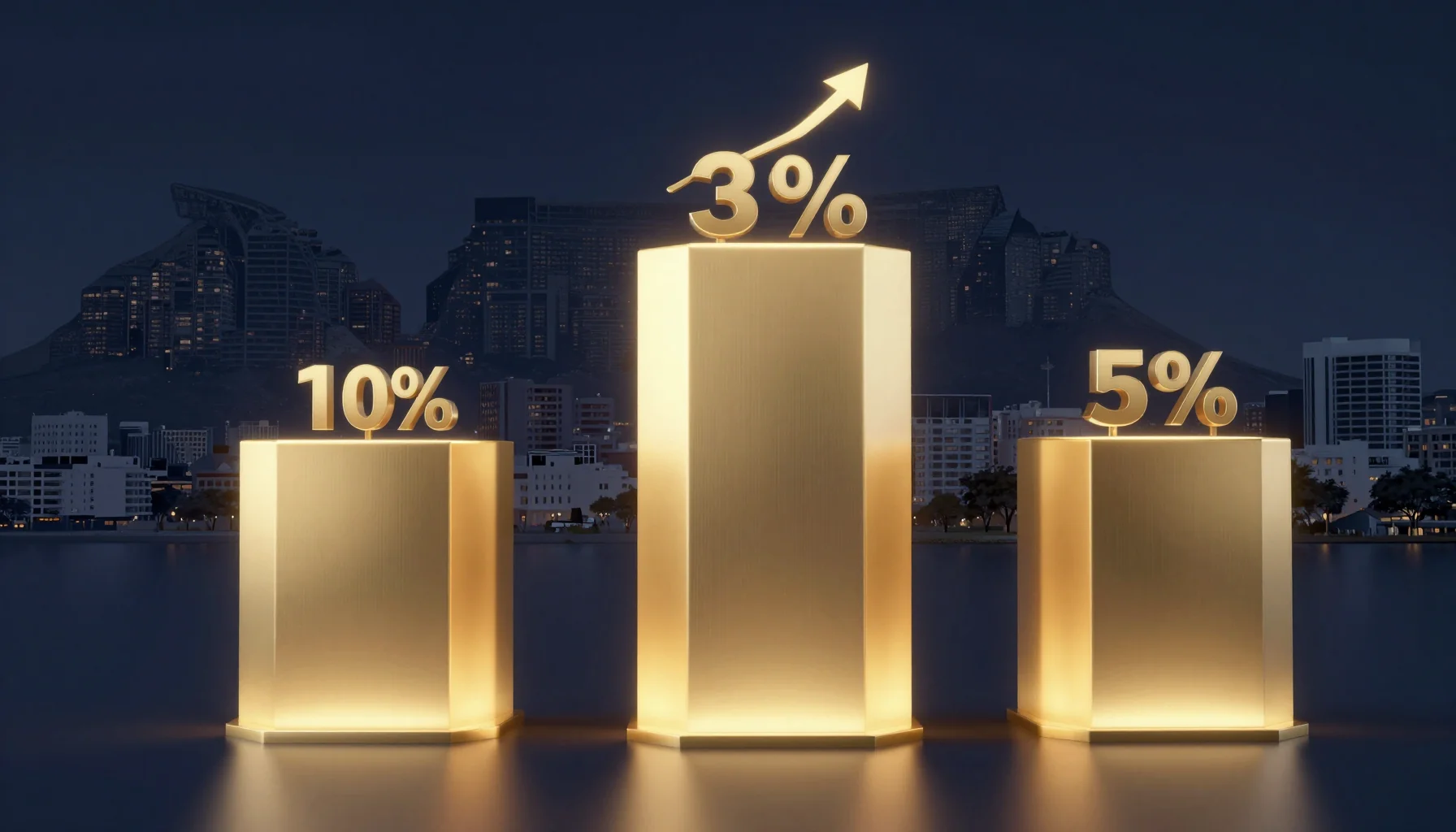
For Taiwan investors, these three figures are not dry macro data but the key signals for reading "is now the time to invest in Cape Town property?". A steady rate means mortgage costs are holding, with rate-cut expectations still in place; inflation at 5% means rising demand for real-asset value preservation; and a stronger rand means South African assets are worth more in Taiwan-dollar terms. Together, they form a three-factor framework of "rates + currency + house prices" — a practical tool for Taiwan investors to time their Cape Town allocation in H2 2026.

Key Summary: Worth allocating. The SARB unexpectedly held rates at 7% on July 23 (4 members supporting the hold), South African inflation rose to 5%, the rand appreciated 9.58% in a year (USD/ZAR 15.99), and the Repeat Sales house price index slowed to 5.2% year-on-year in June. Steady rates, a 9/23 rate-cut expectation, a strong rand and moderating price growth create a "stable cost + asset appreciation + bargaining room" property window. Consult DingYao today for three-factor reading and a Cape Town property strategy.


The SARB's Unexpected Hold: Markets Expected a Hike, Rates Stayed at 7%

Let's give a clear answer first: the SARB unexpectedly held rates at 7% at its July 23 MPC meeting. Reuters reported it under "South Africa central bank surprises with rate hold," while Moneyweb confirmed with "Sarb holds rates steady at 7%." Ahead of the meeting, markets broadly expected the SARB to hike on higher inflation — yet the committee held at 7% with four members supporting the decision, citing that "policy was already restrictive."

Behind this "surprise" is the SARB's read on South Africa's macro picture: the current 7% rate is already restrictive enough to contain upward inflation pressure, so there is no need to rush a hike. For Taiwan investors, this means mortgage costs will stay stable, and market expectations for a rate cut at the September 23 meeting remain intact — if rates fall, borrowing costs for Cape Town property will drop further, making financing even more favourable.

Key Insight: The SARB unexpectedly held rates at 7% on July 23, with four members supporting the hold on the grounds that policy was already restrictive. This means South African mortgage costs are stable, with 9/23 rate-cut expectations still in place — a property-friendly financing window is emerging for Taiwan investors.

"Markets expected a hike, yet the SARB held — this 'surprise' is a clear signal that South African macro policy is already restrictive. Read that signal, and you'll see Cape Town mortgage costs are sitting at a position friendly to property investors." — Scott Huang, CEO, DingYao Advisory

Inflation Rises to 5%: Why Did the SARB Choose to Wait?

Once you understand the rate decision, the next key question is: South African inflation rose to 5% (above the 3% target midpoint), so why did the SARB choose to hold rather than hike? The answer lies in the SARB's decision framework — it does not simply look at the current inflation number, but judges whether "policy is already restrictive" enough to guide inflation back to target.

When the committee believes the current 7% rate is sufficiently restrictive, it will hold even if inflation temporarily rises, keeping flexibility. This is an important signal for Taiwan investors: inflation at 5% means South African prices are still rising, so demand for real-asset value preservation (like property) increases, while the SARB's cautious stance avoids hammering the economy with further hikes. The combination points to a "inflation hedge + steady rates" property environment.

Inflation 5%

South Africa's June inflation rose to 5%, above the 3% target midpoint, lifting demand for real-asset value preservation.

Rate Hold at 7%

The SARB held at 7% on the grounds that policy was already restrictive, with four members supporting the hold.

Next MPC 9/23

Markets expect a possible rate cut at the September 23 meeting, which could lower mortgage costs further.

Stable Mortgage Costs

A steady rate means stable borrowing costs for Cape Town property, with rate-cut expectations reducing the financial burden.

Key Insight: Inflation rising to 5% lifts demand for real-asset value preservation, yet the SARB chose to hold at 7%. The interplay of "inflation hedge + steady rates," plus the 9/23 rate-cut expectation, creates a financing environment friendly to Cape Town property investors — read this combination, and you'll see a relatively good entry window.

Rand +9.58%: South African Assets Rise in Taiwan-Dollar Terms

The third key factor is currency. According to tradingeconomics data, the rand appreciated 9.58% against the dollar over the past 12 months and 4.12% over the past month (USD/ZAR around 15.99 on 8/27). This reversal from depreciation to appreciation has a profound impact on Taiwan investors — as the rand strengthens, the value of South African assets (including property) in Taiwan-dollar terms also rises.

But there is a key investment logic to clarify: a stronger rand is a tailwind for those already in the market (asset appreciation) but a rising entry cost for those not yet in. Taiwan investors have often been drawn in by the "buy on rand weakness" narrative; now that the rand has turned strong, "how to allocate when the rand is appreciating" becomes the new question — this does not negate property investment, but requires a more precise assessment of timing and asset allocation.

Key Insight: The rand appreciated 9.58% in a year (USD/ZAR 15.99), lifting South African assets in Taiwan-dollar terms. For existing holders this is a tailwind; for new entrants it is a higher entry cost — "how to allocate under rand appreciation" is the new question for Taiwan investors in H2 2026.

"The rand's shift from depreciation to appreciation is a signal of recovering confidence in South Africa's macro economy. For Taiwan investors, this is both a tailwind for assets you already hold and a cost consideration for new entries — the key is reading the currency trend before making an allocation decision." — Scott Huang, CEO, DingYao Advisory

Three-Factor Comparison: How Rates, Currency and House Prices Signal Property Timing

By placing all three factors in one table, Taiwan investors can see at a glance how to use "rates + currency + house prices" to read Cape Town property timing — a more systematic decision tool than simply following the news.

Factor Latest Data Impact on Property Signal to Read
Rates (SARB) Held at 7% (unexpected hold 7/23) Mortgage costs stable 9/23 rate-cut expectation → lower costs
Currency (Rand) +9.58% in a year (USD/ZAR 15.99) SA assets rise in TWD terms Tailwind for holders / higher entry cost
House Price Index Repeat Sales +5.2% YoY June (cooling) Moderating growth, lower bubble risk More buyer bargaining room

Key Insight: Three-factor reading: steady rates (stable cost + rate-cut expectation), currency appreciation (asset value up but higher entry cost), and a cooling house price index (more bargaining room). Taken together, H2 2026 is a property window of "stable cost + bargaining room" — the key is to seize timing and location.

Allocating in Cape Town with the Three Factors: A Four-Step Framework

Now that you understand the three factors, how do Taiwan investors turn this framework into action? Here is a four-step process to complete your "read → select → comply → land" Cape Town property allocation.

01

Read the current three factors

Assess the combined signal of current rates (7% hold), currency (rand +9.58%) and house prices (cooling 5.2%), confirm whether the property window is open, and set a budget and return expectation.

02

Select a location by goal

Choose a location by capital and goal: Atlantic Seaboard / Camps Bay high-end areas for appreciation, or mid-market rental hotspots for cash flow at 7.5-11.4% yields, with a local team evaluating the most suitable targets.

03

Fund compliance and purchase

Use DingYao's local team to complete SARB balance-of-payments (BOP code) reporting, compliant fund transfer and title transfer, ensuring a fully legal purchase while capturing the steady mortgage rate.

04

Rent management and residency planning

Entrust rental management to capture rental income, and carry out residency planning in parallel to turn your Cape Town asset into stable long-term returns while adjusting allocation under rand appreciation.

Key Insight: Allocating in Cape Town with the three factors takes four steps: read the current factors → select a location by goal → fund compliance and purchase → rental management and residency planning. Through these steps, translate your "rates + currency + house prices" reading into concrete Cape Town property action.

Conclusion: Read the Three Factors, Seize the Cape Town Property Window for H2 2026

The SARB unexpectedly held rates at 7%, inflation rose to 5%, the rand appreciated 9.58%, and the house price index cooled to 5.2% — these are not four isolated financial headlines but the signal of Cape Town property timing woven from the three factors of "rates + currency + house prices."

For Taiwan investors, steady rates mean friendly mortgage costs and a 9/23 rate-cut expectation that reduces the financial burden; inflation at 5% means rising real-asset value-preservation demand; a stronger rand means South African assets are worth more in Taiwan-dollar terms; and a cooling price index means more buyer bargaining room. Taken together, H2 2026 is a property window of "stable cost + asset appreciation + bargaining room" — reading the three factors and choosing the right location and timing is the key task for Taiwan investors in Cape Town.

Want to read your Cape Town property timing through the SARB decision, rand exchange rate and house price index? Book a consultation now, and let DingYao Advisory help you seize the H2 2026 Cape Town property window with a one-stop property strategy.

FAQ

Did the SARB really unexpectedly hold rates at 7% on July 23?

Yes. According to Reuters (South Africa central bank surprises with rate hold), Moneyweb (Sarb holds rates steady at 7%) and the resbank.co.za July MPC Statement, the SARB held rates at 7% against market expectations of a hike, citing that policy was already restrictive. Four committee members supported holding at 7%, with the next MPC meeting set for September 23.

Why didn't the SARB hike rates even though inflation rose to 5%?

South Africa's June inflation rose to 5%, above the SARB's 3% midpoint target, but the committee judged the current 7% rate was already restrictive enough to contain upward inflation pressure, so it chose to hold and keep flexibility. The market broadly expects a possible rate cut at the September 23 meeting, which could further lower mortgage costs.

Is a 9.58% rand appreciation a tailwind or headwind for Cape Town property?

It depends on your currency. For investors holding Taiwan dollars, a stronger rand means South African assets are worth more in strong-currency terms; the earlier "buy on rand weakness" window has passed, but asset values are genuinely higher and foreign confidence is stronger. Combined with rate-cut expectations lowering borrowing costs, the macro picture still supports a long-term Cape Town position, just at a higher entry price.

Does the Repeat Sales house price index cooling to 5.2% signal a market downturn?

The Repeat Sales house price index rose 5.2% year-on-year in June (slowing from 5.7%), reflecting moderating price growth, not a price decline. For Taiwan investors, this means more buyer bargaining room and lower bubble risk, which may actually be a good time to enter Cape Town at relatively reasonable prices, especially alongside the SARB's steady rates.

How can Taiwan investors use the three-factor framework to time Cape Town property?

The three-factor framework is rates, currency and house prices: steady or falling rates lower mortgage costs, a stronger rand means South African asset values rise but entry prices are higher, and a moderating price index provides bargaining room. We recommend working with DingYao Advisory's local team to interpret these three factors against your own capital and goals before deciding on timing and location.

Related Reading

Read the SARB Hold, Rand Strength and Cooling Prices, Seize the Cape Town Property Window

With the SARB unexpectedly holding rates at 7%, inflation at 5%, the rand up 9.58% and the price index cooling 5.2%, three factors weave into a property window for H2 2026. Book a property assessment now, and let DingYao Advisory help you read the three factors and plan a one-stop Cape Town property and residency strategy.

Book a Property Assessment Now