How to Apply to a South Africa Boarding School: Admission Timeline, Guardianship and Fees (2026)

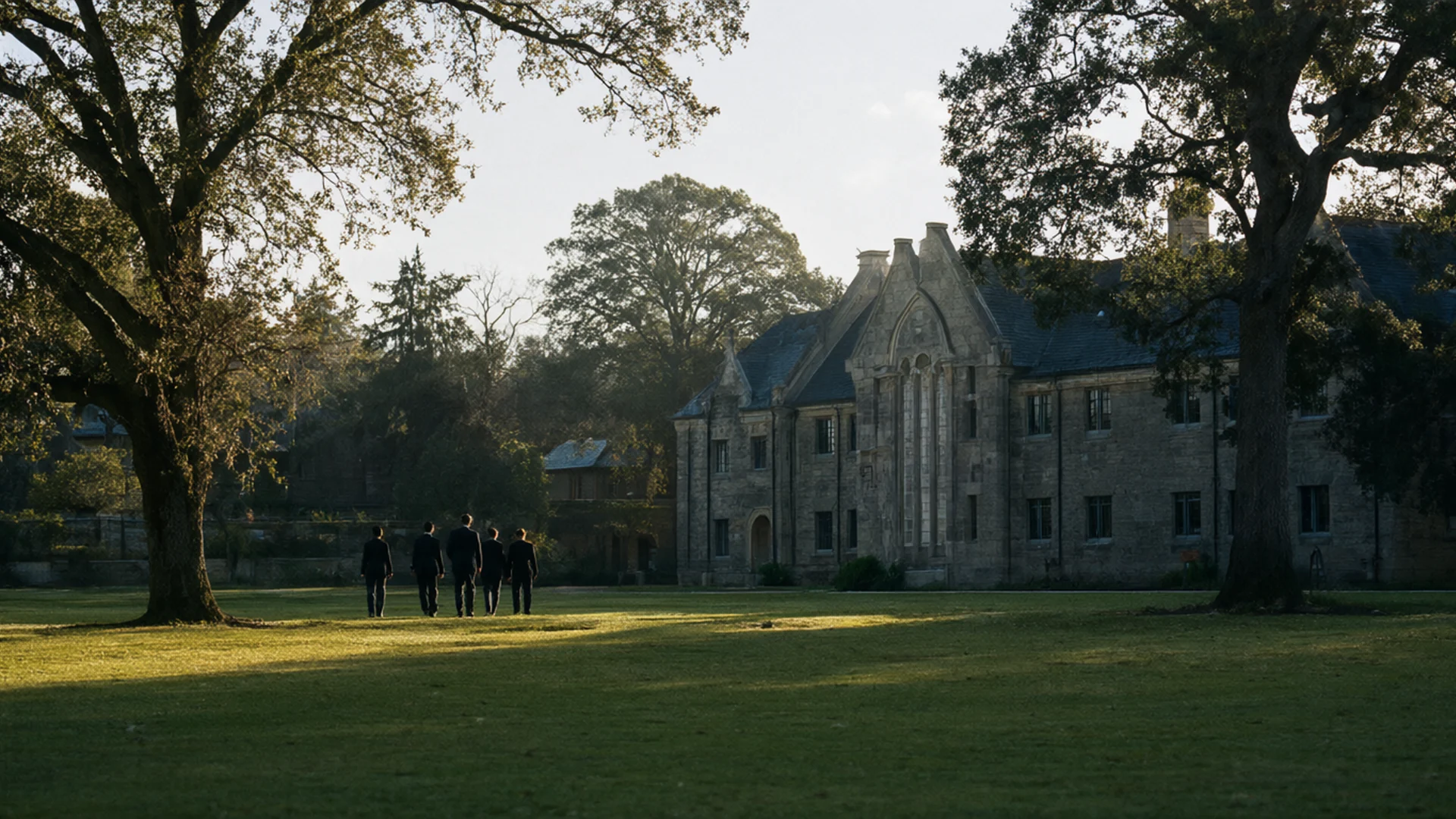
Stone buildings and lawns at a South African boarding school

How to Apply to a South Africa Boarding School: Admission Timeline, Guardianship and Fees (2026)

Most parents weighing Cape Town start with "which school is best". In practice, applications rarely fail on school choice — they fail on timing. The admission cycle at a top South Africa boarding school runs about 18 months, registration closes before the end of Grade 6, and the study visa has to be issued before the first school day. Three clocks run at once, and losing any one of them resets everything else.

Key summary (built around Cape Town and the Western Cape, with KZN boarding kept as the comparison): Apply roughly 18 months ahead. Hilton College states on its own admissions page that the enrolment process takes about 18 months and that registration should be completed no later than the start of the boy's Grade 6 year. Michaelhouse closed Grade 8 registration for 2027 entry on 31 January 2026; later applications go to a waitlist. A study visa for a minor additionally requires an unabridged birth certificate, consent from both parents, and evidence of who is responsible for the child in South Africa. This article covers timeline, guardianship and visa only — school shortlists and fee comparisons are linked at the end.

Admission calendar and timeline planning

How far in advance should you apply to a South Africa boarding school?

About 18 months — and "start" means registration, not the full document pack. Hilton College, a South African boarding school, puts it plainly on its enrolment page: the enrolment process takes about 18 months, online registration can be done from the boy's birth, and it should be completed no later than the beginning of his Grade 6 year. Michaelhouse says the same: registration may be completed any time from birth, preferably by the end of the Grade 6 year, because the campus tour and the interview with the Rector happen during Grade 6. This article is written around Cape Town and the Western Cape as the base, with Hilton College and Michaelhouse kept as the KZN comparison, because Cape Town is where most Taiwanese families actually settle.

Mapped onto a family calendar, the South African cycle feels much closer. For Grade 8 entry in January 2028, Grade 6 is 2026 — which is now. As of October 2026 the 2028 Welcome Days (1 August and 10 October 2026) are effectively over; what remains is the merit assessment in January 2027 and general place offers in April 2027. For entry in 2029, 2026 is precisely the registration window. In Cape Town the same 2028 start would mean signing a Southern Suburbs lease in October or November 2027 so the family can move in for January.

  • Registration: get into the school's database, ideally before Grade 6 starts. (in Cape Town the equivalent step is answering the entrance-exam invitation in November of Grade 6)
  • Visit and interview: campus tour and a meeting with the Rector or Deputy Rector during Grade 6. (Cape Town day schools usually host this on an open day or in an individual family meeting)
  • Assessment: around January of the Grade 6 to Grade 7 transition, usually by invitation. (in Cape Town it falls in February of Grade 7, English and Mathematics)
  • Offer: February to April of the Grade 7 year, released in batches — legacy and sibling places first. (Cape Town keeps a similar rhythm but without the boarding-bed step)

What is Hilton College's application timeline for Grade 8 entry in 2028?

Laid out side by side, the published 2028 Grade 8 dates at this South African school show something counter-intuitive: 22 months before the first day, the parent's calendar is already full. The table below maps the school's published milestones to what the family has to complete: Those are the KZN milestones; the Cape Town counterpart is in Section 3.

WhenSchool milestoneWhat the family completes
By the start of Grade 6Online registration completedSchool reports, family photo, school app set up
Before June 2026Boarding sleepover windowBook flights and accommodation — the only hard-deadline trip
1 August or 10 October 2026Welcome Day (choose one)Register for one session, bring the child
29–30 August 2026Classes and campouts weekendChild attends the weekend programme
9 January 2027Merit Award Assessment (invitation only)Scholarship and bursary assessment
6–7 March 2027New Boys WeekendFinal confirmation of intent
February 2027First offers (sons of Old Hiltonians, brothers)Decide and pay the entrance fee on receipt
April 2027Second offers (merit awards, financial assistance, general places)Where most international families land

Two things stand out. First, the offer arrives in April 2027 for a January 2028 start — those nine months are not idle time; they are when the visa, the guardian arrangement and the holiday accommodation get decided. Second, the sleepover and Welcome Day both fall inside the Grade 6 year, so a family that only starts asking "should we consider South Africa?" during Grade 6 has almost certainly missed the in-person milestones. In Cape Town those nine months absorb the Southern Suburbs lease, the notarised guardianship letter and the school-run route.

(Source: Hilton College (South Africa) enrolment dates and fees page, 2026 — publishes both the 2028 Grade 8 timeline and the 2026 fee schedule)

Why does Michaelhouse close registration so early?

Because the cut-off at this South African school is more than a year ahead, not a few months. Michaelhouse publishes that Grade 8 registration for 2027 entry closed on 31 January 2026, and that applications received after that date are placed on the waitlist. In practice, a family deciding in February 2026 to apply for 2027 entry no longer has a normal place available. Cape Town day schools carry no such multi-year cut-off, but the entrance exam sits in February of Grade 7 — miss it and the family waits another year.

South African selection criteria make late decisions harder still. Entry into E Block (Grade 8) is based on previous academic performance, a personal interview with the Rector or Deputy Rector, the most recent school report, and a confidential recommendation from the applicant's current headmaster. That last item depends on the child's present school cooperating — it is not something a parent can produce alone. Michaelhouse also reserves the right to run credit checks on applications, to confirm families can meet the costs of attendance. Cape Town independent schools weigh the same evidence, replacing the boarding interview with a family interview.

A detail easily missed in the South African system: entry into D and C Blocks (Grades 9 and 10) is possible only when space allows, judged on the same criteria. That makes "secure Grade 8" close to the only reliable route; a mid-school transfer is luck, not a plan. In Cape Town mid-year transfers also depend on vacancies, while Bishops opens its 156 Grade 8 places once a year.

(Source: Michaelhouse (South Africa) Admissions page, 2026 — Grade 8 2027 registration cut-off and 2026 fee structure)

What happens if you miss the registration deadline?

There are options in the South African system, but none of them is a plan. A late application joins the waitlist, and whether it converts depends on another family withdrawing — unknowable in advance. Three alternatives exist in practice, and each one changes the original plan. Cape Town adds one more path: enter a day school first, then move to boarding if the family arrangement changes.

Waitlist

In Cape Town the equivalent is holding a place at one day school while testing another. No new documents needed, but you are entirely passive — accommodation and visa timing cannot be booked ahead.

Grade 9 or 10 entry

Opens only when a place frees up, on the same criteria as Grade 8. Workable for a family already in South Africa, not for a first move abroad.

A city day school

Most international schools around Cape Town are day schools with rolling, vacancy-driven admission — far more flexible on timing, at the cost of solving housing and daily transport.

What these three South African fallbacks share is this: they are not "apply a bit later" solutions, they are different plans. If a family has fixed the year their child switches systems, the practical move is to set the registration date 18 months earlier as their own deadline rather than watching the school's. For a Cape Town family, the 18-month countdown becomes twelve months plus the February of Grade 7 entrance exam.

Family reviewing guardianship and visa documents with an adviser

Who is the legal guardian of a child studying in South Africa?

Guardianship stays with the parents and does not transfer because the child boards. This matters because many families assume the boarding school becomes the guardian. It does not: the housemaster runs boarding-house life and discipline, not legal guardianship. What the visa side actually asks for is proof of who is responsible for the child in South Africa, plus proof of accommodation. In Cape Town this matters more, because most schools are day schools: there is no housemaster at all, so the local responsible adult carries more weight.

In practice, three arrangements appear in South African boarding, and they can coexist:

  • A parent accompanies the child: the child's study visa and the parent's own permission to stay are two different applications. The parent's route depends on purpose and duration and has to be confirmed case by case — it cannot simply mirror the child's visa. The Southern Suburbs rent bands are in Section 6.
  • A relative or family friend on the ground: this needs a notarised authorisation letter naming the responsible adult, their ID number, address, relationship to the child, and the exact scope delegated (medical consent, holiday accommodation, school contact). Both the school and the visa officer will read it. Cape Town schools usually also require that person to live within a reasonable drive.
  • A school-approved guardianship service: some schools offer or refer third-party services covering exeat weekends, mid-term accommodation and emergency medical contact. These are usually charged separately and do not change who holds legal guardianship. Most Cape Town day schools refer aftercare and guardianship providers, charged separately.

The three recurring gaps in South African visa files are almost always in the source documents rather than the forms. An unabridged birth certificate is required — an abridged version naming one parent is usually refused. Consent from both parents must be notarised, and if a parent is abroad, unreachable or deceased, a court order or death certificate has to stand in for that consent. Accommodation and responsible-adult evidence must match reality: when the boarding house address and the guardian's address are in different provinces, the child's location during holidays has to be explained. Lodging in Cape Town, the most common request for further documents is an authorisation that never mentioned medical consent.

What does a minor need for a South African study visa?

The South African study visa sits under section 13 of the Immigration Act, read with regulation 12 of the Immigration Regulations. The hard gate is that no application can be lodged without an acceptance letter from a registered institution — and not just a congratulatory letter: it must state the course name, the course duration, the student number, and the institution's undertaking to report registration status to Home Affairs. Cape Town acceptance letters usually arrive during Grade 7, which lines up with the lodging window a year before entry.

CategoryDocumentWhere it usually goes wrong
SchoolAcceptance letter with course duration, student number, reporting undertakingHolding an "offer" letter with no course dates or student number
FundsBank statements for the last three monthsMission thresholds differ (the Canberra mission states ZAR 3,000 per person per month) — confirm your own mission's checklist
Medical coverCover with a medical scheme registered under the Medical Schemes Act, renewed annuallySubstituting travel insurance, which is generally not accepted
HealthMedical report and chest X-ray reportClinic report not on the required form
Police clearanceRequired for applicants 18 and over staying beyond 90 days; certificate no older than six monthsApplied too early, expired by submission
Minor additionsUnabridged birth certificate, consent from both parents, responsible adult and accommodation evidenceConsent not notarised, or signed by one parent only

South African fees and forms move too, so use current figures. Under the gazetted fee regulations, the Department of Home Affairs study visa fee is ZAR 425 from 17 August 2026, with the visa application centre charging a separate service fee; form codes (BI-947, BI-1738) and document order vary by mission. One final condition is often missed: a study visa is tied to the institution and the course. If the child changes schools after acceptance, confirm the procedure with Home Affairs or the original mission first — the existing visa does not simply carry over. Cape Town applicants follow the same fee schedule, plus the visa centre's separate service charge.

(Source: South African Immigration Regulations, regulation 12, and the gazetted DHA fee schedule, 17 August 2026 — mission checklists differ)

How do the visa, the start date and the four terms line up?

The South African school year opens in mid-January and ends in early December, split into four terms. Using the published 2026 calendar for public schools (Government Gazette No. 52177, 25 February 2025) as the reference: Cape Town independent and private schools shift slightly inside that frame.

Term2026 datesWhat it means for the family
Term 114 January – 27 MarchThe visa must be issued before this date; boarding-house arrival is earlier still
Term 28 April – 26 JuneEaster break — boarding houses close
Term 321 July – 23 SeptemberWinter term, when most schools run inter-school fixtures
Term 46 October – 9 (11) DecemberLong holiday from December; boarding houses closed until January

South African independent schools shift these dates slightly, but mid-January to early December holds. What actually has to be aligned is three things: visa issue before Term 1 starts (lodging in September or October of the previous year is comfortable), flights and boarding-house arrival before day one (new boys usually report several days early), and where the child goes during mid-term breaks and the December holiday. For Cape Town families the two dates that must line up are the lease start and the first day of Term 1.

That last point is the most under-estimated. Boarding houses close during the mid-term breaks and the December holiday, so the child cannot stay on campus. Whether they fly home, meet family elsewhere, or stay with the responsible adult in South Africa has to be decided at application stage — because it determines how the guardianship documents are worded, and whether the parents need accommodation of their own. Cape Town day schools have no boarding house to close, but mid-term and December breaks still arrive and the child still needs someone.

(Source: South African Government Gazette No. 52177, 25 February 2025 — 2026 calendar for public schools)

Documents and planning notes for school fee structure

What makes up a year of fees at a boarding school?

South Africa private school fees are not one number. They are five layers, paid at different times, with different refund rules — which is why families that only track the headline annual figure discover a cash-flow mismatch after the offer arrives: In Cape Town there is a sixth layer: rent.

1

Registration fee

Paid to enter a South African school's applicant pool, non-refundable. Small in scale, but without it there is no registration at all.

2

Acceptance or entrance fee

Cape Town independent schools charge the same non-refundable acceptance fee, and it is not returned if the visa is refused. Paid when accepting a South African school's offer, non-refundable, typically equivalent to about one term's fees. The non-resident version is materially higher, and part of it may be refundable when the child leaves.

3

Annual tuition and boarding

At a Cape Town day school the annual fee covers tuition only — food, board and rent sit outside it. At a South African boarding school this covers tuition, food and board, routine fixtures, basic medical attention and laundry. Based on the two South African schools' published 2026 figures, annual tuition plus boarding totals roughly ZAR 417,000 to 441,766 (2026 published rates, not a guarantee of future years).

4

Foreign pupil's deposit

Cape Town day schools usually skip this deposit and bill termly instead. Applies to families living outside South Africa: about one and a half terms' fees, held against repatriation costs, and refundable. This is standard practice among South African independent schools.

5

Extras

In Cape Town a day school adds daily transport or a school bus on top. Beyond the annual fee, South African schools charge for books and stationery, uniform, accident insurance (compulsory at some schools), doctors' fees, transport and equipment for designated sports such as golf, rowing and canoeing, plus weekend and holiday travel.

The payment rhythm also needs planning: families resident outside South Africa are usually required to pay annually or termly in advance rather than by monthly debit order, which is the arrangement for locally resident parents. For a full school-by-school comparison and the "fees times property" model, see the two linked articles below — this page does not repeat those tables. Cape Town day schools usually bill termly rather than annually, a different rhythm from boarding.

Boarding or accompanying parent: is a Cape Town day school a different path?

Start with a geographic fact that is often blurred: Hilton College sits in Hilton, near Pietermaritzburg in KwaZulu-Natal, and Michaelhouse is at Balgowan in the Midlands. Choosing boarding or an accompanying parent does not put the family in Cape Town — accompanying means living in Pietermaritzburg or the Midlands, not on the Atlantic Seaboard.

If the family's long-term plan is Cape Town anyway — property, lifestyle, and later residency in the same picture — the real comparison is between two systems rather than two schools:

  • Traditional boarding schools: an 18-month admission cycle, place-based intake, Grade 8 as the main entry point. Suited to families who have decided the child will spend five years in a residential, single-sex environment. The Cape Town equivalent — an independent day school — runs on half that lead time.
  • Urban day schools: most international schools around Cape Town admit on a rolling basis as vacancies appear, far more flexible on timing — but the family has to solve housing, daily transport and after-school cover, which loops straight back into a property decision.

The preparation order is inverted: boarding is "lock the date first, then decide where to live"; a day school is "solve where to live first, then join the queue". For families weighing Cape Town international schools alongside school-district housing, our Cape Town international school cost and property model puts fees, districts and housing costs on one sheet, which is closer to real expenditure than a school's own fee page.

How do Cape Town and Western Cape schools differ from KZN boarding schools?

Start by removing a common misconception: Cape Town's school landscape is not the same as KwaZulu-Natal's traditional boarding circuit. Hilton College and Michaelhouse in KZN are almost entirely boarding, admit at Grade 8 as the single entry point, and run an 18-month queue. Cape Town and the Western Cape are built around day schools, with boarding concentrated in the Winelands and Helderberg areas. The same application calendar does not transfer.

Cape Town / Western Cape schoolLocationTypeApplication essentials
Bishops (Diocesan College)Rondebosch (Southern Suburbs)Independent boys, dayAdmits 156 boys into Grade 8 at its Rondebosch, Cape Town campus across six sets of 26; registered candidates are invited by email in November of Grade 6, and the entrance exam (English and Mathematics) is written in February of Grade 7; selection uses the exam, the final Grade 7 report and a confidential report from the prep school
Somerset CollegeSomerset West (Helderberg)Independent, co-ed, with boardingPre-Prep through Matric, offering both Cambridge and CAPS; online application, with boarding places subject to grade and bed availability
SACS (South African College Schools)Newlands (Southern Suburbs)Public, English-mediumA public institution founded in 1829; applications run through provincial and school channels, so closing dates move each year (to be confirmed)
Rondebosch Boys' High / Paarl Boys' and Paarl Girls' HighRondebosch / PaarlPublic (former Model C, fee-paying)Grade 8 entry driven by school results and available places; international applicants must confirm records and study visa sequencing (to be confirmed)
Herschel, St Cyprian'sClaremont / OranjezichtIndependent girls, dayIndependent admission with interviews and references; deadlines differ by school (to be confirmed)

The most important row is the timing. Cape Town day schools make their decision roughly six months later than KZN boarding schools: the Bishops entrance exam falls in February of Grade 7 with offers made during Grade 7, while Hilton College completes its Welcome Day and boarding sleepover during Grade 6 and releases offers in February and April of Grade 7. In other words, for a Cape Town day school the first real deadline is November of Grade 6; for KZN boarding, registration must be finished before Grade 6 even starts.

Boarding is also not the default in Cape Town. Families who want Cape Town but need boarding usually look towards Somerset West, Stellenbosch and Paarl — schools such as Somerset College that combine boarding with Cambridge — and then bridge with daily transport or weekend returns. That is a very different family arrangement from sending a child to board in KZN for five years.

(Sources: Bishops Admissions and Entrance Exam pages, Cape Town, 2026; Somerset College Admissions and Boarding pages, 2026; SACS classification per the Wikipedia entry "South African College Schools"; other school types per each school's own site — items marked "to be confirmed" should be verified school by school before applying)

Where should an accompanying parent live in Cape Town, and what does rent cost?

If the family chooses a day school, rent becomes the second-largest cost — and the spread between Cape Town suburbs is wider than the spread between school fees. The Western Cape has the highest average rent of any South African province: R12,561 per month in Q2 2026, up 9.7% year on year (Source: Cape Town Data, citing PayProp, TPN and Property24, Q2 2026).

Cape Town districtMedian 1-bed rentMedian 2-bed rentSchool catchment it serves
Atlantic Seaboard (Sea Point / Camps Bay)R19,500–40,000R32,000–85,000No main school belt; commute to City Bowl or Southern Suburbs
City Bowl (Gardens / Oranjezicht)R12,500–19,000R19,000–28,000City schools such as St Cyprian's
Southern Suburbs (Rondebosch / Newlands / Claremont)R13,000–21,000R18,000–28,000The core belt for Bishops, SACS, Herschel and Rondebosch Boys'
Northern SuburbsR8,250–16,000R11,000–18,000Budget option; trade rent for commute time
Helderberg (Somerset West)R10,500R15,000Somerset College (with boarding)
False Bay (Muizenberg / Kalk Bay)R12,000–17,750R16,000–22,000Coastal living; commute into the Southern Suburbs

(Source: Cape Town Data, "Cape Town Rental Market Q2 2026" — median asking rents aggregated by district from Property24 and partner listings, data as of October 2026; asking rents, not achieved rents)

Put rent back into the decision: a family choosing Cape Town's Southern Suburbs pays R18,000–28,000 for a two-bedroom and gets Bishops, SACS and Herschel all within a 10–20 minute drive. Choosing the Northern Suburbs saves roughly R7,000–10,000 a month, at the cost of 40–60 extra minutes of daily commuting. If the child attends a school with boarding such as Somerset College, the family can board during term and return at weekends, pushing rent down to Helderberg one- or two-bedroom levels.

Three practical notes. First, these are median asking rents; achieved rents are usually slightly lower and long leases typically require one to two months' deposit. Second, Cape Town leases often exclude utilities, and winter electricity bills rise sharply. Third, a lease does not create school rights — Cape Town's independent schools admit on exam performance and available places, not on your street address.

What should a guardianship arrangement in Cape Town actually look like?

Guardianship needs are heavier in Cape Town than at KZN boarding schools for a simple reason: day schools have no housemaster. After the school day, at weekends, and during school holidays while parents still work, there must be a locally reachable adult. That is what "responsible adult" means in Cape Town — not a legal title, but a 24-hour contact and a care commitment.

Three arrangements exist; Cape Town families most often use the second:

  • A parent accompanies the child in Cape Town: the most direct route, but the parent's own permission to stay is a separate matter, and rent plus living costs land in the same household budget (see the Southern Suburbs bands above).
  • A relative or a professional guardianship service: requires a notarised authorisation naming the responsible adult, their ID number, address, relationship to the child and scope delegated (medical consent, after-school collection, holiday accommodation, school contact). Cape Town schools also ask the guardian to complete an emergency contact form and to be within a reasonable driving distance (the required radius differs by school — to be confirmed).
  • A school-approved third-party service: some Cape Town schools refer guardianship or aftercare providers, usually charged separately and without changing who holds legal guardianship.

The document order should be: notarised authorisation first → then confirm the school's emergency-contact and collection-authorisation format → then lodge the study visa. Done the other way round, the usual outcome is a visa request for further documents because the authorisation never mentioned medical consent — a field most Cape Town schools mark as compulsory on the application form.

How do Cape Town school districts connect to property and rental returns?

For a family planning three to five years of accompanying a child, "rent or buy" is a calculation, not a feeling. Using real Cape Town Southern Suburbs figures, here is an illustrative calculation (hypothetical, not a promise of return): a two-bedroom at an assumed R3,000,000, rented at the Southern Suburbs two-bedroom median of R22,000, produces R264,000 gross rent a year — a gross yield of about 8.8%. After levies, municipal rates, maintenance and vacancy, the net figure is materially lower, and actual outcomes vary by property and year.

The point is not to argue for buying. It is to compare: the same capital buys a two-bedroom in Cape Town's Southern Suburbs to live in and partly let, or a one-bedroom on the Atlantic Seaboard to let out — and those are two very different cash-flow structures. Southern Suburbs rental demand comes from working families and university staff: stable, with moderate price growth. The Atlantic Seaboard commands higher rents but carries higher vacancy and seasonality risk.

One common misjudgement to avoid: in Cape Town, buying inside a school district does not buy a place at the school. Independent schools such as Bishops admit on entrance exam, Grade 7 results and references, regardless of address; public schools follow zoning and admission rules. A property decision should rest on living radius and rental structure, not on a guarantee of admission.

For the full fees × district × price model, see the linked article below; this section only traces the connection and does not repeat the calculation.

FAQ

When is the registration deadline for a South Africa boarding school?

It varies by South African school, but the rule of thumb is before the end of Grade 6. Hilton College asks for online registration to be complete before the Grade 6 year begins, with a process lasting about 18 months. Michaelhouse closed Grade 8 registration for 2027 entry on 31 January 2026, with later applications going to a waitlist. Work backwards 18 months from the intended entry year and treat that as your own deadline. In Cape Town day schools the first real node is November of Grade 6.

Do applicants need an exam or an interview?

An interview, yes, and some South African schools add an assessment. Michaelhouse bases Grade 8 entry on previous academic performance, a personal interview with the Rector or Deputy Rector, the most recent school report and a confidential recommendation from the current headmaster. Hilton College runs an invitation-only Merit Award Assessment. The interview normally happens during the child's Grade 6 year, on the visit with parents. Bishops in Cape Town adds an entrance exam in English and Mathematics.

Does a child studying in South Africa need a local guardian?

Legal guardianship stays with the parents and does not move because the child boards, but the visa side requires evidence of who is responsible for the child in South Africa plus proof of accommodation. In practice: a parent accompanying the child (whose own permission to stay is a separate matter), a notarised authorisation to a relative or friend, or a school-approved third-party guardianship service. The housemaster manages boarding life, not legal guardianship. In Cape Town, day schools ask for a reachable local adult rather than a housemaster.

What documents does a minor need for a study visa?

Beyond the standard South African study visa pack — acceptance letter, proof of funds, medical scheme cover, medical and X-ray reports, and police clearance for applicants 18 and over staying beyond 90 days — a minor needs an unabridged birth certificate, consent from both parents, and evidence of the responsible adult and accommodation. If a parent is unreachable or deceased, a court order or death certificate replaces that consent. Lodging in Cape Town, the accommodation proof is usually the Southern Suburbs lease.

How early should the study visa be lodged?

September or October of the year before entry into a South African school. The visa must be issued before Term 1 starts in mid-January, and it cannot be lodged without the school's acceptance letter; offers are typically released between February and April of the year before entry, leaving time for notarisation, medicals and any request for further documents. In Cape Town the entrance exam in February of Grade 7 is what unlocks that window.

What does a year at a boarding school cost in total?

Based on the two schools' published 2026 figures, annual tuition plus boarding totals roughly ZAR 417,000 to 441,766 (2026 published rates, not a guarantee of future years). That is only the third layer: add the non-refundable registration and acceptance fees, the refundable foreign pupil's deposit of about one and a half terms, and extras such as books, uniform, insurance and travel. See the linked articles for the full comparison and financial model. A Cape Town day school replaces part of that structure with rent plus daily transport.

Related reading

This article compiles public information on admission timing, guardianship arrangements and study visa dependencies only. It is not immigration or legal advice. School timelines and visa checklists change every year — confirm against the school's published dates and the latest checklist from the South African Department of Home Affairs or the mission handling your application. Cape Town schools and Western Cape public schools revise their rules annually; check each school's own site.

Why Handle This Through Crestline Advisory?

South African school and visa requirements change every year — and what changes is usually the format, not the eligibility. Same birth certificate, same consent letter, wrong format, rejection.

The three most common failure points

  • The unabridged birth certificate was not ordered first: An abridged version naming one parent is usually refused, and replacing it means waiting on the issuing authority — while every other visa document references it, so a wrong order resets the whole pack.
  • Parental consent was signed but not notarised: This is the single most common refusal reason. Where a parent is abroad, unreachable or deceased, a court order or death certificate must stand in — there is no substitute wording.
  • The guardian's address does not match the boarding house: When the two sit in different provinces, the child's location during mid-term breaks and the December holiday has to be explained, or the visa officer will request further documents.

Working through our partner Crestline Advisory (on-the-ground execution in South Africa) means these are checked before submission:

  • Document format pre-screened item by item (a round trip costs 2-4 weeks)
  • Current notarisation and scope-of-authority wording confirmed for guardian documents
  • School milestones aligned with the visa lodgement date, before an offer exposes a gap
  • Progress tracked locally after submission, so you are not calling across time zones

DingYao verifies your documents on the Taiwan side and hands over to Crestline Advisory for execution. You do not receive a checklist and left to figure it out alone.

Put Your Child's Admission Timeline on Paper

Work backwards 18 months from registration and the visa, guardian documents and accommodation decisions all still fit. Book a consultation for your child's timeline and document checklist.

Book a consultation

【Compliance & Disclaimer】

1. Company Statement: DingYao Advisory (Ding Yao Advisory) is a Taiwan-based consultancy providing asset allocation, immigration advisory, overseas account opening, and second-generation education coordination services. DingYao does not engage in real estate brokerage or dealer activities within the Republic of China (Taiwan), nor does it handle, collect, or hold any property transaction funds.

2. Information Source & Contracting Party: The South African property, development projects, market data, and related images in this article are provided by overseas partners Crestline Advisory (Pty) Ltd and developer CanvasCrest Properties, for overseas asset allocation and market reference only, and do not constitute any offer, solicitation, or investment guarantee. All property-related purchase agreements, fund payments, and title transfers are executed directly between the buyer and overseas licensed developers/institutions in accordance with local law.

3. Statutory Risk Warning: "Foreign real estate investment carries risks. Investors should read marketing documents carefully and consider transactions prudently." Overseas investments involve exchange rate fluctuations, local regulations, tax changes, and market risks. Data (such as historical returns, interest rates, etc.) are based on specific calculation standards and timeliness; past performance does not guarantee future returns. Investors should assess independently and seek professional legal and financial advice.