Cost of Living in Cape Town 2026: Rent

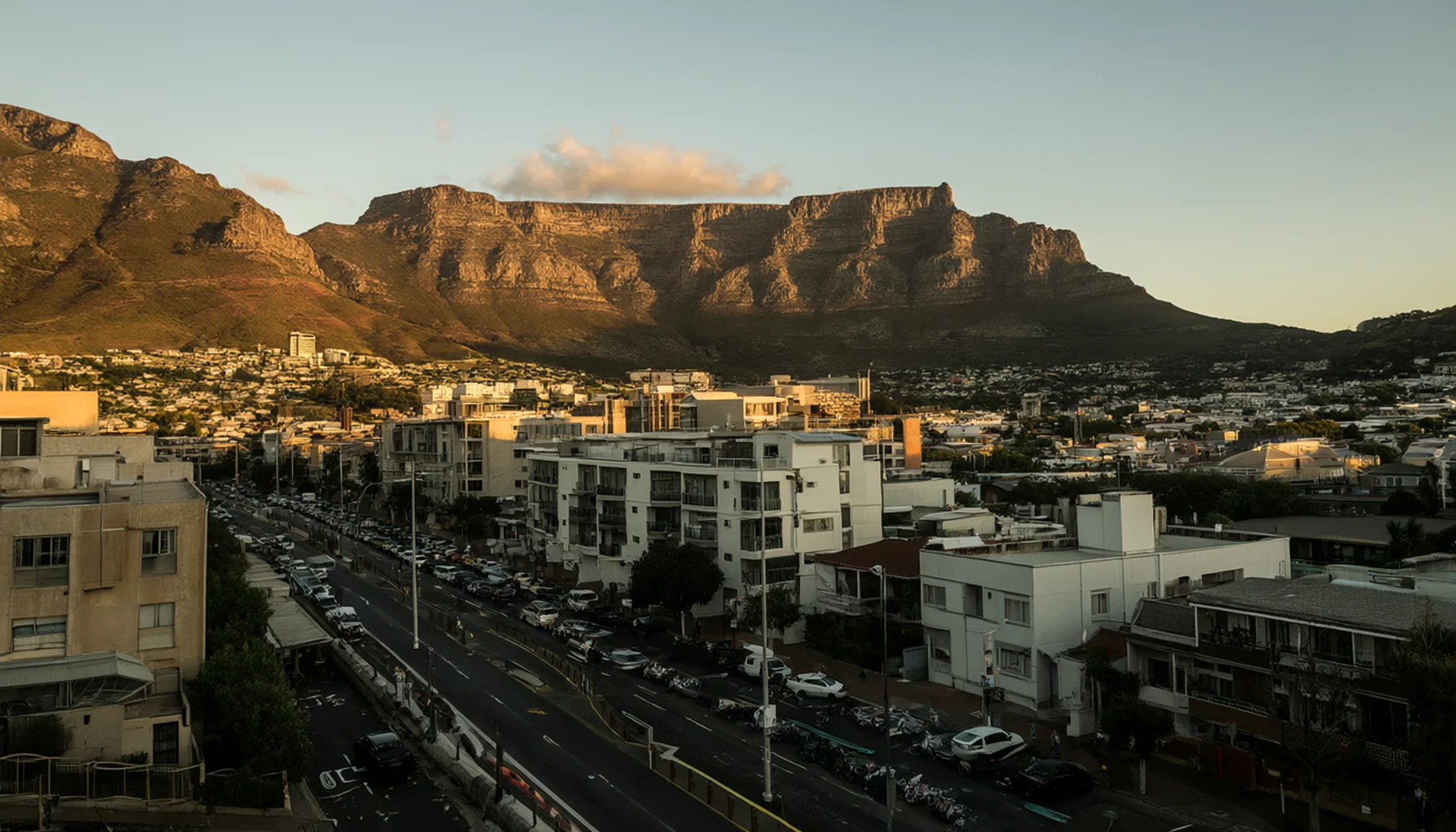
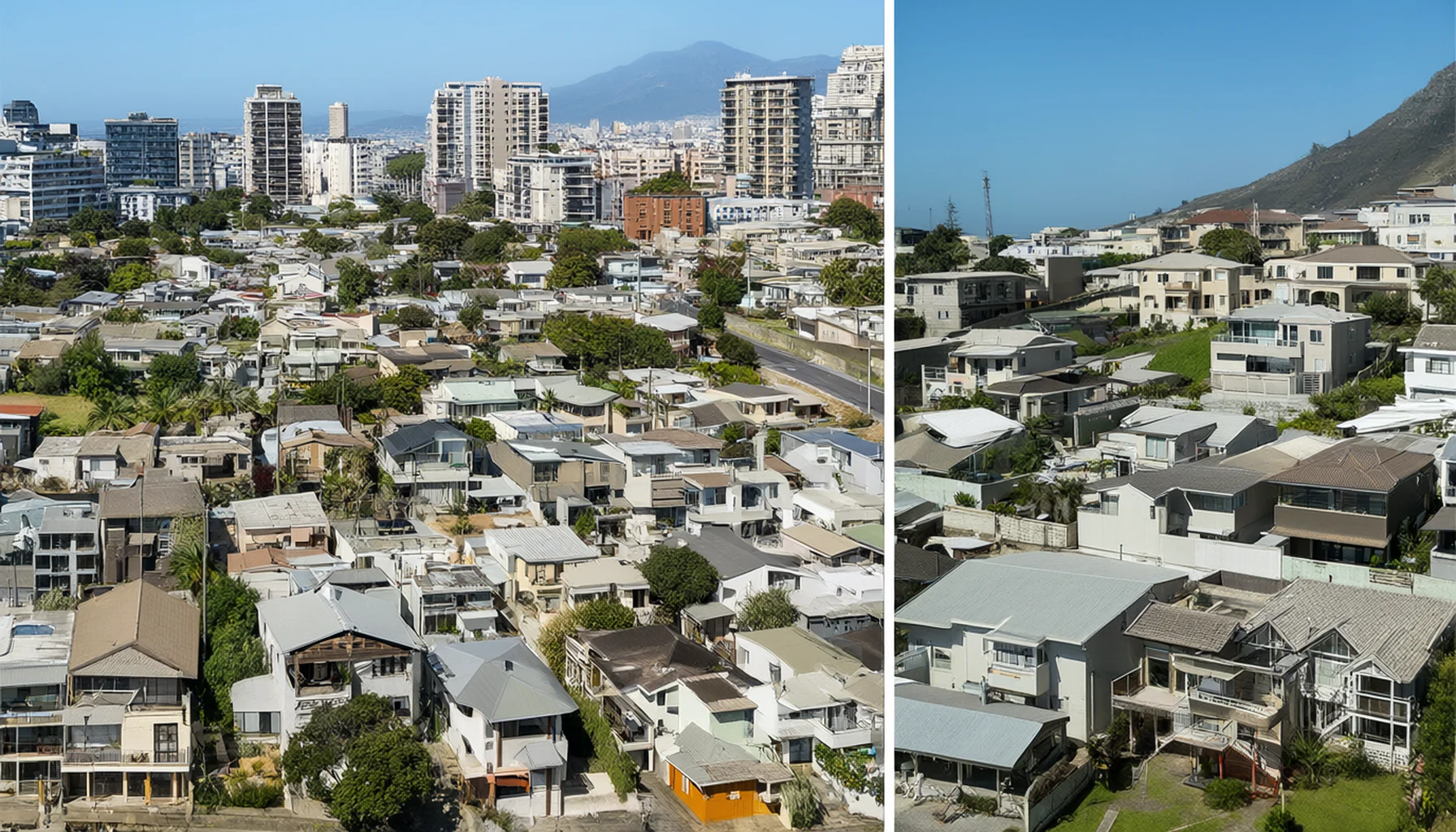
Cape Town short-term letting by-law and inner-city skyline

Cost of Living in Cape Town 2026: Rent, Schools, Medical Aid and Monthly Budgets

"What does it cost to live in Cape Town?" is one of the most searched questions about the city, and most answers get it wrong in one of two ways: they quote a national South African average as if it were Cape Town, or they use a backpacker's minimalist budget as if it were a normal family.

The more useful question is what different lifestyles actually cost. The spread is wider than most people expect. Take a family of four living well with private schooling and two cars: the monthly budget can be R45,000 or it can exceed R140,000 - depending on whether you live on the Atlantic Seaboard or in the Northern Suburbs, which tier of school your children attend, and whether you run one car or two. This guide breaks Cape Town living costs into five blocks - rent, utilities, education, medical aid and transport - and puts them in rand and US dollars.

Key takeaway: Cape Town living costs are driven by two variables: rent and lifestyle. In 2026 a single professional renting a one-bedroom flat and living modestly spends about R18,000-25,000 a month; a couple in a mid-range two-bedroom with one car spends about R28,000-42,000; a family of four living well with private schooling, two cars and domestic help spends about R45,000-75,000; and a family on the Atlantic Seaboard or in Constantia using top-tier schools can spend R80,000-140,000 or more. The structural point: rent varies far more by suburb than by property size. All figures are market-reference ranges that depend on household size, area and school tier - not guaranteed amounts. This article is for information only and is not investment advice.

Monthly household budget breakdown for Cape Town
Rent, education, medical aid, transport and backup power are the five main budget lines

What is the cost of living in Cape Town, South Africa by household type?

Direct answer: in 2026 a single professional renting a one-bedroom flat in Cape Town spends about R18,000-25,000 a month (roughly $1,090-1,510); a couple in a mid-range two-bedroom with one car about R28,000-42,000 (about $1,690-2,540); a family of four living well with private schooling, two cars and domestic help about R45,000-75,000 (about $2,720-4,540); and a family of four on the Atlantic Seaboard or in Constantia using top-tier schools R80,000-140,000+ (about $4,840-8,470+).

HouseholdMonthly budget (ZAR)Approx. USD
Single professional (one-bed flat, City Bowl or Sea Point)R18,000 - 25,000about $1,090 - 1,510
Couple (mid-range 2-bed, one car)R28,000 - 42,000about $1,690 - 2,540
Family of four (private school, two cars, help)R45,000 - 75,000about $2,720 - 4,540
Family of four (Atlantic Seaboard / Constantia, top schools)R80,000 - 140,000+about $4,840 - 8,470+

The conversion uses early-October 2026 rates: one South African rand was worth about 0.0605 US dollars, or roughly R16.5-16.6 to the dollar (Source: ECB reference rates / open.er-api.com, 7 Oct 2026). The rate floats, so when you budget, model a more conservative rate as well - a stronger rand raises your costs in foreign currency.

What actually widens the budget in Cape Town is not how big the property is but where it is and which school your children attend. That is why the rest of this guide breaks the numbers down - rent, utilities and connectivity, education, medical aid, transport and domestic help - line by line. The fee range behind that education line is on the Cape Town private schools for foreign families page.

Source: Relocating to South Africa, "Cost of Living in Cape Town: What You'll Actually Spend in 2026" (updated September 2026). The author verified the page directly.

Comparison of rental levels across Cape Town suburbs
Within one city, rent can vary almost four-fold

How much does rent cost in Cape Town, and why does it vary so much?

Direct answer: a lot. A one-bedroom flat in Cape Town ranges from about R7,500 a month in the Southern Peninsula to R28,000 in Camps Bay or Clifton - the same city, the same property type, nearly a four-fold gap. Rent is the single most suburb-sensitive line in Cape Town's cost of living, far more than salaries or grocery bills. So set the suburb first, then the property type; doing it the other way round badly misleads the budget.

Area1-bed (monthly)3-bed house (monthly)
Sea Point / Green Point / Mouille PointR11,000 - 18,000R28,000 - 48,000
Camps Bay / Clifton / Bantry BayR16,000 - 28,000R55,000 - 120,000+
City Bowl (Gardens, Tamboerskloof, Oranjezicht)R11,000 - 17,000R30,000 - 55,000
Southern Suburbs (Newlands, Claremont, Rondebosch)R9,000 - 14,000R25,000 - 45,000
Constantia / BishopscourtR12,000 - 18,000R40,000 - 90,000
Southern Peninsula (Muizenberg, Fish Hoek, Noordhoek)R7,500 - 12,000R18,000 - 32,000
Northern Suburbs / Winelands (Durbanville, Stellenbosch)R7,500 - 12,000R18,000 - 35,000

The practical implication for anyone planning to rent before buying is that the suburb you choose directly determines how much you can save towards a deposit. Rent in the Northern Suburbs or Southern Peninsula is roughly a third to a half of the Atlantic Seaboard, while still sitting close to the schools, supermarkets and medical facilities most families need.

Two practical details are worth knowing up front. First, furnished short-lets run 20-40% above unfurnished long-lease rates, and most landlords ask for a one- or two-month deposit plus the first month. A 12-month unfurnished lease plus your own basic furniture is usually the cheaper route on arrival. Second, most agents quote in rand and expect local bank transfers, so budget time to open a South African bank account rather than starting when you begin viewing.

Note that "Cape Town rental levels" and "Cape Town rental yields" are different questions. If the purpose is investment rather than living, what matters is not whether an area commands high rent but the ratio of rent to price - and the net cash flow after levies, rates and vacancy. Gross yields on mainstream Cape Town residential property sit in a market-reference range of about 5-8% (actual figures depend on letting performance and tax; not guaranteed returns).

Household utilities, fibre internet and backup power equipment in Cape Town
Backup power has moved from an optional extra to a normal household budget line

What do utilities, fibre and backup power cost in Cape Town?

Direct answer: a typical flat's utilities (electricity, water and rates if not included in rent) run R1,200-2,500 a month; a larger house with a garden and pool can be double that. Fibre internet is R700-1,000 a month for an uncapped high-speed line, and mobile data is cheap at R150-300 for a generous bundle. Backup power is the larger one-off: a basic inverter-and-battery setup that keeps lights, Wi-Fi and a fridge running costs R15,000-35,000, while a full home solar-and-battery system runs R80,000-200,000+.

Utilities in Cape Town have a structure that surprises most newcomers: the City bills a fixed service charge separately from consumption. For 2026/27 the water and sanitation fixed charge on a 15mm meter is about R160 a month (water R103.65 plus sanitation R56.56), and the residential electricity service charge is about R424 a month for properties valued at R1 million or more - both payable regardless of how much you use (Source: City of Cape Town approved 2026/27 budget, rates and tariffs).

Backup power is the most underestimated item. Load-shedding has improved sharply since 2023, but most middle-class households still budget for it. There are two practical routes:

  • Renting or newly arrived: choose a building or complex with backup power already installed. It is usually the simplest and cheapest fix, and increasingly a genuine selling point landlords advertise.
  • Buying to live in: treat backup power as part of the renovation budget. A basic inverter system at R15,000-35,000 covers short outages; a full solar-and-battery system at R80,000-200,000+ largely removes load-shedding exposure and reduces long-run electricity bills.

For overseas buyers, the point of this section is simple: if you buy a standalone house, build both the backup-power cost and the City's fixed service charges into your cost of ownership - not just the bond and the levy. Neither has a direct equivalent in most Asian ownership structures, which is exactly why they get left off the spreadsheet until the first month's bill arrives.

Sources: City of Cape Town approved 2026/27 budget, rates and tariffs (July 2026); Relocating to South Africa, "Cost of Living in Cape Town 2026". The author verified the pages directly.

Private and international school campus in Cape Town
The school tier is often the single largest discretionary decision in a family budget

What do schooling and medical aid cost in Cape Town?

Direct answer: private schooling runs R4,000-12,000 a month at solid independent schools and R15,000-25,000+ at top-tier international and private schools. Medical aid is close to essential for expats because the public system is not geared towards newcomers: an entry-level hospital plan is roughly R1,500 a month per adult, mid-range cover with day-to-day benefits R2,500-6,500, and comprehensive plans R7,000-12,000+. Private GP visits run R500-800, with specialists more.

ItemMonthly cost (ZAR, market reference)Notes
Independent / private schoolR4,000 - 12,000Varies by grade and school reputation
Top-tier international and private schoolsR15,000 - 25,000+Schools offering international curricula cluster here
Medical aid (entry hospital plan)about R1,500 per adultPublic healthcare is not designed for expats
Medical aid (mid-range with day-to-day)R2,500 - 6,500 ppCovers routine visits and some chronic medication
Medical aid (comprehensive)R7,000 - 12,000+ ppBroad specialist and hospital cover
Domestic help (hourly)about R150 - 250 a dayOnce or twice weekly; inexpensive by international standards
Full-time live-out domestic worker or nannyR5,000 - 9,000Plus UIF contributions

One linkage matters here: Cape Town school fees and location are tied together. The top international schools cluster in the Southern Suburbs, Constantia and the City Bowl, so choosing an area for the school pushes rent or price up at the same time. That is why the recommended order is school tier first, then area, then property type - not the reverse.

On medical aid, look for gap cover - a relatively inexpensive add-on policy that closes the difference between what your plan pays and what specialists actually charge. For families with children it is usually worth adding.

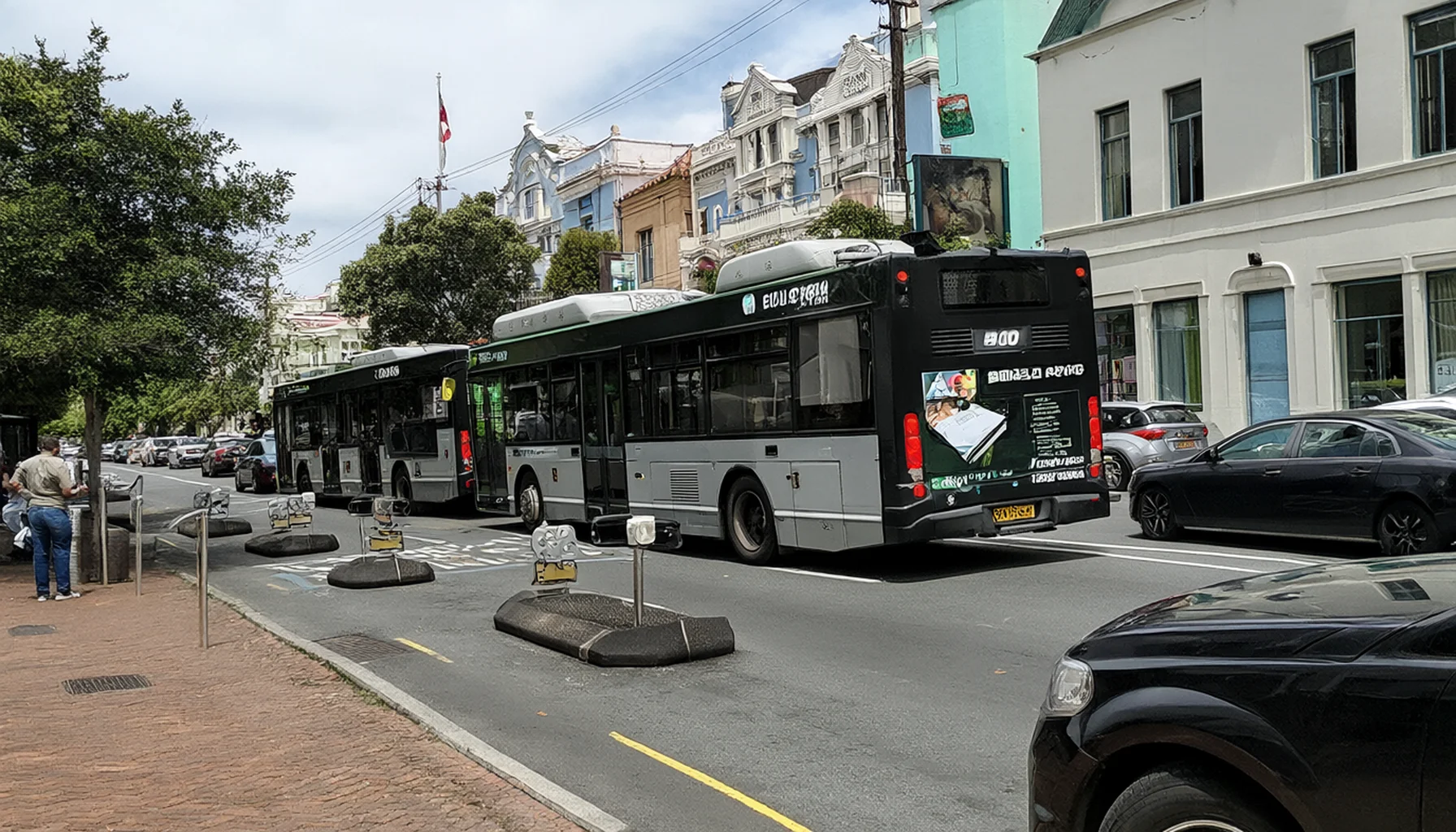
Cape Town transport, fuel prices and MyCiTi bus
Most Cape Town households still depend on a private car

What does transport cost in Cape Town - can you manage without a car?

Direct answer: public transport coverage is limited outside a few MyCiTi bus routes, so most households run at least one car. In September 2026, 95 ULP petrol sat at about R26.05-26.92 a litre (Source: BusinessTech, September 2026). Uber and Bolt are cheap, though: a 15-minute ride is typically R60-120, which means a single professional in a walkable area such as Sea Point or the City Bowl can genuinely skip car ownership.

The decision rule is straightforward: families need a car; a single person in a walkable area may not. But "no car" depends not only on proximity - it also depends on whether you are comfortable relying on ride-hailing in the rain and at night.

The most useful comparison for an overseas reader is with a dense metro. Cities with strong rail and bus networks make car-free living almost costless in lifestyle terms; Cape Town's public transport density is far lower. So if a household has more than one commuting point - one adult working, another doing school runs - one car is usually not enough. That flows directly into the budget line for fuel, insurance and servicing on two vehicles.

Parking is the other easily missed cost. Some areas, Sea Point among them, operate a managed parking zone, and parking bays in city-centre apartment buildings may be priced separately or bundled into the levy. If you plan to buy in the inner city and let the property, the parking allocation directly affects lettability and rent.

Sources: BusinessTech South African fuel price reporting (September 2026); Relocating to South Africa, "Cost of Living in Cape Town 2026"; Cape Town Data neighbourhood cost database (September 2026). The author verified the pages directly.

Comparison of Cape Town living costs against other cities
What matters is disposable income, not a headline price index

Why do newcomers and locals experience Cape Town living costs so differently?

Direct answer: because it depends on the currency you earn in. If you earn in dollars, pounds, euros or a strong Asian currency, Cape Town is comfortable - often startlingly so - and the same income buys sea views, restaurant culture and household help. If you earn in rand, Cape Town is expensive: the median Cape Town household income is about R14,133 a month, while a one-bedroom flat in Sea Point is asked at about R20,500 - the rent alone is 1.5 times the median household's entire monthly income.

That structure is exactly why Cape Town attracts foreign buyers and movers - and also why it is socially contested locally. A concrete comparison makes it plain:

ItemCape Town (2026)Approx. USD
Mid-range restaurant meal with wineR250 - 450 a headabout $15 - 27
Flat white coffeeR30 - 40about $1.80 - 2.40
Groceries for a couple, monthlyR4,500 - 7,000about $272 - 424
Domestic help (hourly)R150 - 250 a dayabout $9 - 15
Uber, 15-minute rideR60 - 120about $3.60 - 7.30
Case of good Stellenbosch wineR900 - 1,500about $54 - 91

Put this table next to rent and school fees and the shape of Cape Town's cost structure becomes clear: labour-intensive services and agricultural produce are cheap; imported goods and property in premium school districts are expensive. That is the mirror image of many developed Asian economies, where electronics and imports are cheap and labour-intensive services are costly. Once you see the structure, the useful question stops being "is Cape Town cheaper or dearer?" and becomes "which lifestyle am I actually buying?"

Finally, a budget self-check. Three items most newcomers underestimate in Cape Town year one: (1) backup power and the City's fixed service charges (see above - payable whether or not you consume); (2) deposits and furniture - one to two months' deposit plus the first month, plus basic furniture, and furnished short-lets cost 20-40% more than unfurnished long leases; (3) school registration and one-off fees, which private schools charge on top of monthly fees, including development levies and uniforms. Put all three into the year-one budget and the landing is far smoother.

If the plan is relocation rather than a short stay, rent before you buy. Six to twelve months in your target area is the cheapest way to price in the microclimates, commute times and neighbourhood character that differ far more across Cape Town than they appear to on a map.

FAQ

What is the cost of living in Cape Town per month?

In 2026 a single professional renting a one-bedroom flat spends about R18,000-25,000 a month; a couple in a mid-range two-bedroom about R28,000-42,000; a family of four living well with private schooling about R45,000-75,000; and a family on the Atlantic Seaboard or in Constantia using top-tier schools R80,000-140,000 or more. These are market-reference ranges that depend on household size, area and school tier. (Source: Relocating to South Africa, September 2026)

Which Cape Town suburbs are the most and least expensive to rent in?

The most expensive are Camps Bay, Clifton and Bantry Bay, where a one-bedroom flat asks R16,000-28,000 and a three-bedroom house R55,000-120,000+. The most affordable are the Southern Peninsula (Muizenberg, Fish Hoek, Noordhoek) and the Northern Suburbs / Winelands (Durbanville, Stellenbosch), with one-bedroom flats at R7,500-12,000 and three-bedroom houses at R18,000-35,000. The suburb gap for the same property type is close to four-fold, so choose the area before the property type.

How much start-up capital do you need to move to Cape Town?

Beyond monthly Cape Town living costs, three items commonly underestimated in year one: backup power plus the City's fixed water and electricity service charges (payable regardless of consumption); deposits and furniture (most landlords ask one to two months' deposit plus the first month, and furnished short-lets cost 20-40% more than unfurnished long leases); and private school registration and one-off fees, which sit on top of monthly fees.

Can you live in Cape Town without a car?

A single person in a walkable area such as Sea Point or the City Bowl can - Uber and Bolt are cheap, with a 15-minute ride typically R60-120. Families usually need at least one car, because public transport coverage outside a few MyCiTi routes is limited; if a household has more than one commuting point, one car is often not enough. In September 2026, 95 ULP petrol was about R26.05-26.92 a litre. (Source: BusinessTech, September 2026)

How much does backup power (load-shedding) cost in Cape Town?

In South Africa, load-shedding has improved sharply since 2023, but most middle-class Cape Town households still budget for backup power. A basic inverter-and-battery setup keeping lights, Wi-Fi and a fridge running costs R15,000-35,000 one-off; a full home solar-and-battery system runs R80,000-200,000+. For renters the simplest fix is choosing a building or complex that already has backup power installed - increasingly advertised by landlords as a selling point.

Is Cape Town expensive compared with other cities?

It depends on the currency you earn in. For foreign-currency earners, labour-intensive services (domestic help, eating out) and agricultural produce are cheap, while imported goods and property in premium school districts are expensive. For rand earners the experience is the opposite: the median Cape Town household income is about R14,133 a month, while a one-bedroom flat in Sea Point asks about R20,500 - 1.5 times the median household's whole monthly income. (Source: Cape Town Data, September 2026)

Why Handle This Through Crestline Advisory?

South African documentation requirements change every year — and what changes is usually the format, not the eligibility. Same passport, same proof of address, wrong format, rejection.

The three most common failure points

  • Passport certification rejected: A plain true-copy stamp is not accepted. A commissioner of oaths must certify in English, confirm the original was seen, add a true-likeness statement for photo pages, and include signature, date, address and occupation.
  • TIN left blank without a reason code: For Taiwanese clients the tax number is the national ID number. Leaving it blank requires ticking Reason A / B / C with an explanation.
  • Proof of address older than three months: Measured from the application date. Past the deadline the entire application is void and must be resubmitted.

Working through our partner Crestline Advisory (on-the-ground execution in South Africa) means these are checked before submission: document format pre-screened item by item (avoiding a 2-4 week round trip), current bank requirements confirmed before you book any flight, remittance routing and BOP declaration categories aligned in advance, and progress tracked locally after submission.

DingYao verifies your documents on the Taiwan side and hands over to Crestline Advisory for execution. You do not receive a checklist and left to figure it out alone.

Want your own lifestyle priced into a real Cape Town monthly budget?

DingYao provides advisory consulting on market analysis, investment assessment and cross-border funding structure planning, to help you understand living costs by Cape Town suburb, education and medical aid structures, and how to assess rent-then-buy decisions. The actual property transaction, transfer and agency services are carried out by South African partners and licensed professionals. Book a consultation to request our "Cape Town Living Cost and Relocation Budget Worksheet". This article is for information only and is not investment advice.
Book Now

[Compliance & Disclaimer]

1. Company statement: DingYao Advisory (DingYao) is a Taiwan-based advisory firm for asset allocation, immigration consultancy, offshore account setup and second-generation education coordination. The company does not conduct real-estate brokerage or agency sales within the territory of the Republic of China (Taiwan), and does not handle, collect or hold any property transaction funds.

2. Information source and contract parties: South African properties, developments, market data and related images in this article are provided by offshore partner Crestline Advisory (Pty) Ltd and developer CanvasCrest Properties for offshore allocation and market reference only, and do not constitute an offer, solicitation or investment guarantee. All property purchase contracts, fund payments and title transfers are executed directly between the buyer and the offshore licensed developer/institution in accordance with the law outside Taiwan.

3. Statutory risk warning: Overseas real estate investment involves risks; investors should read all marketing documents carefully before transacting. Overseas investment involves FX volatility, local legal and tax changes and market risk; data (such as historical prices, averages, days-on-market and rental yields) have their own calculation standards and time sensitivity. Past performance does not guarantee future returns. All property rates, tariff and return figures in this article are market-reference values drawn from public reporting and the City's own worked examples, not guarantees or forecasts; the draft by-law is not yet in force and final clauses are subject to the City of Cape Town's announcement. This article is for information only and is not investment advice.