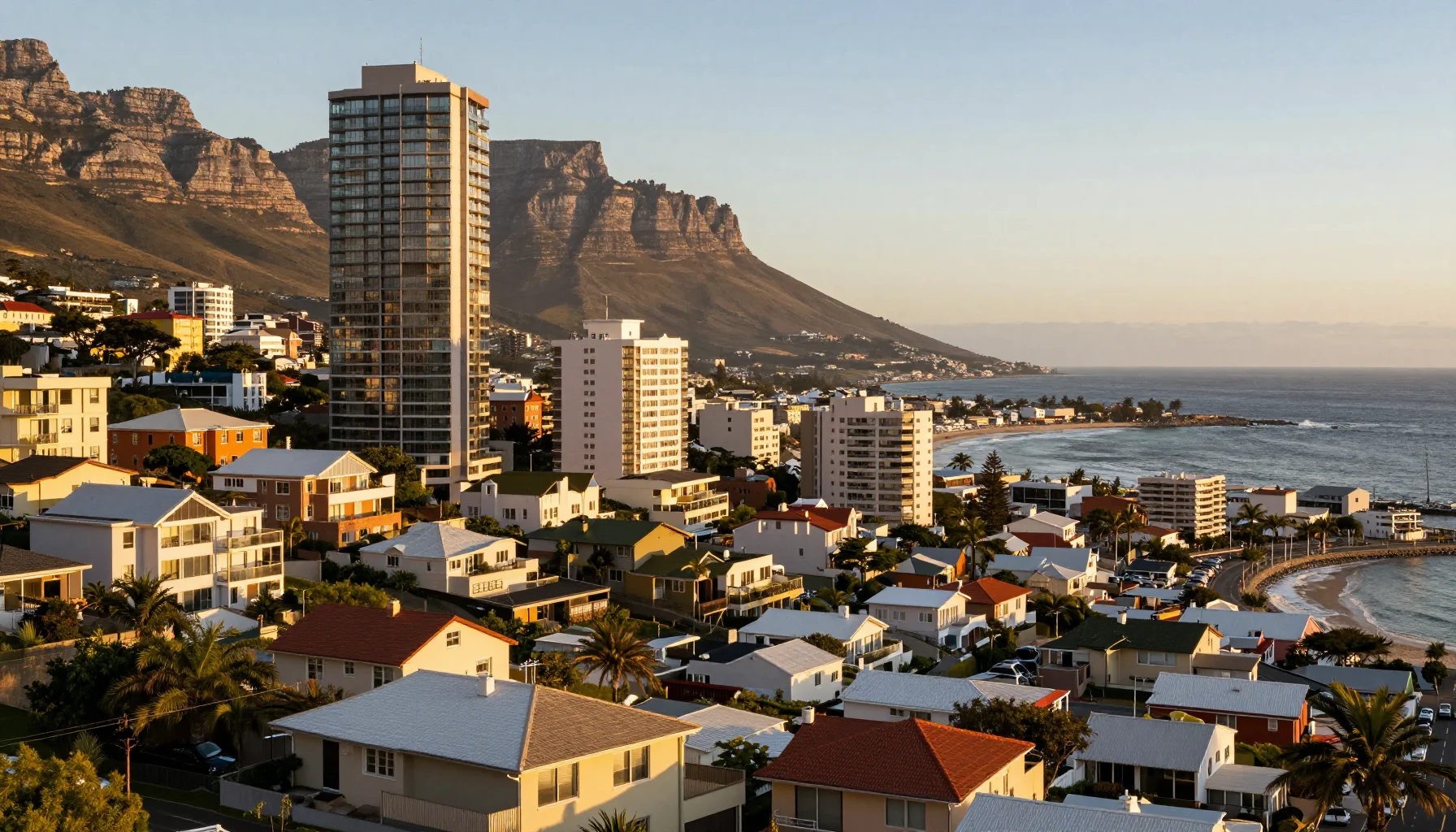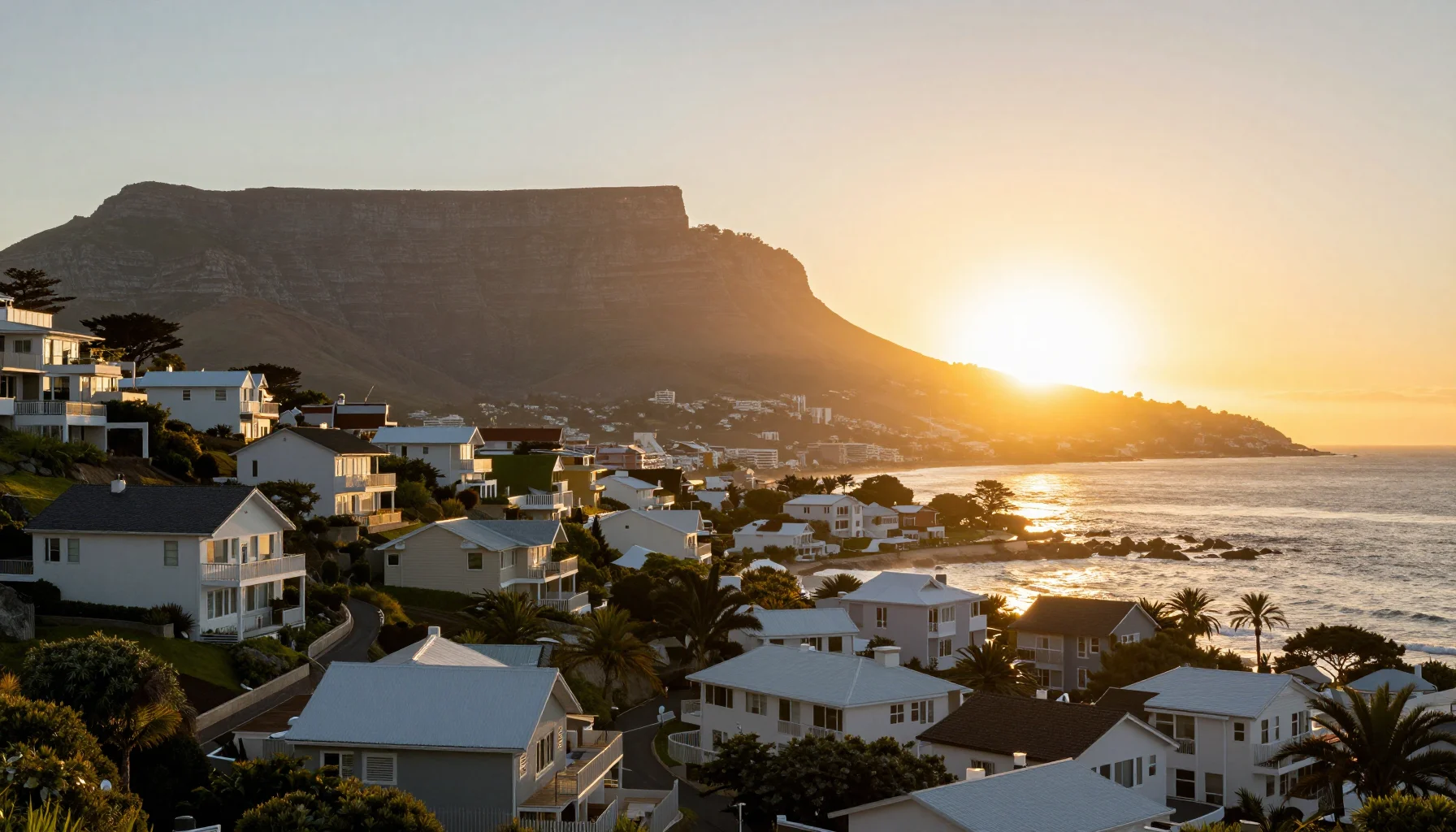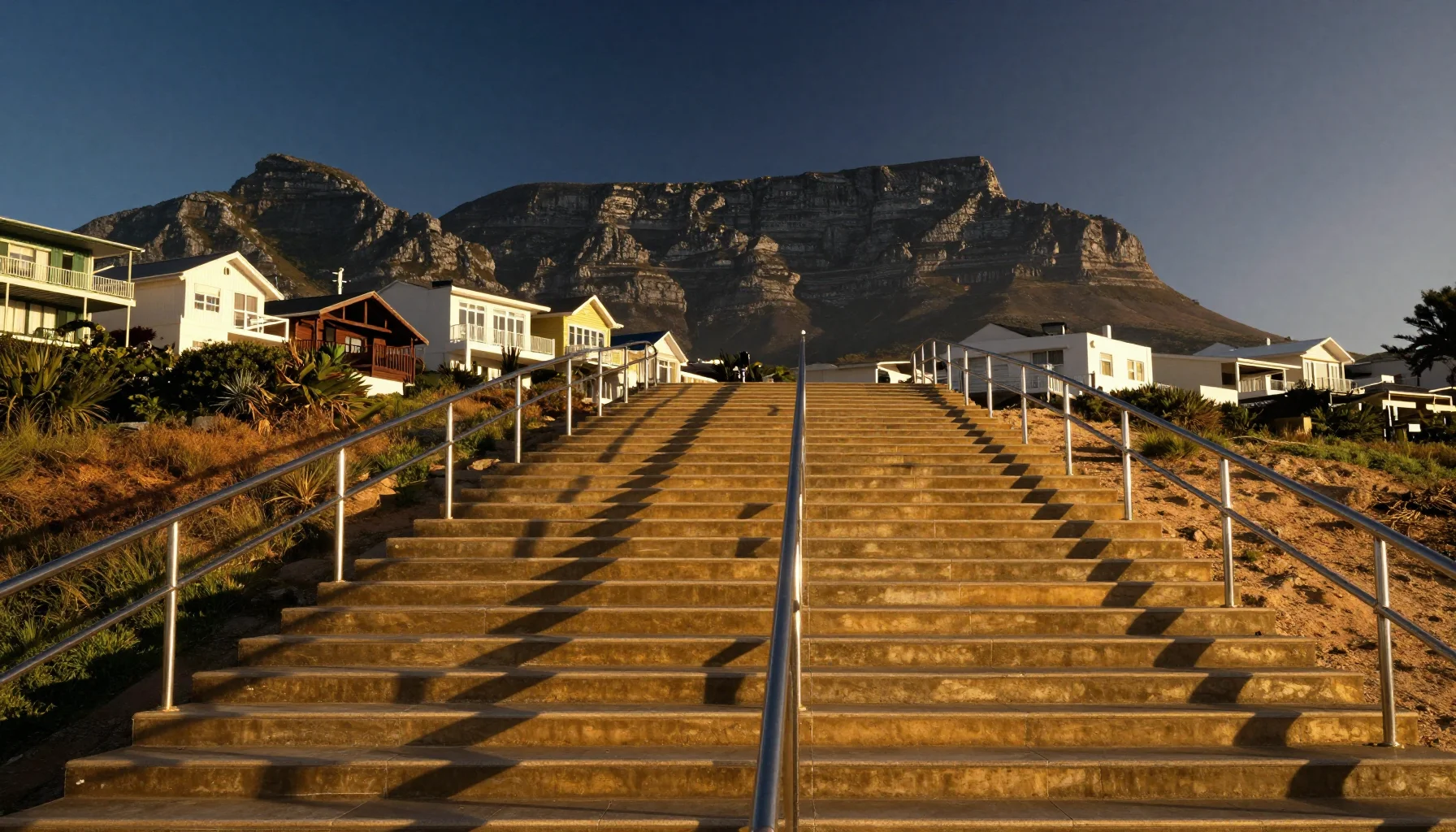
A financial freedom staircase and Cape Town seaside homes, evoking the journey from passive income to financial freedom

How Much Money Do You Need for Financial Freedom? Why Cape Town Property Is the Accelerator for Taiwanese Salaried Workers

"Financial freedom" is one of the hottest keywords in Taiwan in 2026 — Google Trends shows its search interest steadily rising, and every day on Dcard's personal finance board, salaried workers debate "how much do I need to save to retire?" But most people get stuck on one core question: how much money do you actually need for financial freedom?

The answer actually has a formula. Through the 4% rule of the FIRE movement, you can precisely calculate your financial freedom number. And more critically — when Taiwanese residential rental yields are just 1-2% and fixed deposit rates keep falling, Cape Town's 7.5-11.4% rental yields are the key engine accelerating your path to financial freedom.

Key Takeaway: Financial freedom capital = annual living expenses ÷ 4%. With annual expenses of NT$1.2 million, you need NT$30 million in principal. But through Cape Town rental yields of 7.5-11.4% (vs Taiwan's 1-2%) and South Africa's high-yield fixed deposits up to 8.15%, the dual-engine passive income can significantly reduce required capital and accelerate financial freedom. Get your passive income plan now.


How Much Money Do You Need for Financial Freedom? Calculate Your Number with the 4% Rule

Financial freedom is not a vague dream — it is a number you can calculate precisely. The core tool of the FIRE (Financial Independence, Retire Early) movement is the famous 4% rule.

The logic of the 4% rule is simple: withdraw no more than 4% of your portfolio annually, and in theory your principal can last 30+ years. Therefore, financial freedom capital = annual living expenses ÷ 4%.

Annual Living Expenses Capital Needed (4% Rule) Monthly Passive Income
NT$600,000 NT$15 million NT$50,000
NT$900,000 NT$22.5 million NT$75,000
NT$1.2 million NT$30 million NT$100,000
NT$1.8 million NT$45 million NT$150,000

For most Taiwanese salaried workers, NT$30 million (annual expenses of NT$1.2 million) is a common financial freedom target. But the problem is — relying on Taiwan's 1-2% rental yields and persistently falling fixed deposit rates, accumulating NT$30 million in principal often takes 30+ years. This is exactly why financial freedom feels so out of reach for many.

"Financial freedom is not built by scrimping and saving — it is accelerated by passive income. The higher your passive income yield, the less principal you need, and the shorter your path to financial freedom." — Scott Huang, CEO of DingYao Advisory

The Passive Income Dilemma for Taiwanese Salaried Workers: Low Yields Slow Financial Freedom

Back to the scene Taiwanese salaried workers know best. Relying on fixed deposits and Taiwan stocks, many have tried to build passive income, only to find progress painfully slow. The problem is yields that are simply too low.

Taiwanese residential rental yields typically run just 1-2%, and fixed deposit rates have kept falling as the rate-hike cycle peaks. Working backwards from the 4% rule, when your passive income yield is only 2%, you need 50 times your annual expenses in principal to reach financial freedom — a near-impossible task for most salaried workers.

Taiwan Rental Yields 1-2%

Low residential rental yields slow passive income accumulation.

Falling Deposit Rates

As the rate-hike cycle peaks, TWD/USD deposit rates shrink.

Inflation Erodes Purchasing Power

Real purchasing power erodes; low yields can't keep up.

Overseas High-Yield Opportunity

Markets like Cape Town offer 7.5-11.4% rental yields.

This is why "overseas high-yield assets" have become the key to accelerating financial freedom for Taiwanese salaried workers. When domestic yields are too low, finding a market with higher yields and asset appreciation potential can dramatically shorten your path to financial freedom. And Cape Town, with its 7.5-11.4% rental yields and South Africa's high-yield deposits, provides exactly that accelerator.

Cape Town Property: The Passive Income Accelerator (Rental Yields 7.5-11.4%)

Cape Town can be an accelerator for financial freedom because it offers rental yields far higher than Taiwan's. As South Africa's most international city, Cape Town property rental yields typically range from 7.5% to 11.4%.

For example, Observatory one-bedroom net yields reach 11.4%, and Woodstock hits 10.2% — numbers almost unimaginable in Taiwan's residential market (rental yields of just 1-2%). Working backwards from the 4% rule, when your rental yield reaches 10%, you only need 10 times your annual expenses in principal to reach financial freedom — a dramatic reduction from Taiwan's 50 times.

Key Insight: Cape Town rental yields of 7.5-11.4% are 5-10 times Taiwan's residential yields (1-2%). Under the 4% rule, the higher your yield, the less principal you need and the faster you reach financial freedom. Cape Town property is the key engine accelerating financial freedom for Taiwanese salaried workers.

More importantly, Cape Town's rental demand keeps growing. As South Africa's tourism and commercial hub, Cape Town attracts a steady stream of international tenants, digital nomads and students, keeping the rental market supply-demand healthy. For Taiwanese investors, this means a stable source of rental cash flow — an ideal vehicle for building passive income.

South Africa's High-Yield Fixed Deposits: The Second Engine (ZAR Deposits Up to 8.15%)

Beyond Cape Town's rental income, South Africa offers a second passive income engine — high-yield fixed deposits. The SARB (South African Reserve Bank) repo rate currently stands at 7.00%, with the prime lending rate at 10.50%.

In this high-rate environment, South Africa's major banks offer attractive deposit rates — 12-month fixed deposit rates reach up to 8.15% (e.g. Standard Bank), well above Taiwanese and US dollar deposits. For investors seeking stable cash flow, this is a highly attractive passive income source.

Asset Class Yield Characteristics
Taiwan Residential Rent 1-2% Low yield, slow accumulation
Taiwan/USD Deposits 1-3% Falling as rate-hike cycle peaks
South Africa ZAR Deposits Up to 8.15% High yield, stable interest cash flow
Cape Town Rental Income 7.5-11.4% High yield + capital appreciation

These two engines are not mutually exclusive — they can be allocated complementarily. Fixed deposits provide stable interest cash flow, while property provides rental income and long-term capital appreciation. Combined, they build a more robust, diversified passive income portfolio that accelerates financial freedom.

Dual-Engine Passive Income: How to Build Your Financial Freedom Accelerator

Now that you understand the advantages of Cape Town property and South Africa's high-yield deposits, here are the practical steps. DingYao Advisory's dual-engine passive income plan can be built in the following stages:

01

Calculate Your Financial Freedom Target

Use the 4% rule to calculate your financial freedom number (annual expenses ÷ 4%) and set your passive income goal.

02

Asset Assessment & Allocation

Undergo a one-on-one property assessment to understand your capital size, risk tolerance and yield goals, and plan the deposit-to-property allocation ratio.

03

Allocate ZAR High-Yield Deposits

Allocate part of your capital to South African ZAR high-yield deposits (up to 8.15%), enjoying stable interest cash flow as the foundation of passive income.

04

Invest in Prime Cape Town Property

Target high-rental-yield prime Cape Town areas (such as Observatory, Woodstock) and acquire properties with appreciation potential.

05

Property Management & Cash Flow

Manage your property remotely through DingYao's property management service, collecting stable rent that, together with deposit interest, forms your dual-engine passive income.

The key to this plan is the complementarity of the "dual engines" — deposits provide stable, low-volatility interest income, while property provides higher but management-intensive rental income and long-term appreciation. Combined, they let investors reach financial freedom with less capital and at greater speed.

The TWD/ZAR Exchange Rate Advantage: Amplifying Your Overseas Purchasing Power

Beyond high yields, Taiwanese investors hold an additional advantage — the exchange rate. In 2026 the Taiwan dollar is relatively strong while the South African rand (ZAR) is relatively weak, creating a "strong TWD + weak ZAR" dual exchange-rate advantage.

For Taiwanese investors, this means the same TWD capital can buy more rands and thus "cheaper" Cape Town property. When you allocate TWD-denominated capital to South Africa, the exchange-rate advantage further amplifies your actual purchasing power and investment returns.

  • Relatively strong TWD — enhanced overseas purchasing power
  • Relatively weak ZAR — Cape Town property relatively cheaper
  • Dual exchange-rate advantage — amplifies actual investment returns
  • Long-term holding — currency volatility smoothed over time

Of course, the exchange rate is a double-edged sword. If the rand appreciates, your asset value rises; if it depreciates, it may erode returns. Therefore, professional currency planning and a long-term holding strategy are essential — precisely the value DingYao Advisory's on-the-ground team can provide.

Risks and Considerations: Viewing High Yields Rationally

High returns often come with high risk, and South African high-yield assets are no exception. Before allocating, investors must rationally consider the following risks:

  • Currency risk — ZAR/TWD exchange-rate volatility can affect actual returns. Assess currency hedging and long-term holding.
  • Interest-rate risk — If the SARB cuts rates in the future, deposit rates and mortgage costs may change, affecting returns.
  • Liquidity risk — Overseas property is slower to liquidate than deposits; plan your capital accordingly.
  • Tax and legal — Overseas property involves South African tax, foreign-buyer rules and legal procedures that require professional advisors.

These risks are not uncontrollable — they require professional planning and management. Through DingYao Advisory's on-the-ground team (Crestline Advisory for execution, Garlicke & Bousfield law firm, Standard Bank for custody), investors gain complete legal, tax and capital-security support to minimize risk.

"High yield is not a trap, provided you understand the risks behind it and manage them with the right structure. South Africa's dual-engine passive income is a tool to accelerate financial freedom, and it deserves serious research by rational investors." — Scott Huang, CEO of DingYao Advisory

Conclusion: Accelerate Your Financial Freedom with Cape Town Property

Financial freedom is not an unreachable dream — it is a number you can calculate precisely and accelerate with the right tools. Calculate your number with the 4% rule, then use higher passive income yields to shorten your path to financial freedom.

The dual-engine combination of Cape Town property (rental yields 7.5-11.4%) and South Africa's high-yield fixed deposits (up to 8.15%) is the key to accelerating financial freedom for Taiwanese salaried workers. When Taiwan's residential yields are just 1-2% and deposit rates keep falling, positioning early in South African high-yield assets lets your passive income outpace inflation and brings financial freedom within reach sooner.

Want to accelerate financial freedom with Cape Town property? Book a consultation now, and let DingYao Advisory calculate your financial freedom number and build a dual-engine passive income plan of ZAR deposits plus Cape Town rental income.

Frequently Asked Questions (FAQ)

How much money do you need for financial freedom?

Use the 4% rule: financial freedom capital = annual living expenses ÷ 4%. For example, with annual expenses of NT$1.2 million, you need NT$30 million in passive income assets. Through Cape Town rental yields (7.5-11.4%) and South Africa's high-yield fixed deposits (up to 8.15%), you can significantly reduce the required capital.

What is the 4% rule?

The 4% rule (core of the FIRE movement) states that withdrawing no more than 4% of your portfolio annually should sustain your principal for 30+ years. Therefore, financial freedom capital = annual expenses ÷ 4%. With annual expenses of NT$1.2 million, you need NT$30 million in principal.

How high are Cape Town property rental yields?

Cape Town property rental yields typically range from 7.5% to 11.4%, with Observatory one-bedroom net yields reaching 11.4% and Woodstock 10.2%. Compared to Taiwanese residential rental yields of just 1-2%, Cape Town offers a significant advantage.

What are South Africa's fixed deposit rates right now?

The SARB repo rate currently stands at 7.00%, with the prime lending rate at 10.50%. South Africa's major banks offer 12-month fixed deposit rates of up to 8.15% (e.g. Standard Bank), well above Taiwanese and US dollar deposit rates.

How can Taiwanese salaried workers accelerate financial freedom?

Through DingYao Advisory's dual-engine passive income plan, allocate part of your capital to South African ZAR high-yield deposits (up to 8.15%) and prime Cape Town property (rental yields 7.5-11.4%), with property management services providing stable rental income — significantly accelerating your path to financial freedom.

Related Reading

Accelerate Your Financial Freedom with Cape Town Property

Cape Town rental yields 7.5-11.4%, South Africa high-yield fixed deposits up to 8.15% — a dual-engine passive income accelerator. Book a property assessment now to calculate your financial freedom number and build a South African passive income plan.

Book a Property Assessment