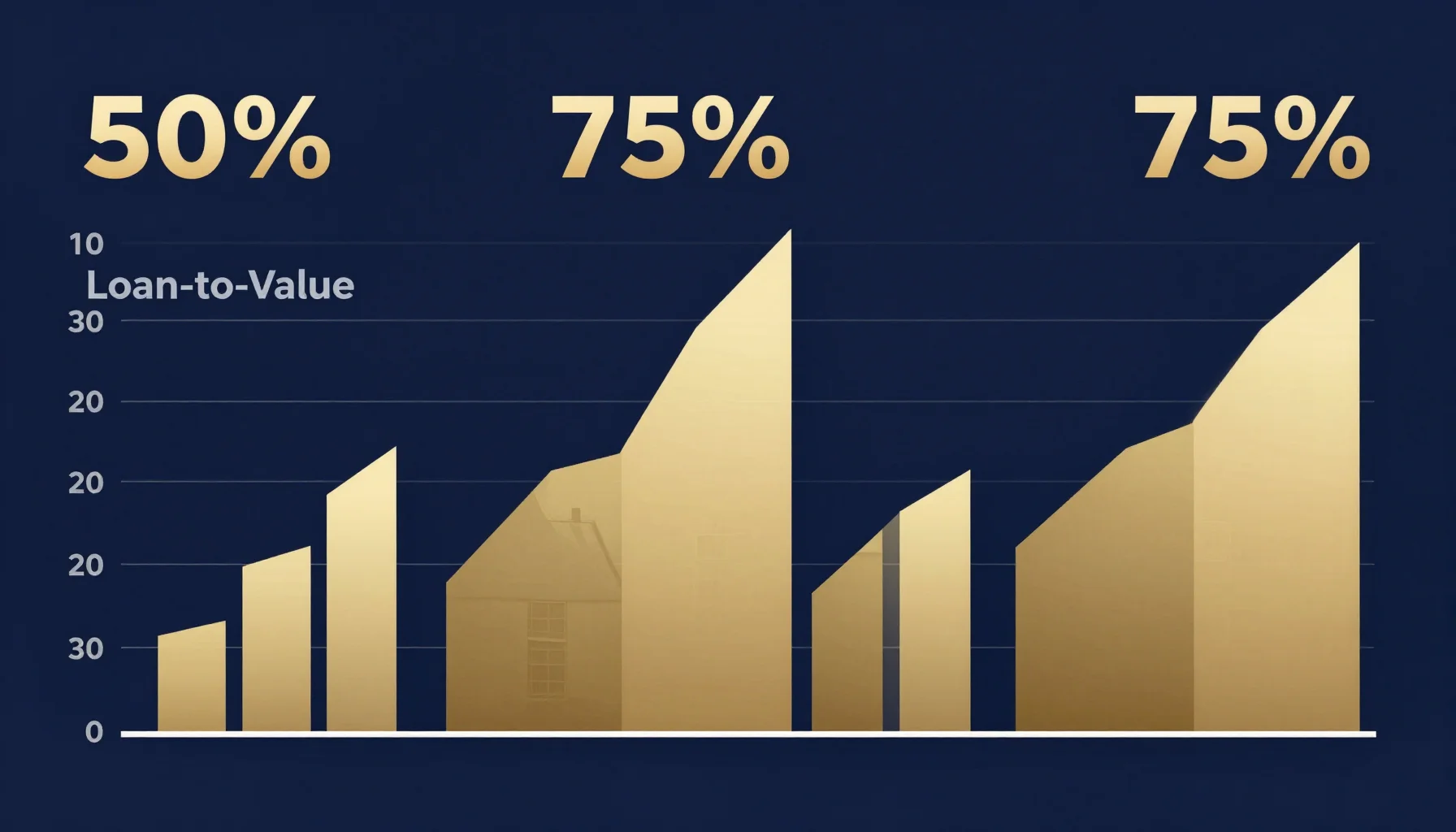
Cape Town homes and mortgage finance chart imagery, showing foreign buyers leveraging property purchases through mortgage financing

Can Foreigners Get a Mortgage in South Africa? The 50% Borrowing Rule, SARB Certificates & Cape Town Property Leverage Guide

"Can foreigners get a mortgage to buy property in South Africa?" This is the first question Taiwanese investors ask when considering Cape Town property. The answer is yes, but the rules are more complex than you might think — South Africa's exchange control regulations stipulate that non-resident foreigners can borrow up to 50% of the property price (a 1:1 borrowing rule), and must obtain a SARB exchange control certificate (Form A/B) to legally remit funds.

This set of rules is the key threshold for Taiwanese investors leveraging Cape Town property. Understanding the 50% borrowing rule, the SARB certificate process, LTV limits, and the cash vs. mortgage comparison is essential to making the most favorable capital decision. This guide will walk you through every step of getting a mortgage as a foreigner in South Africa.

Direct Answer: Foreigners can get a mortgage to buy property in South Africa, but under exchange control, the loan limit is 50% of the property price (a 1:1 rule). Those holding a South African ID or permanent residency can reach an LTV of up to 75%. You must obtain a SARB exchange control certificate (Form A/B) to legally remit funds. With Cape Town rental yields of 7.5-11.4%, you can assess whether rent covers the mortgage cost. Consult DingYao now to master Cape Town mortgage options.


Can Foreigners Get a Mortgage in South Africa? First Understand the 50% Borrowing Rule

Let's give a clear answer first: yes, foreigners can get a mortgage to buy property in South Africa. South African law does not prohibit foreigners from obtaining a mortgage, but this right is strictly governed by South Africa's exchange control regulations.

Under South Africa's Exchange Control Regulations, non-resident foreigners cannot borrow more than 50% of the property price, meaning a 1:1 ratio of loan to own capital. This means that if you are looking at a R4 million Cape Town property, a foreigner can borrow at most R2 million, and the remaining R2 million must be paid with your own capital.

Key Insight: The 50% borrowing rule is the core limit on foreign buyer leverage. It ensures foreign buyers invest at least half of their own capital in the South African property market, reducing financial risk. For Taiwanese investors, this means Cape Town property requires a higher own-capital ratio, but it also preserves 50% leverage room.

This rule differs from the "high leverage" mindset Taiwanese investors are familiar with. In Taiwan, a 20-30% down payment with 70-80% financing is the norm; but in South Africa, the foreign buyer loan cap is 50%. Understanding this difference is the first step in planning your Cape Town property capital.

"Foreigners can get a mortgage in South Africa, but the 50% borrowing cap is the core of exchange control. Understanding this rule is essential to correctly plan your own capital and leverage ratio for Cape Town property." — Scott Huang, CEO of DingYao Advisory

SARB Exchange Control Certificates (Form A/B): The Key to Legally Remitting Funds

Beyond the 50% borrowing rule, when foreign buyers remit funds into South Africa, they must also go through the South African Reserve Bank (SARB) exchange control declaration. This is a critical process to ensure funds are legally remitted in and can be smoothly remitted out later.

Foreign buyers must declare the source and nature of their funds through an Authorised Dealer (usually a bank), obtaining an exchange control certificate (Form A/B related documents). This document proves your funds are legal and traceable, and is a necessary credential for remitting funds in and out.

Form A

Inward remittance declaration, proving the source and nature of funds — the first step in legalizing foreign buyer purchase capital.

Form B

Outward remittance declaration, ensuring funds can be legally remitted back to your home country when you sell the property later.

Authorised Dealer

Usually a major South African bank (such as Standard Bank), responsible for reviewing and declaring foreign exchange transactions.

Compliance Protection

Correct declaration ensures funds are legal, avoiding delays or freezes caused by declaration errors.

This exchange control declaration process is closely related to the SARB BoP code declaration that DingYao Advisory previously explained. Correct declaration codes and exchange control certificates are the cornerstone of foreign buyer fund security and compliance.

LTV Limits: How Much Can Foreigners vs. South African Residents Borrow?

The loan-to-value (LTV) ratio is the key factor determining how much you can borrow. South Africa's LTV limits vary by buyer status:

Buyer Status Maximum LTV Notes
Non-resident foreigner 50% Subject to the exchange control 1:1 borrowing rule
South African resident (with ID) Up to 75% Those holding a South African ID or permanent residency
South African resident (no ID) Varies by bank policy Assessed on credit score and income

For Taiwanese investors, if you have not yet obtained South African permanent residency (PR), your loan cap is 50%. This means Cape Town property requires a higher own-capital ratio, but it also preserves 50% leverage room, allowing you to leverage a larger asset with less own capital.

Notably, those holding a South African ID or permanent residency can reach an LTV of up to 75%. For Taiwanese investors considering long-term relocation and obtaining South African status, this is an important leverage advantage — after obtaining PR, the loan room can increase from 50% to 75%.

Cash vs. Mortgage: Which Is Better for Cape Town Property?

Now that you understand the 50% borrowing rule and LTV limits, the next key decision is: should you buy Cape Town property with cash or a mortgage? This depends on your capital cost, leverage needs, and rental income.

The SARB repo rate currently stands at 7.00%, with the prime lending rate at 10.50%. Foreign buyer mortgage rates are typically priced off prime with a margin, with the actual rate depending on individual credit and bank policy. In a prime 10.5% environment, mortgage costs are not low.

Comparison Cash Purchase Mortgage Purchase
Own capital required 100% of price At least 50% of price
Leverage room None Up to 50% (foreigners)
Capital tied up High Low (preserves cash flow)
Mortgage interest None Prime 10.5% plus margin
Exchange control declaration Simpler More complex (includes loan declaration)
Rent coverage Full income Must cover loan principal and interest

The key lies in comparing rental yield with mortgage cost. Cape Town property rental yields typically range from 7.5% to 11.4%. If rental income can cover the loan principal and interest, a mortgage amplifies leverage and preserves cash flow; if rental income cannot cover the mortgage cost, a cash purchase is more favorable.

Key Insight: Cape Town rental yields of 7.5-11.4% are close to the prime 10.5% mortgage rate. When rental income approaches or exceeds the mortgage cost, the leverage benefit of a mortgage is significant; conversely, a cash purchase avoids interest eroding returns. DingYao can help you calculate the rent coverage ratio to make the most favorable decision.

Cape Town Property Leverage: The Complete Process from Mortgage Application to Rent Coverage

Now that you understand the rules and comparisons, here are the actual execution steps. Foreigners buying Cape Town property with a mortgage can follow these stages:

01

Capital planning and own-capital preparation

Confirm your own-capital ratio (at least 50% for foreigners), plan the TWD/ZAR exchange timing, and prepare proof of fund source.

02

SARB exchange declaration and certificate

Declare the fund source through an Authorised Dealer (bank), obtain an exchange control certificate (Form A/B), and ensure funds are legally remitted in.

03

Bank mortgage application

Apply for a mortgage with a South African bank, providing income proof, credit history, and the exchange control certificate. The bank approves based on LTV limits.

04

Signing and transfer

Sign the Offer to Purchase and complete the property transfer and Deeds Office registration through a conveyancer.

05

Property management and rent coverage

Rent out the property through DingYao's property management service, using rental income to cover the loan principal and interest and build stable cash flow.

The key to this process lies in "fund compliance" and "rent coverage". Fund compliance ensures your mortgage and remittances are legal, while rent coverage determines whether the leverage is worthwhile. When both are handled well, the leverage benefit of Cape Town property can be fully realized.

TWD/ZAR Exchange Rate: Amplify Your Cape Town Purchasing Power

Beyond the mortgage rules, Taiwanese investors also have an additional advantage — the exchange rate. In 2026, the TWD is relatively strong while the South African rand (ZAR) is relatively weak, creating a dual currency advantage of "strong TWD + weak ZAR."

For Taiwanese investors, this means the same TWD capital can buy more rands and purchase "cheaper" Cape Town property. When you allocate TWD-denominated capital to South Africa, the currency advantage further amplifies your actual purchasing power and investment returns.

  • Relatively strong TWD — increased overseas purchasing power
  • Relatively weak ZAR — Cape Town property is relatively cheaper
  • Dual currency advantage — amplifies actual investment returns
  • Mortgage denominated in ZAR — exchange rate fluctuations affect loan cost and returns

Of course, the exchange rate is a double-edged sword. If the rand appreciates, your asset value rises; if it depreciates, it may erode returns. Therefore, professional currency planning and a long-term holding strategy are essential — this is exactly the value DingYao Advisory's on-the-ground team can provide.

Risks and Considerations: View Mortgage Leverage Rationally

Mortgage leverage can amplify returns, but it can also amplify risk. Before taking out a mortgage for Cape Town property, investors must rationally consider the following risks:

  • Exchange rate risk — Fluctuations in the ZAR/TWD exchange rate can affect actual returns and mortgage costs. Assess currency hedging and long-term holding.
  • Interest rate risk — If the SARB raises rates, the prime rate rises, increasing mortgage costs and affecting the rent coverage ratio.
  • Exchange control risk — Remitting funds in and out must comply with SARB rules; declaration errors can lead to delays or freezes.
  • Liquidity risk — Overseas property is slower to liquidate than fixed deposits; plan your capital accordingly.
  • Tax and legal — Overseas property involves South African tax, foreign buyer regulations, and legal procedures that require professional assistance.

These risks are not uncontrollable, but require professional planning and management. Through DingYao Advisory's on-the-ground team (Crestline Advisory for execution, Garlicke & Bousfield law firm, Standard Bank for fund custody), investors can obtain complete legal, tax, and fund security support to minimize risk.

"Mortgage leverage is not a trap, provided you understand the rules and risks behind it and manage them with the right structure. South Africa's 50% borrowing rule and exchange control are the compliance framework for foreign buyers investing in Cape Town property, worth deep study by rational investors." — Scott Huang, CEO of DingYao Advisory

Conclusion: Master the 50% Borrowing Rule and Leverage Cape Town Property Wisely

Foreigners can get a mortgage to buy property in South Africa, but you must master the three key elements: the 50% borrowing rule, SARB exchange control certificates, and LTV limits. Understanding these rules is essential to correctly plan your own capital and leverage ratio for Cape Town property.

Cape Town rental yields of 7.5-11.4% are close to the prime 10.5% mortgage rate. When rental income can cover the mortgage cost, a mortgage amplifies leverage and preserves cash flow; when rental income cannot cover it, a cash purchase is more favorable. Mastering the rules early and calculating the rent coverage ratio precisely is the way to maximize the leverage benefit of your Cape Town property investment.

Want to understand how foreigners can get a mortgage in South Africa? Book a consultation now and let DingYao Advisory help you master the 50% borrowing rule, the SARB certificate process, and Cape Town property leverage solutions.

Frequently Asked Questions (FAQ)

Can foreigners get a mortgage to buy property in South Africa?

Yes. South African law does not prohibit foreigners from obtaining a mortgage, but under exchange control regulations, the loan limit for foreigners is 50% of the property price (a 1:1 borrowing rule). Those holding a South African ID or permanent residency can reach an LTV of up to 75%.

What is the 50% borrowing rule for foreign buyers in South Africa?

Under South Africa's Exchange Control Regulations, non-resident foreigners cannot borrow more than 50% of the property price, meaning a 1:1 ratio of loan to own capital. This is the core limit on foreign buyer leverage and a key factor in Cape Town property capital planning.

Do foreigners need a SARB exchange control certificate to buy property in South Africa?

Yes. When foreign buyers remit funds into South Africa, they must declare under SARB exchange control rules and obtain an exchange control certificate (Form A/B related documents) proving the source and nature of the funds, ensuring the capital is legally remitted in and can be remitted out later.

What are South Africa's mortgage interest rates right now?

The SARB repo rate currently stands at 7.00%, with the prime lending rate at 10.50%. Foreign buyer mortgage rates are typically priced off prime with a margin, with the actual rate depending on individual credit and bank policy.

Is it better to buy property in Cape Town with cash or a mortgage?

It depends on capital cost and leverage needs. Cash purchase avoids mortgage interest and exchange control complexity but ties up capital; a mortgage amplifies leverage and preserves cash flow but is subject to the 50% cap and the prime 10.5% rate. With Cape Town rental yields of 7.5-11.4%, you can assess whether rent covers the mortgage cost before deciding.

Related Reading

Master the 50% Borrowing Rule and Leverage Cape Town Property Wisely

Foreigners can get a mortgage in South Africa, but you must master the 50% borrowing rule, SARB exchange control certificates, and LTV limits. With Cape Town rental yields of 7.5-11.4%, book a property assessment now and let DingYao Advisory help you plan your Cape Town mortgage options and leverage strategy.

Book a Property Assessment