South Africa School Curriculum: CAPS, IEB, Cambridge and IB Compared for Cape Town Families

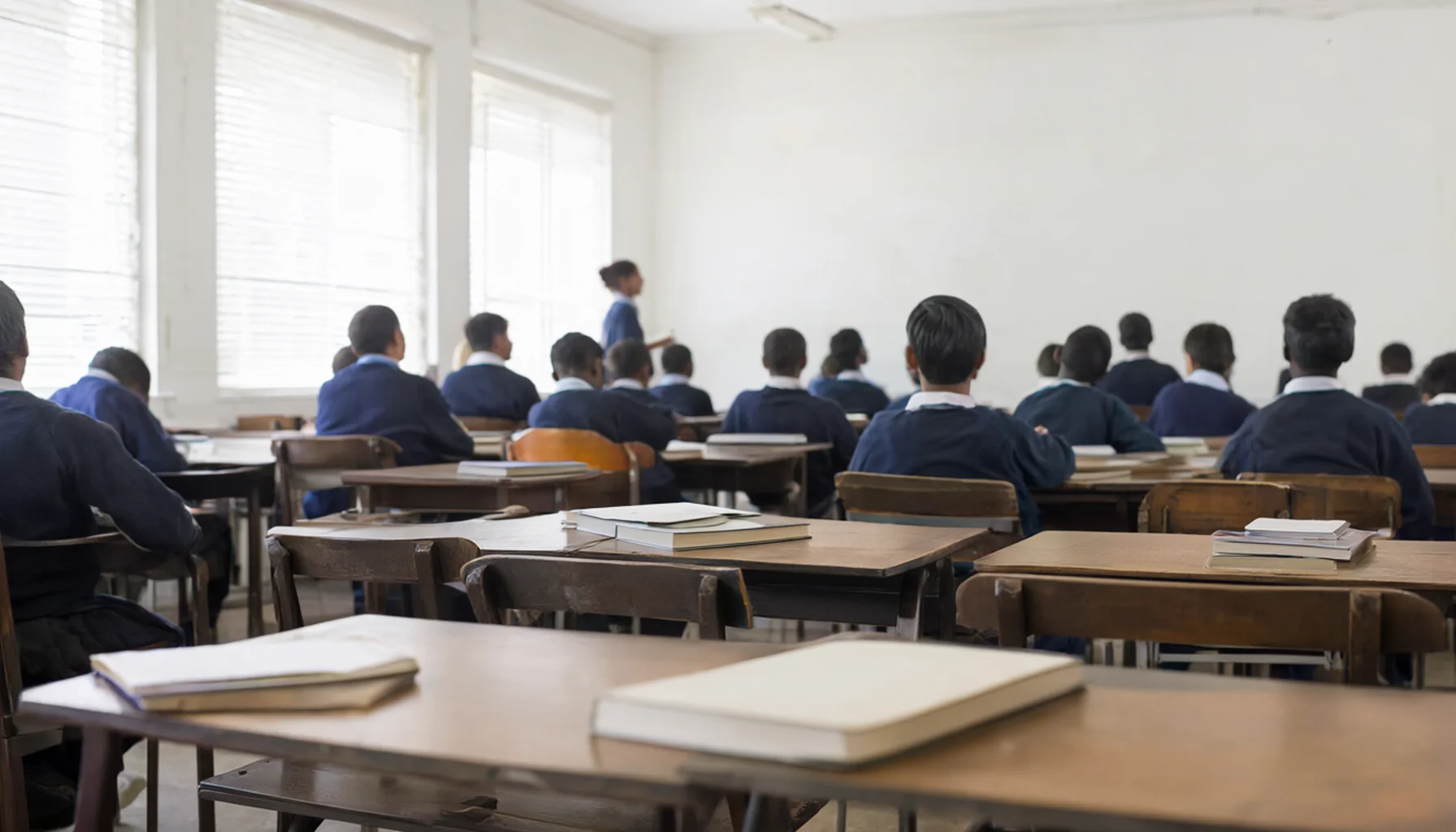
CAPS IEB Cambridge IB curriculum choice at a Cape Town school

South Africa School Curriculum: CAPS, IEB, Cambridge and IB Compared for Cape Town Families

Taiwanese families choosing a school in Cape Town rarely get stuck on which school is better. They get stuck on four acronyms: CAPS, IEB, Cambridge and IB. All four exist in Cape Town at the same time, and they are not the same kind of thing. The first two lead to one South African national certificate. The other two are separate systems entirely. Get that layer wrong and the school choice goes wrong with it, usually at the cost of an extra school year.

This article covers four things: where the four systems actually differ, which Cape Town schools really teach each one (checked against each school's own website, marked “to be confirmed” where no official statement exists), what 2026 fees look like in Taiwan dollars, and what has to be done for a university application in Taiwan or the UK. School information was taken from school websites and the IB's official school finder on 2026-11-07, with sources listed at the end of each section. This is an information summary, not a ruling on qualification recognition or admission.

Quick answer: South Africa issues one national school-leaving certificate, the NSC. CAPS is the national curriculum set by the Department of Basic Education; IEB and SACAI are two other Umalusi-accredited assessment bodies. All three end in the same NSC, and South African universities accept them equally. Cambridge (IGCSE, AS, A Level) and the IB Diploma are independent systems offered by only a handful of Cape Town schools. Applying to a South African university with either requires a matriculation exemption from USAf's Matriculation Board: R1,070 in 2026, about 6 to 8 weeks.

If your child will finish school in South Africa and apply locally or to the UK, IEB is normally the best value route. If the family expects to move again within three years, Cambridge IGCSE and A Levels transfer most cleanly between English-speaking systems. The IB Diploma is rarely available in South Africa: exactly one Cape Town school is authorised to offer the full Diploma. The deciding question is not which system sounds more international. It is where your family will be for the next five years.

Cape Town school choices across four curriculum systems

What are the four school systems taught in Cape Town?

South Africa's NSC is quality-assured by Umalusi, and three assessment bodies — DBE, IEB and SACAI — all issue that same certificate. So the CAPS-versus-IEB question is about who sets and marks the papers, not about which qualification the child receives. Cambridge and the IB sit outside the NSC system altogether.

This structure is frequently misdescribed in Chinese-language guides. Two claims circulate widely: that the IEB is a separate qualification, and that an IEB matric is easier for overseas university admission. The first is wrong. The second is only half right. Both CAPS and IEB teach the same national curriculum, but IEB papers are set by an independent assessment body whose style leans towards application and critical reasoning. Cambridge and the IB have their own syllabi, exams and grading, and issue their own certificates.

The practical consequence for parents: moving between CAPS and IEB is usually straightforward, because the underlying syllabus is identical. Moving into or out of Cambridge or the IB is not. Subject sequences rarely line up, and part-completed programmes are hard to credit, so a switch usually means repeating work.

SystemLeaving qualificationWho sets and certifiesSouth African universitiesOverseas universities
CAPSNSC (matric)Department of Basic Education sets papers; Umalusi assures qualityAccepted directlyMany UK universities accept for direct entry, thresholds vary
IEBNSC (matric)IEB sets papers; Umalusi assures qualityAccepted directlyMany UK universities accept; Oxford does not take IEB alone
CambridgeIGCSE, AS, A LevelCambridge International (CAIE)Requires a USAf exemptionRead directly in the UK, the Gulf and many other countries
IBIB DiplomaIBO-authorised IB World SchoolsRequires a USAf exemptionWidely recognised, particularly in the United States

(Source: Umalusi quality assurance statement on the IEB, 2023-03-30; Department of Basic Education CAPS publications; Universities South Africa Matriculation Board exemption regulations; all re-checked 2026-11-07)

South African NSC certificate and university application papers

Are CAPS and IEB two different qualifications?

CAPS and IEB are two assessment routes to one NSC, and South African universities accept both equally. The real difference appears at application: each university sets its own admission point score and subject requirements, with medicine, law and engineering the most demanding, regardless of which paper the child wrote.

In Cape Town's independent schools, IEB is the default, and the schools say so themselves. Herschel Girls School in Claremont states on its academic page that it introduced the IEB curriculum to Grades 8 to 10 in 2022, and that its first Grade 12 cohort wrote the IEB NSC in 2024. Whole-school switches like this became common after 2020, which is why older guides still describe some schools as CAPS schools.

Two misconceptions about Cape Town school choice are worth naming. First, there is no official basis for calling IEB harder: both routes follow the same national curriculum, and the difference is paper design and marking emphasis. Second, an IEB matric does not automatically open UK doors. Many UK universities accept the NSC for direct entry, but Oxford's international qualifications page states that the IEB on its own is not accepted for its standard offer. Schools of that tier want A Levels or an equivalent.

So the real decision point is narrower than it looks: do the target universities accept an NSC? If they do, IEB in Cape Town is the best-value route. If they do not — Oxford, Cambridge, some medical schools — that is when Cambridge or the IB earns its cost.

(Source: Herschel Girls School official Academic Approach page, retrieved 2026-11-07; University of Oxford international qualifications admissions page; University of Sheffield entry requirements for South African students)

South African USAf exemption documents and timeline

What does a Cambridge or IB student need for a South African university?

A Cambridge or IB applicant needs a matriculation exemption certificate from USAf's Matriculation Board, which cost R1,070 in 2026 and is non-refundable. The certificate is a legal requirement for first-degree study in South Africa, not an administrative preference of the university, and without it a foreign qualification cannot be registered for a bachelor's degree.

This is the most frequently skipped step in the whole process, and the most expensive to skip. Many families assume that an international system means automatic international admission. The actual sequence is: apply to South Africa's Matriculation Board, a body under Universities South Africa, receive the exemption certificate, and only then does each university apply its own admission score and subject rules. An exemption is not an offer. The Board's own guidance is explicit that qualifying for a certificate does not oblige any university to admit the applicant.

Plan the South African exemption timeline backwards. The form is the M30e, available from university admissions offices or the Board's website. Online or faxed enquiries take 5 to 10 working days; qualifying applicants receive a provisional letter that is sufficient to support a university application. The actual certificate takes about 6 to 8 weeks, counted from the point at which all correctly certified documents and the fee have arrived. Missing documents turn eight weeks into three months.

The Board's academic thresholds are published too. For the IB route, the Board asks for the full Diploma with at least 24 points, or specified Higher and Standard Level combinations. For Cambridge, it asks for passes in at least five different subjects drawn from set subject groups, combining IGCSE, AS and A Level results, achieved in no more than two exam sittings. These conditions sit in the Board's gazetted regulations and can be revised.

ItemWhat applies in 2026What it means for a family
Application formM30e, from a university or the Board's siteStudent can apply directly or through a university
FeeR1,070 (about NT$2,151), non-refundableAdjusted annually; pay the rate for the application year
Enquiry response5 to 10 working daysProvisional letter supports admission applications
Actual certificateAbout 6 to 8 weeks after documents and paymentWrong documents are the usual cause of delay
IB thresholdFull Diploma, at least 24 pointsStrong individual subjects without the Diploma do not qualify
Cambridge thresholdFive different subjects, maximum two sittingsResults spread across too many sittings can fail the rule

The South African system has one more distinction that trips people up: SAQA and USAf are different bodies with different jobs. The Board's guidance is explicit that applicants seeking a diploma rather than a degree should be referred to SAQA's foreign qualification evaluation unit (DFQEAS). Degrees go through the USAf exemption. Approaching the wrong office costs a semester.

(Source: South Africa's Universities South Africa Matriculation Board FAQ, including the 2026 fee of R1,070 and the 6 to 8 week turnaround; Matriculation Board guidance on admission of foreign school leavers; rand conversions at ZAR/TWD 2.01 as measured on 2026-11-06)

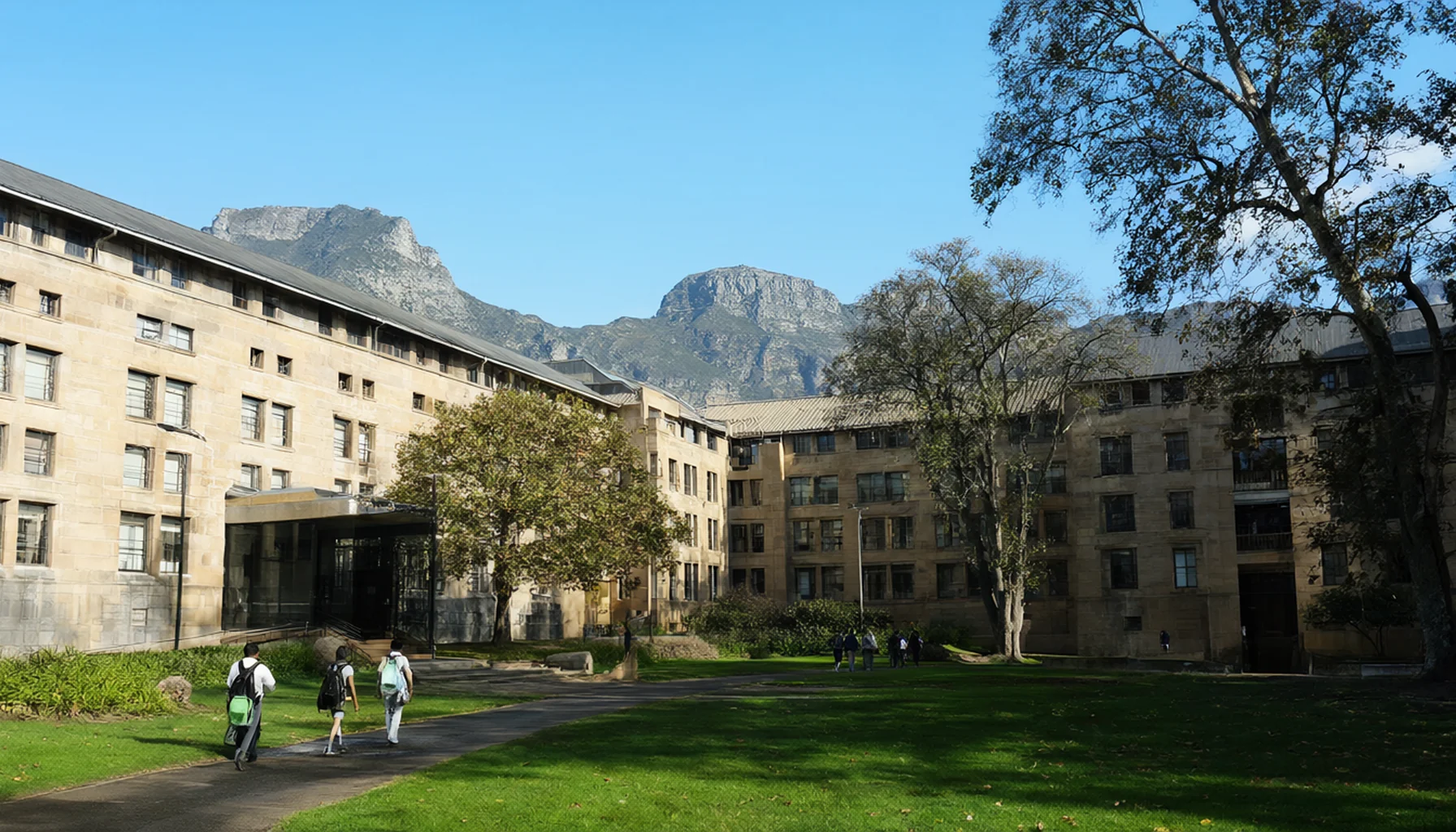
Cape Town independent school campus and classroom

Which Cape Town schools actually teach these systems?

Fewer than 10 schools in Cape Town offer NSC, Cambridge and IB pathways, and only 3 schools in all of South Africa are authorised for the IB Diploma. Most other independent schools run IEB, and public schools run CAPS — which is what determines whether you choose the system first or the school first.

The table below lists only Cape Town and Western Cape schools with verifiable statements on their own websites. Anything that cannot be sourced is marked “to be confirmed” rather than guessed, because group-level marketing claims regularly differ from what a specific campus runs in a specific grade. The reliable question is: “in my child's grade, at this campus, which programme is he or she actually in?” A search for “Cambridge international school South Africa” mostly returns group-level pages, so the table below filters those down to campuses that publish a senior-year programme. The IB school Cape Town families ask about most often is Hout Bay International School, the city's only authorised Diploma campus.

SchoolAreaProgramme on the school's own siteWhat it means for a Taiwanese family
Bishops Diocesan CollegeRondebosch, Southern SuburbsCambridge AS and A Level (with IGCSE)Boys' school; six subjects in Grade 11 narrowing to three A Levels in Grade 12
Somerset CollegeSomerset West, about 50 km from Cape TownSenior School: IEB (NSC) or Cambridge A Level, family chooses; Preparatory: CambridgeTwo leaving qualifications on one campus, chosen by target university
Herschel Girls SchoolClaremont, Southern SuburbsIEB, introduced 2022, first cohort examined 2024Girls' school; the mainstream IEB example among Cape Town independents
Hout Bay International SchoolHout Bay, Atlantic coastIB DiplomaThe only Cape Town school authorised for the full Diploma in the IB's own finder
International School of Cape TownCape Town, Wynberg areaCambridge, with a published 2027 fee scheduleTransparent pricing, useful as a budget benchmark
Other IEB independentsMostly Southern SuburbsTo be confirmed per schoolAsk each school in writing which programme runs in your child's grade

Two practical details are worth knowing before touring schools. First, Bishops charges extra for Cambridge: its own page states that an additional R25,000 per annum (about NT$50,250) covered Cambridge registration and exam fees in 2025, on top of tuition, and that Grade 10 applications open at the end of Term 2. Second, Somerset College's A Level programme is completed in two years with no additional Year 13, which the school describes as unique in South Africa — for a family trying to avoid an extra year, that matters more than a ranking table.

(Source: Cape Town's Bishops Diocesan College official Cambridge page, including the R25,000 annual add-on; Western Cape's Somerset College official Academic Programme page, noting the 2027 intake is finalised 2026-11-16; Herschel Girls School Academic Approach page; IB Find an IB World School, searched October 2026, three South African schools; all retrieved 2026-11-07)

Cape Town school fee statement with Taiwan dollar conversion

How much does each system cost in Taiwan dollars?

IEB independent schools in Cape Town ran from roughly R67,000 to R214,000 a year in 2026, and Cambridge schools from about R97,000 to R191,000. At the 6 November 2026 rate of 1 rand to NT$2.01, that is about NT$134,670 to NT$430,140 a year.

The price order is not simply “more international costs more”. What the published schedules show: IEB schools have the widest band, because the group spans very different sizes and reputations; Cambridge schools sit in the middle; and the American-plus-IB route is the most expensive, with the American International School of Johannesburg running from about R170,000 to about R643,000 for 2026/27. IB supply in South Africa is thin, and the pricing reflects it.

RouteAnnual fee range (ZAR)In Taiwan dollars (x2.01)Note
IEB independentsR67,000 - R214,000About NT$134,670 - NT$430,140The default route for most Cape Town independents
Cambridge in Cape TownR97,000 - R191,000About NT$194,970 - NT$383,910Based on International School of Cape Town's 2027 schedule
Cambridge exam add-onR25,000 a yearAbout NT$50,250Bishops 2025 figure, charged on top of tuition
American plus IB (Johannesburg)R170,000 - R643,000About NT$341,700 - NT$1,292,430Upper-bound reference only, not a Cape Town school

The rand conversion deserves a warning, because it eats budgets quietly. This site's rand-to-Taiwan-dollar baseline was corrected this week from 1.93 to 2.01, based on two independent measurements on 2026-11-06. On the same R441,766 annual boarding fee, 1.93 gives NT$852,608 and 2.01 gives NT$888,000 — a NT$35,000 difference per child, per year. Fees follow the school's invoice and the rate moves daily; neither figure is a guarantee.

Cape Town schools charge fixed extras that have to be budgeted separately: a registration fee (usually one-off and non-refundable), an entry fee (often equal to one term and non-refundable), boarding if applicable, uniforms and activities, and any international pupil deposit a school requires. These vary widely between schools; our separate article on boarding school admission timing breaks the five-layer fee structure down in detail.

(Source: South African relocation guide relocatingtosouthafrica.com international school fee compilation, October 2026, including International School of Cape Town's 2027 schedule and AISJ's 2026/27 figures; Bishops Cambridge page; exchange rate from open.er-api.com on 2026-11-06 00:02 UTC, direct ZAR/TWD 2.0072 and USD cross-rate 2.0089, rounded to 2.01)

Cape Town parents and child at a school information session

When must the decision be made, and what happens mid-stream?

The latest sensible decision point is the end of Grade 9, because A Level and the IB Diploma are both two-year programmes starting in Grade 11. Miss that window and a switch usually costs a repeated year rather than a change of school, which is the cost parents most often underestimate.

In the South African system, three moments matter. Before Grade 8, the curriculum choice barely bites: pick the school and the neighbourhood, and do not move suburbs for a syllabus. In Grades 9 and 10, switching is clean, because IGCSE subject choices and the IB's pre-Diploma years are only starting to narrow. After Grade 11, both programmes are running, and leaving mid-cycle almost always loses credits.

Applications are not a last-minute matter either. Somerset College in the Western Cape states that its 2027 intake is finalised on 16 November 2026, with late applications only processed in the new year, and Bishops opens Grade 10 applications at the end of Term 2. If the target is a January 2027 start, the decision point is November 2026, which means the curriculum choice has to be settled before then.

In South Africa, mid-stream switching reduces to one rule: CAPS and IEB interchange, Cambridge and IB do not. The first two share a national syllabus; the latter two are self-contained two-year structures whose subject combinations rarely align. If another move is likely, the clean points are before Grade 10 or at the start of an A Level or Diploma cycle — and ask the receiving school, in writing, how it will place a child arriving part-way through.

(Source: Somerset College Academic Programme page, 2027 applications finalised 2026-11-16 and the two-year A Level with no Year 13; Bishops Cambridge page, Grade 10 applications opening at the end of Term 2; general switching guidance from relocatingtosouthafrica.com curriculum comparison, 2026-10-21, with final placement always at the receiving school's discretion)

FAQ

Are CAPS and IEB two different qualifications in South Africa?

You may be thinking: "IEB is a different qualification, so choosing it means a more expensive route with a different certificate." The missing step is treating 'who sets the papers' as 'which certificate you get' - the examining body differs, the certificate does not. Both lead to the same National Senior Certificate: CAPS is set by the Department of Basic Education, IEB by an independent body accredited by Umalusi, on the same national curriculum. Umalusi's quality-assurance statement on the IEB (2023-03-30) and the DBE's CAPS publications both place the two under one NSC; South African universities accept both equally and admission turns on each institution's own APS and subject rules.

Can a Cambridge or IB student apply straight to a South African university?

You may be thinking: "The IB is an international diploma, so applying in South Africa should work like a local applicant, with no extra paperwork." The error is reading 'the qualification is recognised' as 'you can register directly' - South Africa asks for an exemption certificate, not for a verdict on recognition. A foreign school-leaving qualification needs a matriculation exemption from USAf's Matriculation Board first, and the certificate takes about 6 to 8 weeks once documents and payment are complete. USAf's Matriculation Board FAQ states the 2026 fee is R1,070 and non-refundable; the IB route needs the full Diploma with at least 24 points, Cambridge needs at least five subjects within a maximum of two sittings.

Which Cape Town school offers the IB Diploma?

You may be thinking: "Cape Town is an international city, so there must be several IB schools - let me just apply." The problem is not the number of schools but which programme the specific campus and grade actually runs; most South African IB schools are listed for earlier IB programmes only. According to the IB's official school finder, only three South African schools are authorised for the IB Diploma, and in Cape Town only Hout Bay International School. The IB school finder searched in October 2026 lists the American International School of Johannesburg and Redhill School in Johannesburg, and Hout Bay in Cape Town; confirm the campus and grade before applying.

What does Bishops charge on top of Cambridge tuition?

You may be thinking: "Tuition is the whole cost - Cambridge is just the name of the curriculum, it does not bill separately." What is missed is the Cambridge registration and exam fee: it sits outside tuition and is a fixed annual add-on. Bishops' own Cambridge page states an additional R25,000 per annum (about NT$50,250) in 2025, charged to cover Cambridge registration and exam fees. The same page sets Grade 11 at six subjects, including AS English, IGCSE or AS Afrikaans or French, Mathematics and three electives, narrowing to three A Level subjects in Grade 12.

Does an IEB matric work for universities in the UK or back in Taiwan?

You may be thinking: "IEB is the route for studying abroad, so it must beat CAPS for UK or Taiwan admissions." The mistake is treating the name of the system as an admission advantage; what actually counts is the subject mix and the grade level, and top-tier schools ask for A Levels. Many UK universities accept South Africa's NSC for direct entry, usually with a set number of subjects at roughly 70% or better, while Oxford states the IEB alone is not accepted for its standard offer. Those readings come from Oxford's international qualifications page and Sheffield's South Africa entry requirements; recognition in Taiwan must be confirmed case by case against the Ministry of Education's published list and the overseas mission's procedure.

Can a child switch systems part-way through?

You may be thinking: "If we pick the wrong system we can simply switch later, since it is all the same national curriculum." The error is assuming the same curriculum means interchangeable credits: A Levels and the IB Diploma are complete two-year structures and their subject sequences rarely line up. Between CAPS and IEB switching is usually possible because both follow the same national curriculum; into or out of Cambridge or the IB it is hard, and leaving after Grade 11 usually means repeating a year. The clean switching points are before Grade 10 or at the start of an A Level or Diploma cycle, and the two-year structures are set out on Herschel and Somerset College's official curriculum pages.
Why Handle This Through Crestline Advisory?

South African school applications rarely fail because the child is not good enough. They fail on the wrong curriculum and the wrong document format: the same transcript, sent the wrong way, is simply not accepted, and the same results in the wrong track cost a year.

The three most common failure points

  • Treating the IEB as a separate qualification: families chase a certificate that does not exist, while the question that actually matters — whether the target university accepts an NSC — goes unanswered.
  • Choosing Cambridge without knowing about the USAf exemption: the certificate takes 6 to 8 weeks after documents and payment are complete, so discovering it in the second term of Grade 12 costs an entire intake cycle.
  • Transcripts not sent directly by the school: most international applications require the issuing school to send records directly or via a certified channel. Self-uploaded scans get returned, and a return trip costs three to six weeks.

Working through our partner Crestline Advisory (on-the-ground execution in South Africa) means these are checked before submission: the curriculum-to-university mapping is confirmed first, the USAf exemption documents and timing are scheduled backwards from the deadline, transcript despatch is pre-screened item by item, registration and accommodation offers are sequenced, and progress is tracked locally after submission.

Crestline Advisory executes on the South African side. DingYao verifies your academic records, documents and financial information on the Taiwan side and hands over for execution. You do not receive a checklist and get left to figure it out alone.

Decide where the child is going before choosing the system

Curriculum choice is a routing decision before it is a ranking decision. Tell us your child's grade, the system they are in now, and the universities you are aiming at — South Africa, the UK, Taiwan or the US — and we will map the route: which curriculum leads to which admission path, what has to be completed by when, and when the USAf exemption should be filed. Where local execution is needed, we hand over to our South African partner Crestline Advisory.

Explore South Africa education planning

Compliance and Disclaimer

1. Company statement: Ding Yao Advisory (DingYao Advisory) is a Taiwan-based advisory practice covering asset allocation, immigration consultation, offshore account opening and next-generation education coordination. We hold no real estate agency licence in Taiwan, do not act as an agent in any property transaction, and do not operate as a study-abroad placement agency; admission, programme placement and entry conditions are decided solely by South African schools and universities under their own regulations.

2. Sources and contracting party: The curriculum structure described here follows Umalusi's quality assurance statement on the IEB (2023-03-30) and Department of Basic Education CAPS publications. Exemption rules, the 2026 fee of R1,070 and the 6 to 8 week turnaround come from the Universities South Africa Matriculation Board FAQ and its guidance on foreign school leavers. School programmes, add-on fees and application deadlines come from the official pages of Bishops Diocesan College, Somerset College and Herschel Girls School. The list of IB Diploma schools comes from the IB's Find an IB World School tool, searched October 2026. Fee ranges come from relocatingtosouthafrica.com's October 2026 compilation. All pages were re-checked on 2026-11-07. Credential recognition in Taiwan must be confirmed case by case against the Ministry of Education's current list and the overseas mission's verification procedure; this article does not determine that outcome. This is information only and is not admission, investment or legal advice.

3. Statutory risk warning: “Overseas real estate investment carries risk. Investors should read the marketing documents carefully and consider the transaction prudently before proceeding.” The tuition figures and rand conversions here are November 2026 market references, not guaranteed to hold; fees are revised annually and exchange rates move daily, so the school's invoice for the relevant year governs. No admission outcome, programme transition outcome or credential recognition outcome is guaranteed.