Unlawful Occupation South Africa: Cape Town Eviction Timeline, Rent Control and Landlord Risk

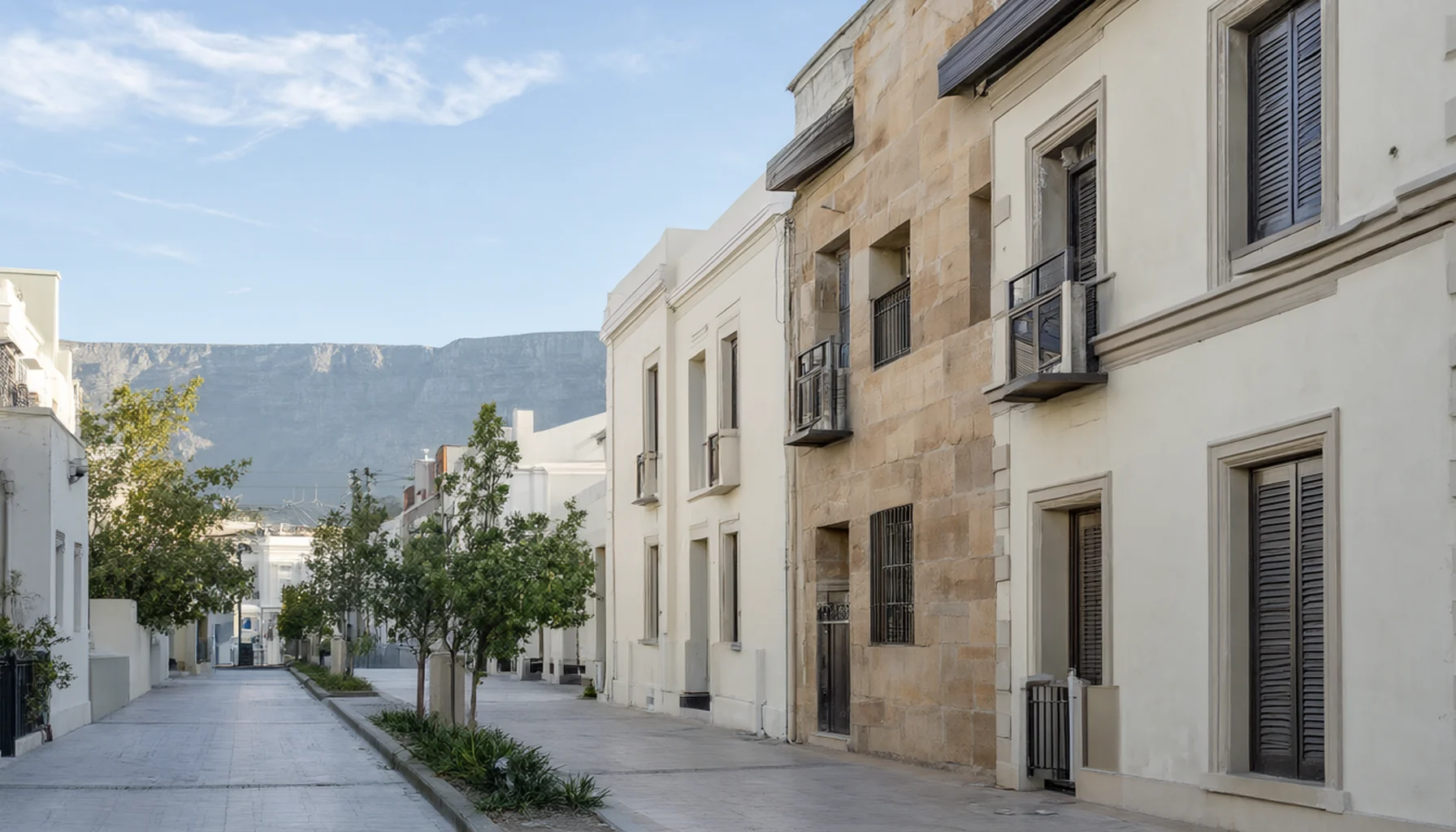
Cape Town skyline and residential suburbs representing rental risk management for overseas landlords

Unlawful Occupation South Africa: Cape Town Eviction Timeline, Rent Control and Landlord Risk

Unlawful occupation South Africa property owners face is the scenario no overseas landlord wants to imagine, and the one they most need an answer for in advance. You are in Taiwan; your managing agent messages you that the tenant has not paid for four months and has stopped answering. The first instinct is usually: can someone change the locks, cut the utilities, and put the belongings outside? The answer is no — and doing it makes things materially worse. South Africa's Prevention of Illegal Eviction from and Unlawful Occupation of Land Act 19 of 1998 (the PIE Act) provides that where the property is someone's home, no one may be evicted without a court order. There is no exception.

This guide covers only the three things a Cape Town landlord actually needs: how the court process runs, how long it takes, and what the 2026 policy reality is for Cape Town rent control and the rental market. Yield and location analysis is well covered elsewhere. What this article adds is the risk side — because for an owner based in Taiwan, total return is usually decided not by an extra two thousand rand of rent, but by eleven extra months of vacancy.

Direct answer: No, a Cape Town landlord cannot change the locks. The PIE Act requires a court process: a court-authorised notice, service by the Sheriff, at least 14 days' notice of the hearing, a "just and equitable" enquiry by the court, an eviction order, and enforcement by the Sheriff. Unopposed matters typically take about 3–6 months; opposed matters take 12 months or longer. The City of Cape Town has explicitly rejected rent control, while short-term letting faces pressure to be rated at commercial property rates.
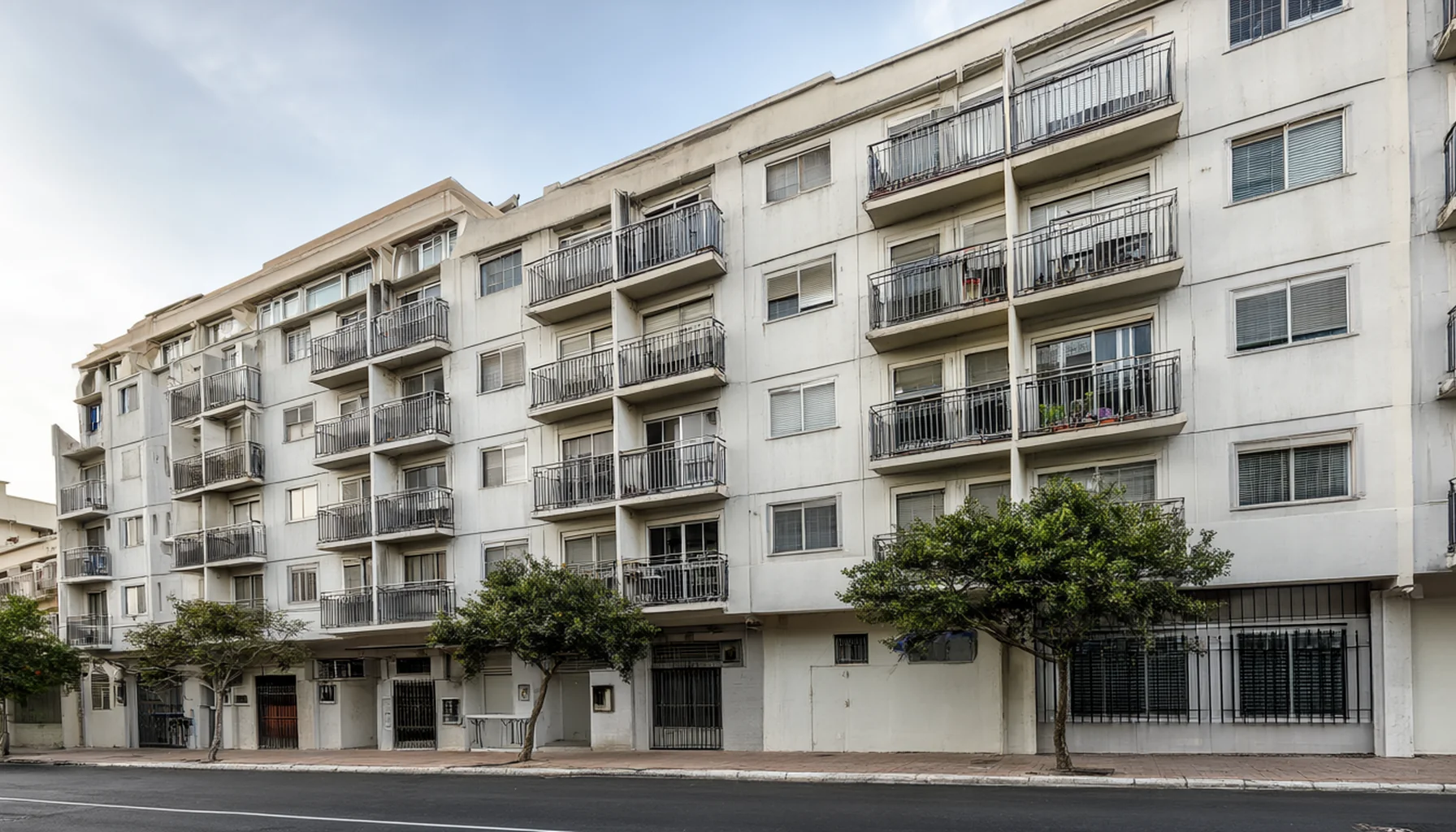

Apartment buildings in the Cape Town CBD representing residential property held by overseas landlords
Cape Town CBD apartments are the most common rental asset for Taiwanese buyers

Can a Cape Town Landlord Simply Change the Locks?

No. In Cape Town, as long as the occupier is living in the property, changing locks, cutting water or electricity, removing doors, taking away possessions, or applying pressure through third parties are all unlawful self-help measures. The core principle of the PIE Act is that eviction from a home must be supervised by a court, because eviction engages two constitutional interests at once: property rights and human dignity. What makes this worse in practice is the counter-effect. Once a Cape Town landlord changes the locks, the occupier can apply for urgent spoliation relief, and the court will first restore possession to the occupier. Your eviction then has to run an extra lap.

The correct framing is this: you are not "removing someone", you are asking the Cape Town Magistrates' Court to find that occupation has no lawful basis, and to decide whether eviction is just and equitable. Once that framing shifts, the whole preparation changes — the emphasis moves from emotion to evidence.

Never do this

Changing locks, cutting utilities, removing doors, discarding belongings, or intimidation in person or by message. These are unlawful self-help in South Africa, can trigger spoliation relief, and make the eventual eviction slower and more expensive.

The only lawful route

Apply to court for eviction, obtain the court-authorised PIE notice, have it served by the Sheriff, and wait for the hearing and the just and equitable enquiry. In Cape Town, residential eviction without a court order does not exist.

A second common misunderstanding is conflating a rental dispute with an eviction. A Cape Town landlord can take deposit, maintenance and harassment complaints to the Rental Housing Tribunal, but that tribunal cannot grant an eviction order and cannot replace the court process. Winning at the tribunal does not get the property back.

(Source: SD Law, Cape Town attorneys, Eviction Process in South Africa: Step-by-Step PIE Act Guide, 2026)

Court building and legal documents representing the PIE Act eviction process in South Africa
Residential eviction in South Africa requires court authorisation and Sheriff service

How Does the Eviction Process South Africa Law Sets Out Actually Work?

The eviction process South Africa law provides is not the intuitive sequence of "send a letter of demand, call the police, police remove the tenant". It is seven sequential legal steps. Get the order wrong, or leave a defect in any one document, and the Cape Town Magistrates' Court simply sends the matter back and the clock restarts. These are the seven steps in the standard Cape Town residential matter:

1

Confirm the legal route and terminate the right to occupy

First distinguish a lease dispute, unlawful occupation, and farm or rural occupation (ESTA 62 of 1997). Where the occupier entered lawfully, the lease or right to occupy must be lawfully terminated first. A defective termination is the most common first delay.

2

Issue the eviction application in the Cape Town court

The papers must set out the legal basis, the occupation history, the notices already issued, and any facts affecting urgency and the just and equitable enquiry, such as the presence of children, elderly persons or disabled occupiers.

3

Obtain the court-authorised PIE notice

In the ordinary process the court authorises the notice, often called the section 4(2) notice. It is court-authorised, not a letter the landlord issues — the legal effect is entirely different.

4

Sheriff service and municipal notice

The notice must be served by the Sheriff and the municipality notified where required. It must state the grounds, the hearing details and the occupier's rights, and must generally be served at least 14 days before the hearing.

5

Affidavit evidence and opposition

The founding affidavit must address the basis for eviction, breach and termination history, duration of occupation, proof of service, and vulnerability or homelessness risk. The occupier may oppose and file answering papers.

6

The court applies the just and equitable test

The court does not only ask who owns the property. It weighs the parties' conduct, how long the occupation has lasted, vulnerability, homelessness risk, alternative accommodation and community safety factors.

7

Eviction order, writ and Sheriff enforcement

If eviction is granted, the order usually sets a vacating date. If the occupier still does not leave, a writ of ejectment must be obtained and the Sheriff executes it.

Converted into time, those seven steps produce the table most Cape Town landlords actually want. Note that urgent eviction is not a shortcut: section 5 of the PIE Act requires real urgency to be proved on affidavit — threats to safety, violence, criminal activity, ongoing destruction of property — and courts are consistently cautious. A weak urgency claim gets pushed back into the ordinary section 4 process.

ScenarioTypical timelineMain causes of delay
UnopposedAbout 3–6 monthsCape Town court roll availability, Sheriff service logistics, defective paperwork
Opposed12 months or moreFactual disputes, postponements, municipal involvement, vulnerability factors (children, elderly, disability)
Urgent eviction (PIE section 5)VariesReal urgency must be proved on affidavit; courts are cautious

Cost structure follows the timeline: attorney time, Sheriff service fees, drafting and appearances are the main items. The way to reduce cost is not to find a cheaper attorney but to get the documents right the first time. Clean notices, complete proof of service and a clear arrears schedule are what decide whether this is a four-month matter or a fourteen-month matter.

(Source: SD Law, Cape Town attorneys, Eviction Process in South Africa, 2026; statute: PIE Act 19 of 1998, SAFLII)

Residential streets and apartment blocks in central Cape Town representing rental market supply
Cape Town CBD two-bedroom flats average about R29,400 a month; supply is the driver

Is Cape Town Rent Control Going to Happen?

Not in the foreseeable future. The City of Cape Town has explicitly rejected rent control. Mayor Geordin Hill-Lewis put it plainly at the Cape Town Press Club: "One thing we will not engage in is market manipulation." The City's position is that rental pressure is a supply and demand problem, and the answer is to build more housing rather than suppress prices.

That position matters because it sets the policy risk pricing for overseas landlords. In a city without rent control, long-let rents can adjust with the market. At the same time, tenant pressure becomes political pressure, and that pressure tends to return to landlords through other channels — short-term letting rates, holding costs, and compliance requirements.

The numbers behind the pressure are clear. Average rents in the Western Cape rose 9.7% in the year to June 2026, almost twice the inflation rate, according to the PayProp Rental Index. In October 2026, two-bedroom flats in the Cape Town CBD were advertised on Property24 at an average of about R29,400 a month. Over the longer run, Cape Town house purchase prices rose about 23% in real terms between 2010 and 2024.

Put those three figures together and the shape of the Cape Town rental market 2026 becomes visible: real price growth, rents rising faster than inflation, and supply that cannot keep up. For landlords that is a positive on the income side. For policy it is a source of pressure. And that pressure usually does not arrive as rent control — it arrives as short-term letting regulation and higher holding costs.

Key insight: The Cape Town rental risk is not "the government will cap rents". It is "the government will raise the cost of holding and operating". Long-let policy risk is currently low; short-let policy risk is rising. That judgement directly affects which product you buy and how you let it.

(Source: GroundUp, Elections 2026: Affordable housing – has the City of Cape Town done enough?, 2026-10-14; rental index: PayProp Rental Index; asking rents: Property24, October 2026)

Residential buildings and streets in the Woodstock and Salt River area of Cape Town
Inner-city Cape Town supply in Salt River and Woodstock has long lagged demand

How Will the Short-Term Letting By-Law and the Supply Gap Change Landlord Risk?

They will change it, and the direction is already clear: compliance costs for short-term letting will rise, and the relative advantage of long lets will widen. The City of Cape Town's proposed short-term letting by-law would see many Airbnb listings pay commercial property rates. The draft has been criticised for not going far enough, on the argument that it may not actually release residential space back into the long-let market.

The supply-side facts deserve more attention from overseas buyers. In its report to the Western Cape High Court, the City of Cape Town set out plans for about 28,400 affordable homes. Yet none of the affordable housing projects the City has approved since 2017 for the CBD, Salt River, Woodstock, Observatory or Sea Point has been completed. At the same time, the national Consolidated Capital Grant that funds social housing has fallen about 41% in real terms since 2017, and since 2021 no grant funding has been released for developments on City-released land, despite six applications.

That means two things. First, Cape Town rental pressure will not ease within two or three years, so long-let vacancy risk is relatively low. Second, undersupply makes occupation and eviction a more routine dispute — the Woodstock Hospital site in Cape Town has been occupied since 2017, with about 365 households still living there while the City investigates disposal options. For a landlord, that is not distant news; it is a neighbouring risk in the suburb you bought into.

So if your Cape Town strategy depends on high-turnover short lets, the rate category change and compliance cost must go into the return model. If it depends on long lets, the eviction timeline must go into the vacancy assumption. Neither is an income question. Both are risk pricing questions.

(Source: GroundUp, 2026-10-14; by-law critique: Daily Maverick, Airbnb by-law doesn't do enough to address Cape Town's housing crisis, 2026-10-01)

Close-up of a door lock and keys representing property possession and rental management
Changing the locks is the most common and most expensive mistake Cape Town landlords make

Which Five Landlord Mistakes Make an Eviction Take Longer?

Almost every Cape Town case where an eviction drags on for two years traces back to the same handful of errors. They are not usually gaps in legal knowledge; they are problems of sequence and record-keeping — precisely the parts an overseas landlord is most likely to overlook.

  • Skipping lawful termination of the lease: the occupier originally entered lawfully, but the lease or right to occupy was never cleanly terminated before proceedings were issued. The Cape Town court then treats the eviction as premature and dismisses it.
  • Self-help — locks, utilities, pressure: this can trigger urgent spoliation relief, with the court first restoring the occupier's possession while your matter goes back into the queue.
  • Incomplete records: no written lease, no arrears schedule, no proof of delivery, no move-in or condition photographs. The burden of proof sits with you.
  • Filing early on thin evidence: rushing to issue with incomplete papers produces postponements and re-filing, which is how a 3–6 month matter becomes a 12 month matter.
  • Ignoring vulnerability and municipal factors: where children, elderly persons, disabled occupiers or homelessness risk are involved, the court will require municipal input and the timeline extends. Not assessing this upfront means you cannot plan for it.

All five share one solution: assume it will happen before you buy. Rental risk management in Cape Town is not about finding an attorney after the event; it is about having termination clauses, a service address, deposit handling and a remote power of attorney in place before signing. The real cost difference is created before anything goes wrong.

(Source: SD Law, Cape Town attorneys, Common landlord mistakes that delay eviction, 2026)

Professional advisory meeting representing cross-border asset risk assessment
Holding Cape Town property from abroad depends on documentation, not relationships

How Can an Overseas Landlord Break Cape Town Rental Risk into Smaller Pieces?

Breaking the risk down does not mean finding a property that can never be occupied — that property does not exist. What works is a four-layer structure so that a single event cannot consume a whole year's return. All four sit at the advisory and structuring level; none involves arranging a transaction.

Pre-purchase due diligence

Confirm ownership, any existing lease, the actual occupation status and municipal arrears. In Cape Town, obtaining a no-occupation declaration and a municipal clearance certificate before transfer removes roughly half of the tail risk.

Lease clause design

Jurisdiction, a statutory service address, deposit handling, maintenance obligations and termination conditions must be explicit. For an overseas landlord, the service address is the single most overlooked line — and it decides whether an eviction can start cleanly.

A local admitted attorney

The eviction process must be run by a Cape Town admitted attorney. The point is not to find the cheapest one, but one who gets the seven steps right the first time — defective paperwork is the largest time cost in the system.

Property management and remote authority

Pre-let screening (income, credit, previous landlord reference) plus a remote power of attorney, so that legal proceedings can start from Taiwan without waiting for a flight to Cape Town.

Put those four layers back into the return model. Market-reference gross rental yields for Cape Town residential property sit in the 6–10% range on a fully let basis, and actual outcomes depend on occupancy; this is an indicative market-reference range, not a promise of income. But if one opposed eviction consumes twelve months of rent, the realised return is materially eroded. That is why risk structuring belongs ahead of yield comparison — past performance does not indicate future returns, and actual returns will vary with market and occupancy conditions.

One expectation to correct: a Cape Town gated community does not exempt you from the eviction process, but body corporate rules, access control and tenant screening do reduce the probability of a long-term uncontactable occupation. That is a structural solution, not a legal one.

FAQ

If my Cape Town property is occupied, can I cut the utilities to force them out?

No. Cutting water or electricity, changing locks or removing belongings are all unlawful self-help in South Africa and can trigger urgent spoliation relief. The practical result is usually that the court first restores the occupier's possession, your eviction is delayed, and you add litigation cost. The PIE Act requires a court order for residential eviction, and in Cape Town there is no exception.

Do I have to use an attorney for the eviction process South Africa requires?

The law does not compel it, but in practice it is strongly advisable. In the seven-step process, a defect in any single document sends the matter back at the Cape Town court and the clock restarts. For an overseas landlord there is an extra layer: service, appearances and municipal engagement all need a local representative. The attorney's cost is usually lower than the rent lost to one re-filing.

Is Cape Town rent control likely to be introduced?

There is no sign of it. The City of Cape Town has explicitly rejected rent control, and Mayor Geordin Hill-Lewis has said publicly that the City will not engage in market manipulation. The City's approach is to answer rental pressure with supply, including a plan for about 28,400 affordable homes filed with the Western Cape High Court. Cape Town rent control is therefore not the main landlord risk in the foreseeable period; short-term letting rates and compliance costs are.

What does the Cape Town rental market 2026 actually look like in numbers?

Across the Western Cape, average rents rose 9.7% in the year to June 2026, close to twice inflation. Two-bedroom flats in the Cape Town CBD were advertised at an average of about R29,400 a month in October 2026. The defining feature of the Cape Town rental market 2026 is real price growth, rents rising faster than inflation, and supply that cannot keep up — so long-let vacancy risk is relatively low, while tenant affordability is deteriorating.

Why does an opposed eviction take more than 12 months?

Because opposition turns an administrative process into a factual trial. The occupier can file answering papers, dispute the lease or the nature of the occupation, and the matter may be postponed repeatedly. Where children, elderly persons, disabled occupiers or homelessness risk are involved, the Cape Town court will also require municipal input on alternative accommodation. Each stage is weeks to months, and they compound past a year.

Before buying in Cape Town, how do I confirm a property is not occupied?

Three steps: require a physical inspection and condition photographs before transfer; check whether municipal charges are in arrears, since arrears often accompany occupation; and require a written declaration from the seller or developer that there is no existing lease or occupation. If a lease does exist, obtain the full lease, the arrears record and the service address — because what you are buying includes the existing tenancy, not just the title.

Why Handle This Through Crestline Advisory?

South African documentation requirements change every year — and what changes is usually the format, not the eligibility. Same passport, same proof of address, wrong format, rejection.

The three most common failure points

  • Passport certification rejected: A plain true-copy stamp is not accepted. A commissioner of oaths must certify in English, confirm the original was seen, add a true-likeness statement for photo pages, and include signature, date, address and occupation.
  • TIN left blank without a reason code: For Taiwanese clients the tax number is the national ID number. Leaving it blank requires ticking Reason A / B / C with an explanation.
  • Proof of address older than three months: Measured from the application date. Past the deadline the entire application is void and must be resubmitted.

Working through our partner Crestline Advisory (on-the-ground execution in South Africa) means these are checked before submission: document format pre-screened item by item (avoiding a 2-4 week round trip), current bank requirements confirmed before you book any flight, remittance routing and BOP declaration categories aligned in advance, and progress tracked locally after submission.

DingYao verifies your documents on the Taiwan side and hands over to Crestline Advisory for execution. You do not receive a checklist and left to figure it out alone.

Understand Cape Town rental risk before you discuss returns

Cape Town property returns are usually decided not by the purchase price but by vacancy periods. Tell us the suburb, property type and holding structure you are assessing, and we will provide an initial Cape Town rental risk assessment, an explanation of the eviction timeline, and the direction of a pre-purchase due diligence checklist — so the sequence is right before you sign.

Book Now

Compliance and Disclaimer

1. Company statement: Ding Yao Advisory is a Taiwan-based advisory firm providing asset allocation, immigration advisory, offshore account opening and second-generation education coordination services. Within Taiwan, the company does not engage in real estate brokerage or agency business, and does not handle, collect or hold any property transaction funds.

2. Sources and contracting parties: The South African eviction law, rental data and images in this article are drawn from public and official sources (PIE Act 19 of 1998, the Western Cape High Court report, Statistics South Africa), SD Law (Cape Town attorneys), GroundUp, Daily Maverick and public market sources. They are provided as market reference for risk assessment and offshore asset allocation only, and do not constitute an offer, an invitation to offer, or any investment guarantee. All property contracts, payments and transfers of title are concluded directly by the buyer with the lawful offshore developer or institution, outside Taiwan.

3. Statutory risk warning: "Offshore real estate investment carries risk; investors should read the marketing materials carefully and consider the transaction prudently before proceeding." The eviction process and timelines described here are general legal information and do not constitute legal advice; individual outcomes depend on the specific facts and should be confirmed with an admitted Cape Town attorney. South African legislation, rental levels and municipal rates may change at any time. Figures and timelines in this article are public information verifiable at the time of writing, are subject to their own calculation standards and time limits, and past information does not indicate future conditions. Nothing here constitutes investment, tax or legal advice. Investors should make their own assessment and seek professional legal and financial advice.