Rand Below 16: CT Property

Rand below 16 Cape Town property opportunity

Rand Below 16, Then a SARB Hike: the FX Gain vs the Cost of Borrowing

In late August 2026 the rand fell below 16 to the dollar (SARB 15.9792 on 8/28, MTFX 16.17251 on 8/29) after dipping to 17 in July - a gain of over 6% in a month. Less than a month later, on 23 September, the SARB raised rates by 25bp to a 7.25% repo and 10.75% prime (effective 25 September 2026). For a Taiwanese investor these are two forces pulling in opposite directions: the currency lowers your TWD entry price, while the rate makes leverage more expensive. Whether you can act now depends on whether you are buying for cash or borrowing.

The two forces have to be priced separately, and this article does exactly that: the rand's trajectory and what it does to the TWD entry price, then what the 23 September hike does to the monthly payment at prime 10.75%, and finally how to sequence a purchase when one tailwind and one headwind arrive at the same time.

Key Takeaway: You can act, but separate the two forces. The rand below 16 lowers the TWD cost of Cape Town property, while the 23 September 25bp hike (repo 7.25%, prime 10.75%, effective 25 September) raises borrowing costs. Cash buyers capture the FX gain; leveraged buyers should re-run the payment at prime 10.75% and check rent cover. Western Cape prices are projected to grow 4-7% in 2026, with Cape Town gross yields of 7.5-11.4% (market-reference range).

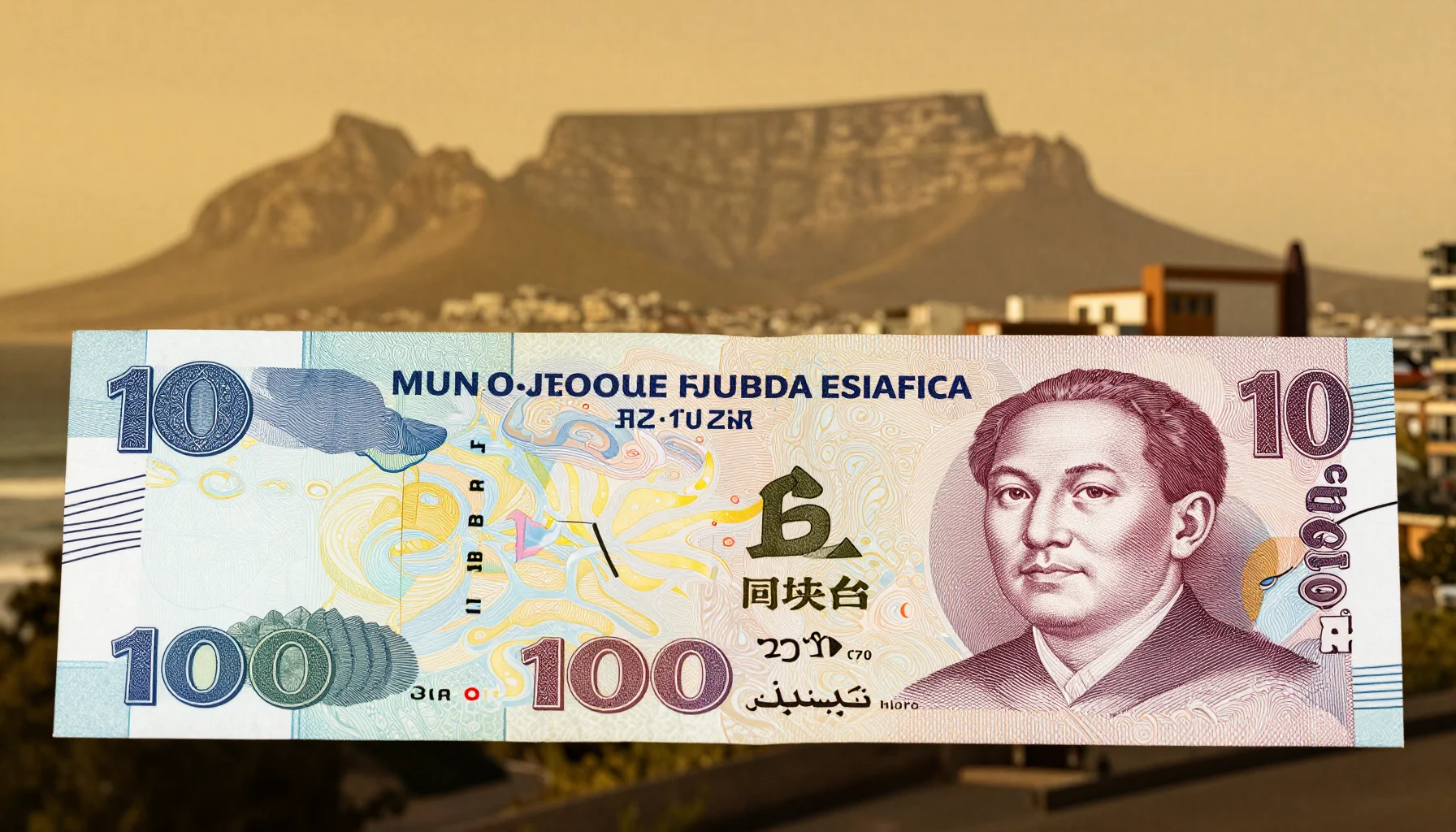
Rand Below 16: A Currency Signal of Over 6% Appreciation in a Month

Rand Below 16: What Does a 6% Monthly Appreciation Signal?

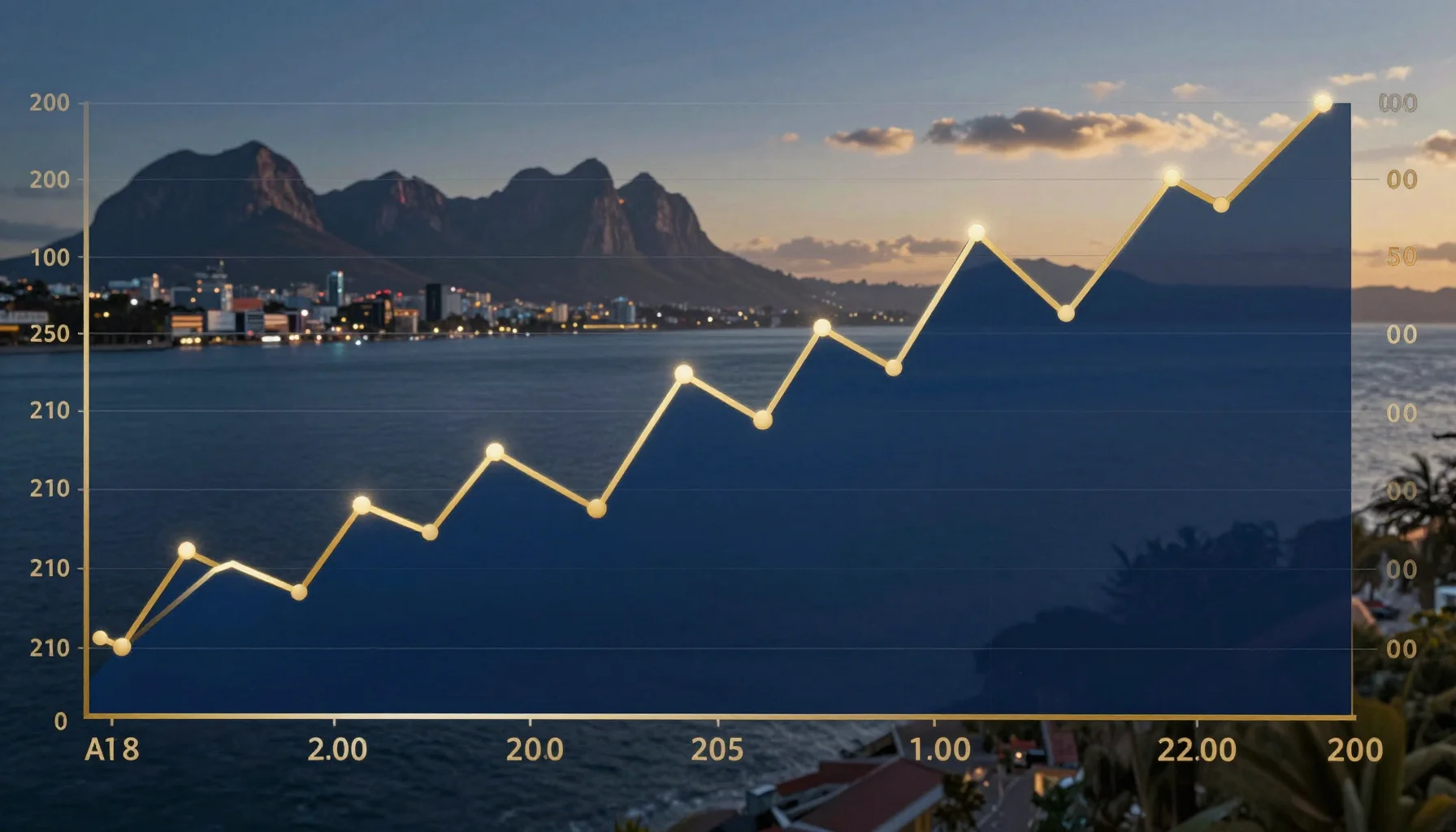
The rand-to-dollar exchange rate saw dramatic movement in August 2026. According to SARB's official Selected Historical Rates, the rand traded at 15.9792 on 8/28, officially breaking below the 16 level; MTFX reported 16.17251 on 8/29. Looking at the full month, Currency News data shows USD/ZAR opened at 16.46299 and closed at 16.16871, with a monthly average of 16.16834 and a high of 16.55654 (8/3).

More critically, the rand dipped to 17 in July and has now recovered to around 16, appreciating over 6% in a month. This rally reflects South Africa's better-than-expected inflation decline, SARB's maintained 3% inflation target, and market expectations, at the time, of a 9/23 rate cut. A stronger rand means lower effective costs for Taiwanese investors buying South African assets.

SARB Official 8/28

Rand at 15.9792 to the dollar, officially breaking below the 16 level — the strongest recent signal.

Over 6% Appreciation in a Month

From 17 in July to around 16 in late August, a strong currency rally.

CPI at 4.3%

Better-than-expected inflation decline strengthens the case for holding or cutting rates.

9/23 MPC Decision

The next rate decision, with markets expecting a possible cut that could further strengthen the rand.

Rand Below 16: A Currency Signal of Over 6% Appreciation in a Month

TWD-to-Rand Costs Are Falling — Is This a Timing Opportunity for Taiwanese Investors?

For Taiwanese investors, the significance of the rand falling below 16 lies in the improved purchasing power of TWD against the rand. Taiwanese investors typically convert TWD to USD, then to rands for South African property purchases. When the rand strengthens and the dollar weakens, the same amount of TWD buys more rands, lowering the TWD cost of Cape Town property.

For example, if a Cape Town property is priced at R5,000,000, the TWD cost is higher when the rand trades at 17 to the dollar. When the rand strengthens to 16, the same property the TWD entry price improves. This is the logic of "a stronger currency = lower property cost," and it directly answers the question Taiwanese investors care most about: "Is it a good time to buy now?"

"A stronger rand is a direct reduction in property cost for Taiwanese investors. The same TWD now buys more rands, lowering the TWD-denominated threshold for Cape Town property." — DingYao Advisory Investment Advisory Team

Notably, this currency advantage stacks with Cape Town's property fundamentals. Western Cape prices are projected to grow 4-7% in 2026, Cape Town's Atlantic Seaboard luxury properties appreciate 12.9% annually, and rental yields range 7.5-11.4%. Currency advantage, asset appreciation, and rental income create a triple-layered investment opportunity.

Lower TWD-to-Rand Costs: A Timing Opportunity for Taiwanese Investors

The SARB Hiked 25bp on 9/23: Why Do the Rand and the Rate Pull Apart?

The SARB raised rates by 25bp on 23 September 2026, taking the repo rate from 7.00% to 7.25% and prime from 10.50% to 10.75% (effective 25 September); the next decision is 19 November 2026. Before the meeting the market widely expected a cut - July CPI had eased to 4.3% (BusinessTech, 8/25) - but oil prices and a softer rand pushed imported inflation higher, and the committee hiked. That is why August's currency gain cannot simply be carried forward as your cost of funds after September.

For Taiwanese investors, the 9/23 decision matters on two levels:

  • A hike → a firmer rand, but a higher cost of funds — higher rates pull carry-seeking capital in, which supports the rand; the same move immediately reprices variable-rate bonds, squeezing leveraged cash flow
  • A hike → higher mortgage costs — prime has moved from 10.50% to 10.75% (effective 25 September 2026); on a R2m 20-year bond that is roughly R337 more per month (market-reference illustration, not guaranteed)

In other words, the question is no longer "wait for a cut" but "which funding source". Cash buyers capture the FX gain and gain bargaining room; leveraged buyers need to confirm the payment at prime 10.75% is covered by rent before deciding how much extra deposit to put in. What matters now is the 19 November MPC and September CPI (due 21 October) - not the pre-decision expectations.

Key Insight: In 2026 the currency and the rate pull in opposite directions: a firmer rand makes entry cheaper in TWD, while the hike makes leverage dearer. Price them separately - cash buyers look at the currency, leveraged buyers look at rent cover at prime 10.75% - so that August's FX gain does not get used to justify September's borrowing costs.

Rand below 16 meets a SARB 25bp hike: FX gain versus cost of funds

Cape Town Market Today: What Are Foreign Buyers Facing in a Two-Speed Market?

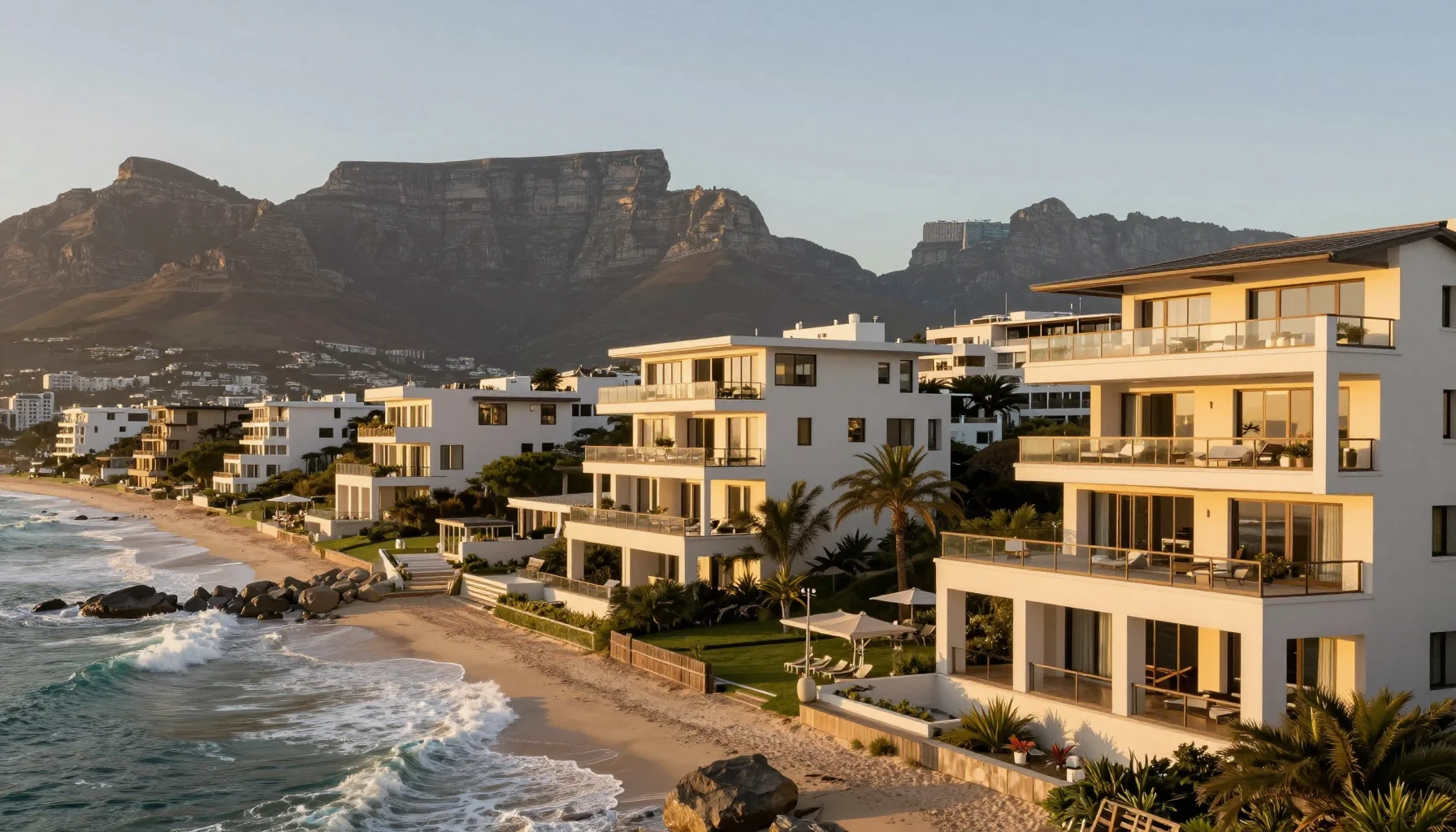
Cape Town's property market continues to attract international attention in 2026. A UK buyer purchased the penthouse at The Marlow on Mill in Newlands for R15.9m, setting a record (briefly.co.za 8/30), while a Hout Bay boutique estate listed at R100m+ (MSN 8/30). Demand for luxury estates in the Western Cape from foreign buyers remains strong. Foreigners are no longer looking only at investment — they also consider residency, remote work, and vacation.

At the same time, Cape Town's market shows clear polarization. MSN 8/30 reported "Contrasting trends in 2026" — affluent suburbs see surging prices while some homeowners face financial distress. This makes area selection critical: high-end coastal and gated-community properties see strong demand, while the general residential market requires careful assessment.

For Taiwanese investors, a stronger rand, foreign buyer influx, and market polarization mean Cape Town's high-end properties are gaining scarcity and appreciation potential. Choosing the right area and property type is key to capturing this window.

UK Buyer R15.9m

Newlands penthouse sets a record, foreign buyers flooding the high-end market.

Hout Bay R100m+

Boutique estate listed, strong demand for Western Cape luxury estates from foreign buyers.

Two-Speed Market

Affluent suburbs surge vs homeowner financial distress — area selection is critical.

Rental Yields 7.5-11.4%

Stable Cape Town rental income, even more attractive under currency advantage.

Cape Town Market Today: Foreign Buyers and a Two-Speed Market

How Do the Rand Trajectory and Property Costs Compare?

The following table summarizes the rand's recent trajectory and key Cape Town property data, helping Taiwanese investors quickly assess timing:

Indicator Value Meaning for Taiwanese Investors
SARB Official 8/28 Rand at 15.9792 to USD Broke below 16, lowering TWD-denominated cost
MTFX 8/29 Rand at 16.17251 to USD Holding strong around 16
July Low Rand at 17 to USD Over 6% appreciation in a month
SARB Policy Rate 7.00% 25bp hike on 9/23, raising mortgage costs
Prime Rate 10.50% Lower financing costs after a cut
Western Cape Price Growth 4-7% (2026 est.) Asset appreciation potential
Cape Town Rental Yields 7.5-11.4% More attractive rental income under currency advantage

As the table shows, after the rand fell below 16, the TWD-denominated cost of Cape Town property sits at a relatively low level. Combined with price growth and rental income, currency, appreciation, and yield stack up — a favorable time for Taiwanese investors to position.

How Taiwanese Investors Can Position: Fund Transfer and Asset Structuring

How Can Taiwanese Investors Position? Fund Transfer and Asset Structuring

After timing the rand, Taiwanese investors need to understand how to transfer funds to South Africa and structure their assets. DingYao Advisory provides advisory on market analysis, investment assessment, and legal and capital structuring, helping Taiwanese investors understand the cross-border investment process.

01

Market Analysis and Investment Assessment

DingYao provides Cape Town market data, area analysis, and investment assessment to help Taiwanese investors understand the market and timing.

02

Fund Transfer and Compliance Planning

Under South African exchange control rules, Taiwanese investors can transfer funds through legal channels. DingYao provides advisory on capital structuring and compliance.

03

Legal and Tax Structuring

Through licensed South African partners and law firms, plan an appropriate legal and tax structure to ensure compliance and optimize tax costs.

04

Asset Allocation and Long-Term Holding

Cape Town property is a long-term asset allocation. DingYao provides ongoing asset management and market information to help investors capture long-term appreciation and rental income.

Advice for Investors: The rand falling below 16 is a key window for Taiwanese investors to position in Cape Town property. We recommend using the window before the 9/23 decision for market analysis and capital planning. DingYao Advisory acts as an information advisor, providing market analysis, investment assessment, and legal and capital structuring; actual property transactions are handled by licensed South African partners.

How Taiwanese Investors Can Position: Fund Transfer and Asset Structuring

Frequently Asked Questions

What does the rand falling below 16 to the dollar mean for Taiwanese investors?

A stronger rand means the same amount of TWD buys more rands, improving the TWD entry price for Cape Town property. SARB reported 15.9792 on 8/28, up over 6% from 17 in July, marking a key window for Taiwanese investors to enter the Cape Town market.

Is it a good time to buy Cape Town property when the rand strengthens?

Yes. A stronger rand lowers the TWD cost of Cape Town property. Combined with Western Cape price growth of 4-7% in 2026 and Cape Town rental yields of 7.5-11.4%, currency advantage and asset appreciation create a compelling entry point.

How will the 9/23 SARB rate decision affect the rand and mortgages?

The SARB hiked, not cut. On 23 September 2026 it raised the repo rate by 25bp to 7.25% and prime to 10.75% (effective 25 September). Higher rates support the rand through carry, but they also reprice variable-rate bonds immediately - so weigh the FX gain for a cash purchase separately from the rent cover on a leveraged purchase at prime 10.75% (market variables, not guaranteed).

How can Taiwanese investors transfer funds to South Africa for property?

Taiwanese investors can transfer funds through legal channels and declare them under South African exchange control rules. DingYao Advisory provides advisory on fund transfer and asset structuring, while actual property transactions are handled by licensed South African partners.

Is now the best time to invest in Cape Town property?

From a currency and funding-cost perspective, this is a split situation rather than a green light. The rand below 16 lowers the TWD entry cost, but the SARB hiked on 23 September to a 7.25% repo and 10.75% prime, so leverage is dearer than it was in August. Confirm whether you are buying for cash or borrowing, and what monthly payment you can carry, before deciding on timing - FX and rates are market variables, not guaranteed outcomes.

Is now the best time to invest in Cape Town property?
Related Reading
Related Reading

Conclusion: How Do You Seize the Opportunity of the Rand Below 16?

The rand falling below 16 is a genuine cost signal for Taiwanese buyers, but it now sits next to a 25bp hike: the currency lowers TWD-denominated costs while the 23 September move raises the cost of leverage, and Western Cape price growth with Cape Town rental yields provide long-term appreciation and income support.

Price the two sides separately - the FX gain on one line, the payment at prime 10.75% on the other - and the entry decision becomes a cash-flow question rather than a forecast. Cash buyers keep the currency dividend; leveraged buyers should size the deposit so that rent covers the higher payment.

Want to understand how the rand's trajectory affects your Cape Town property investment? Book a one-on-one consultation for professional market analysis and investment assessment.

Why Handle This Through Crestline Advisory?

South African documentation requirements change every year — and what changes is usually the format, not the eligibility. Same passport, same proof of address, wrong format, rejection.

The three most common failure points

  • Passport certification rejected: A plain true-copy stamp is not accepted. A commissioner of oaths must certify in English, confirm the original was seen, add a true-likeness statement for photo pages, and include signature, date, address and occupation.
  • TIN left blank without a reason code: For Taiwanese clients the tax number is the national ID number. Leaving it blank requires ticking Reason A / B / C with an explanation.
  • Proof of address older than three months: Measured from the application date. Past the deadline the entire application is void and must be resubmitted.

Working through our partner Crestline Advisory (on-the-ground execution in South Africa) means these are checked before submission: document format pre-screened item by item (avoiding a 2-4 week round trip), current bank requirements confirmed before you book any flight, remittance routing and BOP declaration categories aligned in advance, and progress tracked locally after submission.

DingYao verifies your documents on the Taiwan side and hands over to Crestline Advisory for execution. You do not receive a checklist and left to figure it out alone.

Rand Below 16, Seize the Cape Town Property Window

The rand fell below 16, improving the TWD entry price for South African assets. DingYao Advisory provides advisory on market analysis, investment assessment, and capital structuring to help you time your Cape Town investment. Consult us now for a professional assessment.

Book a Consultation

【Compliance & Disclaimer】

1. Company Statement: DingYao Advisory (Ding Yao Advisory) is a Taiwan-based consultancy providing asset allocation, immigration advisory, overseas account opening, and second-generation education coordination services. DingYao does not engage in real estate brokerage or dealer activities within the Republic of China (Taiwan), nor does it handle, collect, or hold any property transaction funds.

2. Information Source & Contracting Party: The South African property, development projects, market data, and related images in this article are provided by overseas partners Crestline Advisory (Pty) Ltd and developer CanvasCrest Properties, for overseas asset allocation and market reference only, and do not constitute any offer, solicitation, or investment guarantee. All property-related purchase agreements, fund payments, and title transfers are executed directly between the buyer and overseas licensed developers/institutions in accordance with local law.

3. Statutory Risk Warning: "Foreign real estate investment carries risks. Investors should read marketing documents carefully and consider transactions prudently." Overseas investments involve exchange rate fluctuations, local regulations, tax changes, and market risks. Data (such as historical returns, interest rates, etc.) are based on specific calculation standards and timeliness; past performance does not guarantee future returns. Investors should assess independently and seek professional legal and financial advice.