Moving to South Africa from Taiwan? Four residency pathways, PR requirements and study-to-residency compared

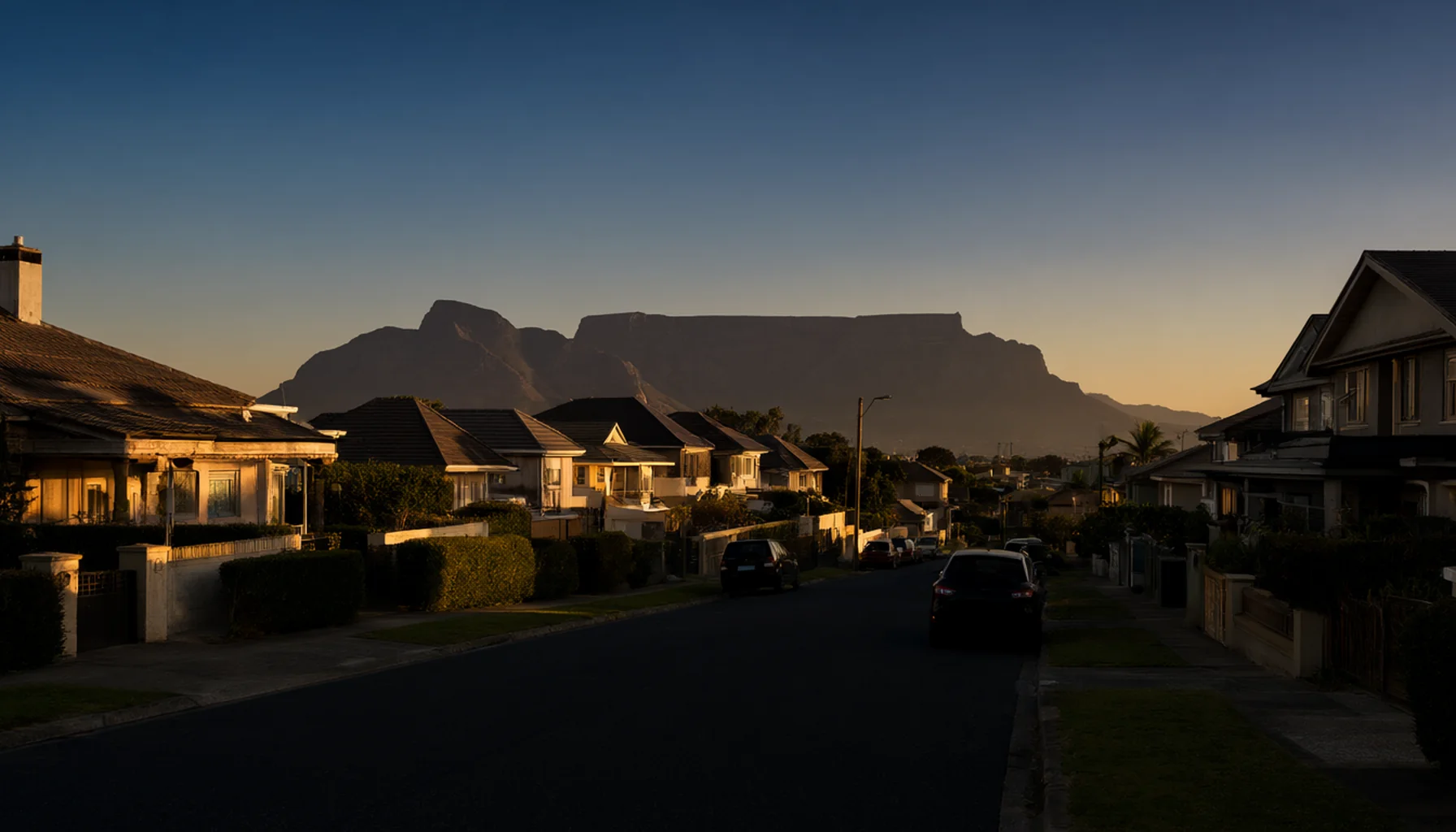
Cape Town skyline and residential neighbourhoods at night

Moving to South Africa from Taiwan? Four residency pathways, PR requirements and study-to-residency compared

If you are searching for how to move to South Africa, you will find two kinds of answers. One talks about the South African passport and its visa-free access to more than a hundred countries. The other says permanent residence takes five years. Neither is the question you should be asking right now. What actually decides the outcome is which pathway you enter through, and whether that pathway will withstand scrutiny in your specific case. For Taiwanese applicants this matters more than usual, because Taiwan passport holders need a visa for South Africa before they travel — there is no e-visa and no visa on arrival.

This guide sets out the four pathways that are realistically available to a Taiwanese applicant: the Financial Independence permit (the only direct route to permanent residence), the Critical Skills work visa (the fastest lawful work route for professionals), the Remote Work visa (the digital-nomad route that lets you base yourself in Cape Town), and the study-to-residency route. Each is documented with its legal basis, financial thresholds, realistic timelines, the point at which applicants usually get stuck, and linkable primary sources.

The final section returns to Cape Town, because status is only the ticket. School fees, rent, prices and transfer duty decide whether you can actually stay in the city long term. This is a pathway decision page, not a returns page and not a visa agency page.

Key takeaway: There is no single entry point to South Africa. For a Taiwanese applicant the pragmatic ranking is: (1) if you can evidence ZAR 12,000,000 in global net worth, take the Financial Independence permit — the only route that delivers permanent residence directly; (2) as a professional, take the Critical Skills visa and convert through Section 27(b); (3) as a remote worker, use the ZAR 650,976 income threshold Remote Work visa to base yourself in Cape Town first; (4) as a family with school-age children, use the study visa to lay the groundwork. All four require you to solve the same prerequisite: a Taiwanese passport needs a South African visa arranged in advance.

South Africa residency pathways and their legal bases compared
South Africa's four residency pathways compared

What are the four South African residency pathways? Start with the comparison table

There are four, or six if you count the two routes built around capital. Both residence and permanent residence in South Africa sit inside the Immigration Act 13 of 2002, mainly under Section 26 and Section 27. The names circulating in Chinese-language search results are many, but only a handful are workable for an individual applicant with a clear route through.

PathwayLegal basisKey thresholdRealistic timelineDirect permanent residence?
Financial IndependenceSection 27(f)Global net worth ≥ ZAR 12,000,000; one-off ZAR 120,000 after approvalDHA target 8–12 months; 2–3 years is common in practiceYes
Critical Skills work visaSection 19(4)Occupation on the Critical Skills List (worth the full 100 points) plus a verifiable South African job offer and a SAQA evaluation2–4 months once documents are readyNo — 5-year work visa first, then Section 27(b)
Remote Work visaSection 11(1)(b)(iv)Foreign-sourced income of at least ZAR 650,976 a year plus a foreign employer contract4–8 weeksNo — 12 months initially, up to 36 months
Study visaSection 13Offer from a DHET-accredited institution, a South African medical scheme, proof of financial means4–10 weeksNo — work visa after graduation, then Section 26(a)
Retirement visa (secondary)Section 11(1)(b)Lifelong annuity or pension income of at least ZAR 37,000 a monthDepends on the missionNo — two-year visa, renewable
Business visa (secondary)Section 15Capital of at least ZAR 5,000,000 (DTIC waiver possible) and at least 60 per cent South African staffDTIC letter 2–4 weeks plus VFS 8–12 weeksNo — temporary status first

The conclusion up front: of the four, only the Financial Independence permit converts an approval directly into permanent residence. The other three begin with temporary status and convert later through years of residence or professional experience. That is why two people can both answer "how long does South Africa permanent residency take" with eight months and three years respectively and both be right — they are describing different pathways.

Three practical consequences follow for a Taiwanese applicant. First, South Africa splits "has capital" from "has skills" into two entirely separate tracks with different legal bases, different review logic and different timelines; neither substitutes for the other. Second, whichever track you take, step one is obtaining lawful temporary or permanent status, which makes the South Africa PR requirements and the underlying visa process a shared prerequisite — and for a Taiwanese passport that step is not automatic.

Third, Cape Town is the only South African city that combines international school density, private healthcare and a mature residential market, so for a Taiwanese family the choice of pathway and the choice of landing city are effectively one question. The pathway determines whether you are entitled to stay; the cost of living in Cape Town determines whether you want to. That is why the cost breakdown is the final section here rather than a separate article.

(Source: Abroadscope, South Africa permanent residence and visa category overview, 27 February 2026)

South Africa permanent residency financial thresholds and asset structure
South Africa permanent residency financial thresholds

What are the thresholds for South Africa permanent residency? Financial Independence, retirement and business compared

Direct answer: the lowest financial threshold that leads directly to permanent residence is ZAR 12,000,000 in global net worth (total assets less total liabilities), roughly USD 650,000. This is the Financial Independence permit under Section 27(f). Three features make it the practical first choice for high-net-worth applicants — and each carries a cost.

MeasureFinancial IndependenceRetirementBusiness
NaturePermanent residenceTemporary (2 years)Temporary
Financial thresholdGlobal net worth ≥ ZAR 12,000,000Lifelong annuity or pension income ≥ ZAR 37,000 a monthCapital ≥ ZAR 5,000,000
Must funds be transferred into South AfricaNo — proof of holding is enoughSource and stability must be evidencedYes, must be invested in the business
One-off government feeZAR 120,000 after approvalPer visa fee schedulePer visa fee schedule
Right to work, trade or studyAll three, without further applicationRetirement livingRunning that business
Physical presenceEnter South Africa once every three yearsPer visa conditionsPer visa conditions

The single most misunderstood point is the ZAR 120,000. It is not an investment; it is a one-off government fee payable only after approval. Applicants do not need to move ZAR 12,000,000 into South Africa or invest it in the local economy. Precisely because it delivers permanent residence in one step, however, scrutiny is heavy: net worth must be verified by a chartered accountant, global assets and liabilities disclosed in full, and source of funds documented to anti-money-laundering standards. That documentation burden, not the headline figure, is where South Africa residence by investment style applications in the region most often fail.

Note that South Africa does not operate a golden-visa programme in the Portuguese or Caribbean sense, where qualifying real estate or fund subscriptions are the route. Capital matters here as evidence of self-sufficiency, not as a purchase.

The common documentation for permanent residence is the same regardless of category: lodgement through VFS Global, a valid passport and lawful temporary status, police clearance certificates from every country you have lived in for twelve months or more, and category-specific evidence. The official processing target is 8–12 months, but because every document is verified with third parties, two to three years is commonly seen.

A time-sensitive variable worth knowing: the government's White Paper on Citizenship, Immigration and Refugee Protection proposes two changes that would alter the game. One is an annual quota and application window for permanent residence approvals, after which lodgement pauses until the next window. The other is decoupling permanent residence from citizenship, so that holding PR would no longer lead automatically to a passport. Both remain proposals rather than law, but the direction is clear. If you already qualify today, indefinite waiting is not a neutral choice.

What permanent residence actually confers also needs stating plainly: the right to live and work indefinitely, to change jobs without a new work visa, to start a business, to invest freely, and to hold property as a resident. It is not a South African passport and it does not carry voting rights. If a second passport is part of your long-term plan, price the naturalisation years into the decision rather than stopping at PR.

(Source: Abroadscope, Financial Independence visa and the ZAR 12 million net worth requirement, 26 February 2026)

(Source: Abroadscope, South Africa permanent residence 2026: process, timelines and White Paper update, 27 February 2026)

South Africa Critical Skills visa and professional qualification recognition
Critical Skills visa and professional recognition

Which route is fastest for professionals? The Critical Skills 100-point system and SAQA explained

Direct answer: the Critical Skills work visa is the shortest and cheapest lawful work route for a professional, issued for up to five years at a time. Since October 2023, however, it is no longer a job-seeker visa. A lodgement must be accompanied by an offer of employment from a verifiable employer in good standing. That single change closed off the route most applicants used to rely on.

From October 2024 South Africa introduced a points-based system for Critical Skills and General Work visas. The threshold is 100 points. Critical Skills applicants hold a structural advantage: an occupation on the official Critical Skills List is itself worth 100 points, so no salary, experience or language points are needed to cross the line.

CriterionRequirementPoints
Critical Skills occupationOccupation appears on the current Critical Skills List100
QualificationNQF level 9 or 1050
QualificationNQF level 7 or 830
SalaryAbove ZAR 976,194 gross a year50
SalaryZAR 650,976 to 976,194 gross a year20
Experience5 to 10 years20
ExperienceMore than 10 years30
EmployerOffer from a Trusted Employer Scheme participant30
LanguageProficiency in at least one South African official language10
Employment offerMandatory (no points)—

Be clear that scoring 100 points does not make the visa automatic. The points threshold and eligibility for the specific occupation are separate tests: the occupation must match the actual duties, the OFO code, the qualification and any professional registration. The most common failure is a correct job title attached to the wrong duties — applying as a Data Scientist when the employment contract describes something else.

Qualification recognition is the second gate. Foreign qualifications generally require evaluation by the South African Qualifications Authority (SAQA). A partial waiver dated 18 October 2024 allows lodgement while the evaluation is pending, but the visa is then usually limited to 12 months until a positive evaluation is supplied, after which it extends to the normal period. Separately, Ministerial Immigration Directive 10 of 2026 waived the medical-report requirement for temporary and permanent residence applications — though some mission webpages still show the older checklist, so confirm the current filing instructions before you submit.

The route to permanent residence: Section 27(b). Critical Skills holders have a permanent-residence route independent of the five-year continuous work rule. The core requirement is generally at least five years of post-qualification professional experience — and that experience does not have to be accumulated in South Africa. An engineer with eight years in Taiwan may therefore satisfy the Section 27(b) experience test on day one, which is a completely different calculation from the Section 26(a) "five years on a work visa first" route.

On cost, government work-visa fees rose on 17 August 2026 to ZAR 1,520, with a VFS service fee of ZAR 1,750 inside South Africa, a combined base of roughly ZAR 3,270 before SAQA evaluation, professional registration, police clearances, translation and authentication. On timing, allow two to four months from a firm job offer when prerequisite documents are not already in hand.

(Source: South African Citizenship, Critical Skills visa 2026: requirements, points, occupations and process, 27 August 2026)

Remote work, digital nomads and city living in Cape Town
Remote work and city living in Cape Town

Can you live in Cape Town on the Remote Work visa? The ZAR 650,976 threshold and the tax trap

Yes, with three hard limits. South Africa has formally opened a remote work visitor visa under Section 11(1)(b)(iv) of the Immigration Act: initially 12 months, renewable to a maximum of 36 months; holders may not take up employment with a South African entity or perform services for a South African client, so income must be entirely foreign-sourced; and gross annual income must be at least ZAR 650,976 (reduced from an earlier proposed ZAR 1,000,000).

ItemRequirement
NatureTemporary residence (visitor visa category)
Initial period / maximum12 months, renewable to 36 months
Minimum foreign annual incomeZAR 650,976
Income sourceMust be entirely foreign-sourced
Age / insurance / recordOver 18; comprehensive medical insurance for the stay; police clearance
Where to lodgeIn person at a South African mission or VFS centre outside South Africa — you cannot apply from inside the country
Government fee / processingAbout ZAR 425; 4–8 weeks, up to 10 in some regions
Employment with a South African companyNot permitted

For an applicant moving to South Africa from Taiwan there is one practical wrinkle. The regulations explicitly refer to a valid contract of employment signed by both the applicant and a foreign-based employer. That fits employees with a formal foreign employer directly. Freelancers, sole proprietors and the self-employed must build equivalent evidence: long-term contracts with foreign clients, verifiable international income flows, and tax returns or payslips meeting the threshold. It is workable, but the file has to be structured deliberately.

Tax is the second issue to settle before you commit. South Africa taxes on a source basis, so income for services physically performed in South Africa is generally South African-source income. Tax residents of countries with a double taxation agreement are required to register with SARS only if present in the Republic for an aggregate of more than 183 days in any 12-month period; holders from countries without an agreement must register regardless of length of stay. Exceeding 183 days may also deem you tax resident on worldwide income, and where your home country taxes worldwide income without foreign tax relief, double taxation is a real outcome.

Why this route matters especially for Taiwanese applicants: the Remote Work visa lets you base yourself lawfully in Cape Town without first finding a South African employer, and it unlocks things a tourist stamp does not — a local bank account, a lease in your own name. It is also the only one of the four pathways that lets you test the Cape Town lifestyle before committing further capital. Spend a year, then decide whether to move on to Critical Skills or Financial Independence. See the linked analysis of how remote work visas are reshaping Cape Town residential demand for the cost structure behind that decision.

(Source: Abroadscope, South Africa remote work visa 2026: digital nomad requirements, income and tax rules)

Campus life, studying in South Africa and family life in Cape Town
Campus life and studying in South Africa

Can studying in South Africa become permanent residence? How the five years under Section 26(a) actually count

Yes, but there is one rule that trips almost everyone up: time spent in South Africa on a study visa does not count towards the five-year residence requirement under Section 26(a). The study visa (Section 13) is not itself a direct route to permanent residence. The correct sequence is study visa, then a general work visa or Critical Skills visa after graduation, then five continuous years on a work visa, then Section 26(a). In other words those university years build qualifications and networks, not qualifying residence.

The study visa threshold is not high, but the conditions are strict. The institution must be accredited by DHET, Umalusi or a provincial education department, and the course must run longer than three months. Proof of financial means must cover tuition, living costs (the DHA expects evidence of roughly ZAR 3,000 a month) and repatriation. Critically, you must hold medical cover with a scheme registered under the Medical Schemes Act 131 of 1998; international travel insurance does not satisfy this even where the cover is higher, and it is one of the most common refusal reasons.

ItemSouth African study visa rule
Legal basisSection 13, read with Regulation 12
Who needs itFull-time students on courses longer than three months
ValidityDuration of the course (about 3 years for a degree, 1–2 for a master's, up to 5 for a doctorate); renewable
Part-time workPermitted for higher education and TVET students, capped at 20 hours a week; not for school learners
Financial means referenceAbout ZAR 3,000 a month for living costs, plus tuition
Medical coverMust be a registered South African scheme, renewed annually
CostDHA fee ZAR 425 plus VFS service fee ZAR 1,550; about ZAR 3,000–4,500 for a first application
ProcessingDHA target 8 weeks; 4–10 weeks in practice

Two things you must not do. First, do not enter on a visitor's visa and then try to convert to a study visa from inside South Africa — the regulations do not permit it, and it is a frequent route to refusal and a declaration of undesirability. Second, do not let the study visa expire: there is no grace period after the course ends, and overstaying by up to 30 days makes you undesirable for 12 months, and for five years beyond that.

For a Taiwanese family the real appeal of this route is the schooling itself. Cape Town offers three parallel systems — South African CAPS, Cambridge IGCSE and A-Level, and the IB — which gives more transition flexibility than most Asian cities for a child who may finish secondary school in English and then continue in Taiwan or a third country. That is why many Taiwanese parents treat study in South Africa as the first step of the residency pathway rather than the objective. The school-selection logic and full fee structures are covered in the linked analysis of why Taiwanese parents choose South African private schools.

(Source: IDChecker, South Africa study visa 2026: complete application guide, 9 May 2026)

South Africa visa, arrival documentation and traveller declaration preparation
South Africa visa and arrival documentation

Where do Taiwanese applicants get stuck? Three misconceptions about the visa, proof of funds and visa-free access

Direct answer: the blocker is rarely eligibility. It is three things people assume they do not need to do — and almost every Taiwanese applicant misjudges the first one at least once.

Misconception one: assuming a Taiwanese passport is visa-exempt for South Africa. It is not. Taiwan passport holders require a visa for South Africa, arranged before travel, with no e-visa and no visa on arrival; you must lodge in person at a South African embassy or consulate, or an authorised visa centre. Processing is typically 5–15 working days and longer in peak season, so start at least four weeks out. Your passport must be valid for at least 30 days beyond your intended departure (in practice six months is often requested) and contain two consecutive blank visa pages. A single-entry tourist visa costs about ZAR 1,350 and a multiple-entry about ZAR 2,700. Airside transit without entering the country does not require a transit visa.

Misconception two: reading "South Africa visa-free countries" backwards. What you see in search results as South Africa's 100-plus visa-free destinations refers to holders of a South African passport travelling visa-free or visa-on-arrival to more than a hundred countries. That is the travel benefit of South African citizenship, not the treatment of a Taiwanese passport entering South Africa. The two directions are exact opposites, yet they are routinely written in the same paragraph, which sends applicants down the wrong preparation path from day one. The correct reading: the passport's reach is the dividend you collect after completing a residency pathway and naturalising; what you face today is that a Taiwanese passport needs a visa to enter South Africa.

Misconception three: ignoring the new arrival procedures and the overstay penalties. Since 1 July 2026 all travellers entering or leaving South Africa through any port must submit an online traveller declaration through the SARS Traveller Management System. Failing to do it in advance will not bar entry, but you will be asked to complete it at the port. Overstaying is expensive: ZAR 500 a day up to ZAR 15,000, plus possible deportation and an entry ban of one to ten years — which would end any subsequent residence application outright.

One more thing nobody flags: dual nationality has to be asked twice. On the South African side, dual citizenship is permitted. The Supreme Court of Appeal struck down the old automatic-loss provision in June 2023 and the Constitutional Court confirmed it on 6 May 2025, so those affected since 6 October 1995 are deemed never to have lost their citizenship. On the Taiwan side, whether a Taiwanese national may simultaneously hold South African nationality falls to be assessed case by case under the Nationality Act and interacts with restrictions on public office, so confirm the position against the Ministry of the Interior's latest guidance rather than extrapolating from the South African answer.

If you would rather check all three at once, we have packaged the South African passport 100-plus visa-free country list together with the four-pathway residency checklist as a free download: visa-free destinations by region, what changed in 2026, and the three document types that most often cause delay. It is available on the South Africa PR guide page.

(Source: EntryBrief, South Africa entry requirements for Taiwan passport holders, reviewed 2 August 2026)

(Source: SafariFind, South Africa entry requirements 2026: visa, passport and traveller declaration, 16 July 2026)

Cape Town residential neighbourhoods and family landing costs
Cape Town neighbourhoods and family landing costs

Once you have status, what does landing in Cape Town actually cost? Fees, rent, prices and transfer duty

Direct answer: for a family of four in Cape Town, with two children at international schools and a two-bedroom rental, recurring annual outgoings land in the ZAR 500,000 to ZAR 750,000 range. If you buy a mid-priced home in the northern or southern suburbs instead, the up-front cash requirement (deposit plus transfer duty plus conveyancing and registration) runs at roughly 12 to 15 per cent of the purchase price. Each line is set out below.

ItemCape Town 2026 reference rangeNote
International school fees (per year)ZAR 120,000–200,000 (ISCT) / ZAR 90,000–160,000 (Reddam) / ZAR 130,000–220,000 (Bishops)Rand-denominated schools
US-curriculum school (per year)USD 15,000–22,000 (AISCT)Dollar-denominated, reflecting expatriate staffing
Costs beyond tuitionZAR 10,000–30,000 development levy plus uniforms, meals, activities, transport, booksAll-in ZAR 180,000–320,000 per child
Annual fee escalationAbout 7–12 per centBudget on 10 per cent
Transfer dutyAbout ZAR 67,200 on a ZAR 2,500,000 property; no duty below ZAR 1,210,000Plus roughly ZAR 107,706 in attorney, deeds and VAT once a bond registers
Time to transfer8–12 weeksMostly waiting on the bond and the deeds office
Bond pricing benchmarkPrime at 10.75 per centForeign buyers are generally capped at 50 per cent loan-to-value
Study visa proof of meansAbout ZAR 3,000 a month for living costsPlus tuition and repatriation

Put these numbers back against the four pathways and a pragmatic conclusion emerges: the real cost difference between pathways is not the visa fee, it is how soon you start paying Cape Town school fees and rent. The Financial Independence permit allows you to enter once every three years, which suits using Cape Town as a base rather than a full-time home. The Remote Work and study visas move the whole family, so school and lease costs begin immediately. That is why costing out the Cape Town living expenses line by line should come before completing the visa paperwork, not after.

Risk notice (please read): every figure in this article is a market-reference range, not a guarantee. Actual spending will move with market conditions, exchange rates, policy and personal circumstances. School fees are set annually by each school; taxes and government fees follow the latest South African gazettes. Any yield or appreciation figure is historical data and past performance does not guarantee future returns. This article is for information only and does not constitute investment, tax or legal advice.

(Source: International School Advisor, international school costs in Cape Town 2026 fee guide, 27 March 2026)

(Source: ImmoAfrica, South African purchase costs, transfer duty and transfer timelines, checked 16 October 2026)

FAQ

Which residency pathways does South Africa offer?

There are four main pathways plus two secondary routes. The four are: Financial Independence (Section 27(f), global net worth of at least ZAR 12,000,000, permanent residence on approval); Critical Skills (Section 19(4), a 100-point test, work visa first then Section 27(b)); Remote Work (Section 11(1)(b)(iv), foreign income of at least ZAR 650,976 a year, up to 36 months); and Study (Section 13, converted to a work visa after graduation and then Section 26(a)). The secondary routes are retirement (Section 11(1)(b), lifelong annuity or pension income of at least ZAR 37,000 a month) and business (Section 15, capital of at least ZAR 5,000,000).

How long does South Africa permanent residency take?

Two different questions. The Financial Independence permit delivers permanent residence on approval, and the Department of Home Affairs targets 8 to 12 months, but because every third-party document is verified individually, two to three years is common in practice. The other pathways carry separate qualifying periods: under Section 27(b) a Critical Skills holder generally needs five years of post-qualification professional experience, which can be accumulated outside South Africa; a study visa holder must first convert to a work visa and then hold it for five continuous years under Section 26(a). A pragmatic planning range is three to six years, depending on the route.

Does a Taiwan passport need a visa for South Africa? What do 'South Africa visa-free countries' mean?

Yes, a visa is required. Taiwan passport holders must obtain a South African visa before travelling; there is no e-visa and no visa on arrival, so you must lodge in person at a mission or authorised visa centre. Processing typically takes 5 to 15 working days, and the passport must remain valid for at least 30 days beyond departure with two consecutive blank pages. 'South Africa visa-free countries' refers instead to the more than one hundred destinations a South African passport holder can visit without a visa. That is a benefit of South African citizenship, the opposite direction from a Taiwanese passport entering South Africa, and the two are constantly confused.

Can I buy property or open a bank account on the Remote Work visa?

You can buy property, but this visa does not change the purchase rules. Foreign buyers in South Africa can generally borrow up to 50 per cent of the property value and must obtain a South African Reserve Bank funds-transfer code. The real value of the Remote Work visa is lawful long-term residence, which in turn lets you open a local bank account in Cape Town, sign a lease in your own name and set up utilities and connectivity, none of which is realistic on a tourist stamp. Note carefully: holders may not work for a South African entity and income must be entirely foreign-sourced.

Can studying in South Africa lead to permanent residence?

Yes, but time on a study visa does not count towards the five-year requirement under Section 26(a). The correct sequence is study visa, then a general work visa or Critical Skills visa after graduation, then five continuous years on a work visa, then Section 26(a). The study visa threshold is an offer from a DHET-accredited institution, medical cover with a scheme registered under the Medical Schemes Act (international travel insurance does not qualify), and proof of means of about ZAR 3,000 a month for living costs. Higher education and TVET students may work up to 20 hours a week.

Where do most South Africa residency applications get stuck?

Three places. First, assuming a Taiwan passport is visa-exempt and losing weeks, so start at least four weeks before travel. Second, insufficient financial and asset evidence: the ZAR 12,000,000 net worth for Financial Independence must be verified by a chartered accountant, with global assets and liabilities disclosed in full and source of funds documented to anti-money-laundering standards, which is the single most common cause of refusal. Third, ignoring the online traveller declaration required since 1 July 2026, and the overstay penalty of ZAR 500 a day up to ZAR 15,000 plus a possible entry ban of one to ten years.

Why Handle This Through Crestline Advisory?

South African documentation requirements change every year — and what changes is usually the format, not the eligibility. Same passport, same proof of address, wrong format, rejection.

The three most common failure points

  • Passport certification rejected: A plain true-copy stamp is not accepted. A commissioner of oaths must certify in English, confirm the original was seen, add a true-likeness statement for photo pages, and include signature, date, address and occupation.
  • TIN left blank without a reason code: For Taiwanese clients the tax number is the national ID number. Leaving it blank requires ticking Reason A / B / C with an explanation.
  • Proof of address older than three months: Measured from the application date. Past the deadline the entire application is void and must be resubmitted.

Working through our partner Crestline Advisory (on-the-ground execution in South Africa) means these are checked before submission: document format pre-screened item by item (avoiding a 2-4 week round trip), current bank requirements confirmed before you book any flight, remittance routing and BOP declaration categories aligned in advance, and progress tracked locally after submission.

DingYao verifies your documents on the Taiwan side and hands over to Crestline Advisory for execution. You do not receive a checklist and left to figure it out alone.

Start planning your South African residency pathway

There is no single entry point to South Africa permanent residency, and choosing the wrong pathway can cost two to three years. Tell us about your asset structure, professional background and family plans. We will provide an initial assessment of the residency pathways open to you, the documentation direction, and a Cape Town landing cost estimate, so the sequence is right before you file anything.

Book Now

Compliance & Disclaimer

1. Company statement:DingYao Advisory Ltd (Ding Yao Advisory) is a Taiwan-based advisory firm covering asset allocation, immigration advisory, offshore account opening and second-generation education coordination. We do not act as a real estate broker or sales agent within Taiwan, and we do not handle, collect or hold any property transaction funds.

2. Sources and contracting party:The South African residency and visa rules, market data and related images in this article are provided by public official sources (including notices from the South African Department of Home Affairs, the South African Revenue Service and the South African Reserve Bank), the overseas partner institution Crestline Advisory (Pty) Ltd and public market sources, for residency planning and offshore asset allocation reference only, and do not constitute an offer, solicitation of an offer or investment guarantee. All property sale agreements, payments and transfers of title are concluded and signed offshore by the buyer directly with the lawful overseas developer or institution under local law.

3. Statutory risk warning:South African immigration rules, visa thresholds, tax rules and school fees may change at any time. The amounts and timelines in this article are public information verifiable at the time of writing, carry their own calculation standards and shelf life, and do not represent future conditions. Nothing here constitutes investment, tax or legal advice. Confirm actual application requirements against the latest notices from the South African Department of Home Affairs, the South African Revenue Service and the receiving mission. Overseas property investment carries risk: read the marketing documents and consider them carefully before transacting. Investors should assess the position themselves and obtain professional legal and financial advice.